29 Mudroom Mistakes That Create More Clutter Instead of Less
A mudroom should catch the mess before it reaches the rest of the house. The layout has to match shoes, coats, backpacks, pets, sports gear, and weather.
29. Building Too Few Hooks
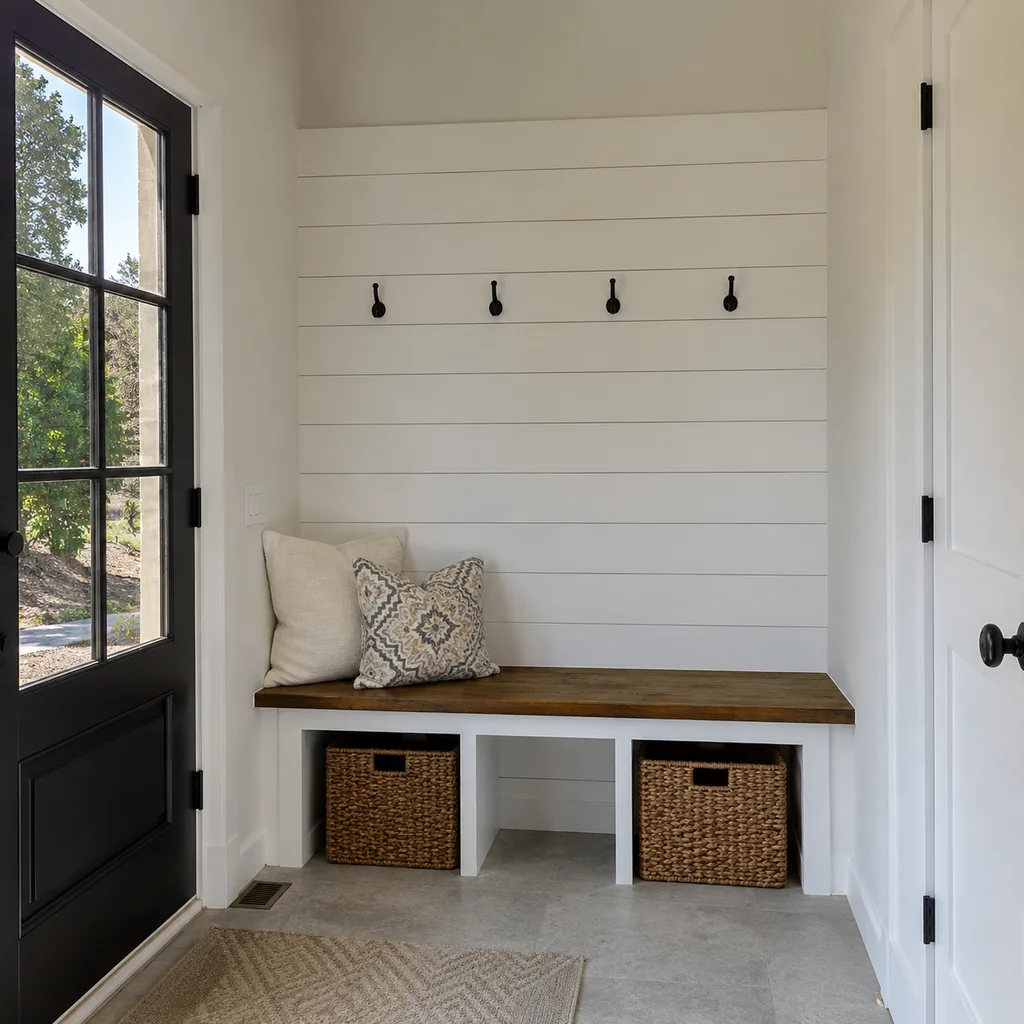
One hook per person usually fails once winter coats, backpacks, hats, and guest items arrive.
Hooks are cheap, but adding more after trim, paint, or cabinetry is finished can look like an afterthought.
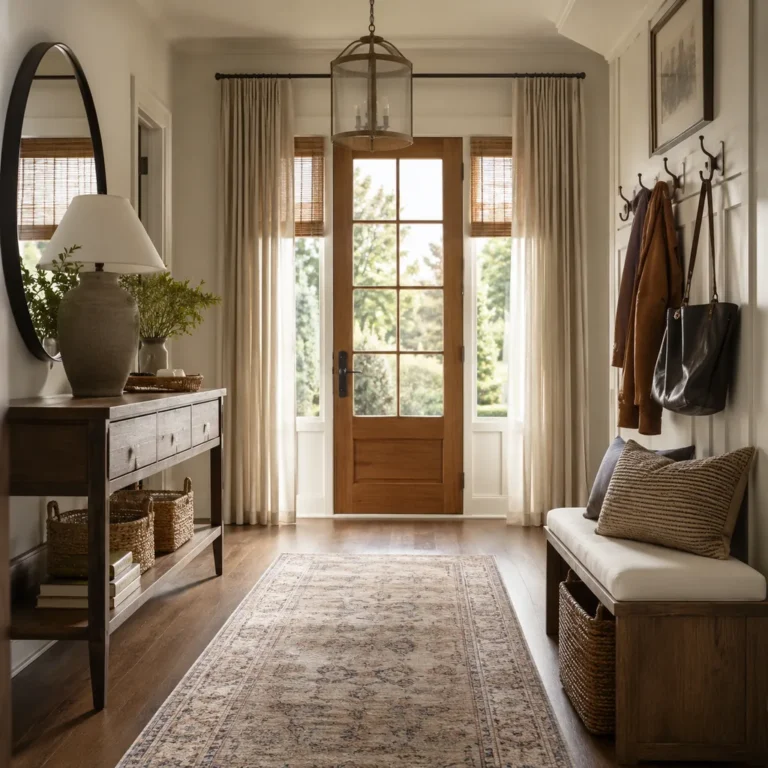
Plan extra rows or staggered heights so bags and coats can hang without turning the bench into overflow.
28. Making Cubbies Too Narrow
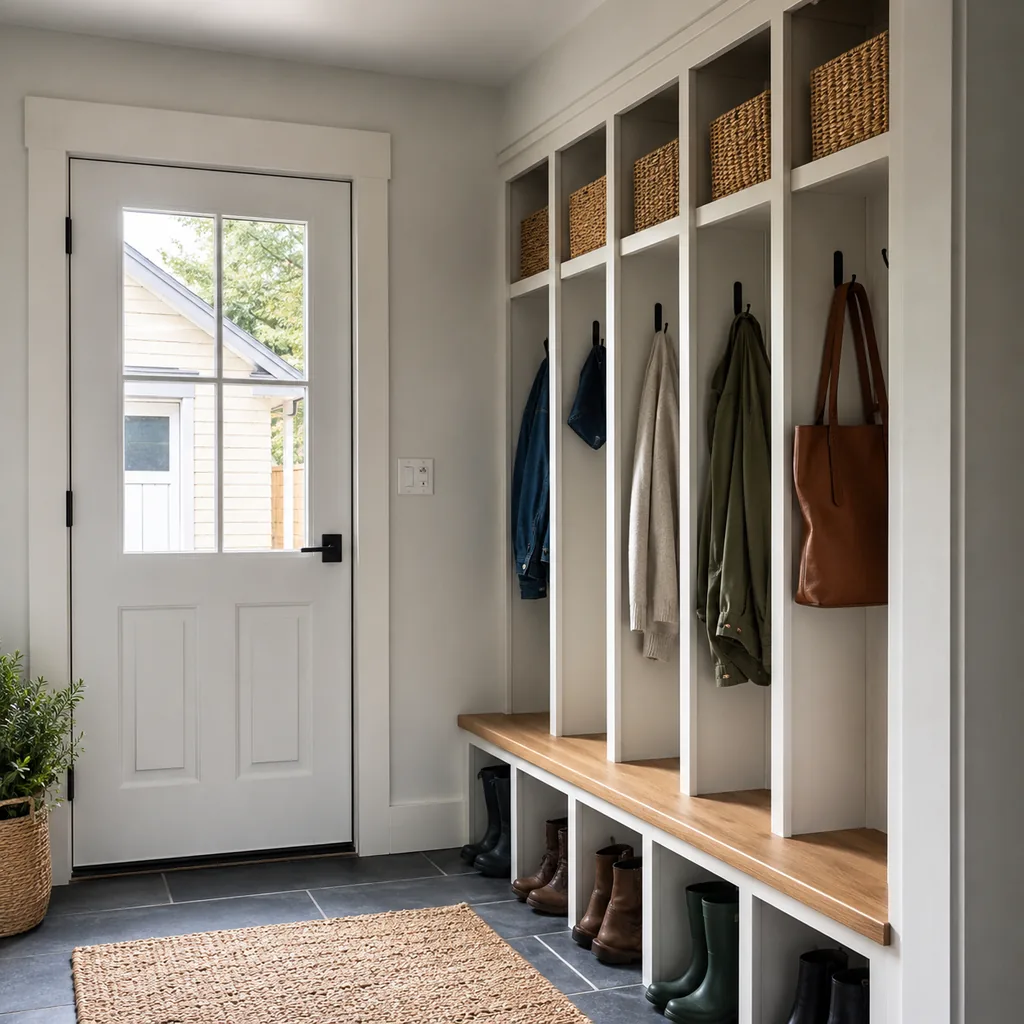
Narrow cubbies look tidy when empty, but real backpacks and jackets need more width.
Measure the largest school bag, work tote, sports backpack, or diaper bag before locking in openings.
A slightly wider cubby usually performs better than a perfect grid that forces soft items to bulge into the walkway.
27. Skipping a Bench
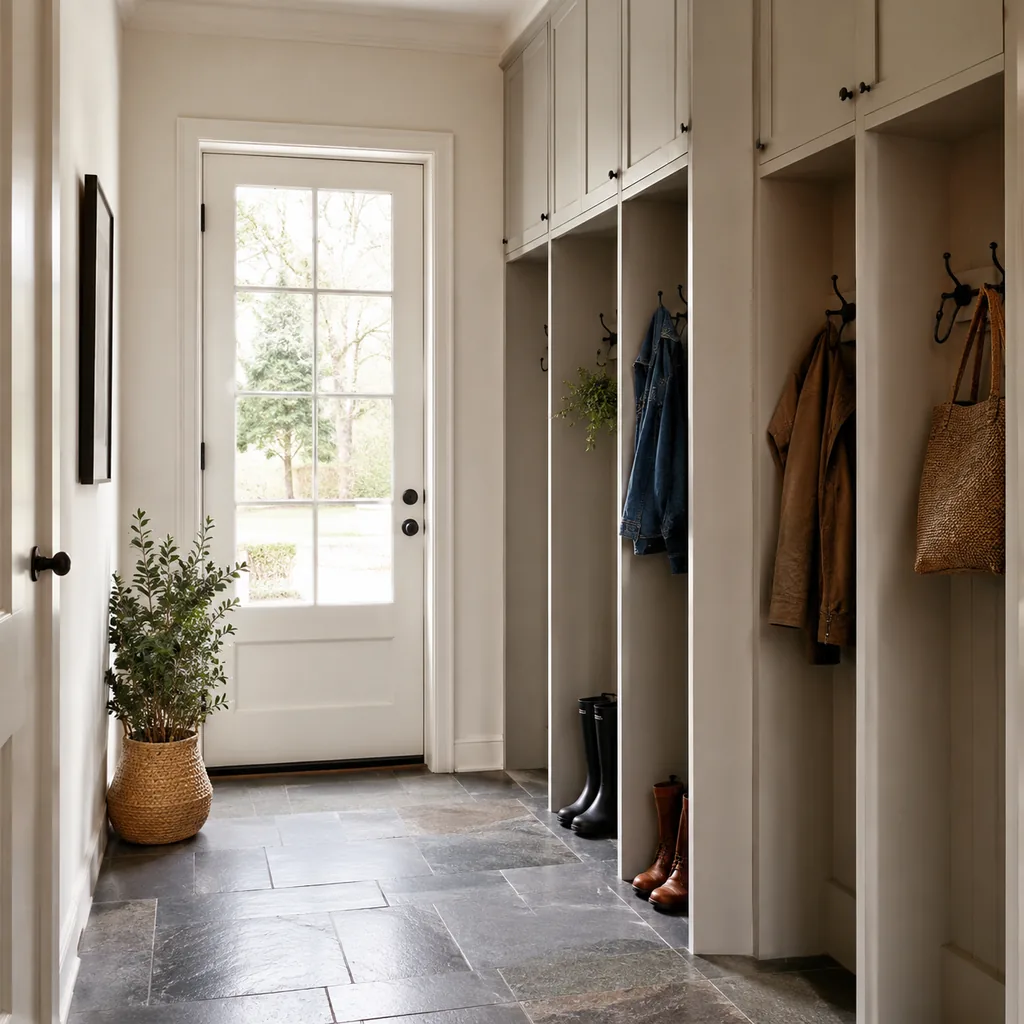
People need a stable place to sit while removing shoes, boots, and winter gear.
Without a bench, the floor becomes the staging area, especially for kids or anyone carrying bags.
The bench does not have to be large; it just needs to sit near shoe storage and stay clear enough to use.
26. Using Delicate Flooring

Mudroom flooring takes salt, snow, rain, grit, pet mess, and wet shoes.
Delicate wood, polished finishes, or slippery tile can become expensive regrets in a high-traffic entry.
Choose textured tile, brick, concrete, or durable vinyl that can be mopped quickly and will not panic you every storm. The best mudroom floor is the one you can clean without worrying about every mark.
25. Forgetting Boot Drying
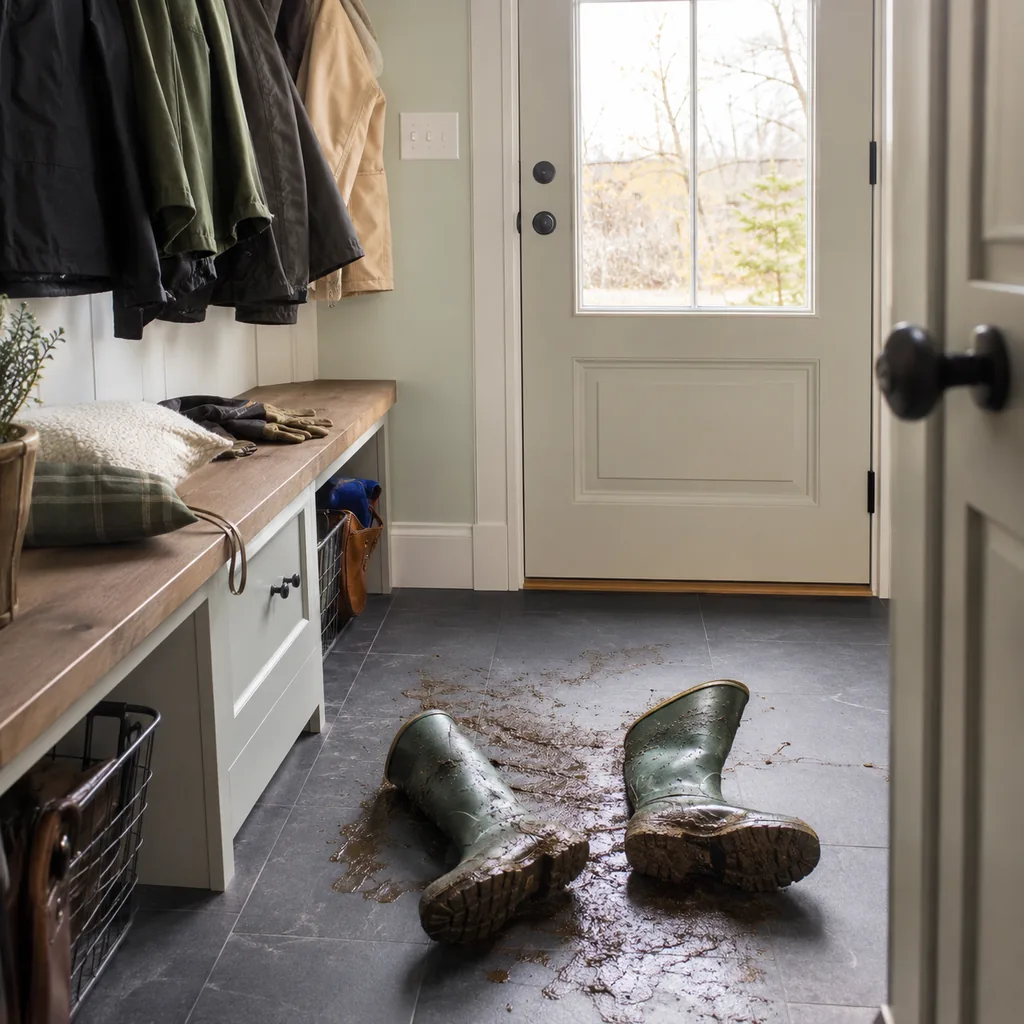
Wet boots need airflow, not just a closed cabinet.
A dark shoe bin can trap moisture, odor, and mud exactly where you want the room to feel cleaner.
Use boot trays, open shelves, racks, or a washable mat zone so wet footwear can dry before it gets stored. In winter regions, this detail can save floors and keep the whole entry from smelling damp.
24. Putting Storage Too High for Kids
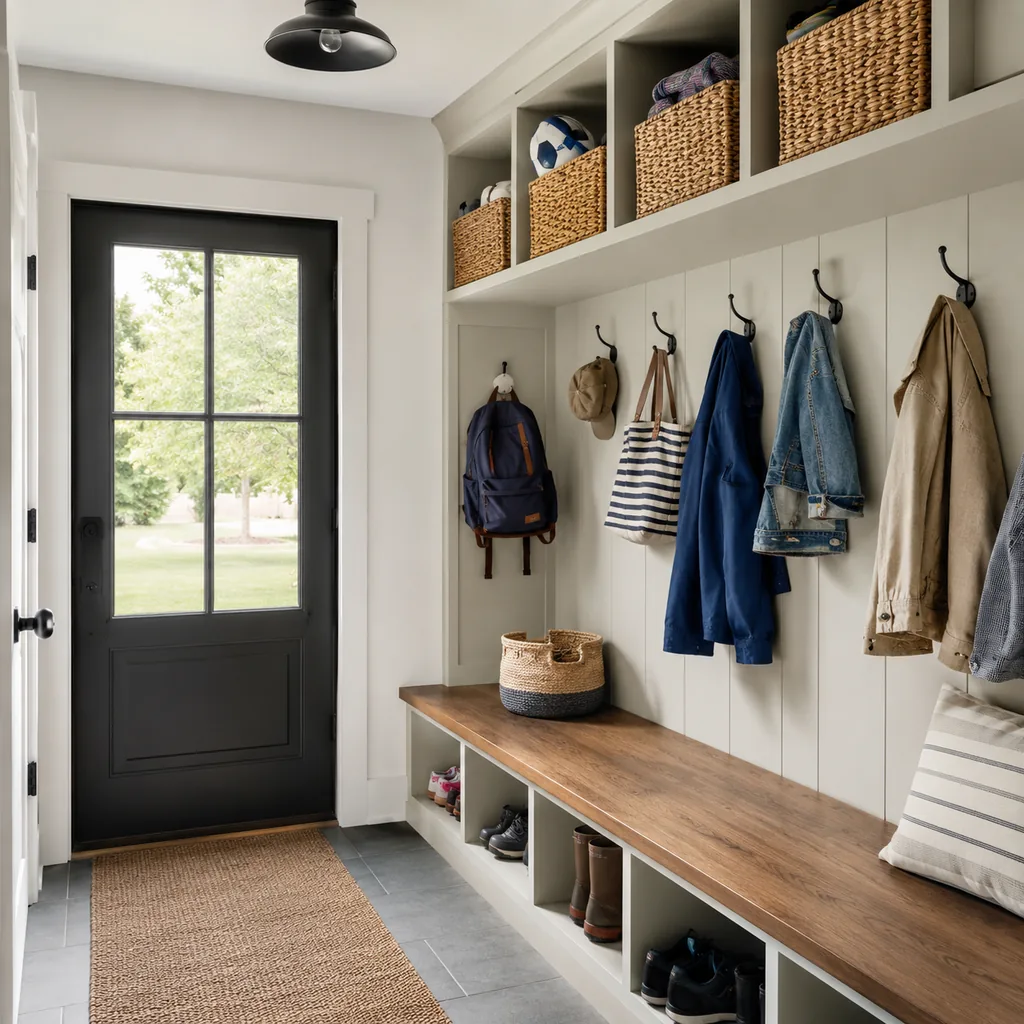
A family mudroom only works if kids can use their own storage.
Hooks, bins, and daily shelves placed too high guarantee that coats and backpacks land on the floor.
Put child-height hooks in the working zone now, then leave room above for taller hooks as the household changes.
23. Not Planning for Seasonal Overflow
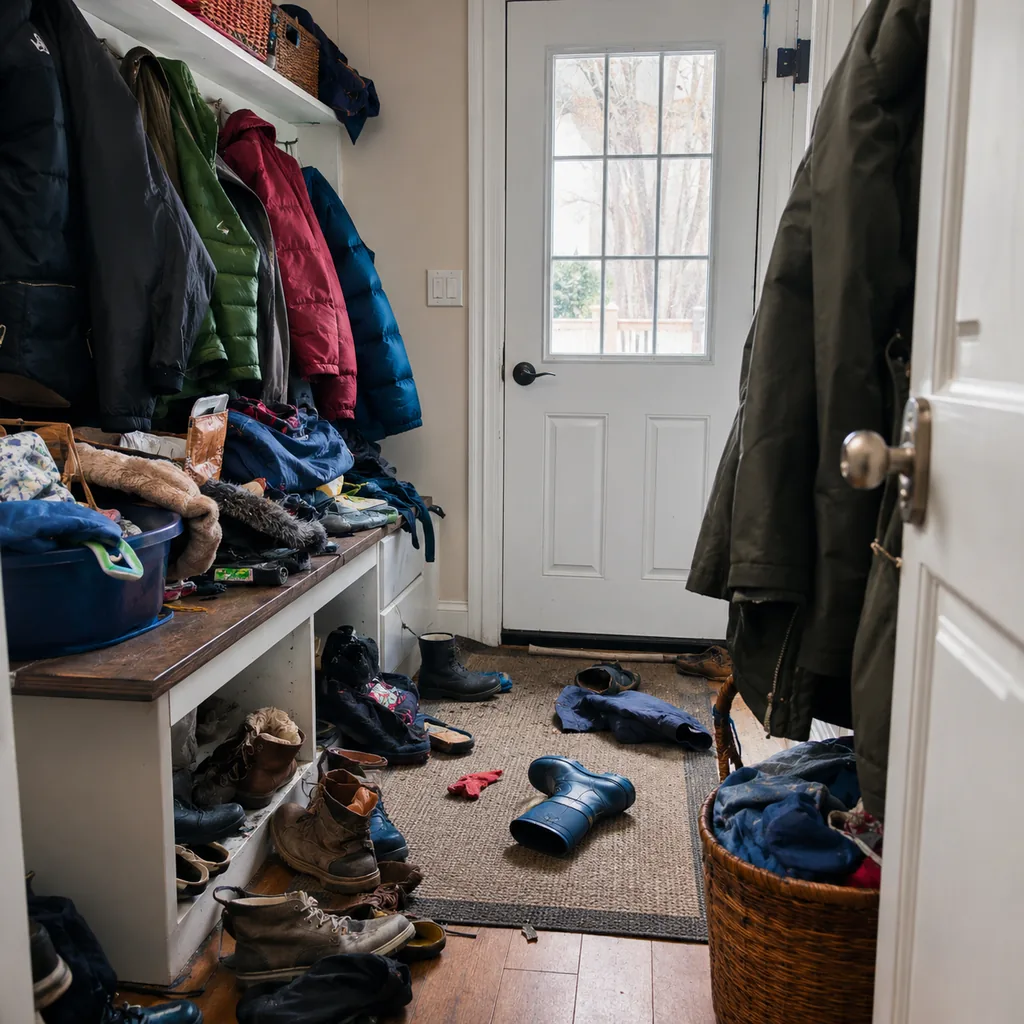
Mudrooms change dramatically between summer, school season, sports season, and winter.
A layout that handles flip-flops may fail when boots, snow pants, umbrellas, and bulky coats arrive.
Reserve one flexible overflow zone for seasonal gear so the everyday hooks do not have to carry the whole year. Hooks alone rarely handle that swing, so flexible bins or shelves need to be part of the plan.
22. Forgetting Mail and Keys
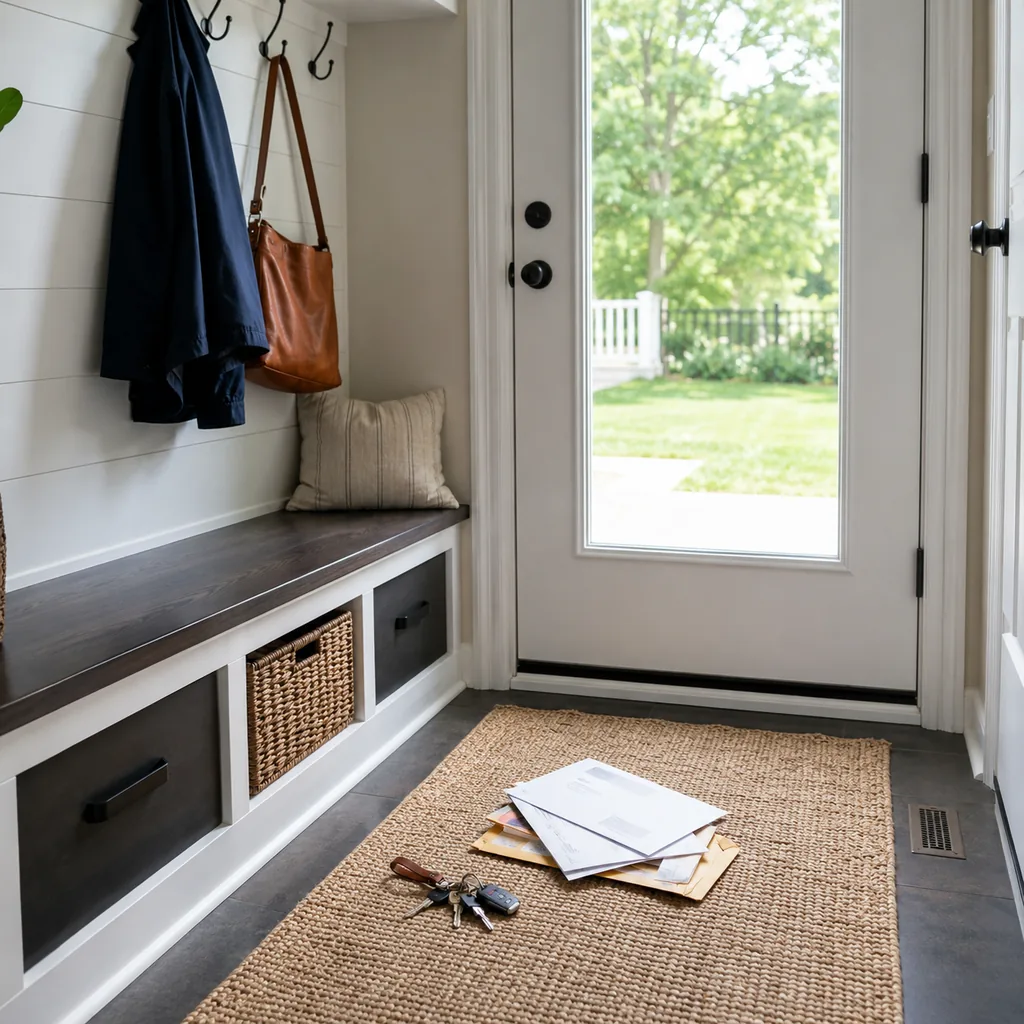
Keys, sunglasses, wallets, and mail need a landing spot before they scatter through the house.
A tray, drawer, small shelf, or wall pocket can keep the mudroom from becoming another clutter transfer station.
Keep this zone small on purpose; it should catch daily items, not invite every paper pile in the house.
21. Using Doors on Every Locker

Closed lockers hide clutter, but they also slow down the habits that make a mudroom useful.
If every backpack or coat requires opening a door, busy families will often leave items outside the cabinet.
Use a mix of open hooks, closed upper storage, and a few doors for ugly overflow rather than hiding everything.
20. Skipping Good Lighting
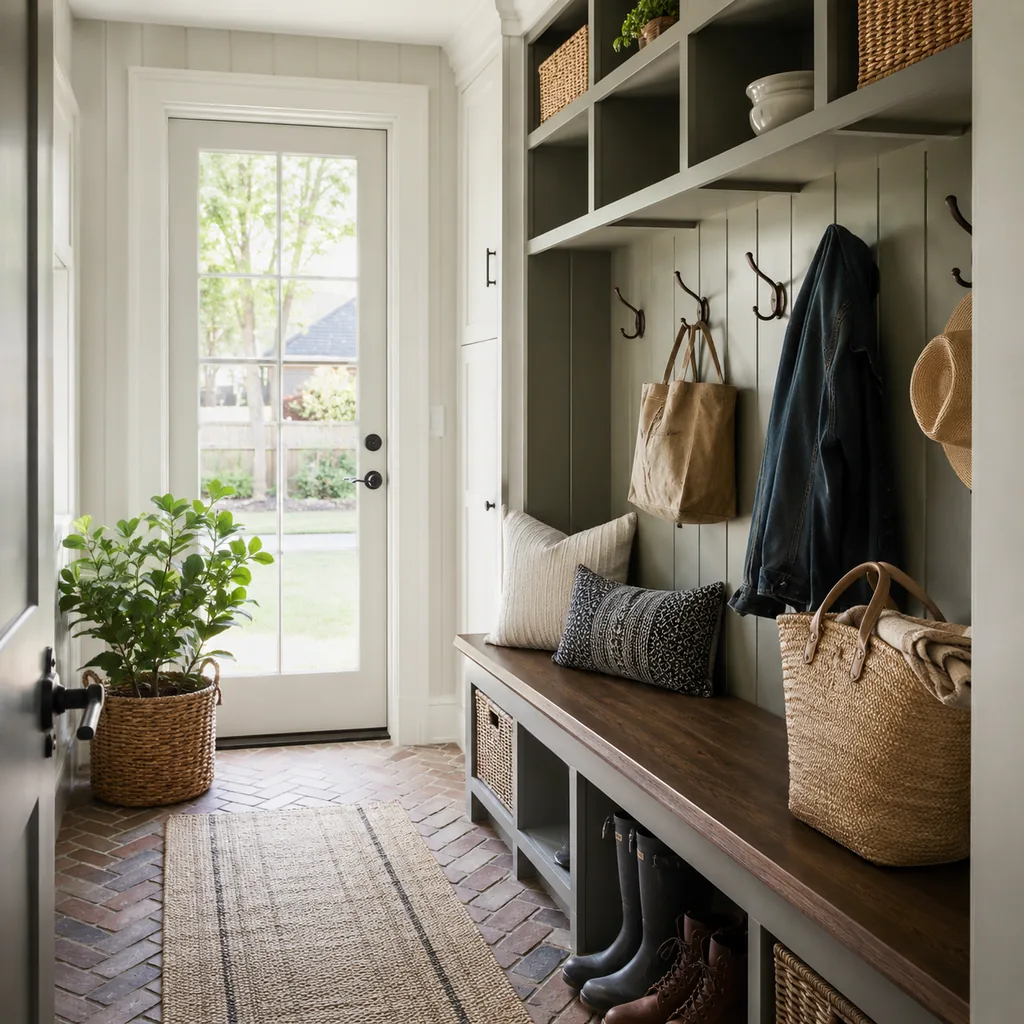
Mudrooms often sit between the garage and kitchen, where natural light can be weak.
Dim lighting makes it harder to spot mud, match shoes, find keys, or check a backpack before school.
Use bright overhead light plus task light near storage so the room works during early mornings and dark winter evenings.
19. Making Shoe Storage Too Shallow
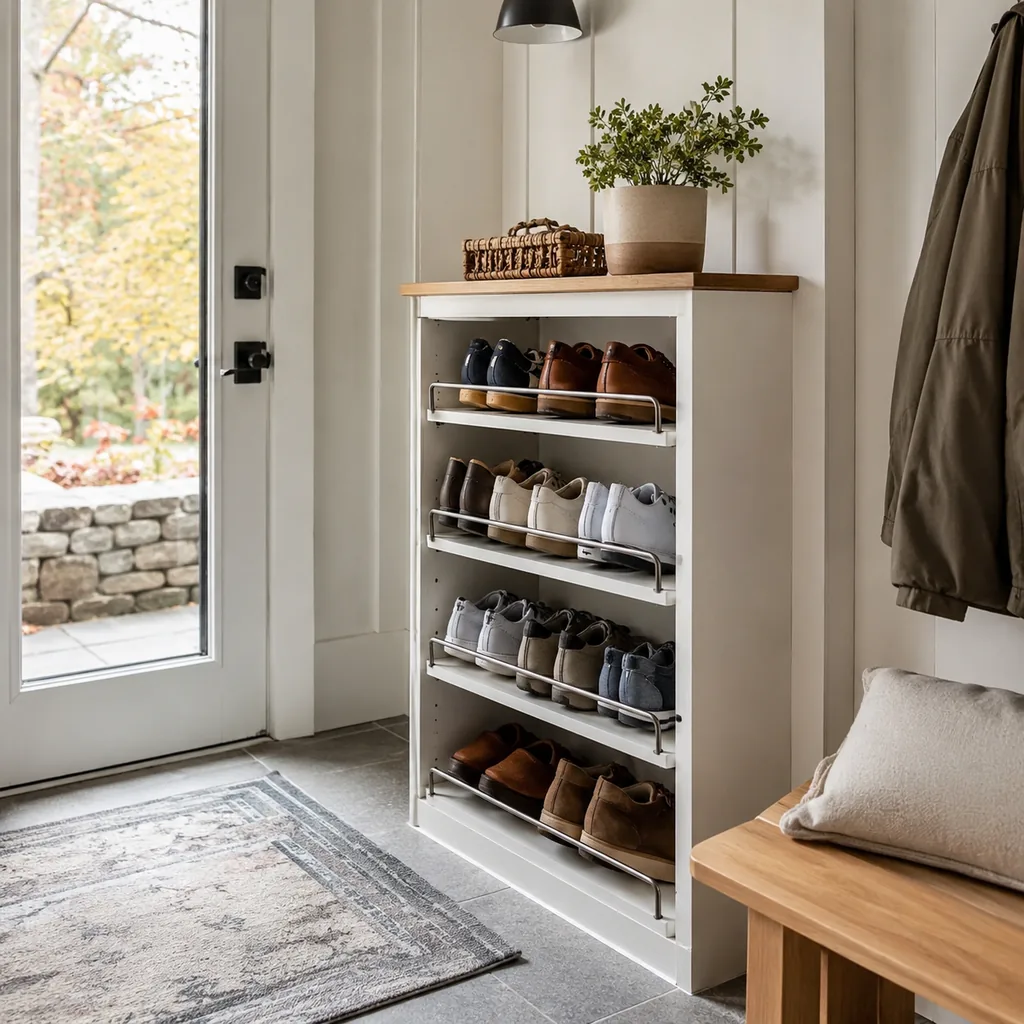
Shoe shelves that fit sandals may not fit boots, sneakers, or larger men’s shoes.
When shelves are too shallow, footwear sticks out and narrows the walking path.
Measure the longest everyday shoe in the house and plan at least one taller boot zone for bad-weather gear. Leave a little extra depth at the bottom row so wet shoes do not project into traffic.
18. Ignoring the Garage Entry Path
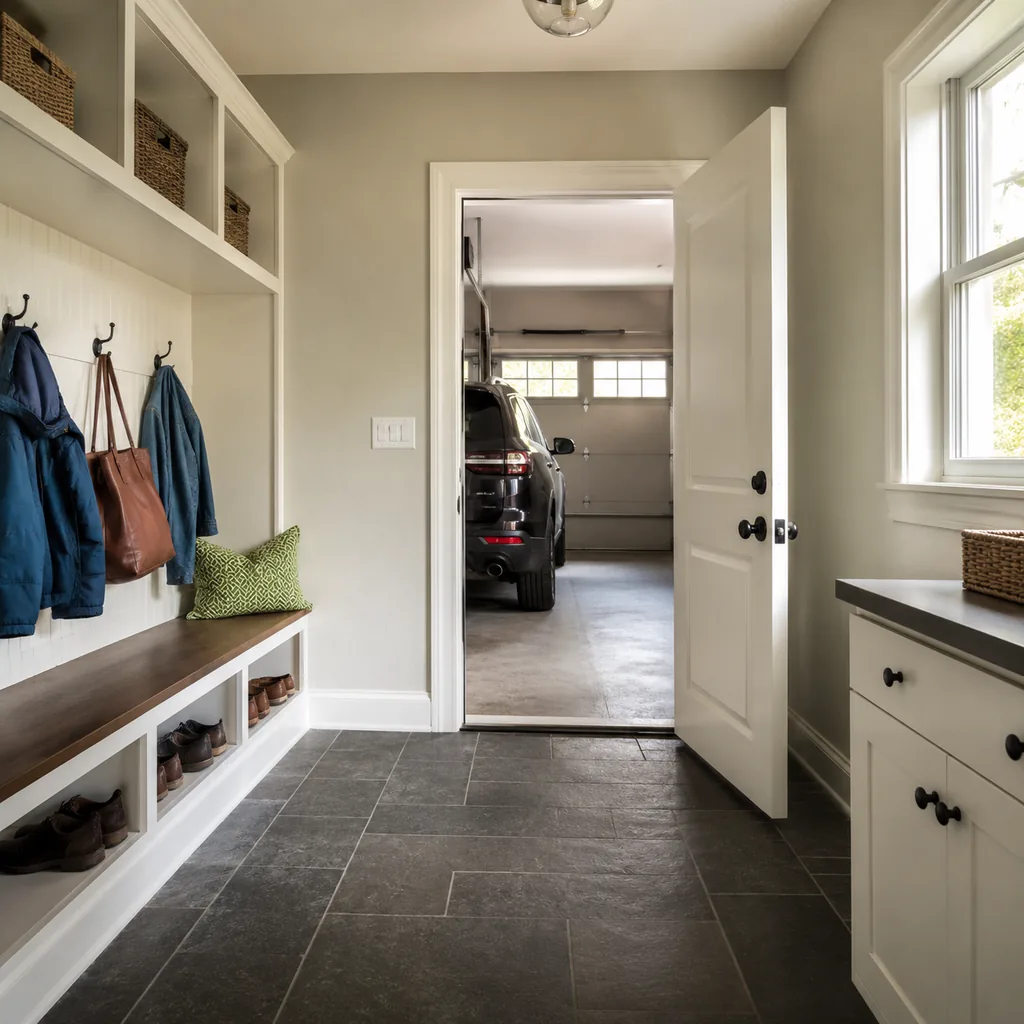
The garage-to-house path is often the real mudroom, even if the photos focus elsewhere.
Watch how groceries, backpacks, sports bags, and work gear enter the house; the same drop-zone logic matters in entryway mistakes.
Place hooks, a landing surface, and shoe storage where people naturally stop, not where the elevation drawing looks most balanced.
17. Forgetting Pet Gear
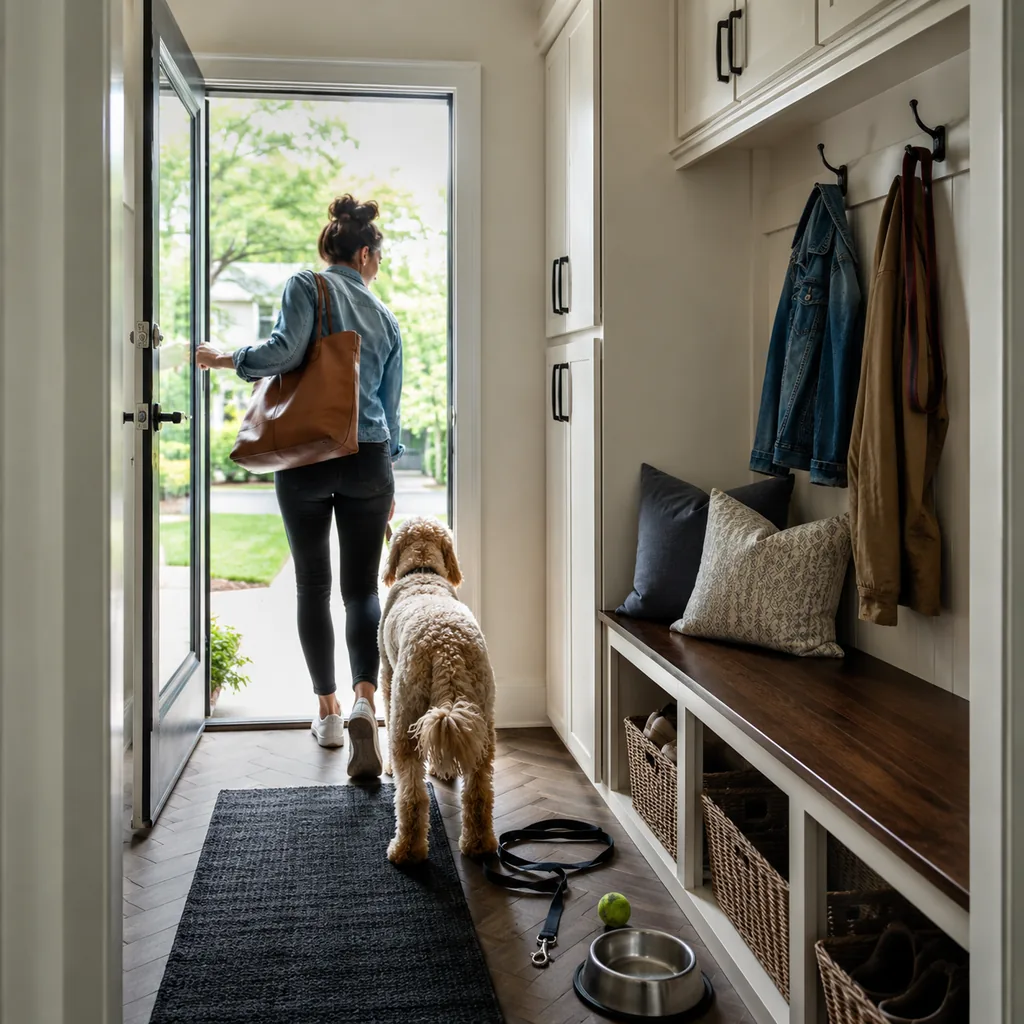
Leashes, towels, waste bags, treats, and muddy paws need a planned home.
If pet gear is scattered, the mudroom can feel messy even when the human storage is working.
Put pet items near the door they actually use, and include one washable towel spot for rainy or snowy days.
16. Installing Pretty Baskets That Are Too Small
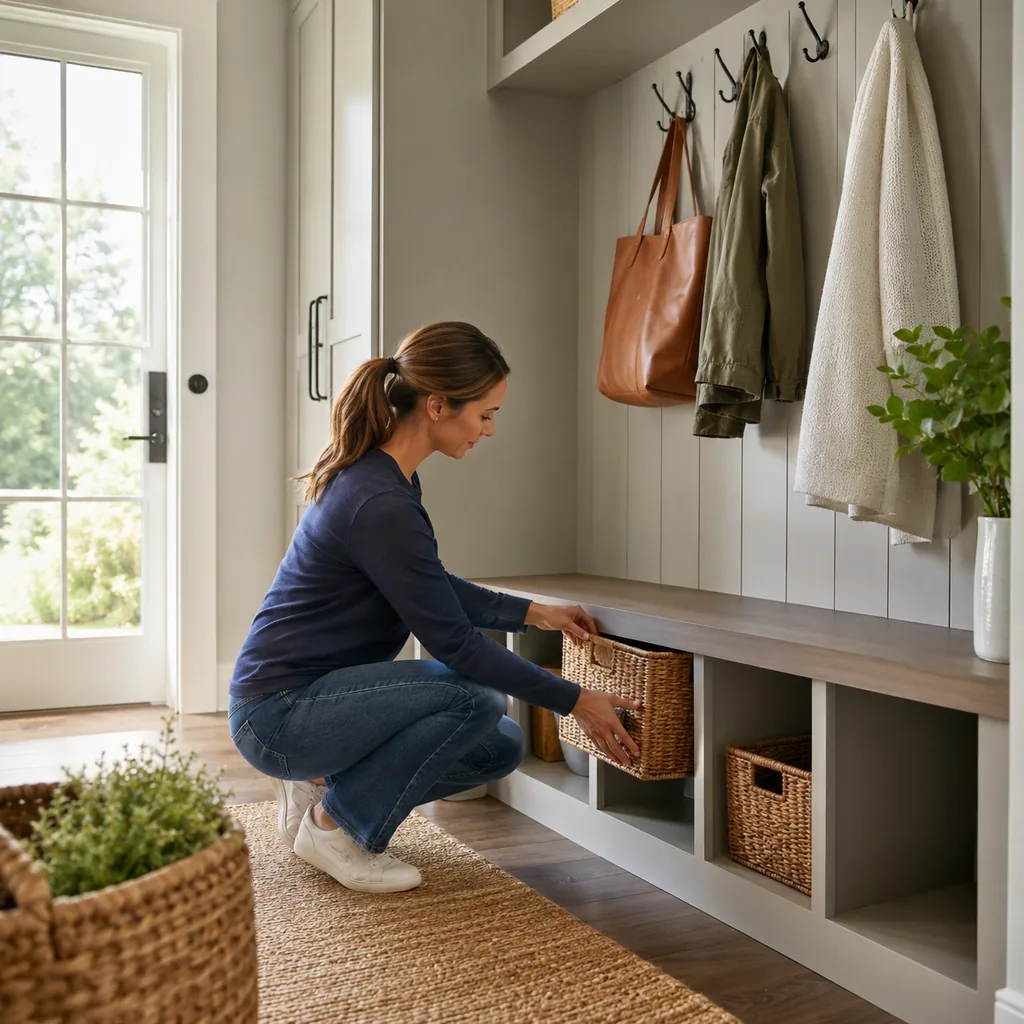
Small baskets make shelves look styled, but they rarely hold real mudroom gear.
Winter hats, gloves, dog supplies, sports items, and sunscreen all need bins with enough depth to be useful.
Choose fewer, larger, labeled containers instead of a wall of tiny baskets that overflow after one busy week.
15. Not Adding an Outlet
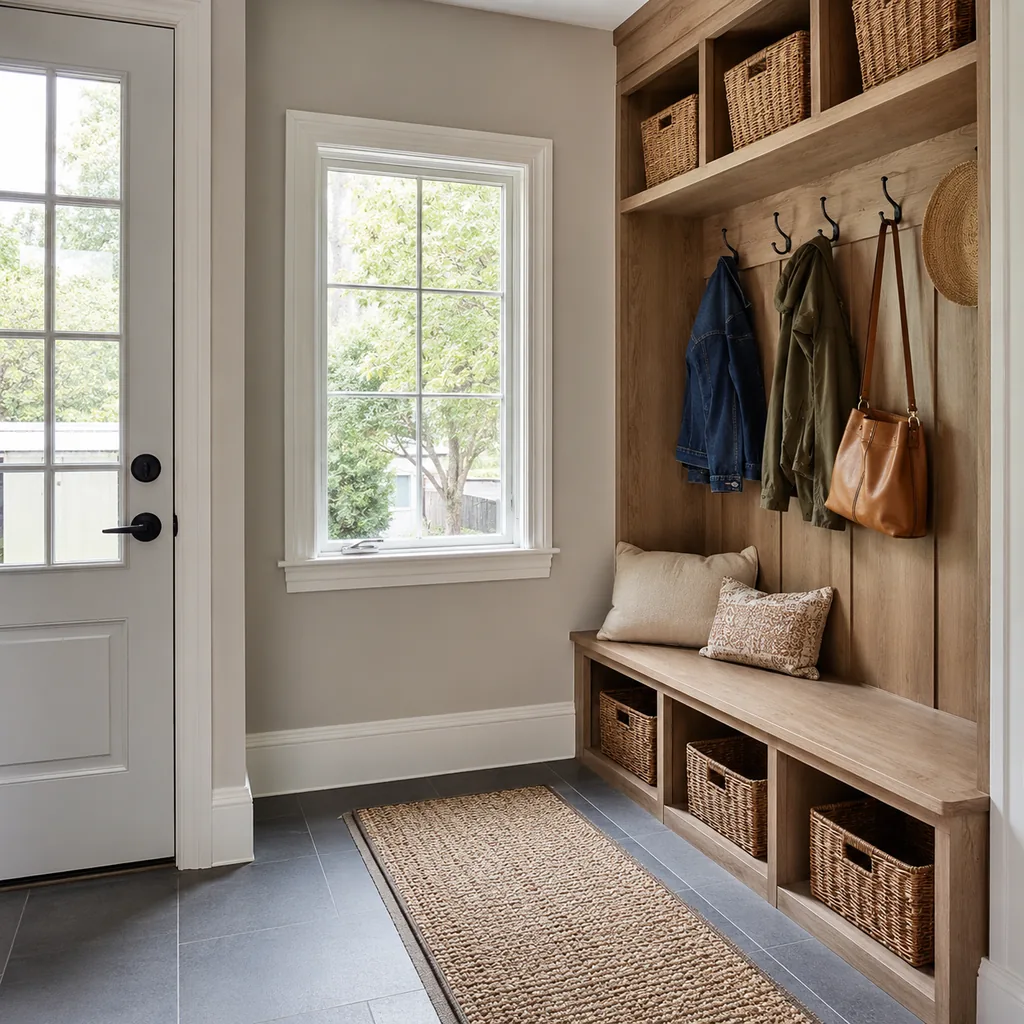
A mudroom outlet is easy to forget and annoying to add later.
Plan for vacuums, boot dryers, label makers, chargers, and small fans, just as outlets matter in laundry room mistakes.
Place at least one outlet where cords will not cross the main walkway or compete with wet shoes.
14. Forgetting a Trash Bin
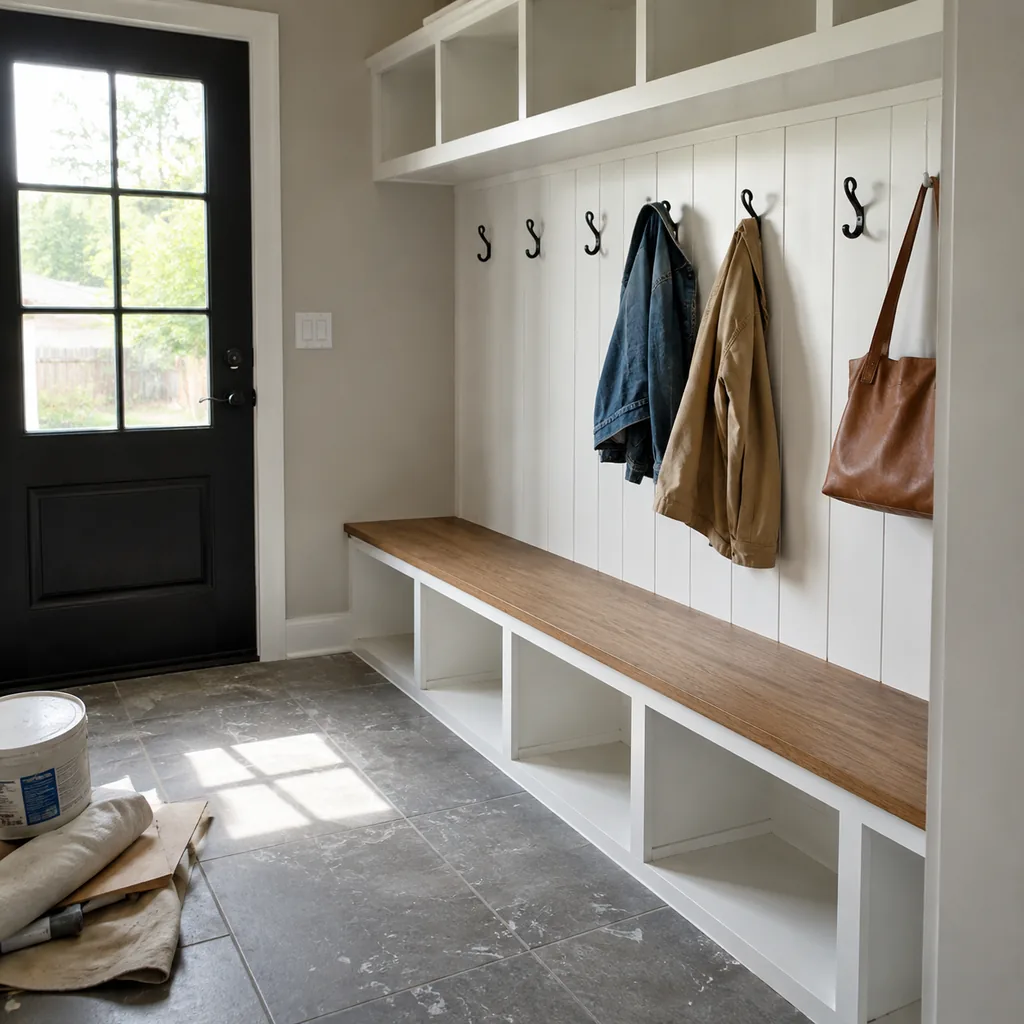
A mudroom catches receipts, wrappers, dryer sheets, lint, tags, and school papers.
Without a trash bin, that small debris travels to the kitchen counter or collects in open cubbies.
Use a slim bin near the landing zone so people can throw things away before they spread through the house.
13. Using Paint That Cannot Be Scrubbed
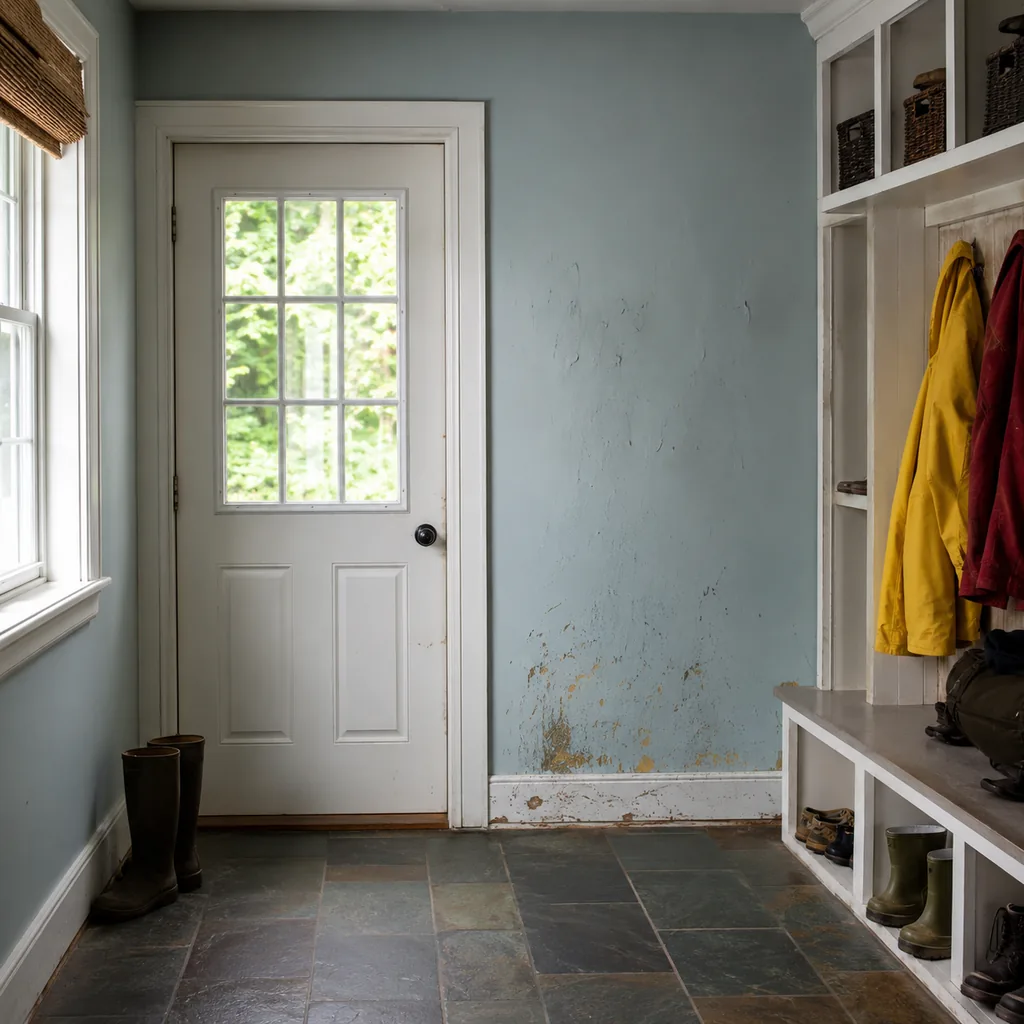
Mudroom walls take scuffs from backpacks, shoes, pets, and wet jackets.
Flat paint may look soft at first, but it can stain or polish when you try to clean it.
Use washable paint, durable trim, or wainscoting in the impact zones so cleanup does not damage the finish. This is especially important around benches, hooks, and the first wall people touch when they come in.
12. Not Leaving Space for Guests
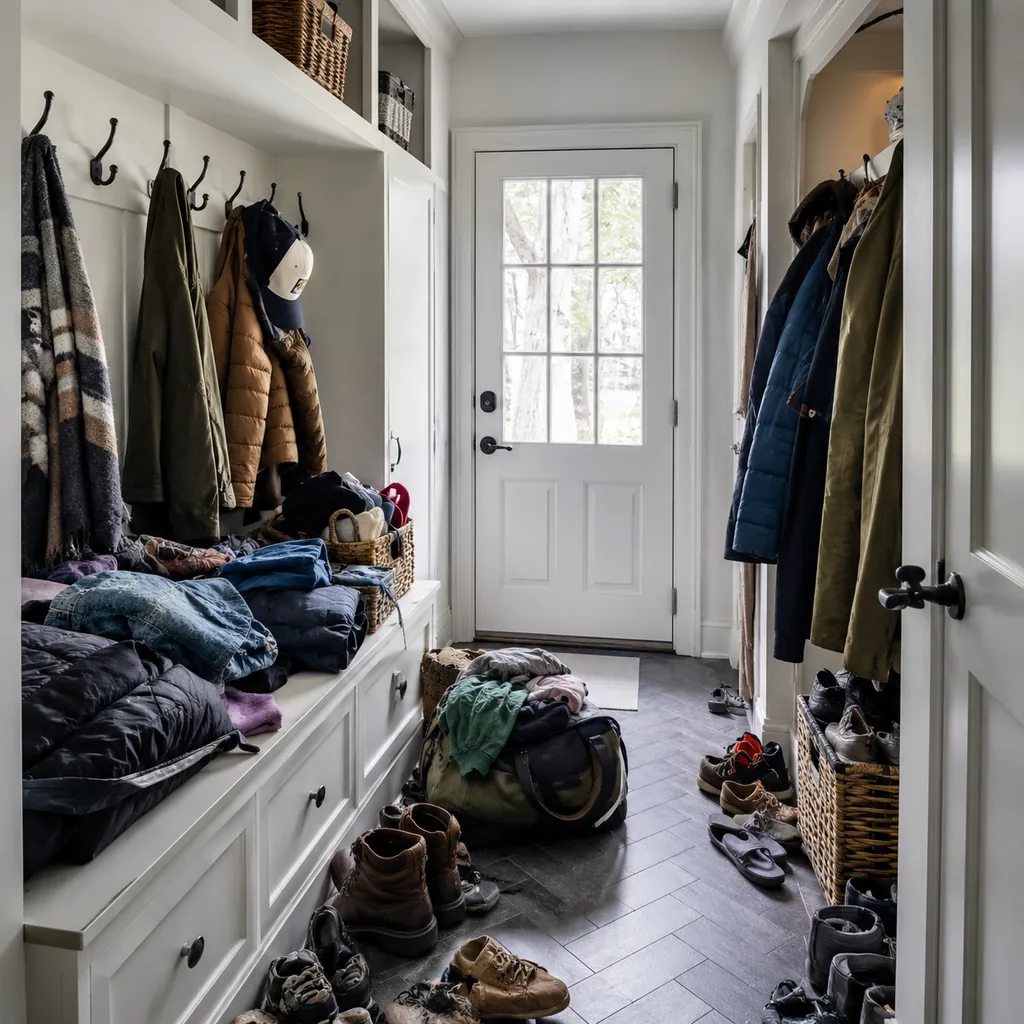
A mudroom that only fits the household can break down the moment visitors arrive.
Leave a small guest zone or overflow hook, the same way walk-in pantry planning needs margin for bigger weeks.
Even two extra hooks and a little floor space can keep coats and bags from spilling into the kitchen.
11. Treating Sports Gear Like Normal Storage
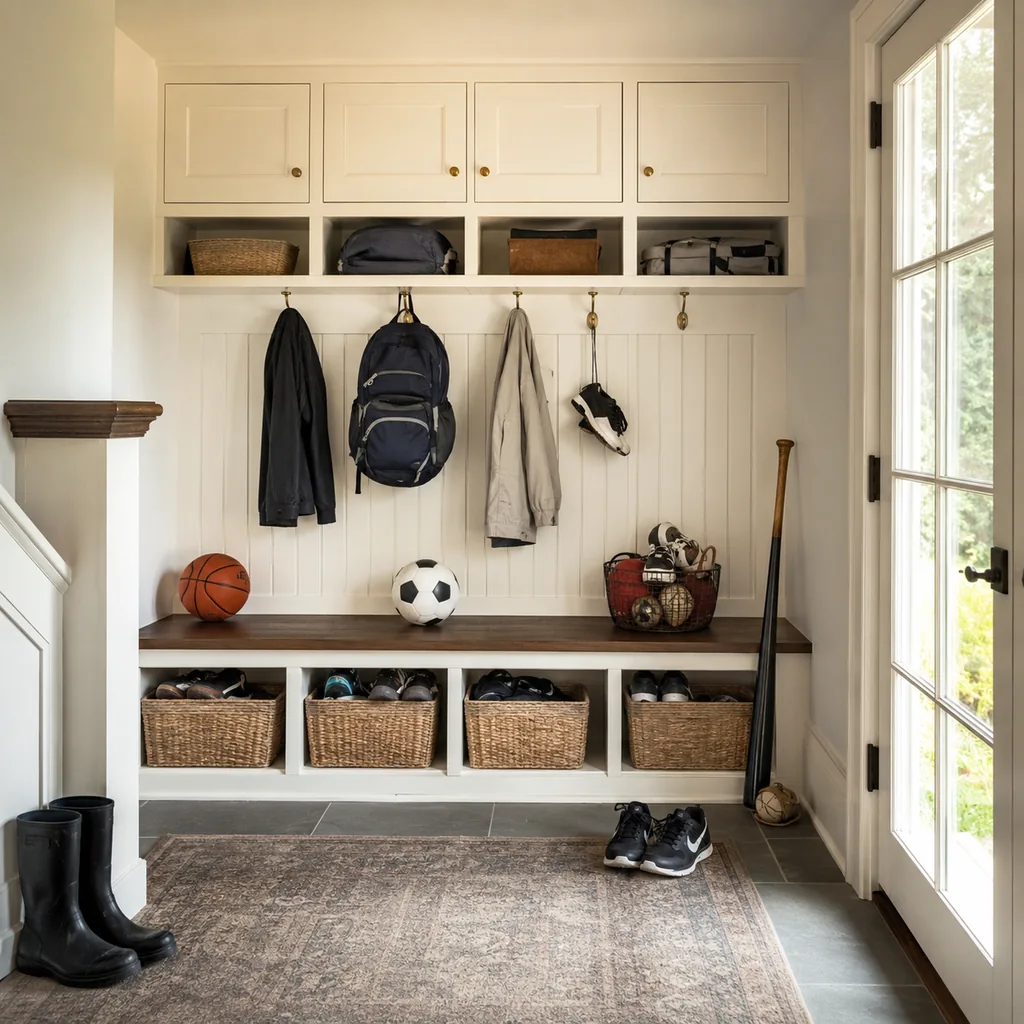
Sports gear is bulkier, dirtier, and wetter than normal coats or backpacks.
Balls, helmets, cleats, pads, and racquets need open, breathable storage that can handle odd shapes.
Give sports items a bin, rack, or wall section near the exit so game-day gear does not take over every hook.
10. Forgetting a Mirror

A small mirror can prevent last-second trips back through the house.
It helps with hats, hair, sunscreen, collars, and quick checks before school or work when everyone is already moving.
Place it where people already pause, but keep it narrow enough that it does not replace needed hooks or storage.
9. Building Around Perfect Habits
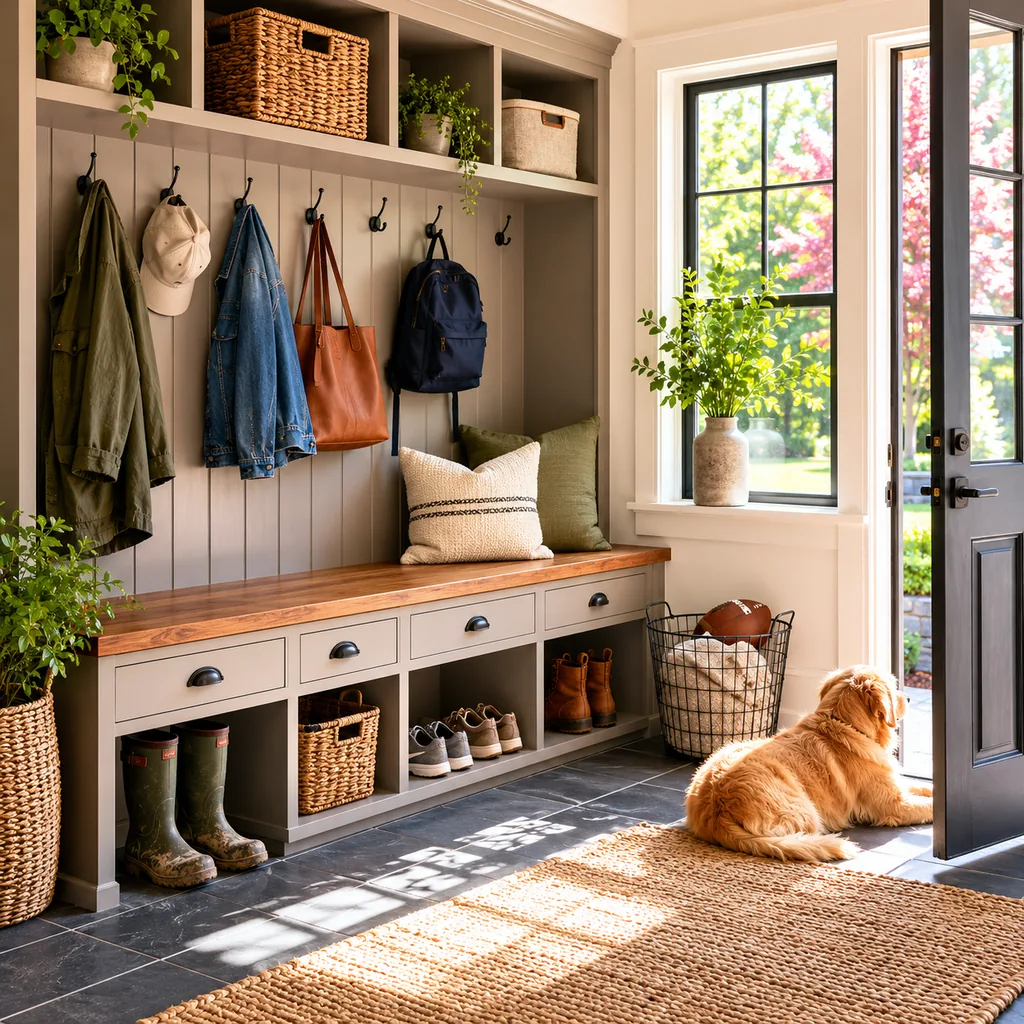
Mudrooms should be designed for rushed mornings, wet shoes, and hands full of bags, not perfect routines.
If the room only works when every person opens a cabinet and sorts items carefully, clutter will win before dinner. Design the default path so the easiest move is also the tidiest one.
Read more: 20 Closet Design Mistakes That Waste Space You Could Be Using.
8. Skipping a Wet Zone
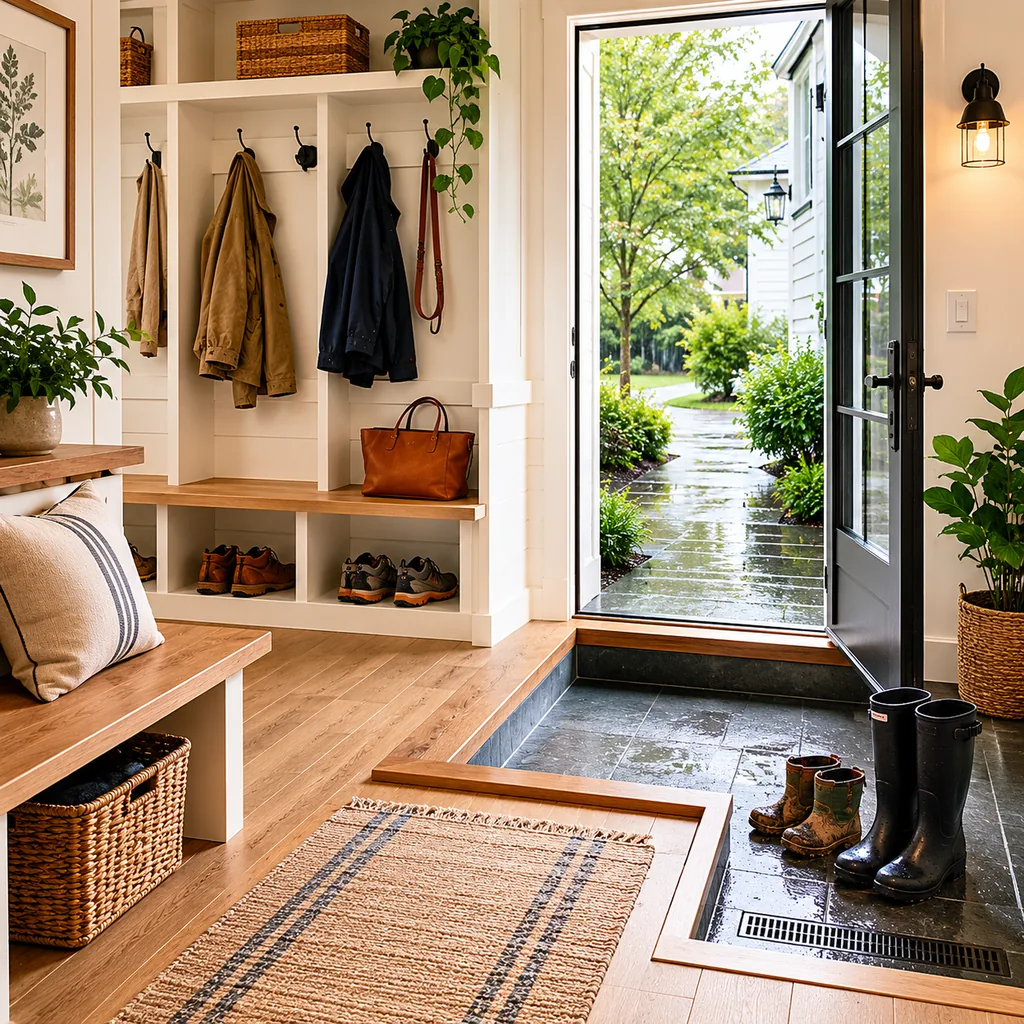
Every mudroom needs a place for wet gear to land before it touches dry storage.
Raincoats, umbrellas, muddy shoes, snow pants, and dog towels should not share the same shelf as clean bags.
Use a washable mat, tile zone, hooks over a tray, or boot rack that can handle dripping without damaging nearby finishes.
7. Putting the Laundry Too Far Away
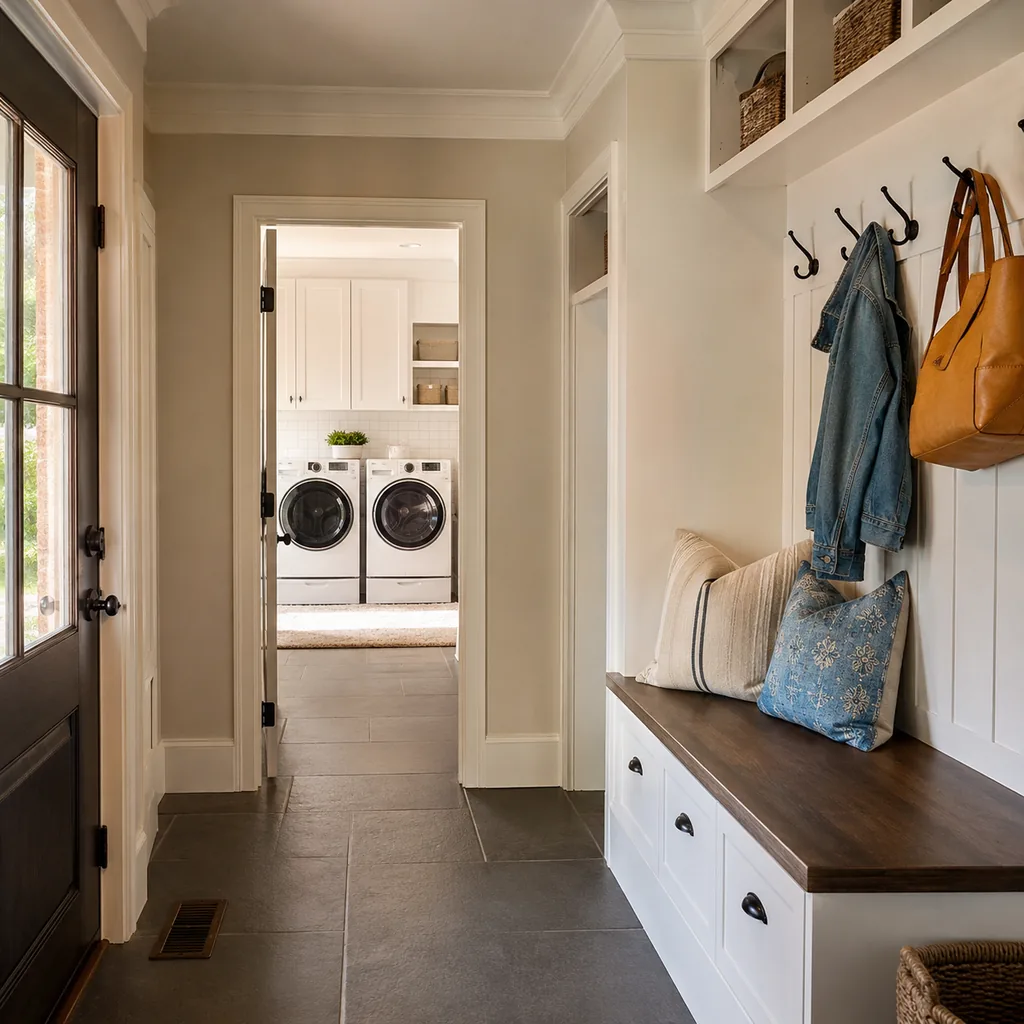
Mudroom mess often turns into laundry within minutes.
Wet towels, sports uniforms, socks, and dirty jackets are easier to manage when the route to laundry is short.
If the laundry room is far away, add a hamper or washable basket so dirty items do not sit on the bench.
6. Ignoring Smell Control
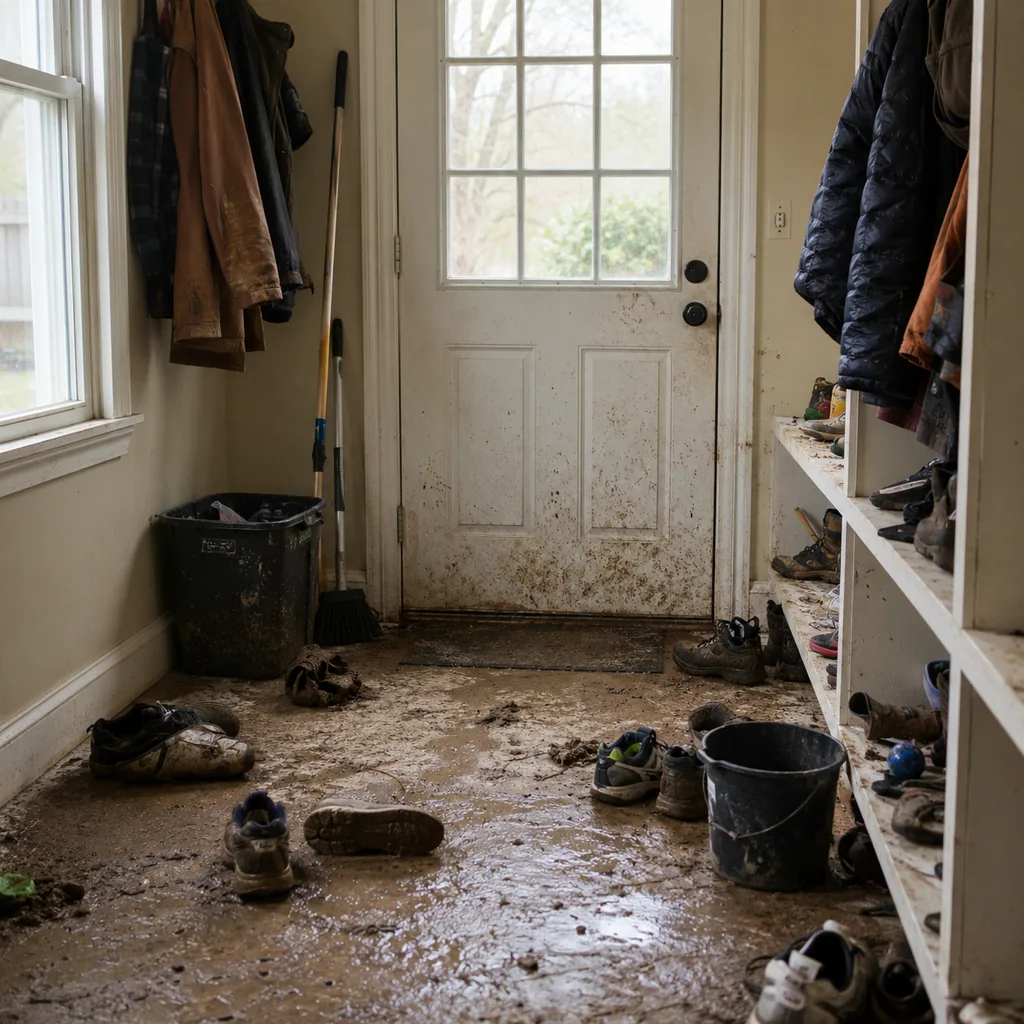
Closed mudroom storage can trap odors from shoes, pets, sports gear, and damp coats.
Airflow matters as much as storage capacity, especially in humid climates or snowy regions where gear dries slowly. A vented basket, open cubby, or washable liner keeps odor control from becoming a constant cleanup job.
Read more: 27 Bathroom Remodel Mistakes That Are Expensive to Fix Later.
5. Forgetting Package Drop-Off
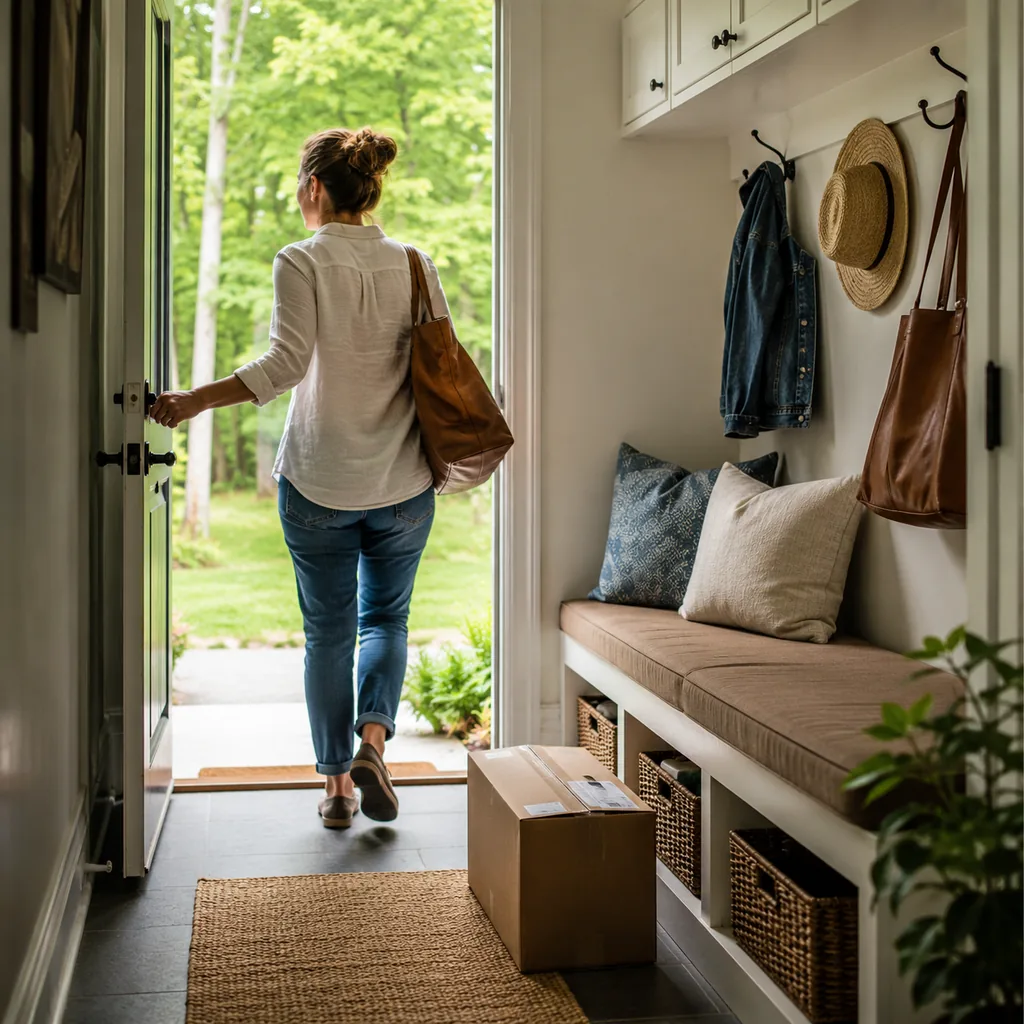
Packages often enter through the same door as shoes, backpacks, and groceries.
Without a drop spot, boxes block the walkway, sit in front of lockers, or end up on the kitchen floor.
Leave a low shelf, bench end, or clear floor zone where deliveries can wait without interfering with daily entry.
4. Using Rugs That Slide Around
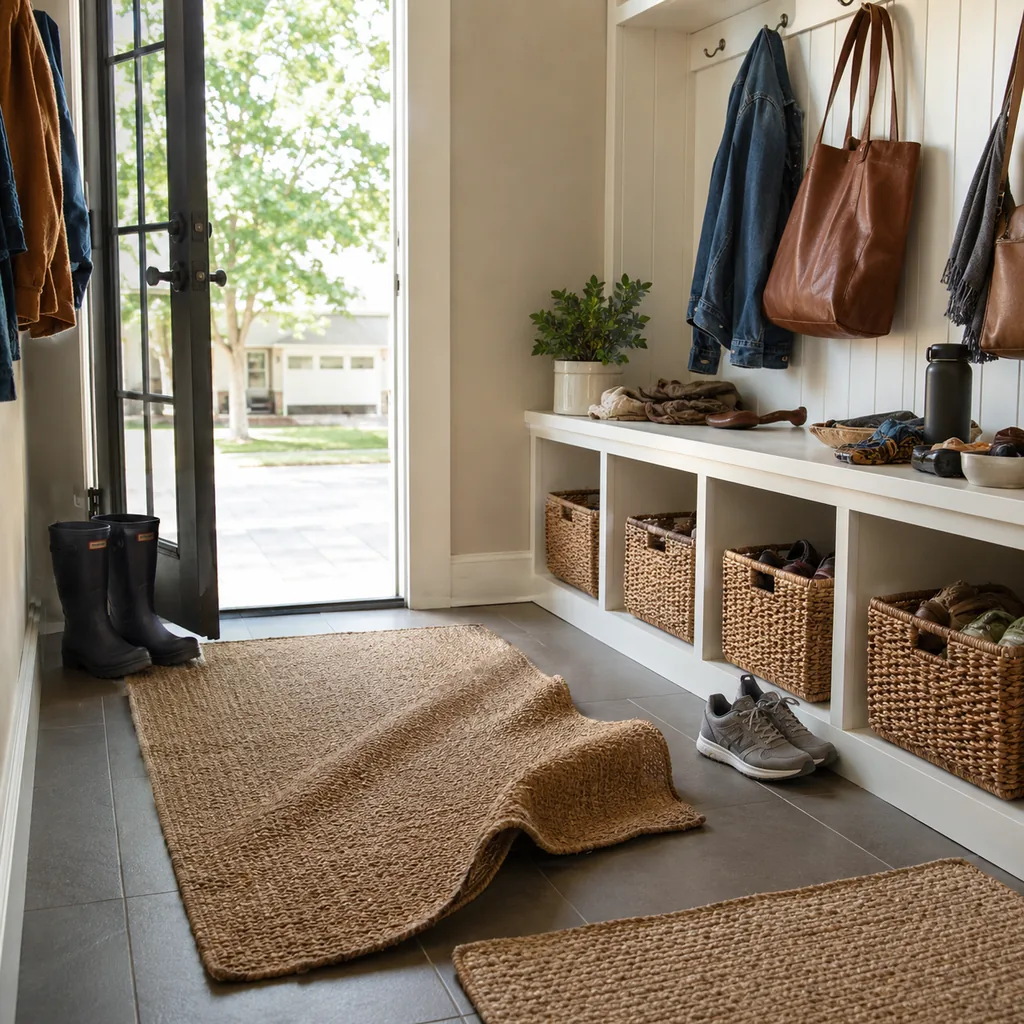
Loose rugs are a bad match for a room where people enter with full hands.
Sliding corners can trip kids, catch doors, and bunch under wet shoes.
Use a grippy washable runner, recessed mat, or heavy-duty indoor-outdoor rug that stays flat and can be cleaned often. Check the mat with the door open and closed so the corner does not catch every time.
3. Not Planning for Cleaning Tools
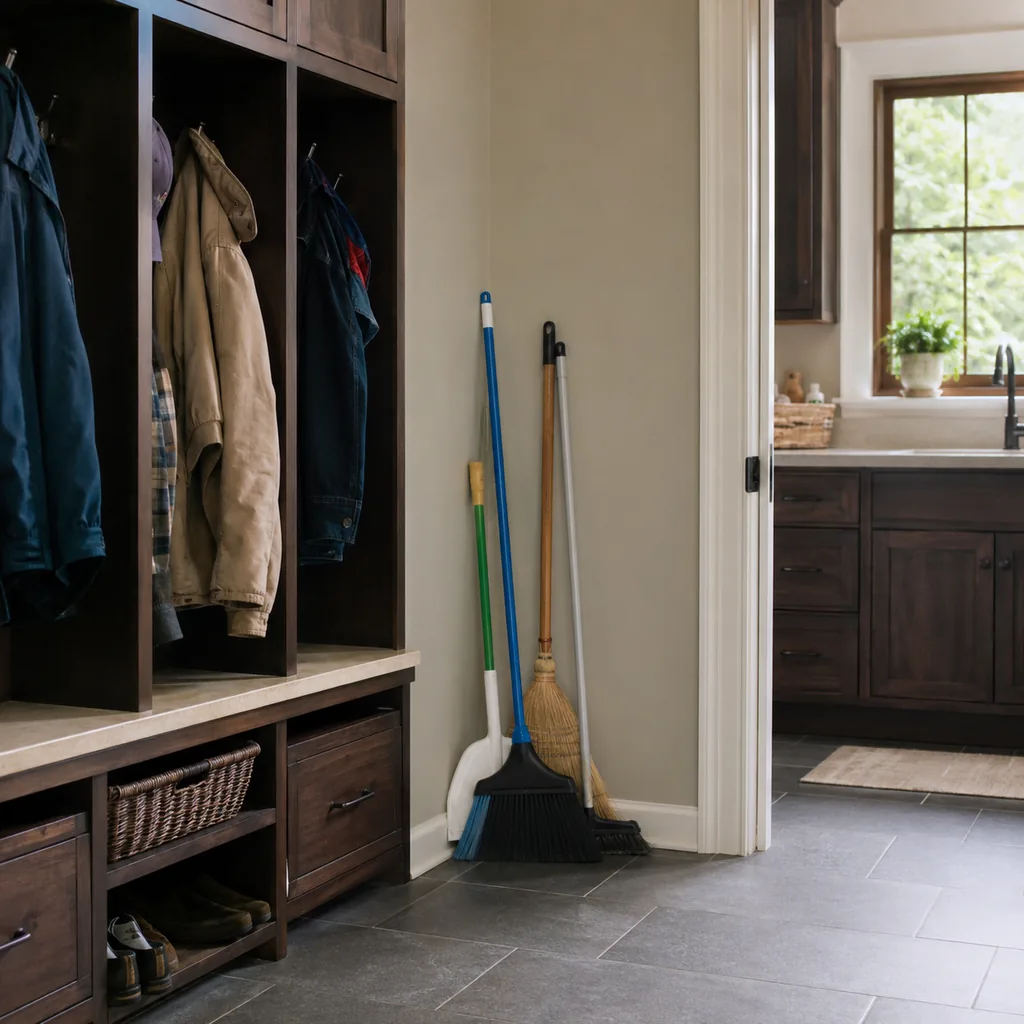
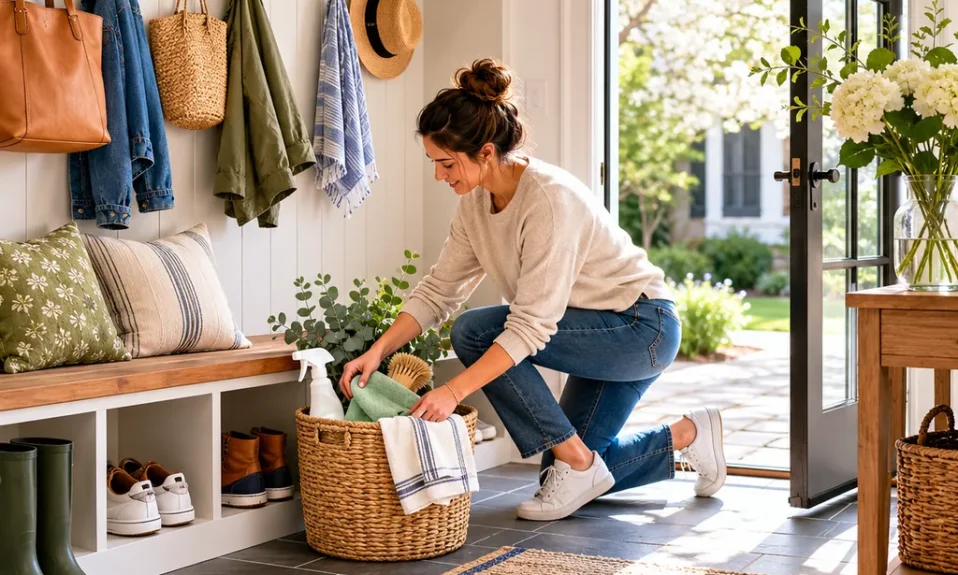
A mudroom is easier to maintain when basic cleaning tools are stored nearby.
A broom, hand vacuum, mop, or stack of towels should not live three rooms away from the mess people make every day. A slim wall rack or labeled bin near the door makes quick cleanup feel automatic instead of optional.
Read more: 24 Lighting Mistakes That Make a Home Look Older and Smaller.
2. Letting the Bench Become a Pile
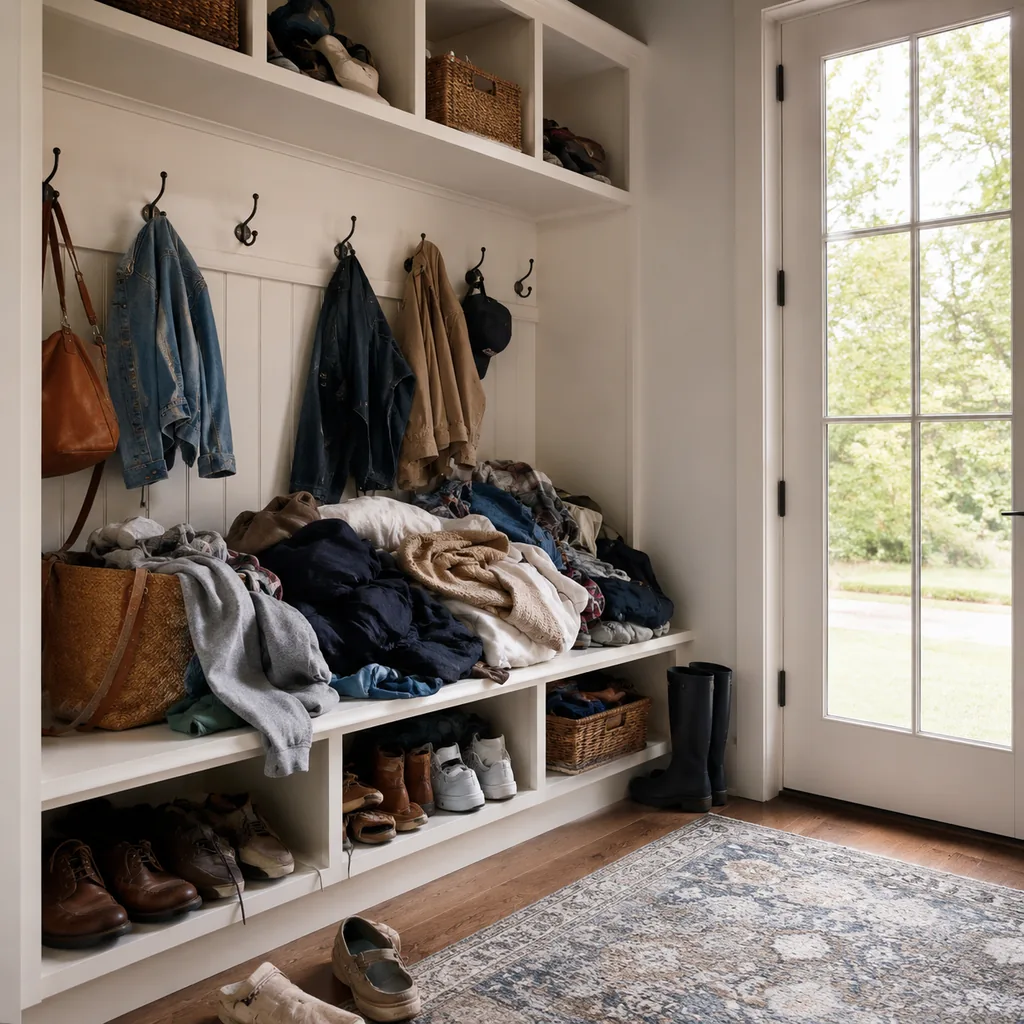
A bench without rules quickly becomes a shelf for bags, coats, and random returns.
The seat needs enough nearby storage that people do not use it as the only landing surface.
Keep shoes below, hooks above, and one small tray beside it so the bench stays clear enough to sit on.
1. Designing for the Cleanest Month of the Year
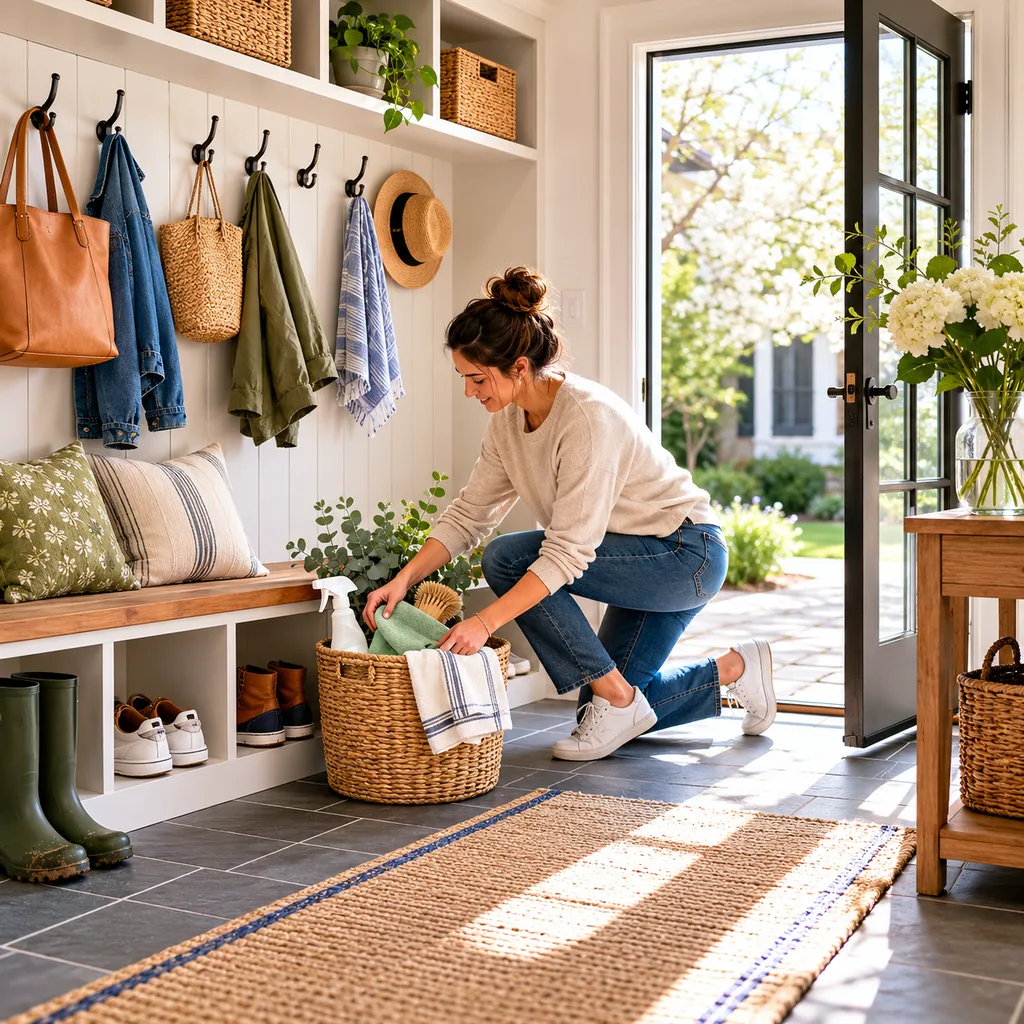
A mudroom should be planned around the messiest season, not the prettiest one.
Snow, rain, school bags, sports gear, guests, pets, and package days reveal whether the layout actually works.
If the room can handle the worst week of the year, it will feel easy during the cleaner months. That is the standard that keeps the room useful after the first pretty week.