27 Entryway Mistakes That Make a Home Feel Messy Immediately
An entryway sets the tone before anyone reaches the living room. Small storage and layout mistakes can make the whole home feel messy immediately.
27. Having No Drop Zone

The issue: Keys, mail, sunglasses, and wallets need a place to land.
Use a tray, small drawer, wall pocket, or console so everyday items do not spread.
The easiest test is to empty your pockets at the door before adding furniture or baskets, then watch where each item naturally lands.
26. Using a Rug That Is Too Small

What changes: A tiny rug makes the entry feel unfinished and fails to catch dirt.
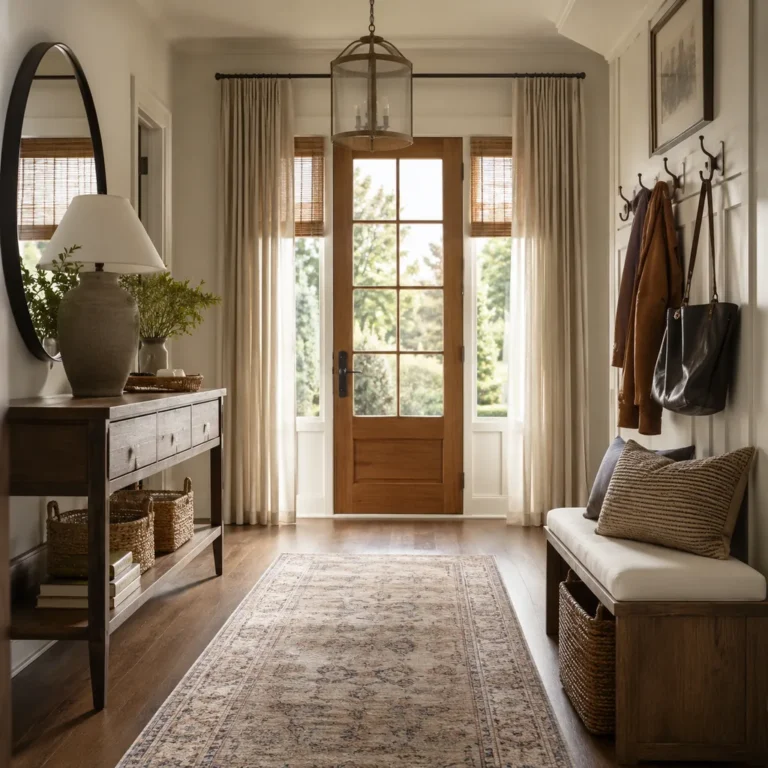
Check first: Choose a washable rug or mat large enough for both feet and the door swing.
A front-door mat should cover the first two steps inside, especially in snowy or rainy American climates, before style becomes the deciding factor.
25. Forgetting Shoe Storage

The risk: Shoes near the door quickly become visual clutter.
Use a slim cabinet, basket, bench shelf, or closet zone depending on the size of the entry.
Closed shoe storage works best when one pair per person stays accessible and everything else rotates away before mornings turn into a pileup.
24. Skipping Hooks

The payoff: Guests and family members need an easy place for coats and bags.
How to judge it: Hooks are faster than hangers. Add a few even if there is a closet nearby.
Mount a few hooks at adult height and lower ones for kids so bags stop landing on the floor.
23. Letting Mail Pile Up

Mail can overwhelm an entry in two days.
Create a simple sort: keep, recycle, action. The recycling spot should be close.
A tiny paper station only works if recycling, bills, and outgoing mail each have a visible next step, not just a pretty tray within arm’s reach of the door.
22. Using Weak Lighting

Where it helps: A dim entry feels smaller and less welcoming.
Look for: Use a fixture with enough brightness and a warm color temperature. Add a lamp if there is a console.
Aim for enough light to check shoes, keys, and the floor; dim entries collect clutter because problems hide.
21. Blocking the Door Swing
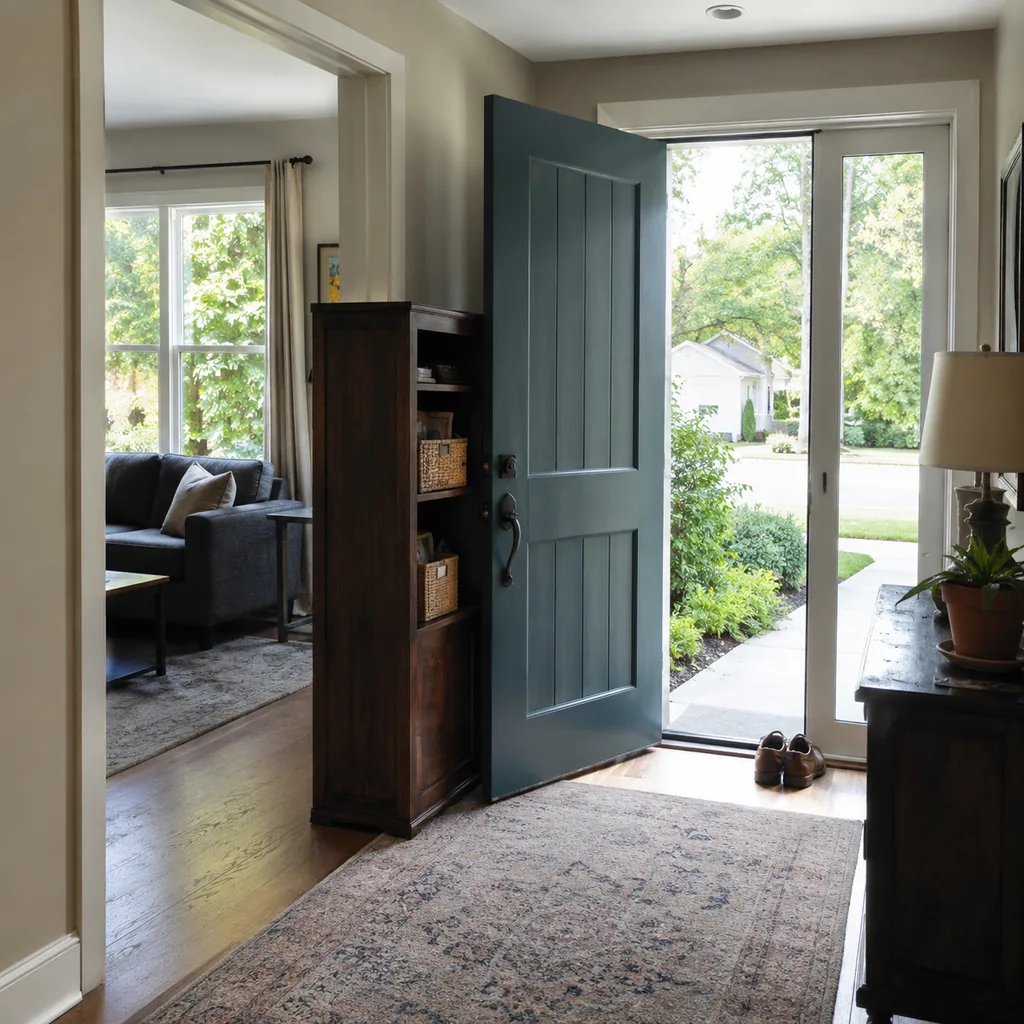
The hidden problem: A bench, basket, or plant that interferes with the door will always feel wrong.
Open the door fully before choosing furniture. Clearance beats decoration.
Open the door with a backpack or grocery bag in hand before deciding a bench truly fits, because real entryways work under load.
20. Choosing a Console That Is Too Deep
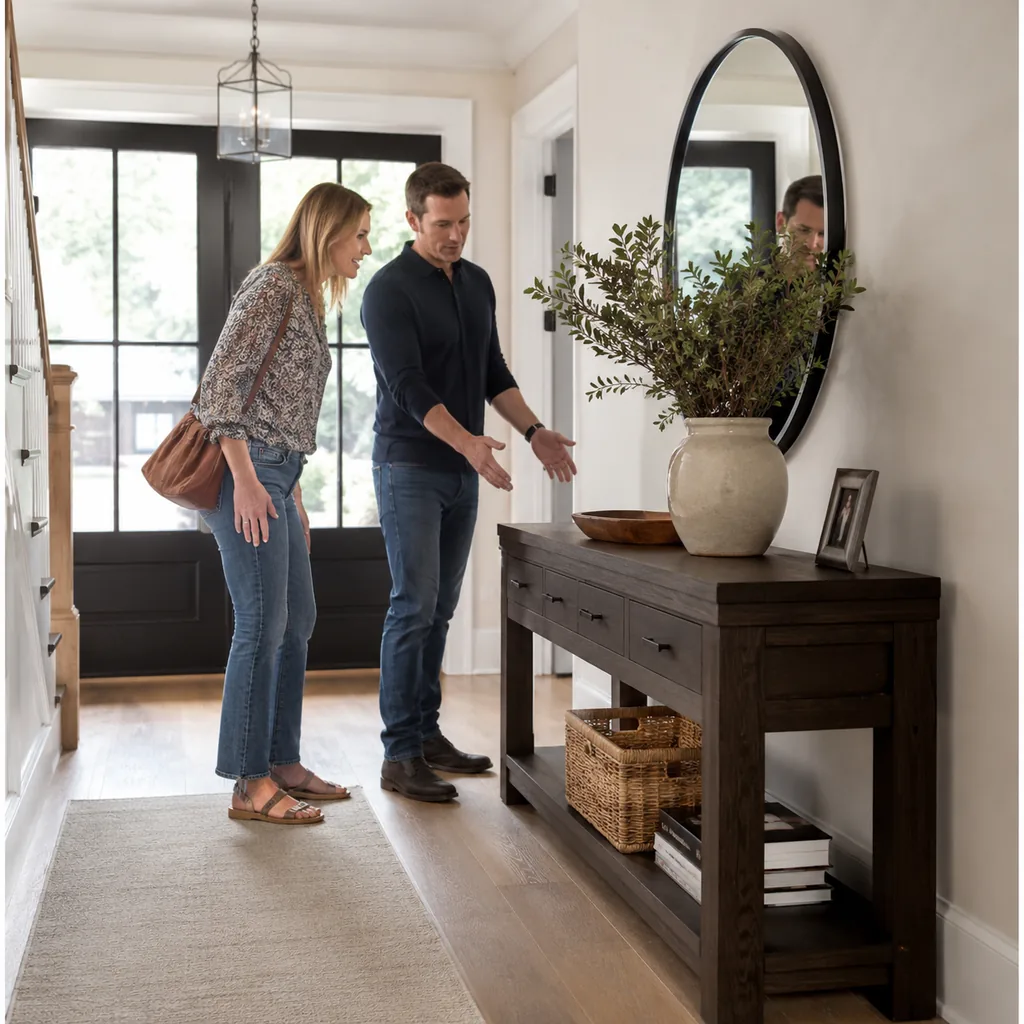
Why it matters: Deep furniture steals the walkway in a narrow entry.
Before you decide: Use slim tables, wall shelves, or floating drawers when space is tight.
In narrow entries, 10- to 12-inch-deep furniture often works better than a standard console when the door and people need to pass without pinching the walkway.
19. Ignoring the View From the Door

The issue: The first sightline shapes the whole impression of the home.
Place the cleanest, calmest element in that view: art, mirror, lamp, plant, or organized storage.
Step outside, open the door, and photograph the first view before styling the console; the photo exposes clutter faster than memory does for guests too.
18. Skipping a Mirror

A mirror adds light and supports last checks before leaving.
Check first: Size it to the wall, not just the table. A tiny mirror can look accidental.
Mirrors only help when paired with the right light, so compare this with lighting mistakes that make a home look older before buying one.
17. Using Too Many Decorative Objects

The risk: Small decor becomes clutter quickly in a working entry.
Keep the top surface mostly functional. One lamp, one tray, and one strong object is often enough.
Limit the surface to one tray, one lamp, and one useful object, especially on narrow tables or ledges where clutter multiplies quickly.
16. Forgetting Packages

The payoff: Modern entries often handle deliveries, returns, and bags waiting to leave.
How to judge it: Leave a floor spot, basket, or nearby shelf for outgoing items.
A small parcel shelf or basket keeps deliveries from blocking the swing path on days when several boxes arrive at once or in wet weather.
15. Not Planning for Weather

Quick read: Rain, snow, salt, and mud need durable materials.
Use washable rugs, boot trays, and wall finishes that can handle real American weather.
Plan for wet shoes, umbrellas, and coats first in places with rain, snow, or mud; pretty baskets will not survive the mess alone by the door.
14. Leaving the Closet Unorganized

Where it helps: An entry closet can hide chaos, but it still affects daily flow.
Look for: Add shelves, hooks, bins, and a clear floor plan so the closet does not dump back into the entry.
If coats spill out here, the fix may belong in closet design mistakes that waste space, not just another entry basket.
13. Using a Bench With No Storage
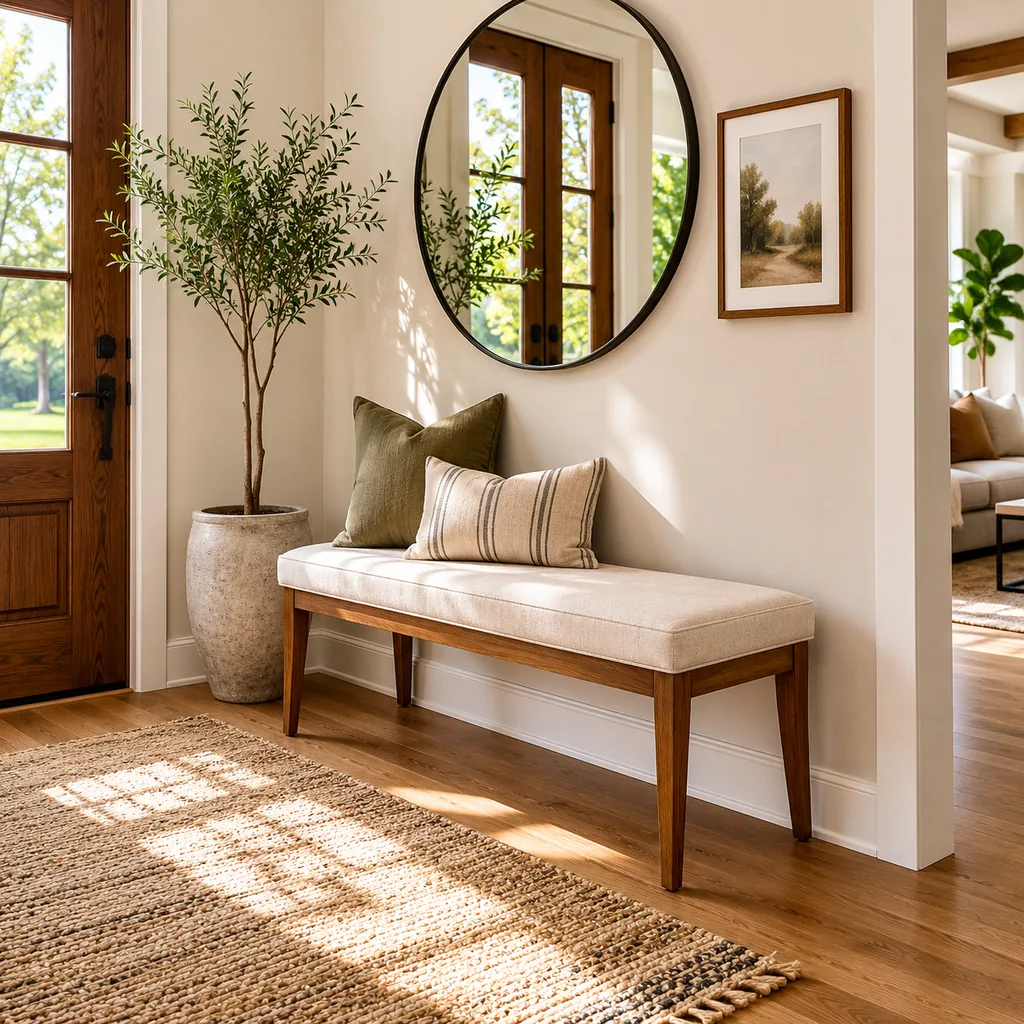
A bench helps only halfway if shoes still sit everywhere.
Choose a bench with shelves, drawers, baskets, or enough space underneath for shoes.
A bench earns its footprint when it holds shoes, bags, or pet gear under the seat and still leaves the walkway wide enough for daily use too.
12. Forgetting Kids’ Gear

Why it matters: Backpacks and sports bags need reachable storage.
Before you decide: Add kid-height hooks or bins if children use the entry daily.
Families usually need a second layer of storage, especially during school mornings; the same principle drives mudroom mistakes that create more clutter before backpacks pile up.
11. Ignoring Pet Supplies

The issue: Leashes, waste bags, towels, and treats often live by the door.
Give pet items one small container or hook zone so they do not mix with keys and mail.
Leashes, towels, and waste bags should live in one washable container close to the door, where muddy paws can be handled fast.
10. Choosing Art Too Small

What changes: Small art above a console can make the wall feel unfinished.
Check first: Use one larger piece, a mirror, or a tight grouping with clear edges.
Use one larger piece or a tight pair instead of several small frames, then align the art with the door view from outside.
9. Letting Cords Show

The risk: Chargers, lamps, and smart devices can make the entry feel messy.
Use cord clips, cable channels, or furniture with hidden access.
Route chargers through the back of a console or wall shelf so cords do not become the first thing people see beside bags and keys every day.
8. Skipping a Scent and Airflow Check

Entries can hold shoe, pet, and coat odors.
How to judge it: Clean rugs often, air out wet gear, and avoid masking odor with heavy fragrance.
Airflow matters after wet coats, sports bags, or shoes come in; handle the moisture source before relying on scent alone near the door first.
7. Using Fragile Decor in the Traffic Path
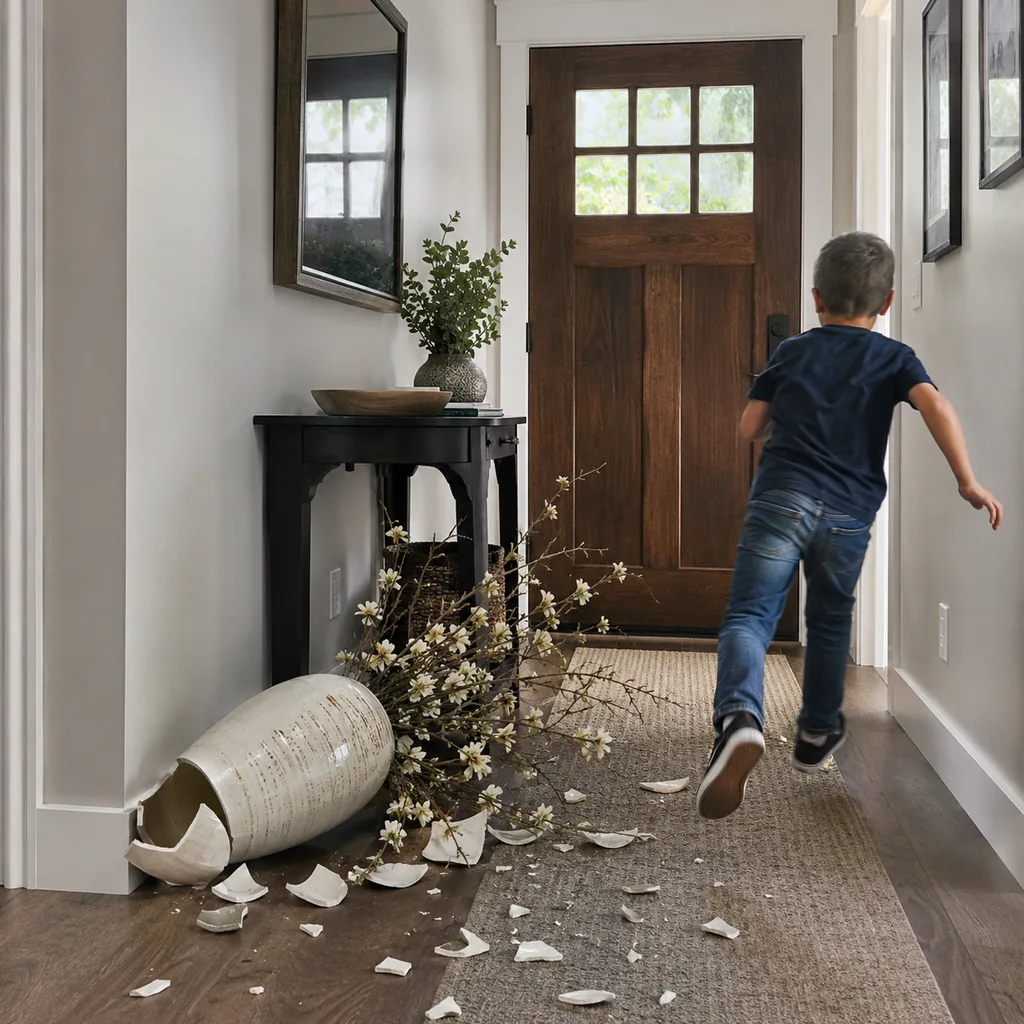
Quick read: The entry is bumped by bags, coats, groceries, and kids.
Use durable pieces near the path. Save delicate objects for quieter rooms.
Choose pieces that can be bumped by bags and sleeves during busy arrivals without breaking, tipping, scratching the wall, or blocking the path on busy days.
Read More: 31 Patio Design Mistakes That Make Backyards Feel Cheap or Unfinished
6. Not Creating an Outgoing Zone

Where it helps: Returns, library books, and items for the car need a place to wait.
Look for: Use one labeled basket or shelf so outgoing items do not disappear.
Outgoing returns, library books, and packages need a labeled spot near the door, where it will not block traffic or shoes.
5. Ignoring Scale in a Two-Story Entry

The hidden problem: Tall entries can make normal furniture look undersized.
Use taller art, a substantial mirror, or vertical lighting to match the volume.
Large vertical spaces need a fixture, mirror, or artwork scaled to the wall so the room does not feel bottom-heavy above a small console or bench.
4. Trying to Store Everything at the Front Door
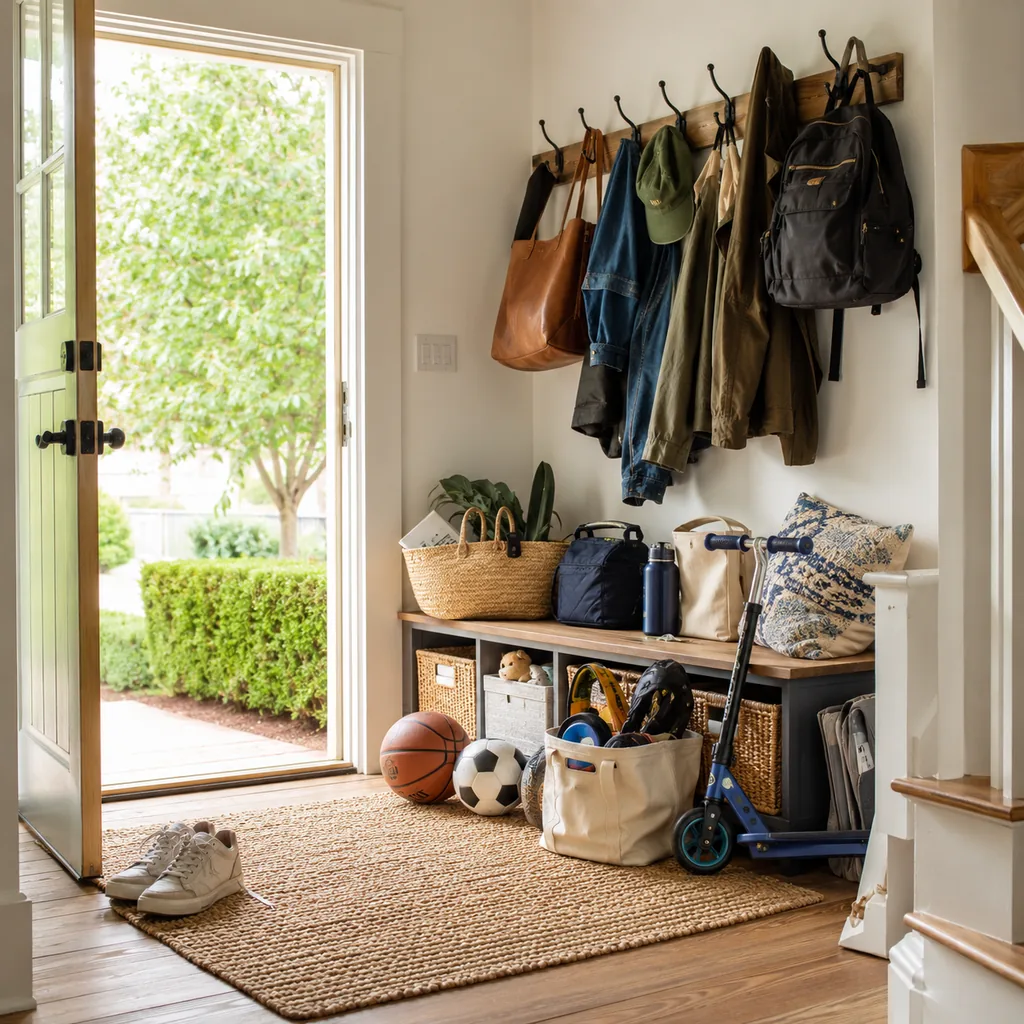
Why it matters: An entry cannot hold every coat, shoe, bag, and seasonal item.
Before you decide: Keep only active items near the door and move overflow elsewhere.
Keep the entry for today’s active items before the first surface becomes overloaded; bulk storage belongs in closets, pantries, or another zone.
Read More: 31 Walk-In Pantry Mistakes That Look Good Online but Annoy You Daily
3. Forgetting Guests
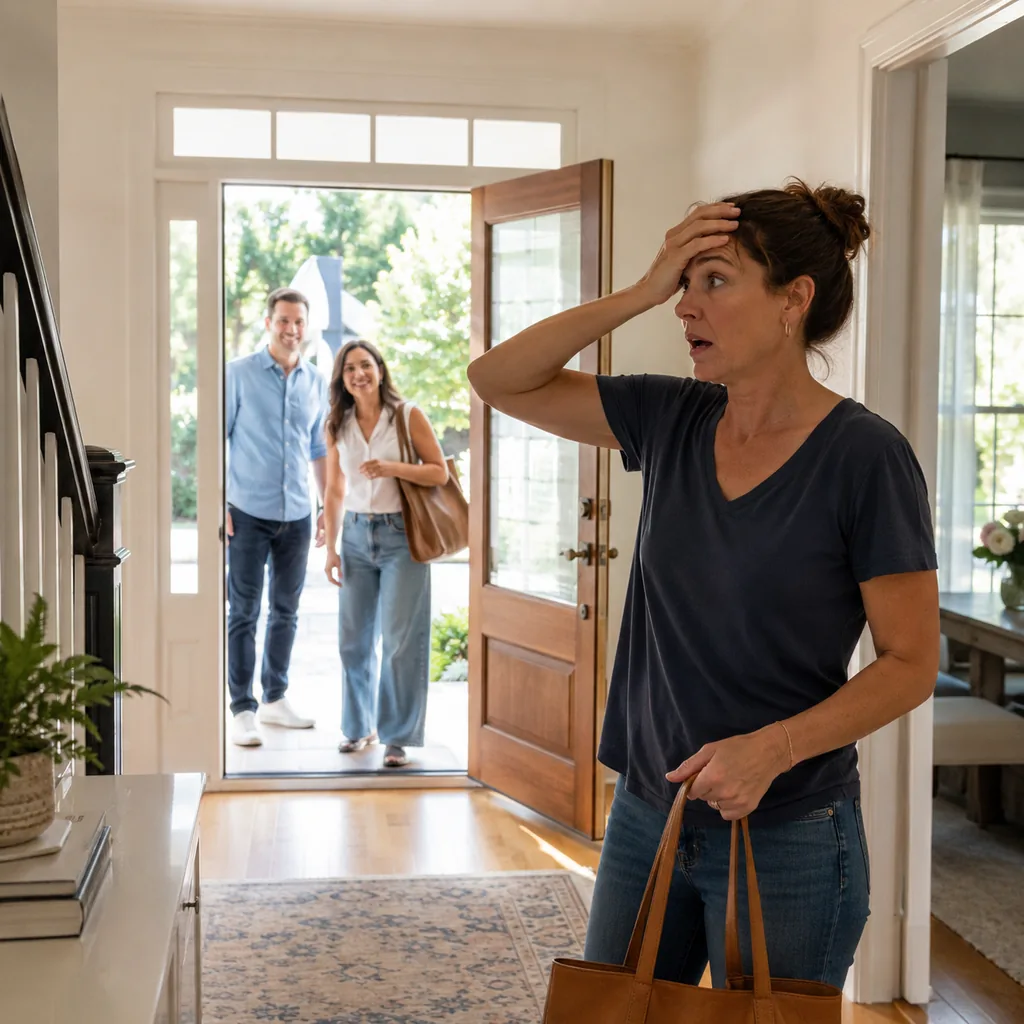
A home can be organized for the family and still awkward for visitors.
Leave a few empty hooks, a clear mat, and obvious space for shoes or bags.
Leave at least one obvious empty hook or landing spot so guests do not have to decode the system or make an awkward invitation.
2. Letting the Entry Become a Junk Drawer

What changes: Flat surfaces attract random objects unless they have a job.
Check first: Limit categories: keys, mail, sunglasses, and outgoing items. Everything else should move on.
A junk-drawer entry usually needs fewer categories, not more containers; keep only what leaves the house before adding another tray or bowl by the door.
1. Designing the Entry Last

The risk: The entry is small, but it carries a lot of daily responsibility.
Plan it with the same seriousness as the kitchen or mudroom. It is the first reset point for the home.
Make the Room Work Before It Looks Finished
Once the clearances, storage, lighting, and maintenance are right, the finishes have a much better chance of lasting.
Read More: 29 Laundry Room Mistakes That Make the Space Harder to Use Later