
31 Walk-In Pantry Mistakes That Look Good Online but Annoy You Daily
A walk-in pantry can look beautiful online and still slow down every meal. Plan the storage around how American households actually shop, unload, and restock.
31. Making Every Shelf the Same Depth

A single shelf depth looks clean in a drawing, but food storage does not work that evenly.
Cans, spices, cereal boxes, small appliances, and refill packs all need different reach and sight lines.
Use shallow shelves for daily goods and reserve deeper shelves for bulky extras so the back row does not become forgotten inventory.
30. Forgetting a Landing Counter
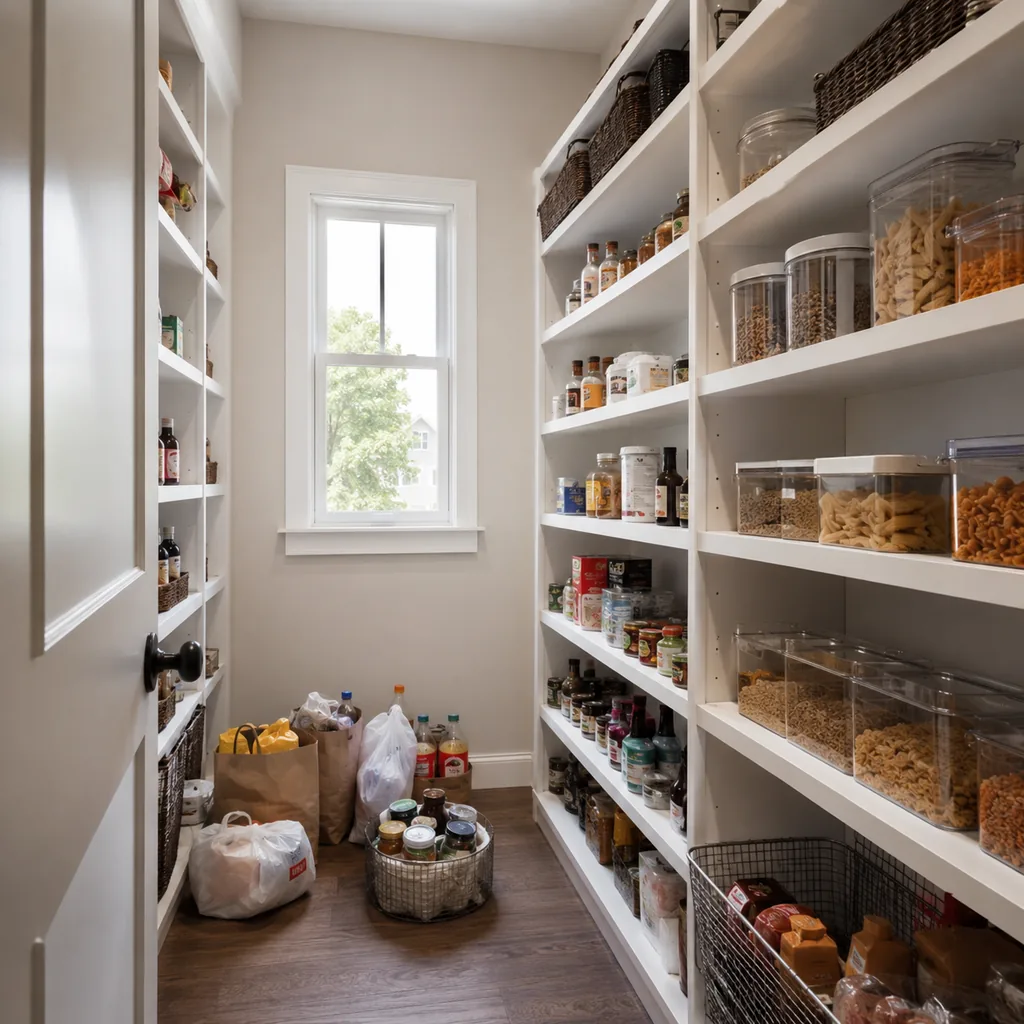
A pantry without a landing spot makes every grocery trip harder than it needs to be.
Even a short counter, open shelf, or cleared waist-high zone gives you a place to sort bags before items go away.
Plan at least one surface for Costco packs, baking supplies, and lunch prep so the kitchen counters do not become the overflow system.
29. Putting the Most-Used Foods Too Low

Daily foods should not require bending, crouching, or moving other items every morning.
Breakfast, coffee, snacks, oils, and school-lunch supplies work best between waist and eye level for the people using them.
Put occasional baking bins or holiday serveware lower instead, where the extra reach will not slow down everyday meals.
28. Using Clear Bins for Everything
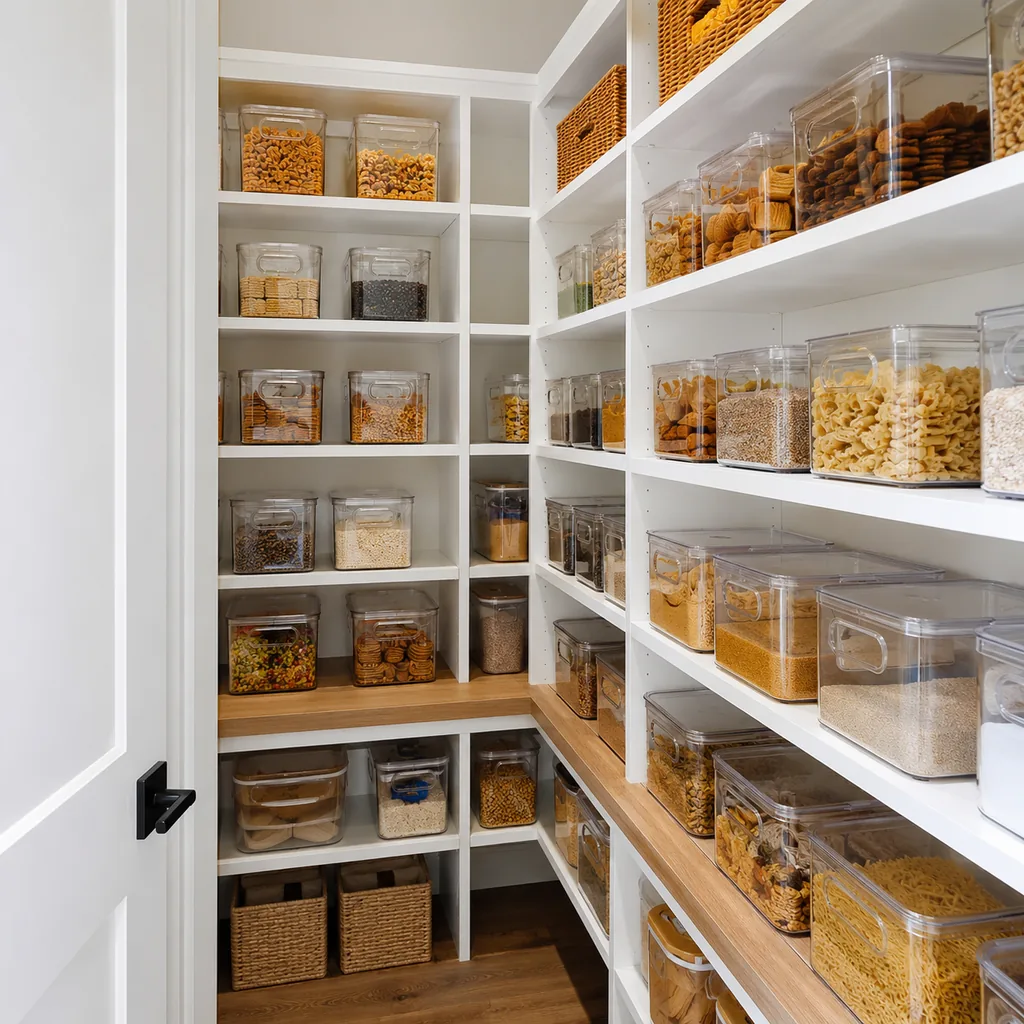
Clear bins are helpful, but using them everywhere can make the pantry look busy fast.
Messy refill bags, half-used snacks, and backup packaging often look calmer in opaque bins with simple labels.
Use clear storage where visibility matters, such as cans or lunch snacks, and hide the visual clutter that does not need constant checking.
27. Skipping Labels Because the Pantry Looks Obvious
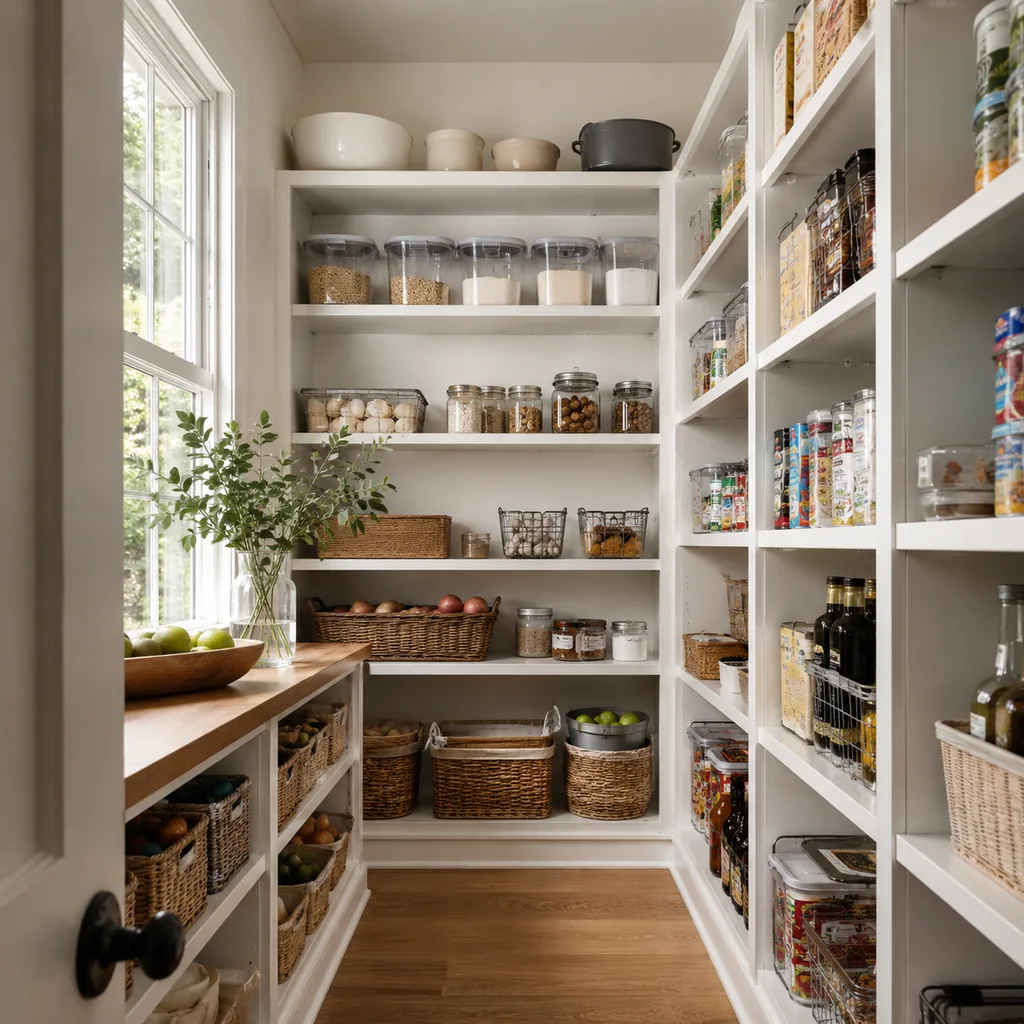
A pantry only feels obvious to the person who organized it on day one.
Broad labels help the rest of the household put food back without inventing a new system each week.
Label zones like baking, snacks, dinner, breakfast, refills, and school lunch; that is usually enough without turning every jar into a project.
26. Ignoring Can Rotation
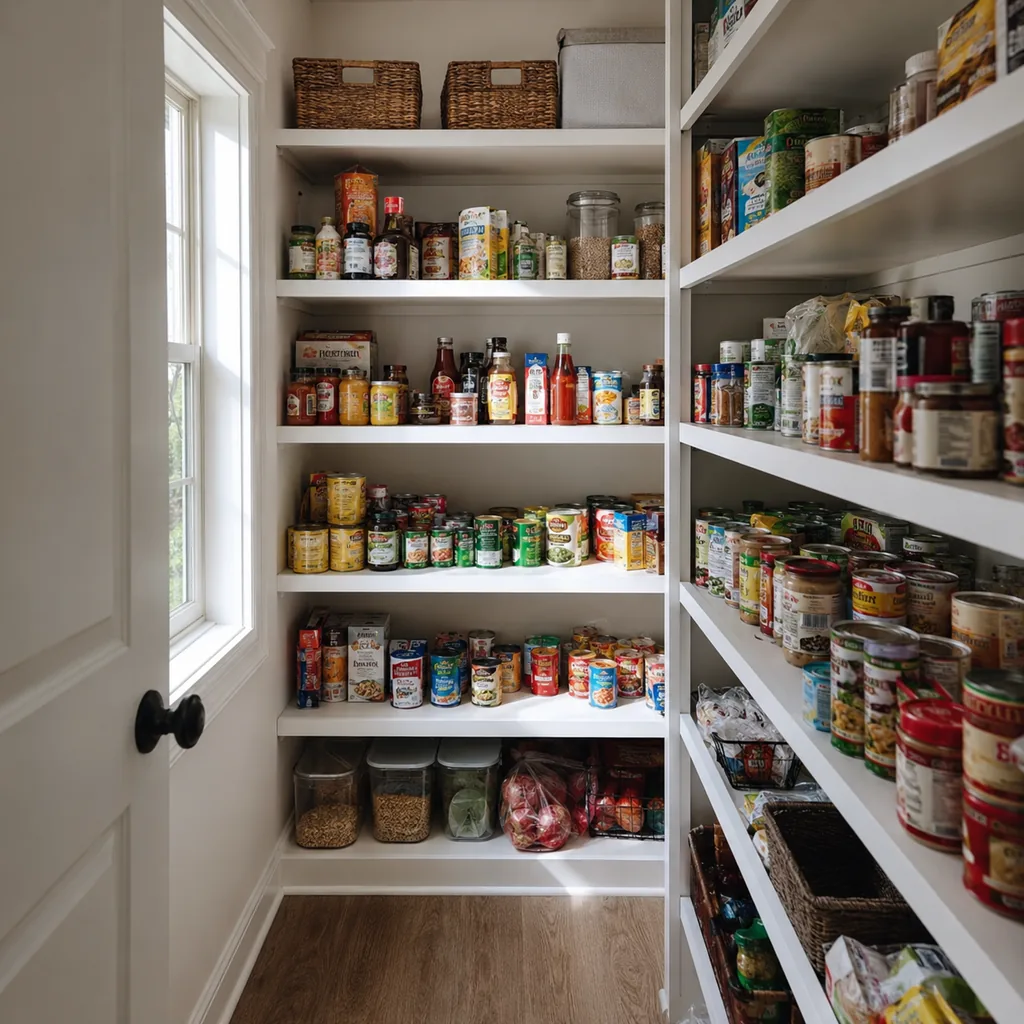
Deep shelves make it easy for old cans to sit behind newer grocery runs.
That leads to expired food, duplicate buying, and awkward digging when you are already cooking.
Use risers, shallow rows, or a first-in-first-out lane for canned goods so older items stay visible before another case comes home.
25. Designing Around Decorative Jars
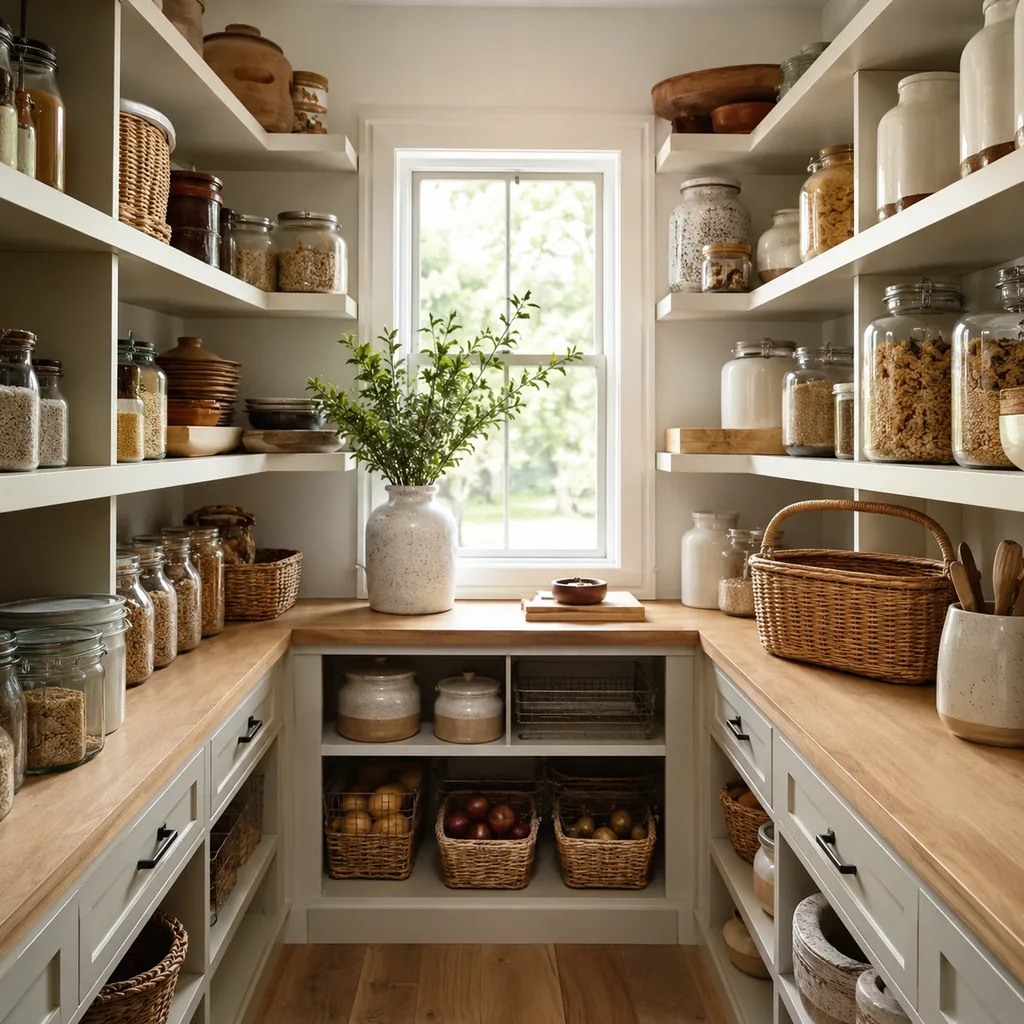
Matching jars photograph well, but they do not solve every pantry problem.
Some foods need cooking instructions, allergen labels, expiration dates, or original packaging that actually helps the household.
Use jars for true staples like flour, sugar, oats, or rice, then keep awkward items in practical bins instead of forcing a display.
24. Forgetting Appliance Heat
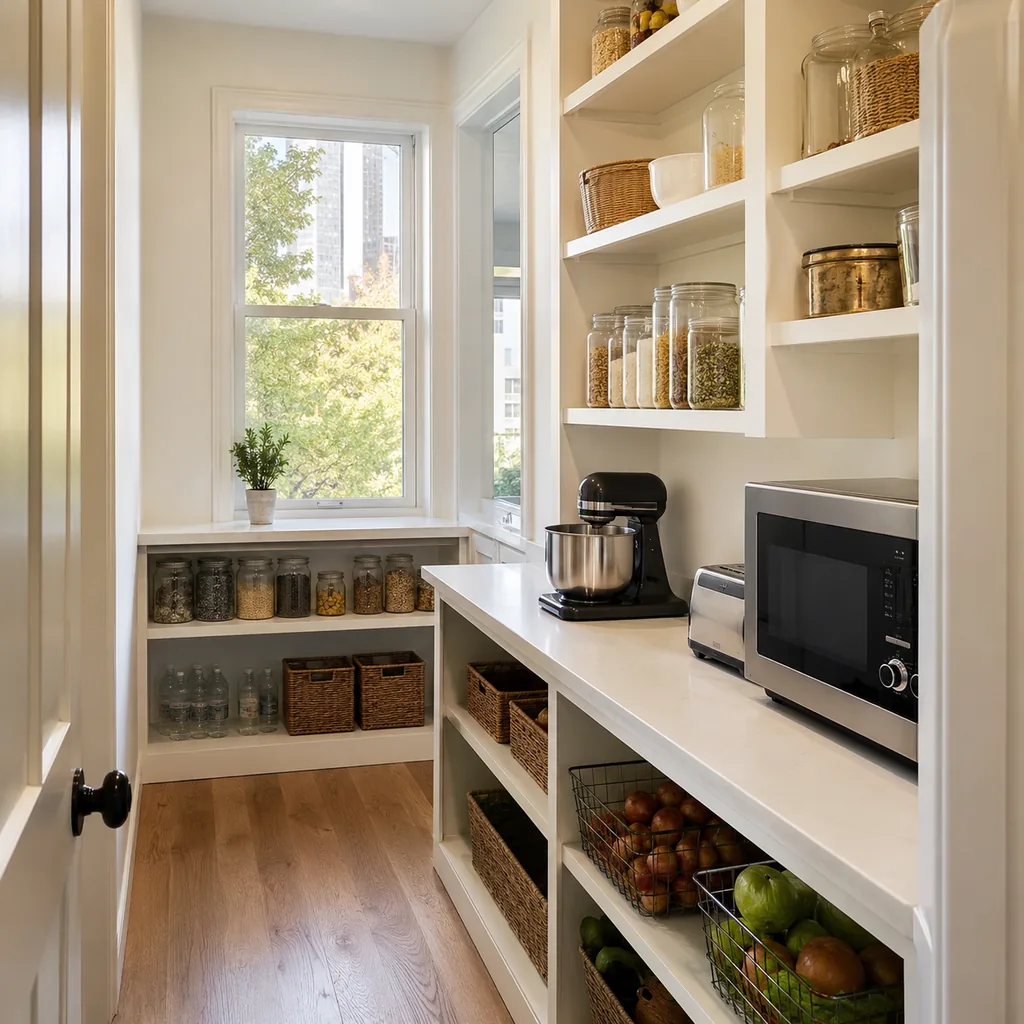
Small appliances can make a pantry warmer than expected if they are used in place.
Coffee makers, toaster ovens, and microwaves need clearance, ventilation, and heat-safe surfaces, not just an open cubby.
If an appliance will run inside the pantry, treat that zone like a work area with outlets, airflow, and easy cleaning access.
23. Not Measuring Bulk Packaging
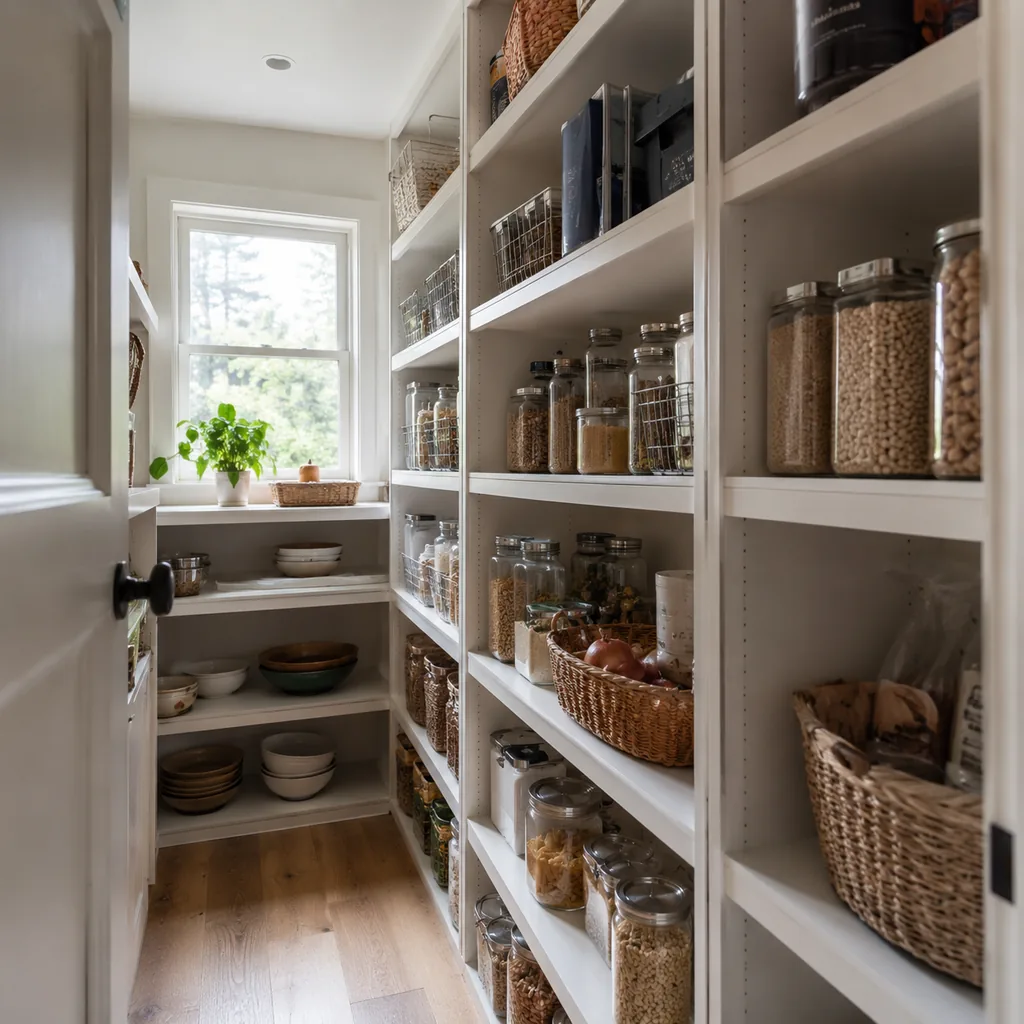
Bulk shopping changes the math inside a pantry, especially for American households that buy warehouse packs.
Paper towels, cereal multipacks, pet food, soda, and snack boxes often need wider openings than standard shelves provide.
Measure the largest items you buy often, then give those products a real home instead of stacking them on the floor.
22. Putting Spices in a Deep Corner

Spices disappear quickly when they are stored in a deep corner or behind taller boxes.
That wastes money because duplicates get bought while half-full jars sit out of sight.
Use a drawer, narrow rack, lazy Susan, or stepped shelf where every label can be seen in one quick scan.
21. Installing a Door That Blocks Kitchen Traffic
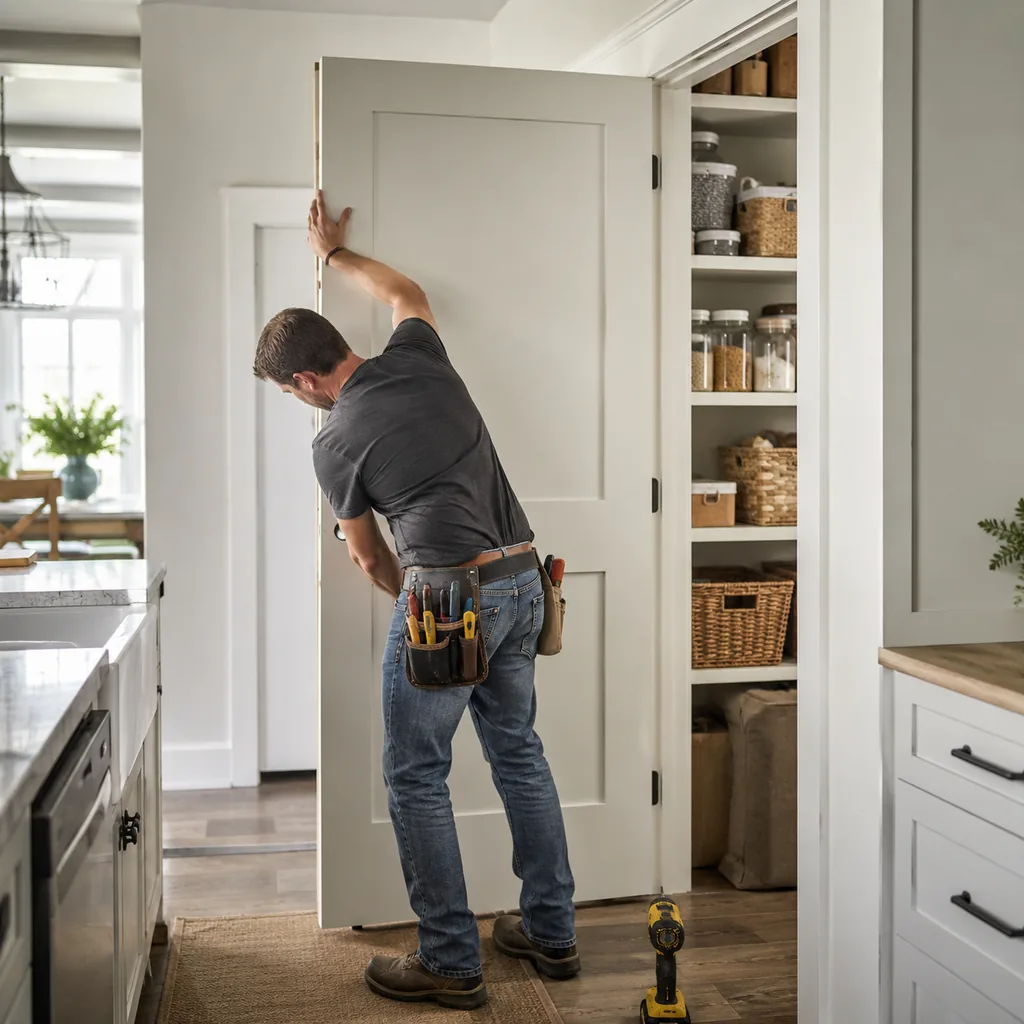
A pantry door can be technically correct and still annoy everyone during dinner prep.
Check the swing against fridge doors, dishwasher loading, and main kitchen paths; the same traffic thinking applies in small kitchen layout mistakes.
Pocket, barn, or outswing doors are not automatically better, so test the open position before committing to trim and hardware.
20. Forgetting Kid Access
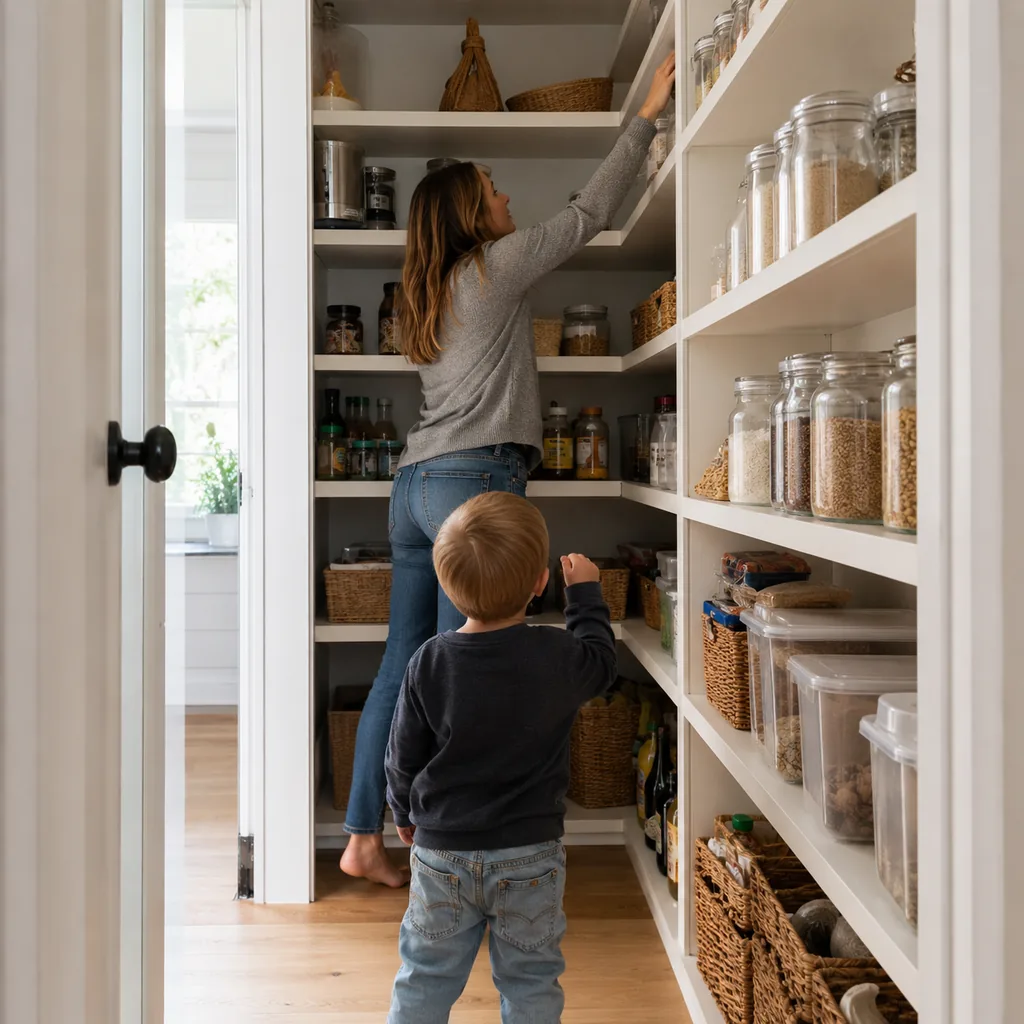
A family pantry should make safe kid items reachable without giving children access to everything.
Place lunch snacks, cereal, napkins, and water bottles where kids can help themselves without climbing.
Keep glass jars, heavy cans, cleaning supplies, and appliance cords higher or behind a controlled zone so independence does not create a mess.
19. Ignoring Pet Food Storage
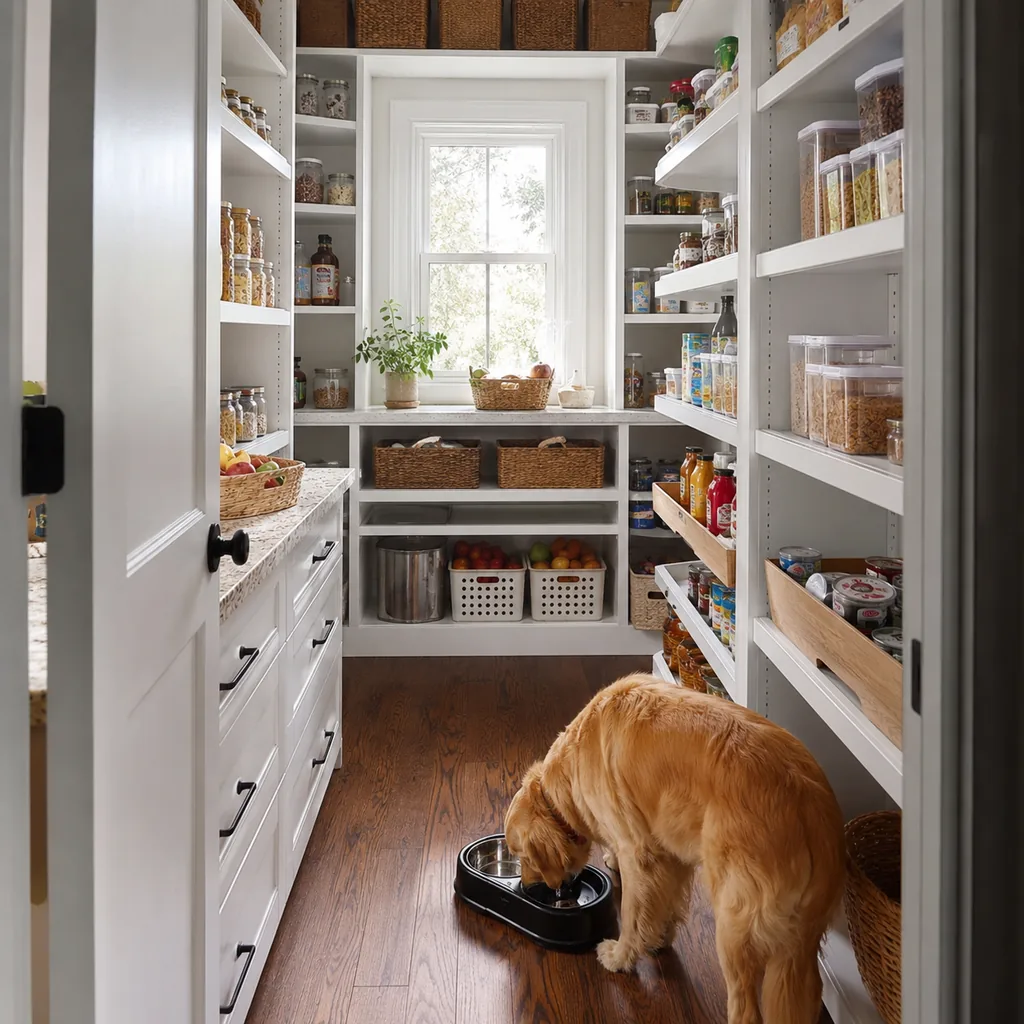
Pet food is bulky, dusty, and often heavier than the containers people buy for it.
Plan for the full bag, scoop, treats, medications, and feeding backup instead of assuming one decorative bin will handle it.
If pet traffic crosses the back entry, pair the pantry plan with the storage logic in mudroom mistakes so food and leashes do not collide.
18. Choosing Pretty Baskets That Waste Space
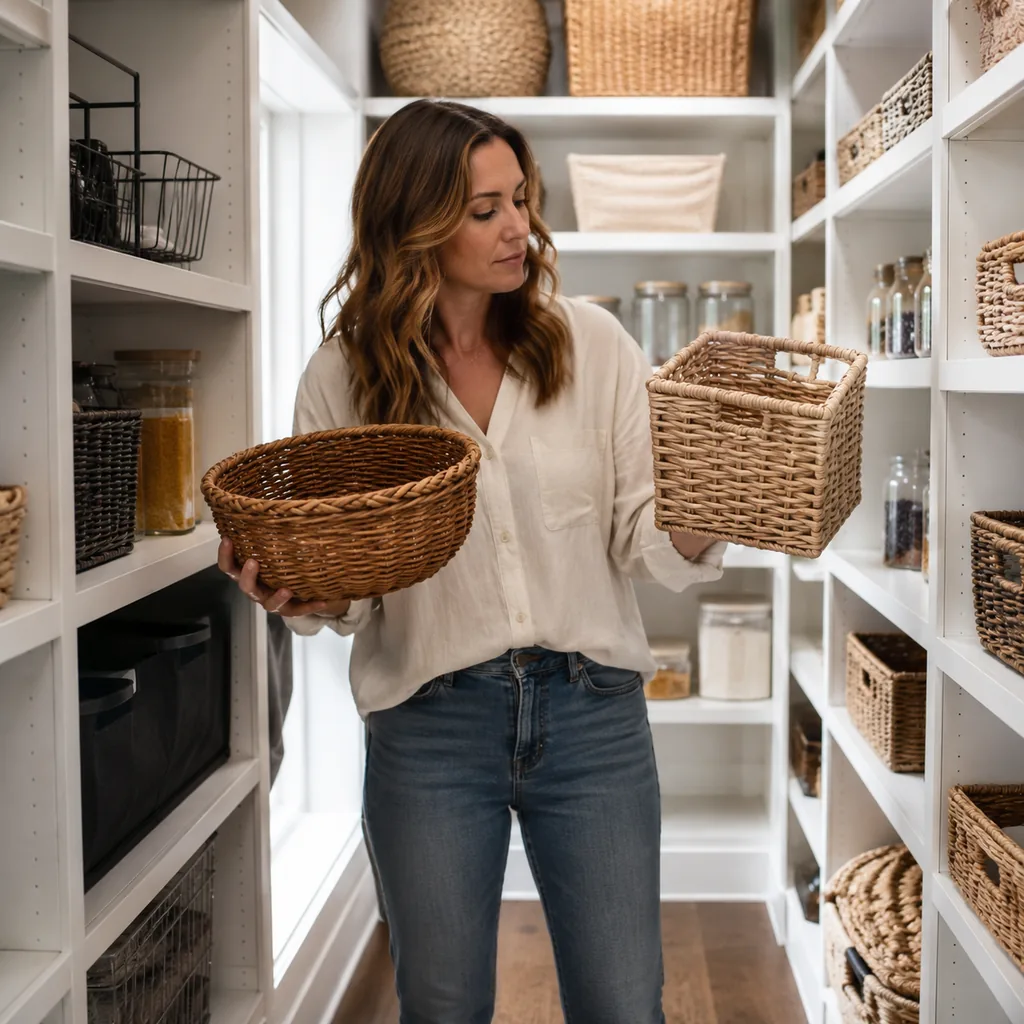
Baskets can make shelves look finished while quietly stealing usable inches.
Thick sides, tapered shapes, and floppy handles reduce capacity and make it harder to pull items straight out.
Choose square or rectangular bins with firm sides for heavy pantry goods, then save decorative baskets for lighter overflow or open display shelves.
17. Skipping Task Lighting
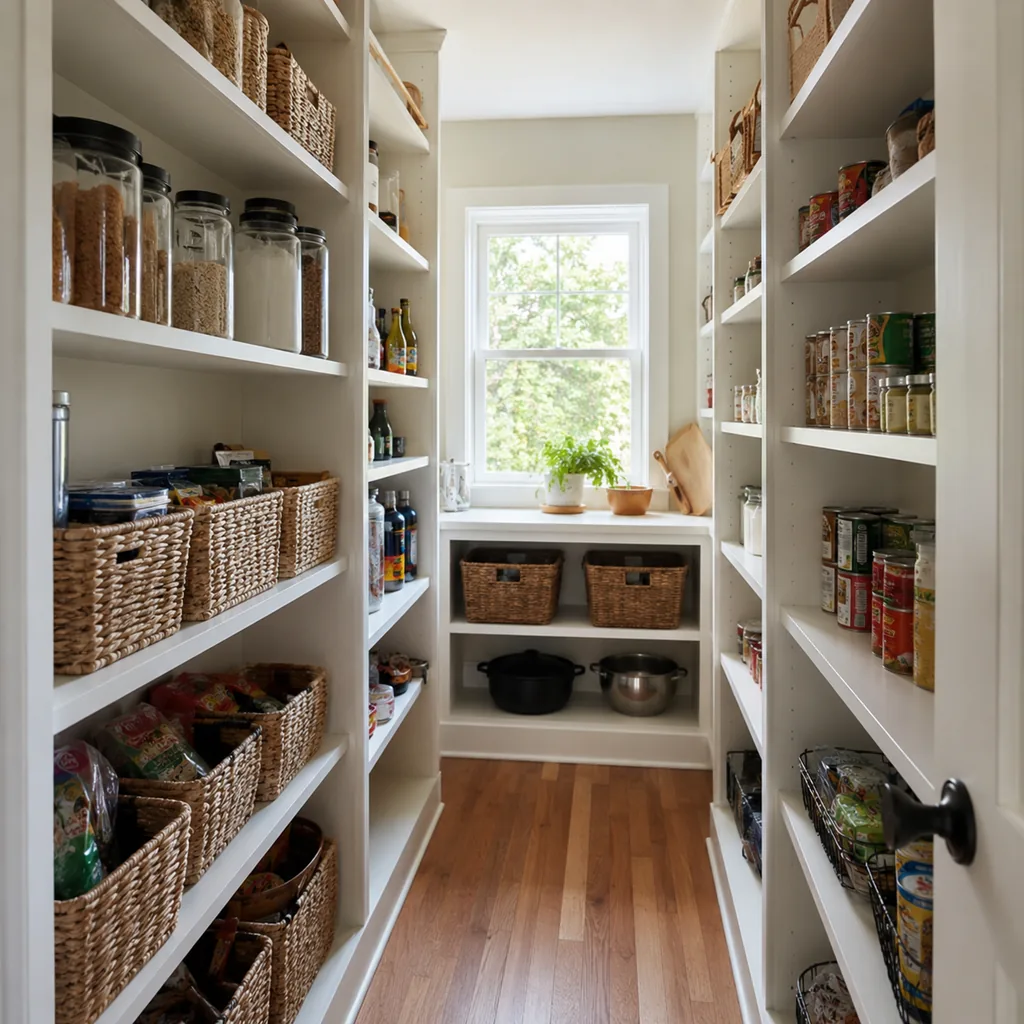
A pantry with one ceiling light still leaves shadows on lower shelves and deep corners.
Bad lighting makes labels harder to read, encourages duplicate buying, and makes spills easier to miss.
Use bright, even lighting near the front of shelves, and consider motion activation so quick trips do not depend on a hidden switch.
16. Not Planning for Cleaning Supplies
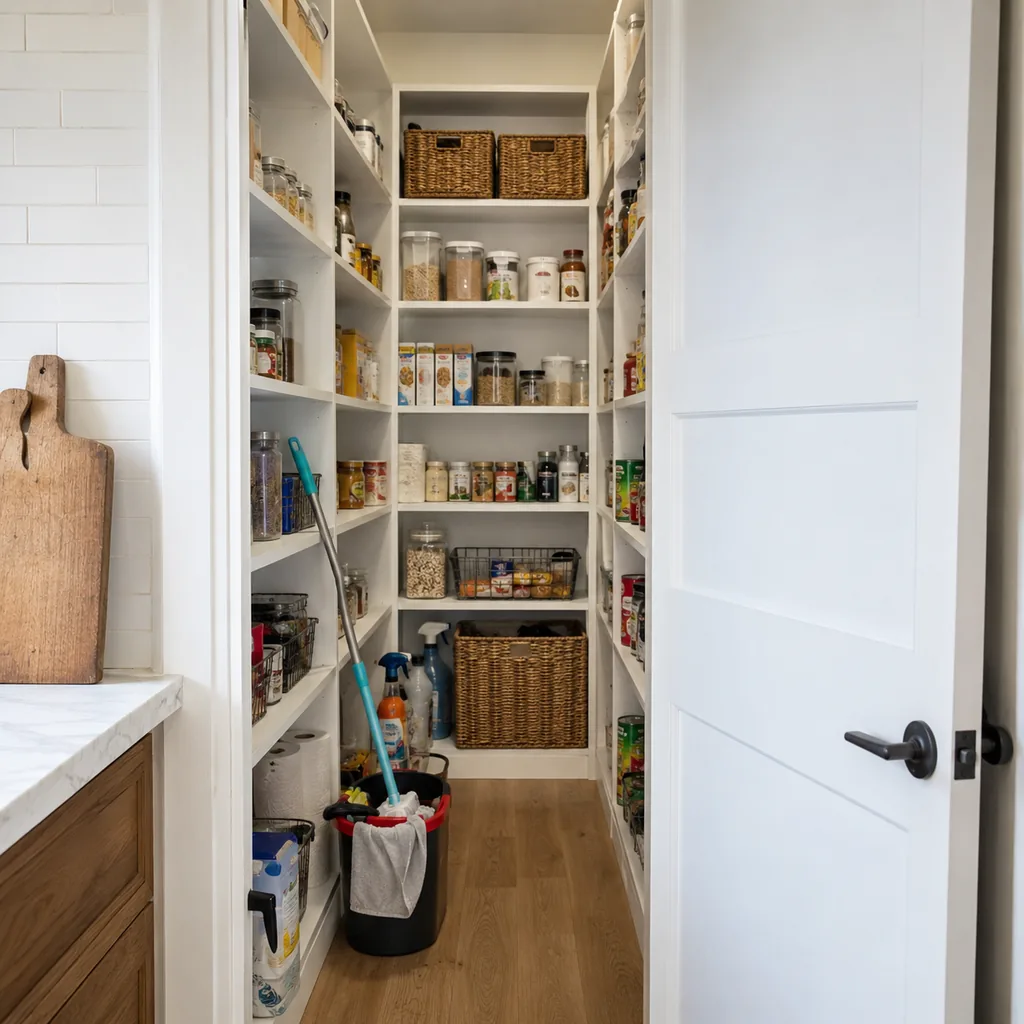
Cleaning supplies do not belong beside open food, but they still need a planned location.
If the pantry becomes the only nearby utility storage, separate chemicals the way you would in laundry room planning.
A slim cabinet, high shelf, or labeled caddy keeps paper towels, sprays, and dusters available without mixing them into dinner ingredients.
15. Letting Corners Become Dead Zones
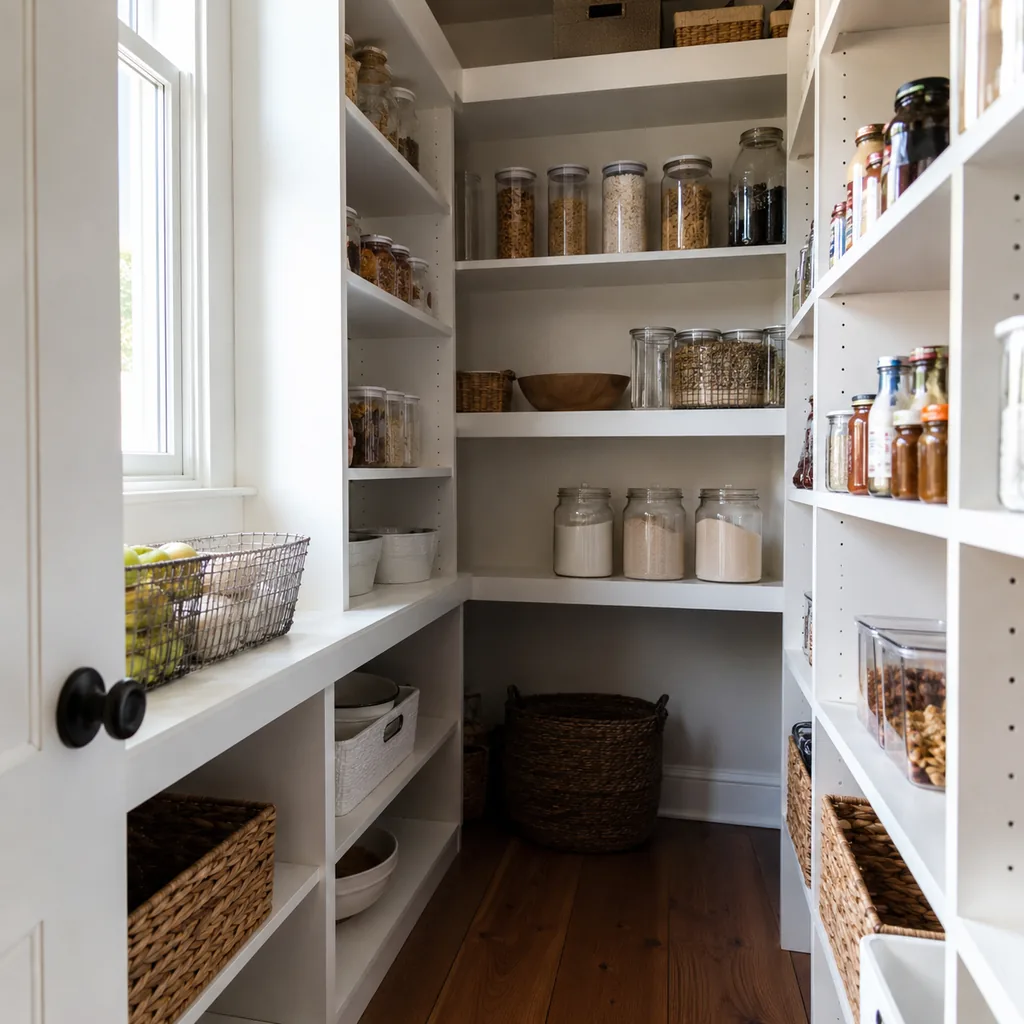
Pantry corners look generous on a plan, then swallow items once shelves are full.
Deep corner storage often means you must remove three things to reach the one item you need.
Use lazy Susans, angled shelves, or dedicated bulky storage in corners so the space earns its footprint instead of becoming a forgotten stack.
14. Forgetting a Step Stool Spot
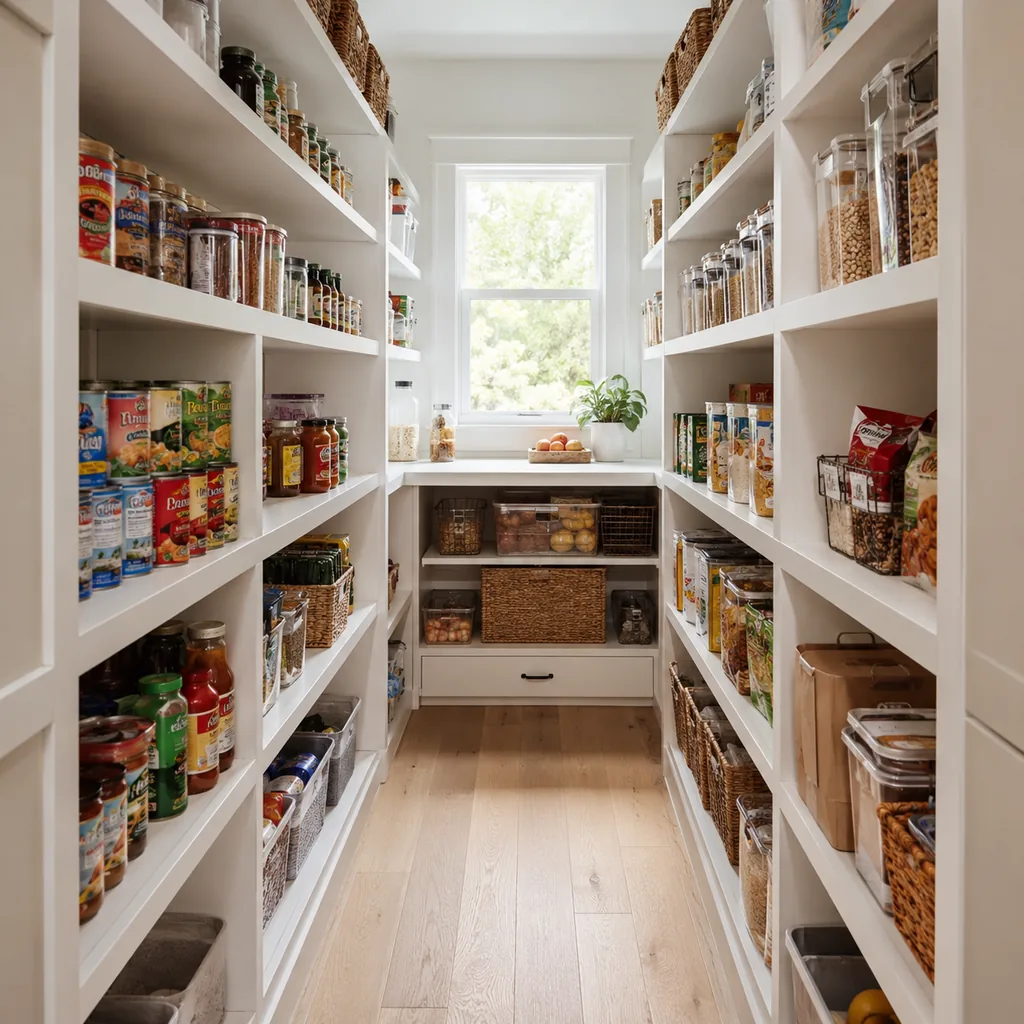
Tall storage is only useful if someone can reach it safely.
A folding stool tossed on the floor becomes its own clutter problem, especially in a narrow walk-in pantry.
Plan a wall hook, narrow slot, or low cabinet space for the stool so upper shelves stay usable without blocking the aisle.
13. Storing Heavy Items Too High
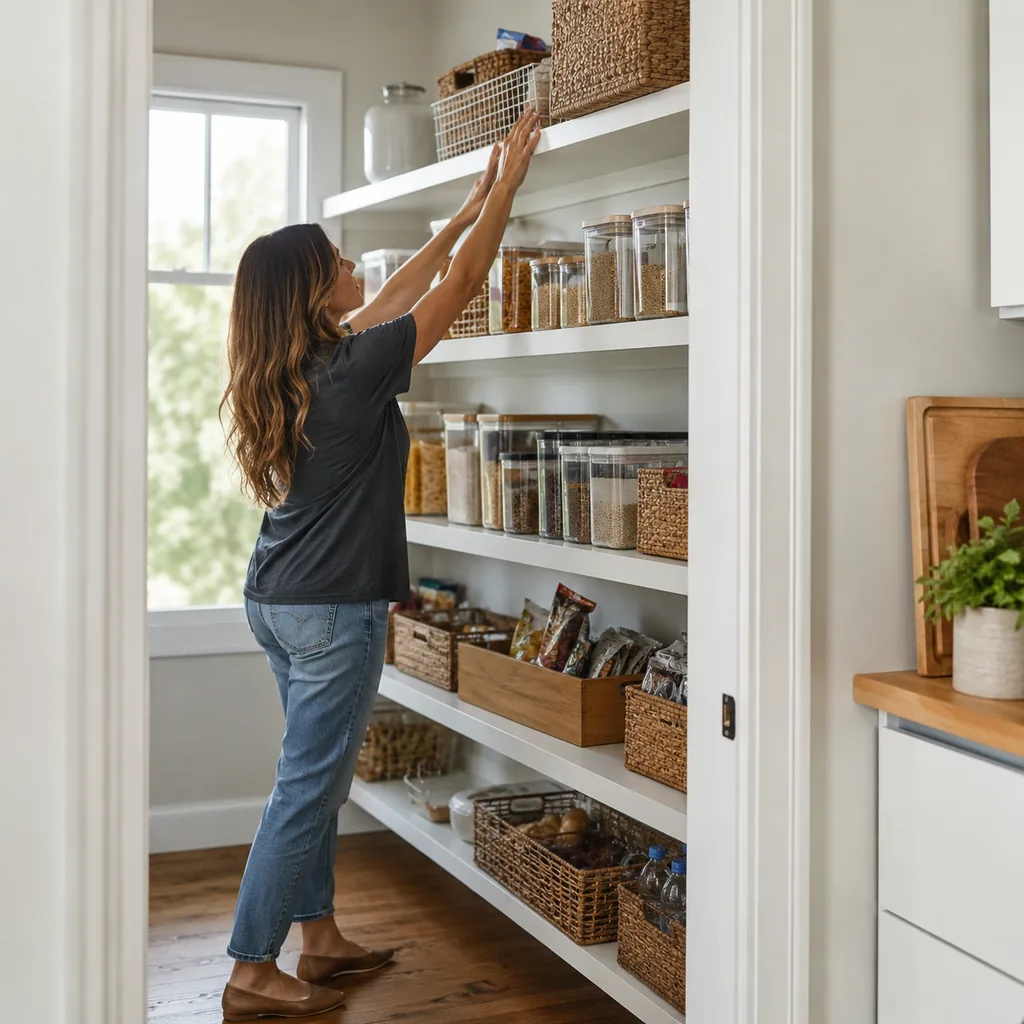
Heavy pantry items should not live above shoulder height, especially on narrow shelves.
Large flour bags, canned cases, drink packs, and small appliances are safer at waist level or below where they can be lifted with both hands.
Read more: 20 Closet Design Mistakes That Waste Space You Could Be Using.
12. Not Leaving Space for Growth
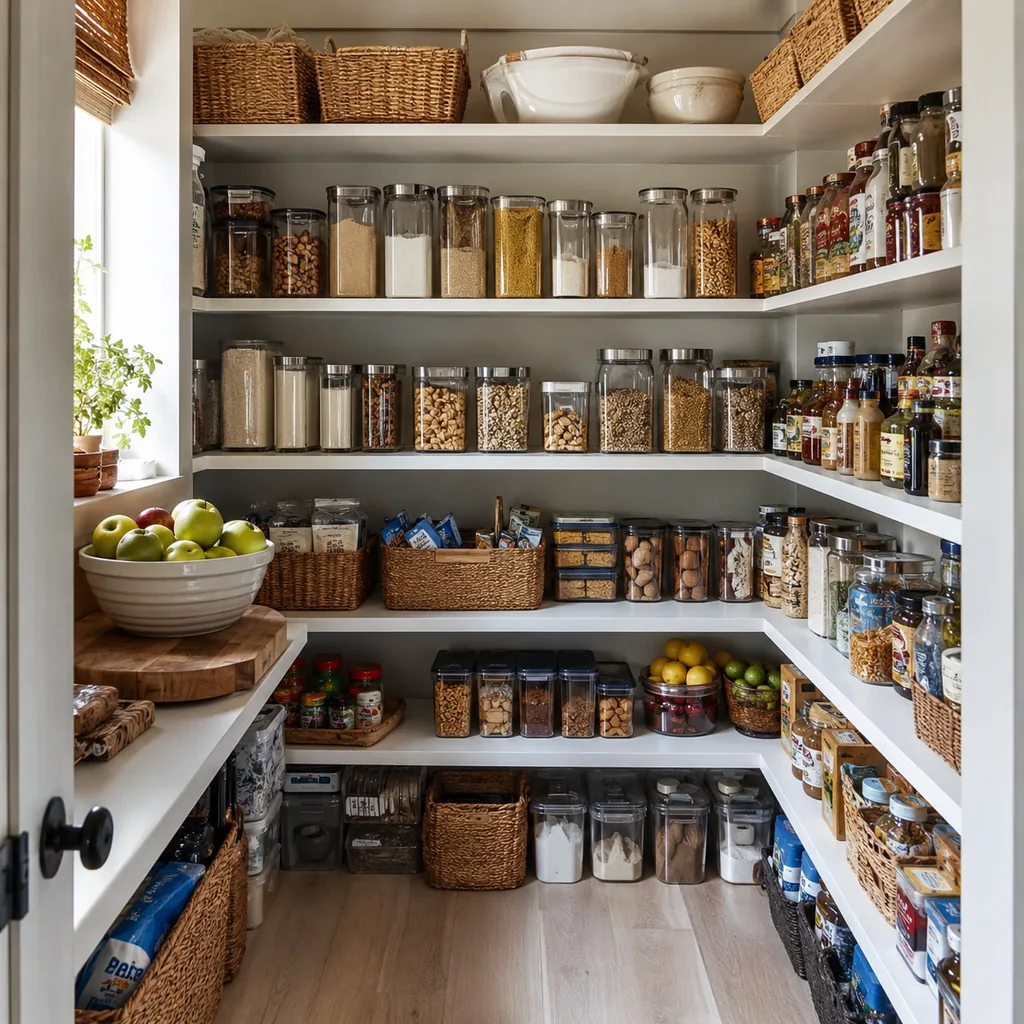
A pantry that is full on move-in day has no margin for real life.
Holiday food, school snacks, guests, sales, and bulk buys all need occasional overflow space.
Keep one flexible shelf or bin less than full so the system can absorb a bigger week without collapsing into the aisle.
11. Using Wood Shelves Without Thinking About Spills

Wood shelves can look warm, but pantry spills are not rare.
Oil, syrup, pet food dust, and sticky drink mixes can stain or seep into unfinished surfaces.
Use wipeable shelf liners, sealed wood, laminate, or painted finishes where food sits directly on the shelf and cleanup needs to be fast.
10. Skipping Vertical Dividers
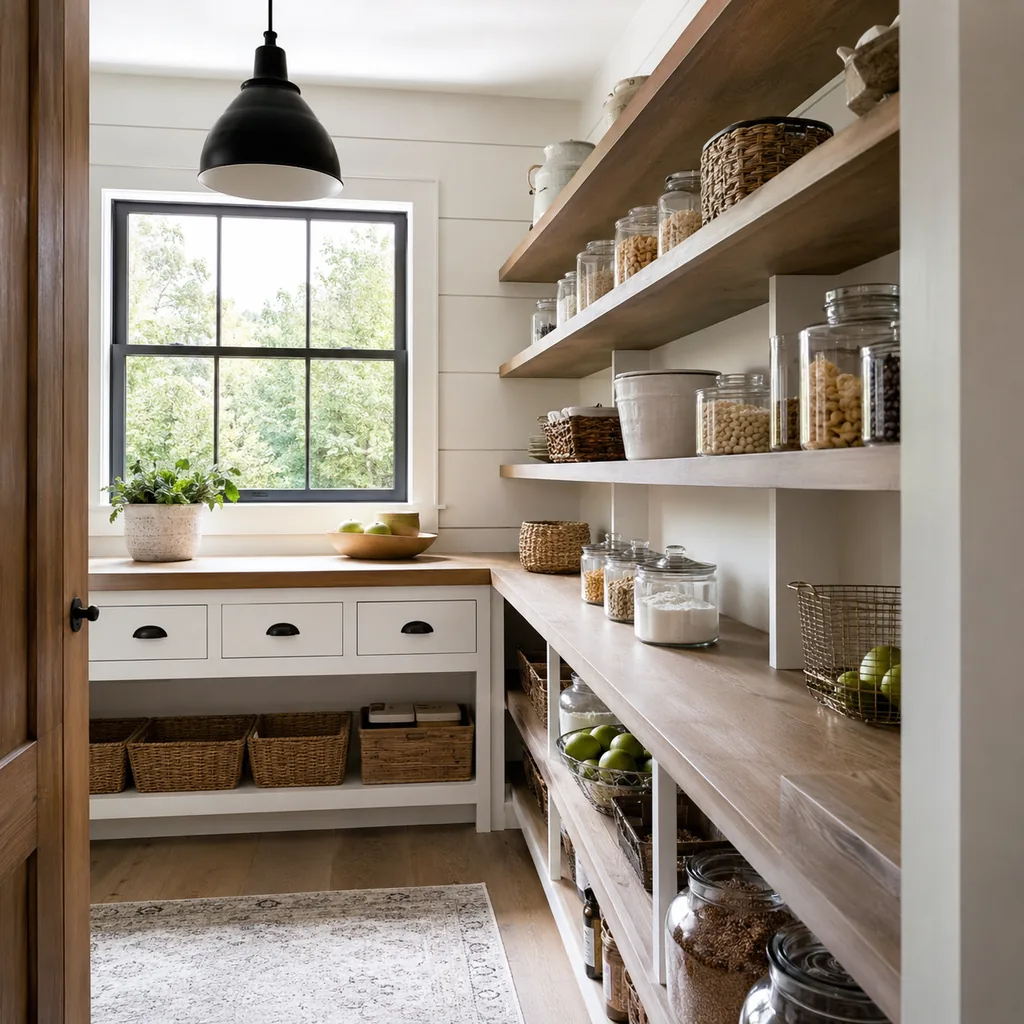
Flat stacks are the reason trays, cutting boards, and sheet pans turn into a noisy pile.
Vertical dividers let these items slide out one at a time without unloading the whole shelf or scratching the pieces underneath.
Read more: 24 Lighting Mistakes That Make a Home Look Older and Smaller.
9. Forgetting Breakfast and Coffee Flow
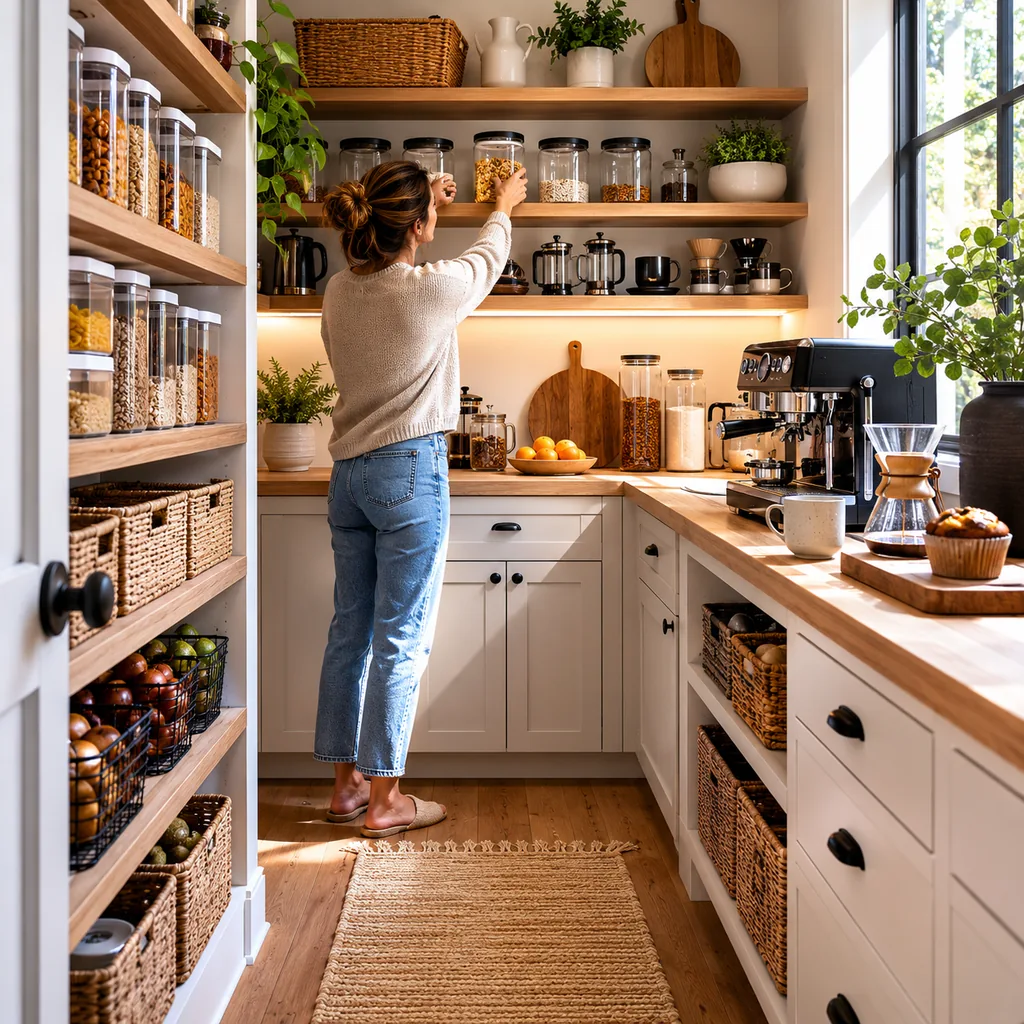
Breakfast supplies are used in a different rhythm than dinner ingredients.
Coffee, filters, mugs, cereal, oatmeal, and grab-and-go foods should sit near the morning path, not behind baking overflow.
A simple morning zone saves more time than a perfectly sorted pantry because it matches the way the room is actually used.
8. Putting the Pantry Too Far From the Fridge

A pantry that is too far from the fridge turns cooking into a back-and-forth route.
This matters most for dinner prep, packed lunches, and unloading groceries from the car.
If the location is fixed, keep fridge-paired items like sauces, wraps, lunch snacks, and produce extras near the pantry entrance.
7. Not Tracking Expiration Dates
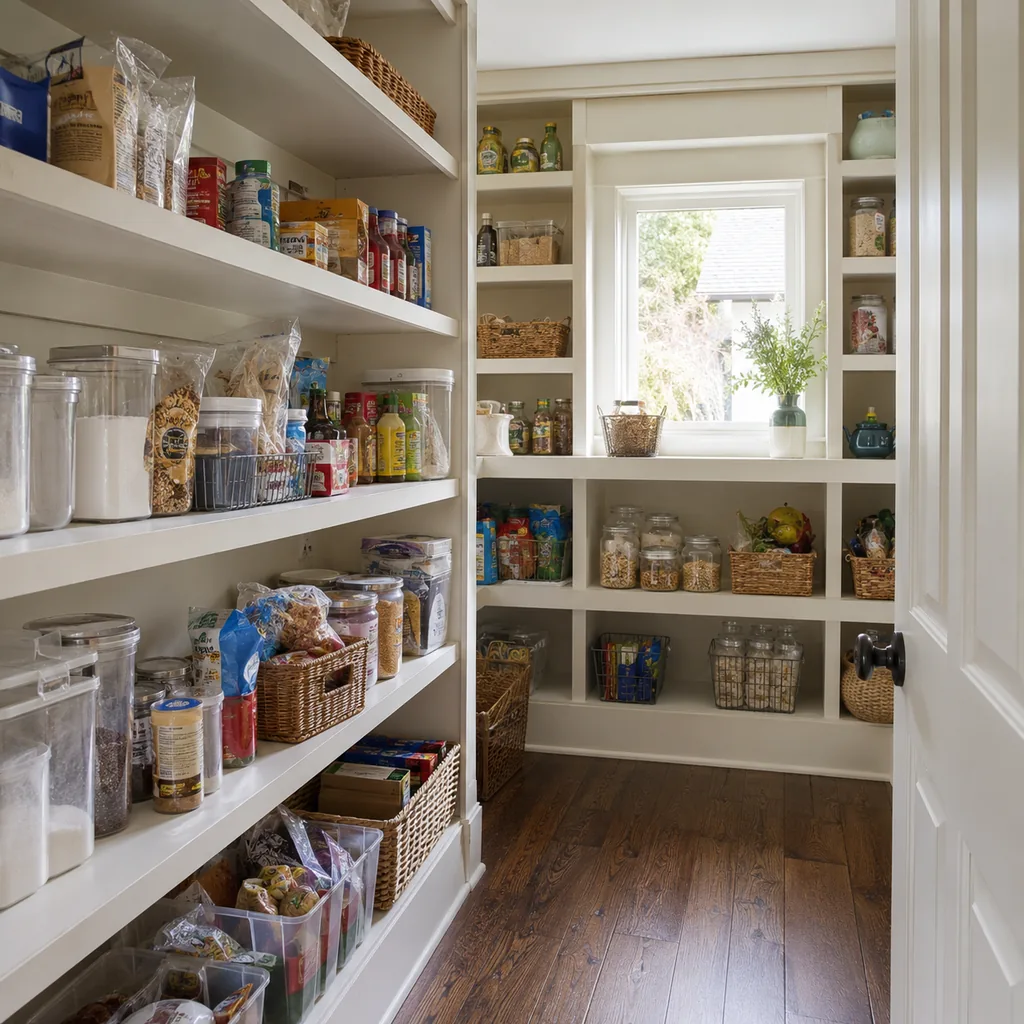
A pantry can look full and still be wasting money behind the front row.
Use date-facing rows, a small marker, or a monthly scan for foods that expire quietly, especially sauces, grains, and backup snacks.
Read more: 27 Bathroom Remodel Mistakes That Are Expensive to Fix Later.
6. Ignoring Door Storage
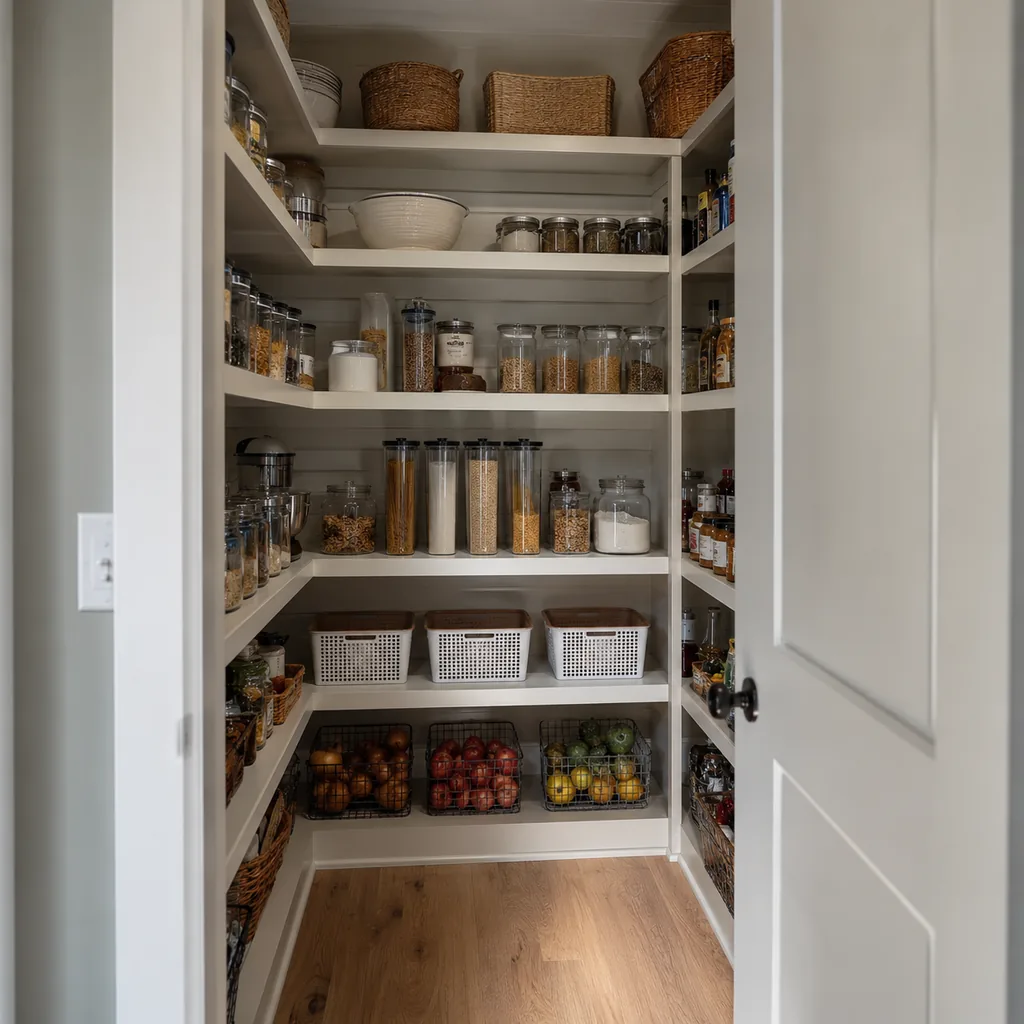
The back of the pantry door can be useful, but only for the right items.
Lightweight goods like wraps, spice packets, snacks, or cleaning cloths work better there than heavy jars.
Check door clearance with the shelves full, because thick racks can bang into stored food or stop the door from closing cleanly.
5. Turning the Pantry Into a Second Kitchen Without Planning It
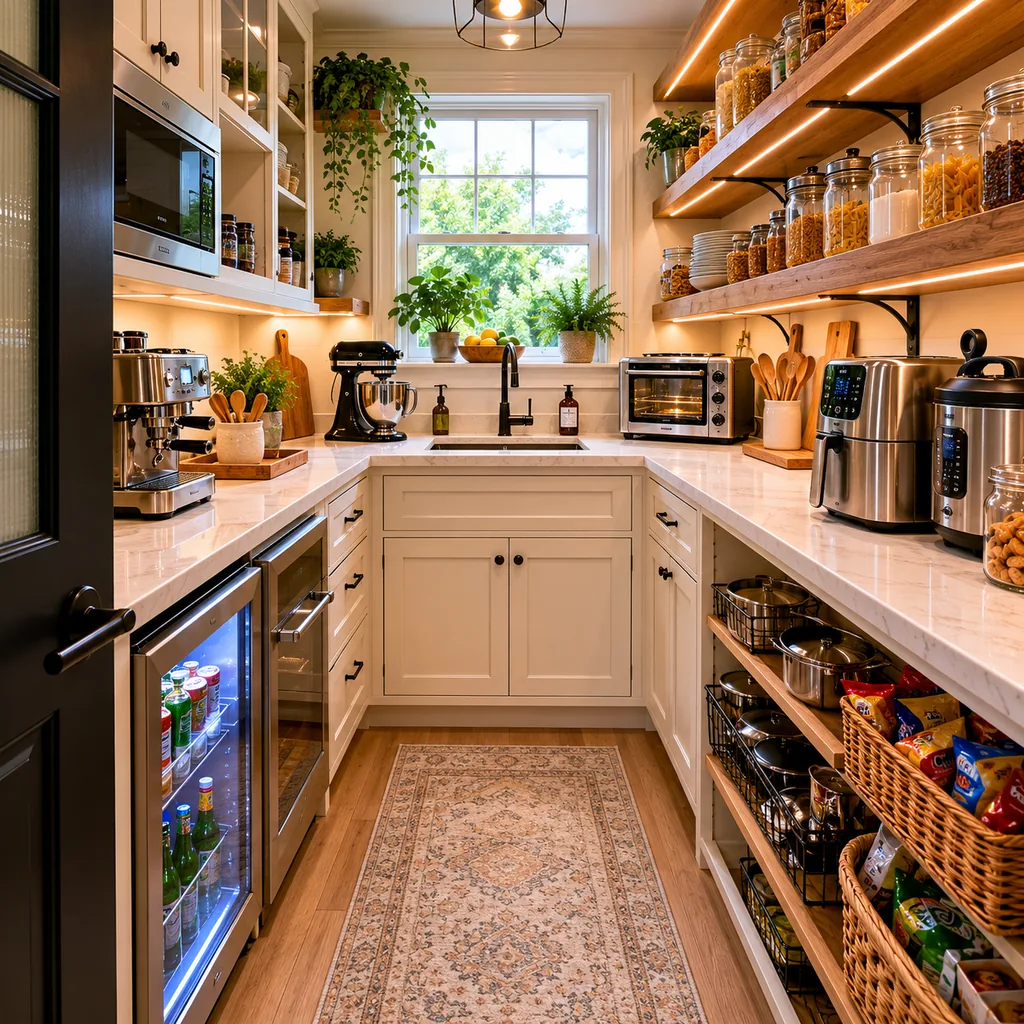
A second-kitchen pantry needs more than an outlet and a pretty counter.
Coffee stations, microwaves, sinks, and appliance garages bring heat, crumbs, moisture, plumbing, and cleaning needs.
Decide early whether the pantry is storage or a work zone, because the electrical, ventilation, and surface choices are different.
4. Using Too Many Tiny Zones
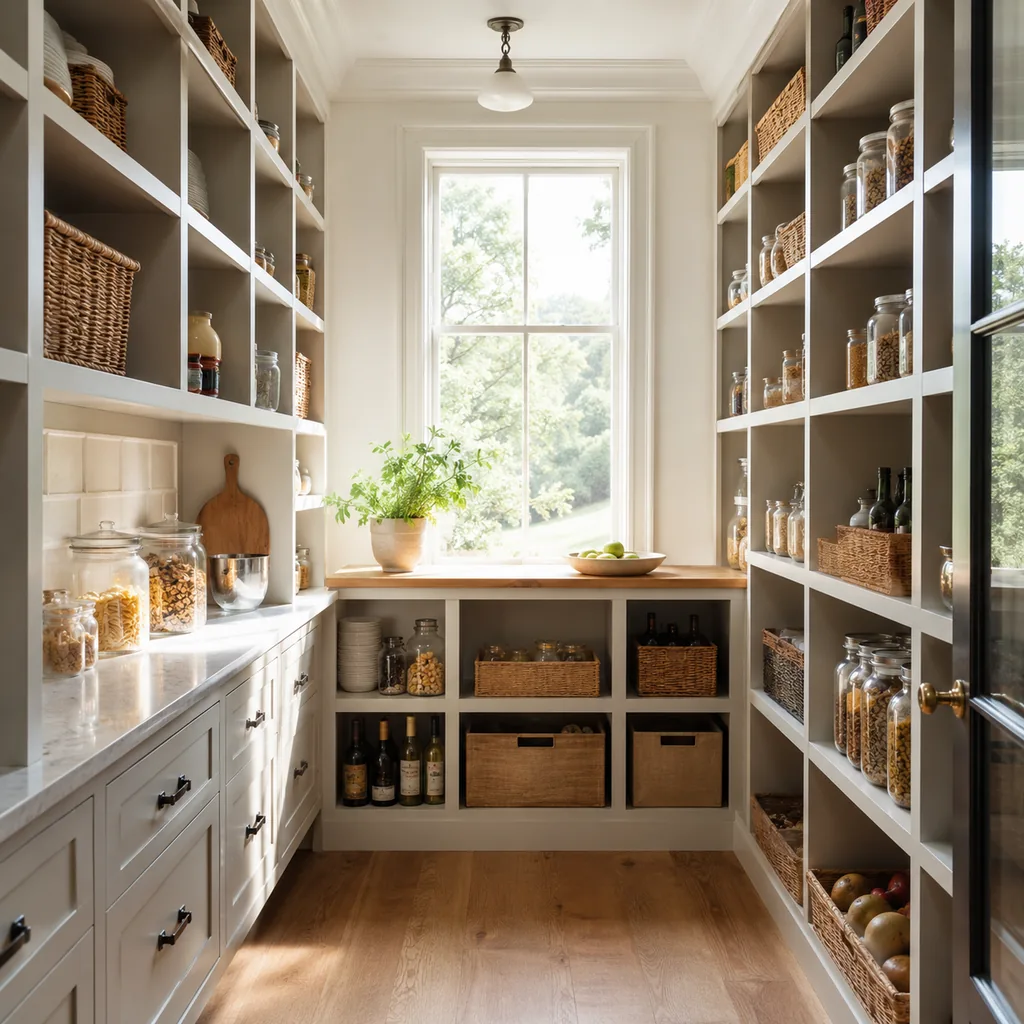
Over-zoning can make a pantry harder to maintain than a simple system.
Tiny categories work for one person, but families usually need broader homes for food to return to quickly.
Group by real tasks such as breakfast, baking, snacks, dinner, drinks, and refills before adding smaller bins inside those zones.
3. Forgetting Emergency Supplies

Many households keep storm supplies near the pantry, but they often get buried behind food.
Batteries, flashlights, bottled water, and backup meals need a marked zone that is easy to check.
Keep emergency items together and visible so they are not mistaken for regular overflow or scattered across several shelves.
2. Letting Packaging Decide the Layout
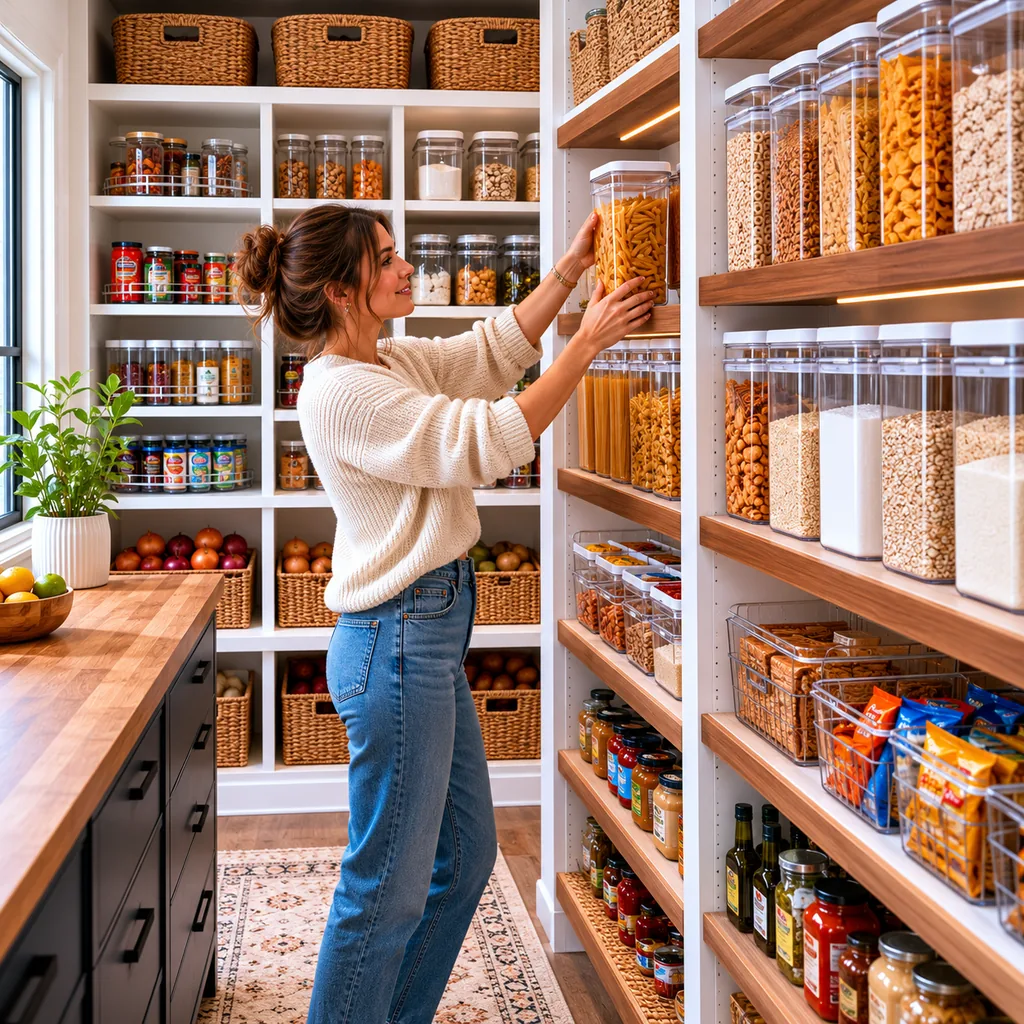
Store packaging is designed for store shelves, not for how your family cooks.
If every box stays in its original shape, the pantry often fills with air gaps and awkward stacks.
Set the layout by task and frequency first, then decide which items deserve bins, jars, risers, or original packaging.
1. Designing the Pantry for Guests Instead of the Household
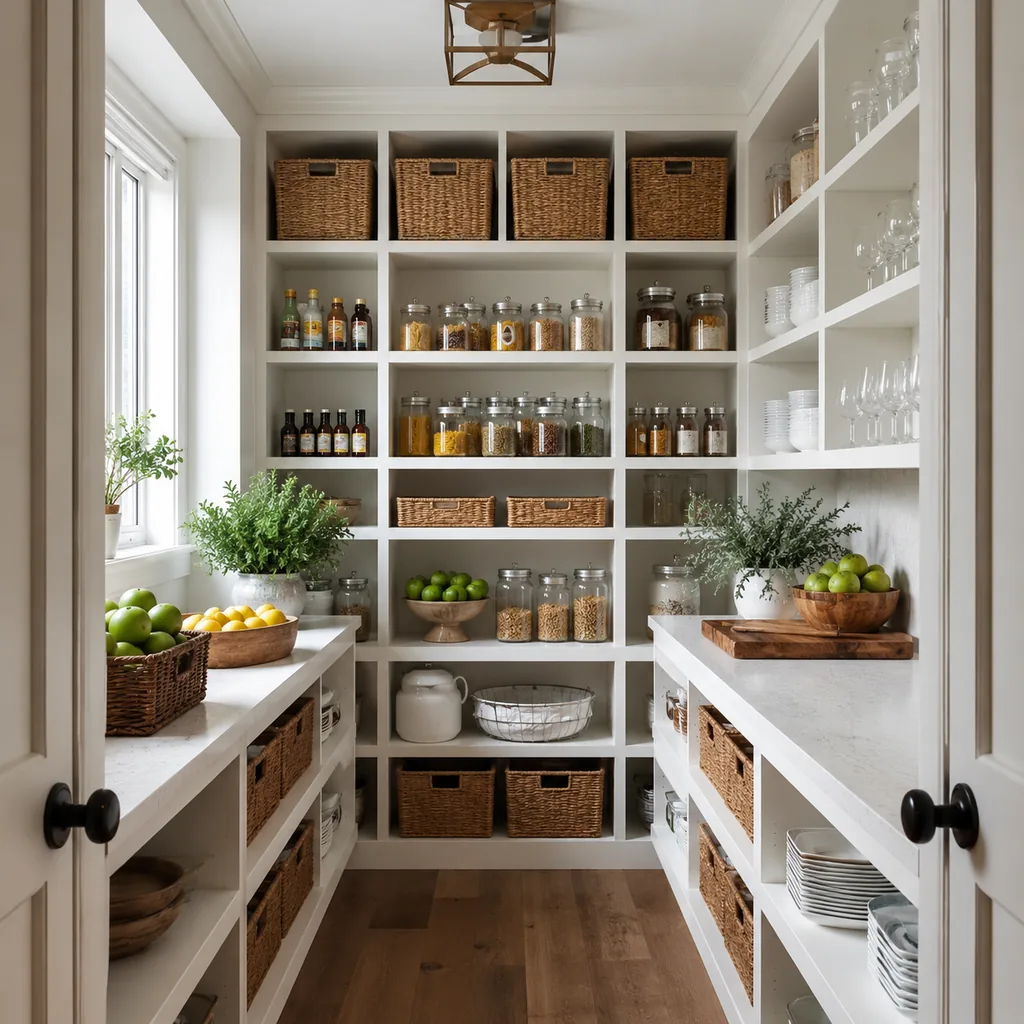
A pantry is a working room, even if guests can see it from the kitchen.
The best version supports grocery unloading, weekday cooking, school lunches, snacks, and restocking without constant resetting.
If the layout works for the people using it daily, it will usually look better too because fewer items end up homeless.