27 Secret Kitchen Tips That Make Cooking Easier and More Enjoyable Every Single Day

There’s a version of cooking that feels like a chore. And there’s a version that feels like something you actually want to do after a long day.
The difference isn’t your kitchen. It isn’t your equipment. It’s about a dozen small habits that nobody ever bothered to tell you.
Most of these tips won’t cost you anything. A few of them will save you money. All of them will make the hour you spend cooking feel calmer, more confident, and a little more yours.
Some of them I learned from cookbooks. A few came from watching someone else’s hands in the kitchen at just the right moment. The best ones came from making the same mistake so many times that I finally had to figure out why.
You won’t use all 27 tonight. But I’d bet three or four of them will change something in your kitchen by this time next week.
None of them require a culinary degree. None of them require expensive equipment or specialty ingredients you can’t find at your regular grocery store.
They’re just the small things. The ones that make cooking feel like it’s working with you instead of against you.
Start wherever feels right. But don’t skip #1.
27. Keep a Small Bowl on the Counter for Scraps While You Cook
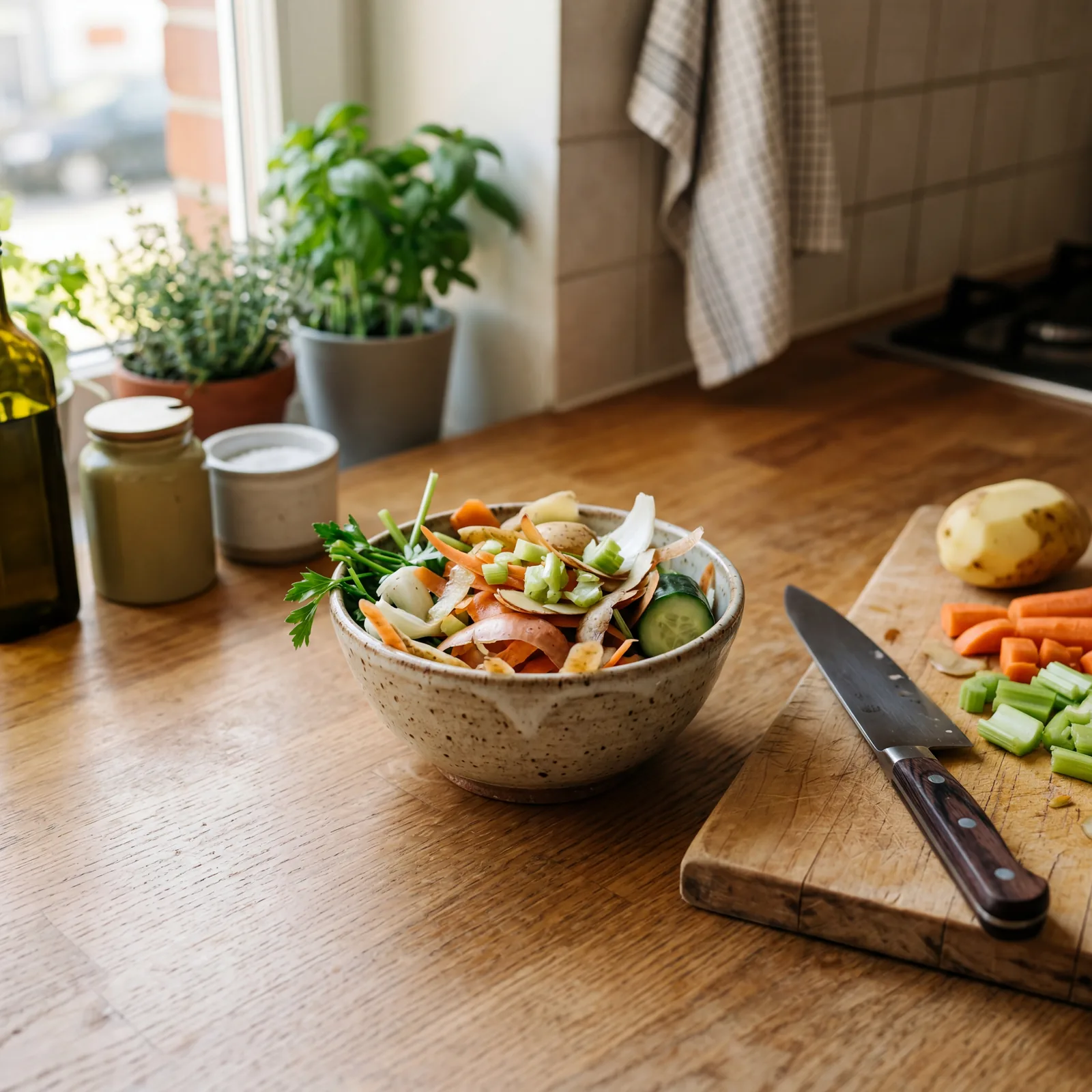
Nobody told you to stop and walk to the bin every thirty seconds. But here you are, doing it anyway.
Put a bowl on the counter before you start. Peels, stems, packaging, eggshells — it all goes in the bowl instead of requiring a trip. You stay at the cutting board. You stay in the rhythm.
The bowl keeps your workspace clear, which keeps your head clear. Professional kitchens call this keeping your station. It’s one reason they move so fast.
One bowl. No trips. The whole prep goes cleaner.
26. Put a Damp Paper Towel Under the Cutting Board So It Stops Sliding
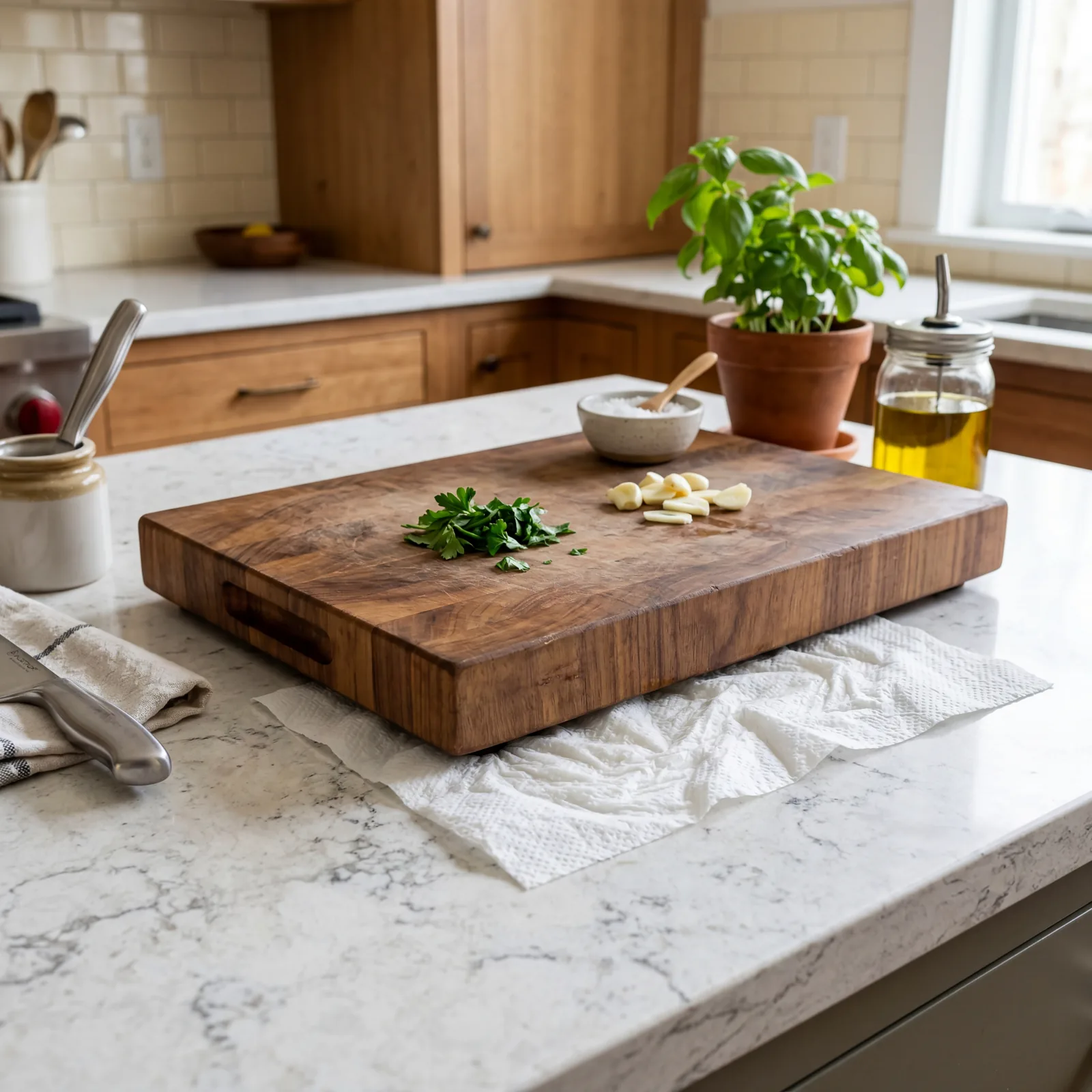
A sliding cutting board is a near-miss waiting to happen, and most people just accept it.
Wet a paper towel, wring it out slightly, and lay it flat under your board before you start. The board grips the counter like it’s bolted down. Your knife hand stays in control of the knife and nothing else.
Friction is the only physics you need here. The damp surface creates enough resistance that the board won’t shift under a fast chop or a hard press.
Ten seconds of setup. No more chasing the board across the counter.
25. Salt Pasta Water Until It Tastes Like the Sea, Not Just “Salted”

If your pasta always tastes a little flat no matter what sauce you put on it, the water is almost certainly why.
Most home cooks add a pinch or a small spoonful. What you actually need is closer to 1 tablespoon of salt per 4 quarts of water. Taste it before the pasta goes in. It should taste pleasantly salty, the way a light ocean wave tastes if it catches your mouth.
Pasta absorbs water as it cooks. That water is its only chance to be seasoned from the inside out. No amount of sauce added later fixes underseasoned pasta.
Season the water like it matters. Because it’s the only time you can.
24. Read the Entire Recipe Once Before You Start Anything

The most expensive cooking mistake isn’t an ingredient. It’s finding out on step 7 that you needed to marinate the chicken overnight.
Read the whole recipe first. Every step. Yes, including the ones at the end. You’ll catch the things that require advance prep, spot the techniques you haven’t done before, and know roughly how long the whole thing will actually take.
This one small habit cuts most of the mid-cook panic that makes people say they hate cooking. It’s not a talent issue. It’s an information issue.
Know where you’re going before you start driving.
The next one takes about 2 minutes to set up and saves you money you’re currently throwing away.
23. Freeze Fresh Herbs in Olive Oil in Ice Cube Trays for Later
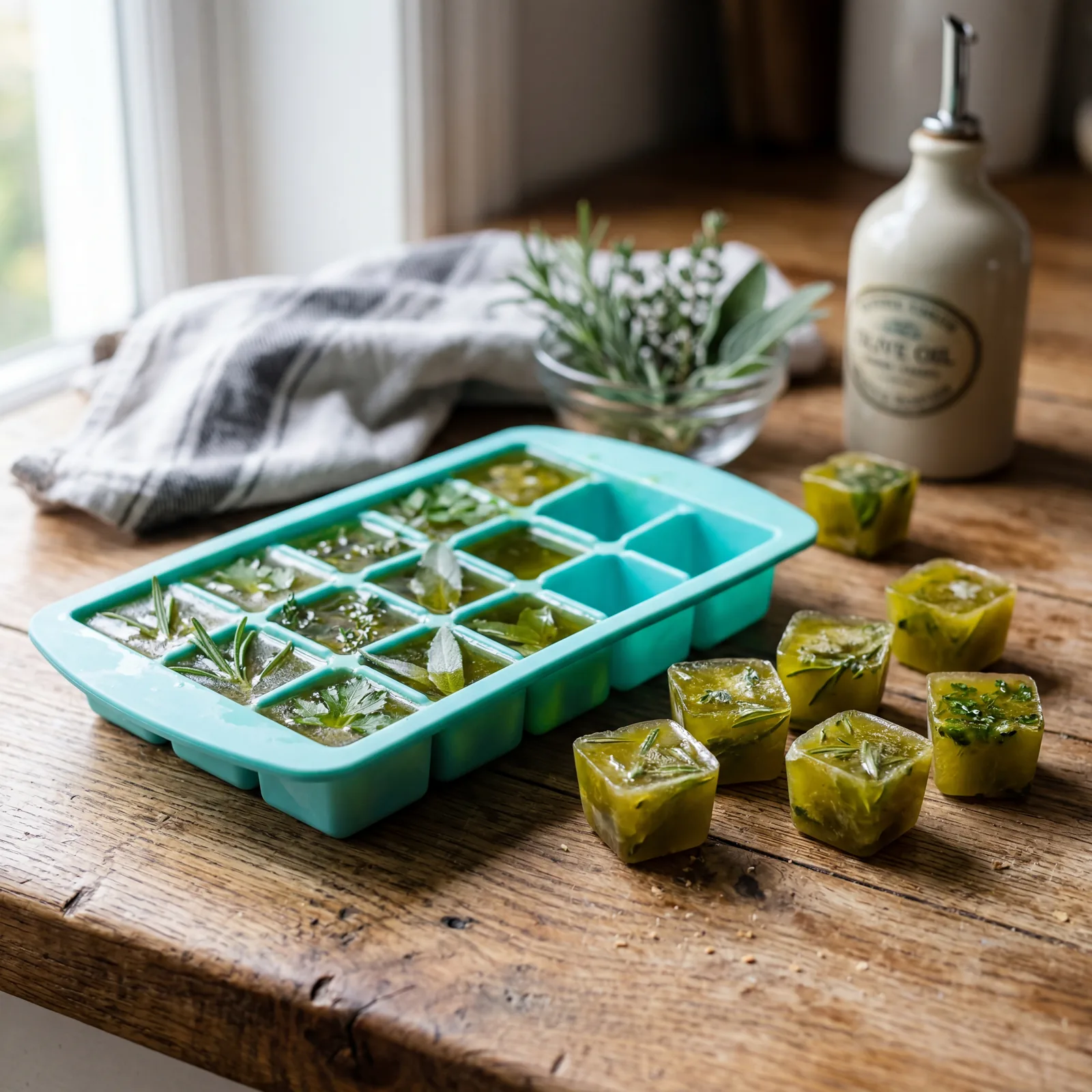
Fresh herbs go bad fast. Most of a bunch ends up in the bin, wilted and forgotten, within a week.
Chop whatever you have left, pack the pieces into an ice cube tray, cover with olive oil, and freeze. Each cube gives you a pre-portioned hit of herb-infused oil, ready to drop straight into a hot pan. Rosemary, thyme, sage, and basil all work well this way.
Olive oil freezes at around 27°F (-3°C) and holds flavor beautifully for up to 3 months. The herbs stay bright and aromatic instead of turning black in the fridge.
Stop letting fresh herbs be a weekly guilt trip.
22. Always Use Room-Temperature Butter in Baking
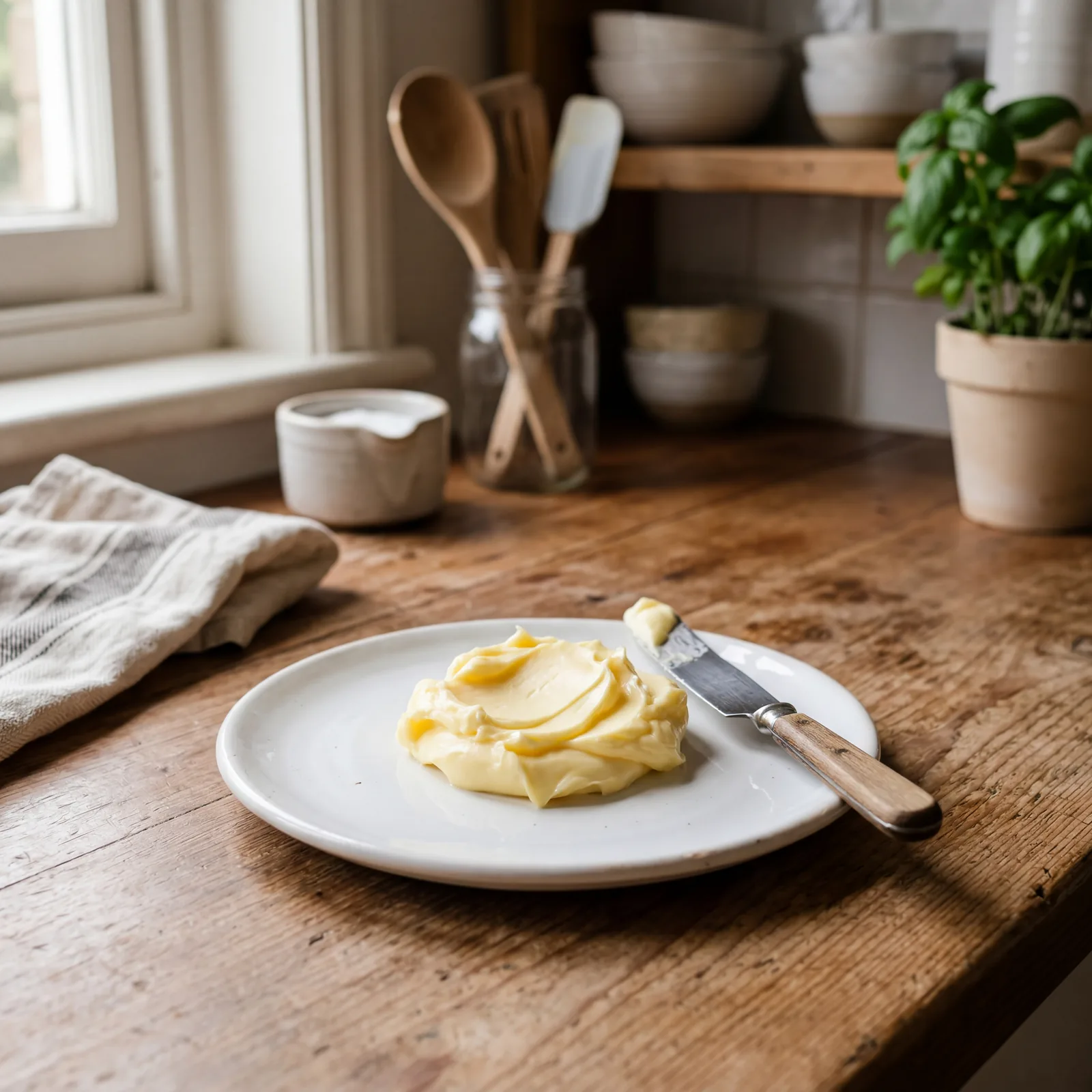
Cold butter from the fridge feels like it should work fine in cookies or a cake batter. It doesn’t, and the results quietly show it.
Room-temperature butter — left out for 30 to 60 minutes — creams with sugar in a way that cold butter simply can’t. That creaming process traps air in the fat, and that trapped air is what makes baked goods rise evenly and feel light. Cold butter just smears and clumps instead of aerating.
The science is simple: fat at around 65–68°F (18–20°C) has the right plasticity to hold air bubbles. Cold fat at 38°F collapses the structure before the oven can set it.
Your cookies aren’t flat because of the recipe. They’re flat because of the butter temperature.
21. Save a Cup of Pasta Water Before Draining
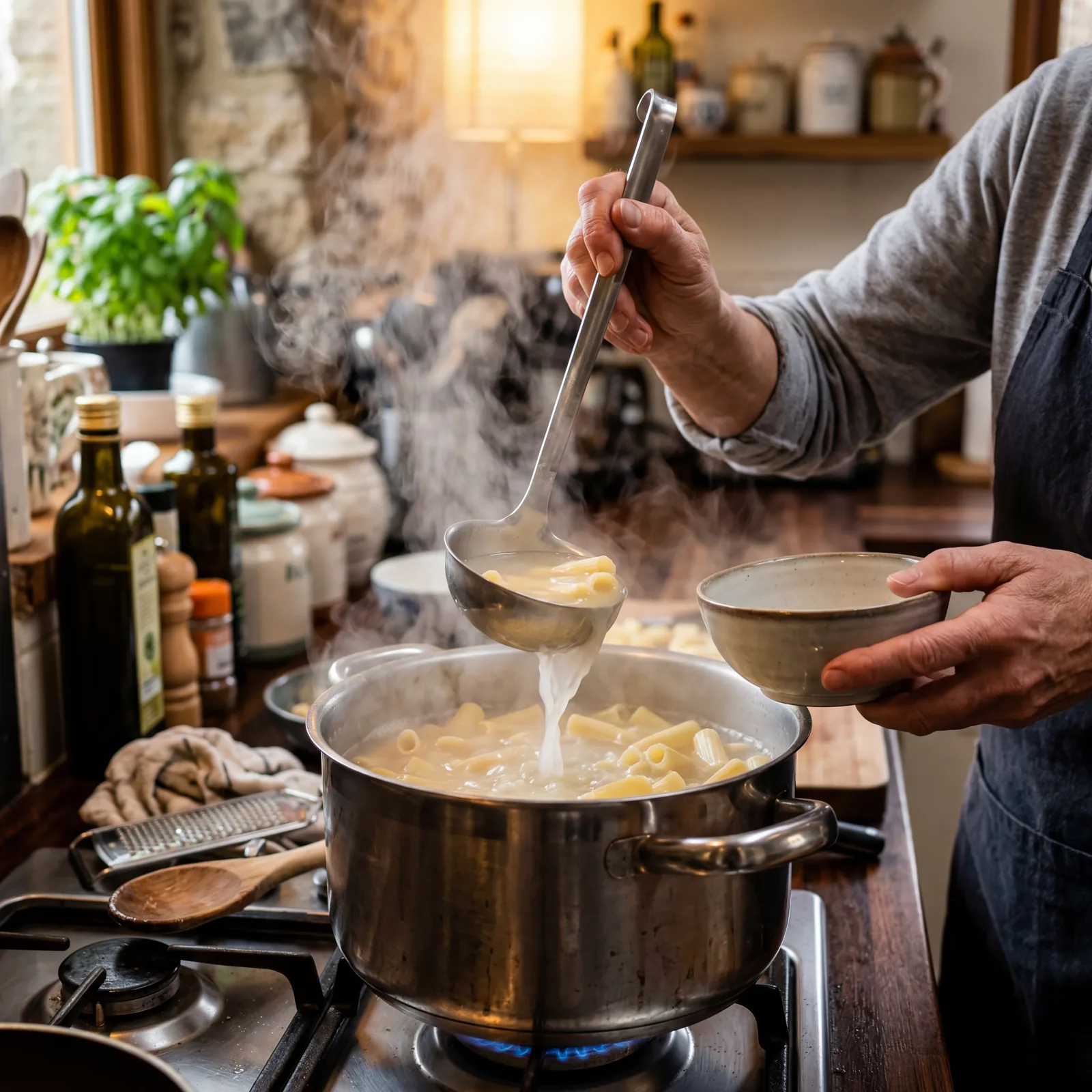
This is the tip that separates pasta that tastes like a restaurant from pasta that tastes like home — and most people pour it straight down the drain.
Before you drain the pot, scoop out one full cup of the cooking water and set it aside. When you toss your cooked pasta with the sauce, add splashes of that water as you stir. The starch in the water binds fat and liquid together into a sauce that clings instead of sliding off.
That starchy water is what Italian grandmothers have been using for generations to finish a sauce. It’s not a trick. It’s just understanding what’s already in your pot.
The best ingredient in your pasta isn’t in any grocery store. It’s already in the pot.
Most home cooks skip this one without knowing it exists. Professional pasta cooks wouldn’t dream of skipping it.
20. Toast Spices in a Dry Pan for 30 Seconds Before Adding Any Liquid

Spices from the jar taste like a fraction of what they could. Heat is what unlocks the rest.
Before you add anything wet to the pan, add your ground spices or whole seeds to the dry, hot surface. Thirty seconds, medium heat, stirring constantly. You’ll smell the difference immediately. The volatile aromatic compounds in spices only release fully when they hit dry heat. Liquid dilutes and steams them before they can bloom.
This is why a curry made by someone who knows what they’re doing smells extraordinary from the hallway. They toasted the spices first.
Thirty seconds of dry heat does more for your spice than ten minutes of simmering ever will.
19. Rest Meat for at Least 5 Minutes After Cooking Before Cutting
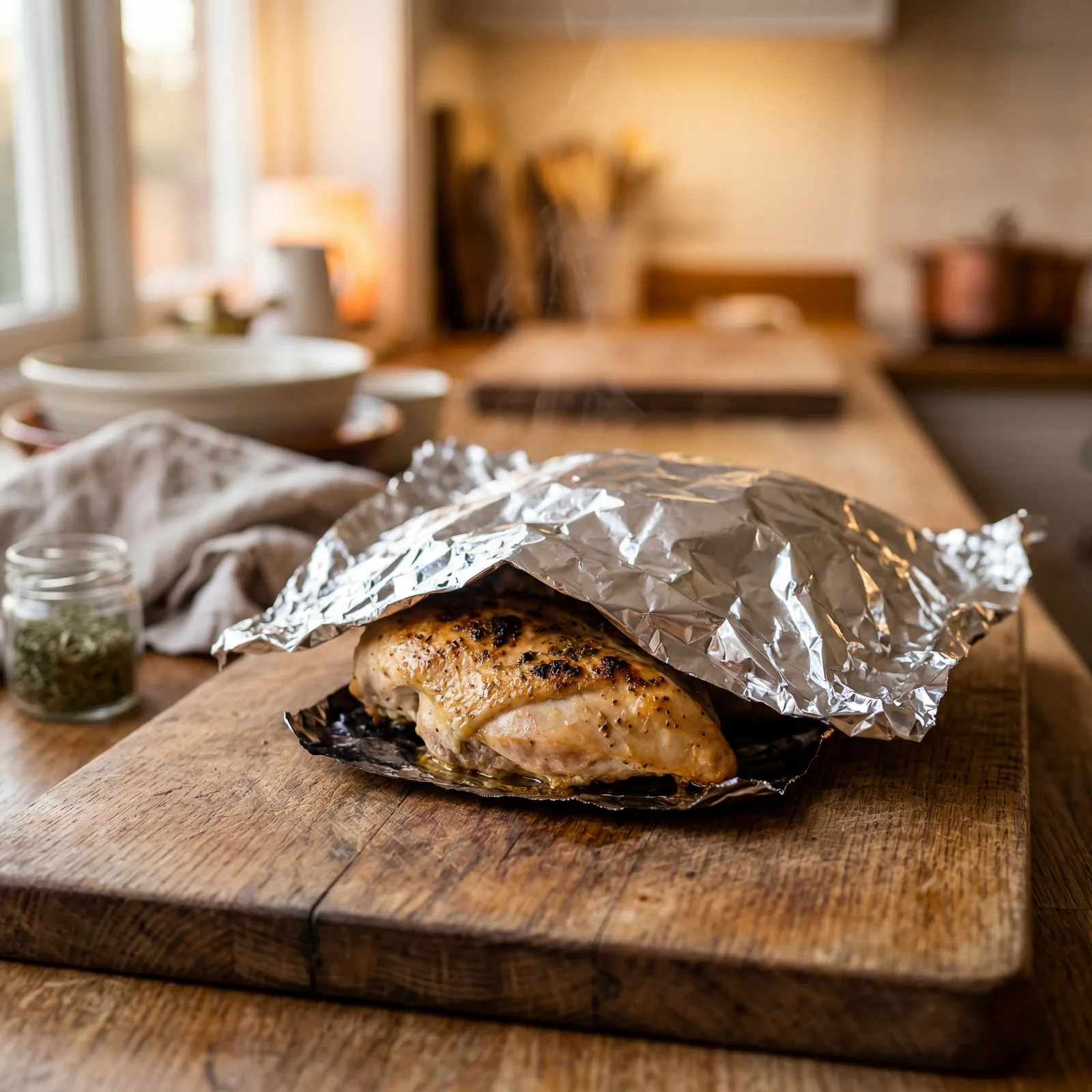
Cut a steak straight off the heat and the juice runs everywhere — onto the board, not into your mouth.
When meat cooks, the muscle fibers tighten and push liquid toward the center. Resting for 5 to 10 minutes lets those fibers relax and reabsorb that liquid back through the meat evenly. The result is a cut that stays juicy on the plate instead of bleeding out the moment your knife goes in.
The rule is roughly 1 minute of rest per 100g of meat for larger roasts. For a chicken breast or a pork chop, five minutes is usually enough.
All that juice on the cutting board is flavor you earned and then gave away.
18. Use Kitchen Scissors More
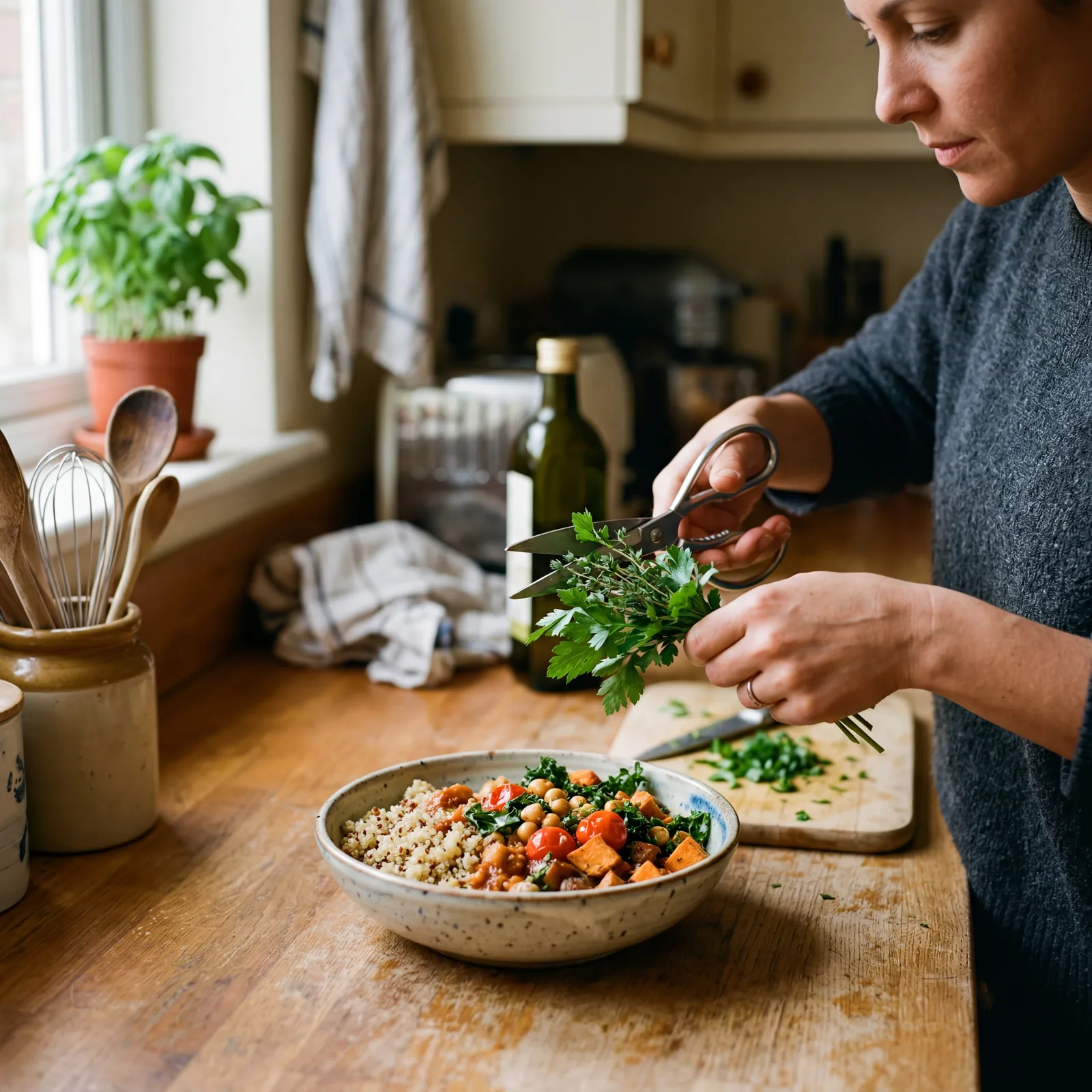
The knife gets all the credit. The scissors do half the work faster, and most people leave them in a drawer.
Kitchen scissors are faster than a knife for fresh herbs, safer for cutting pizza into portions, and the easiest way to open a can of whole tomatoes directly into a pot. They cut bacon straight from the packet into lardons without a board, and they’re how you break down a whole chicken in minutes instead of fifteen.
Scissors deliver about 40% faster prep than a knife on any task they can handle equally well.
The most underused tool in most kitchens costs less than $12 and lives in a drawer.
Before you get to the sharp-knife tip, these next few will save you from some of the most common cooking mistakes there are.
17. Set a Timer Even for Things You Think You’ll Remember
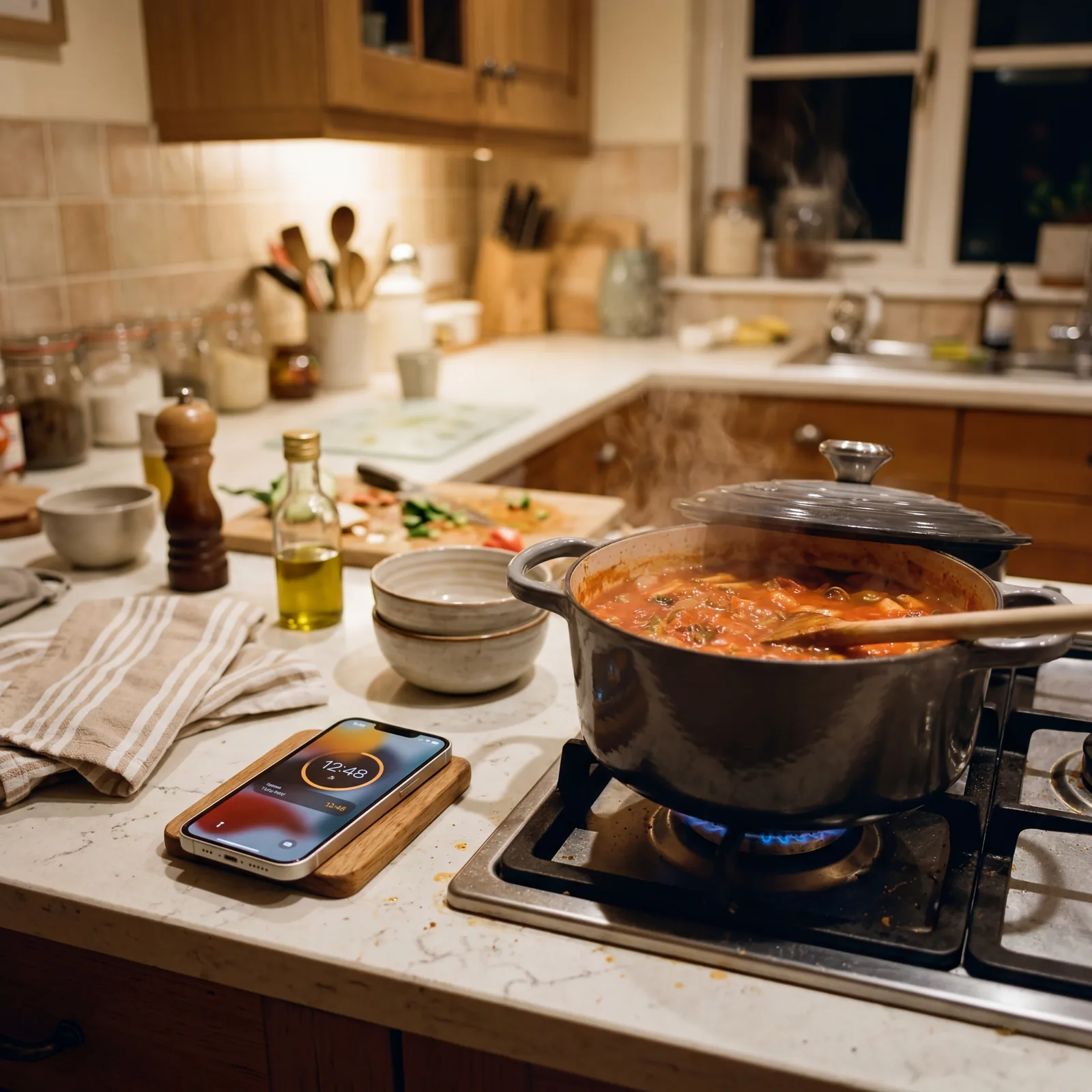
You won’t remember. The moment you leave the kitchen to answer one message, you won’t remember.
It doesn’t matter how simple the task is. Boiling an egg. Toasting bread. Reducing a sauce on low. Set the timer. Your phone is already in your hand. Your brain is better used for tasting and adjusting than for holding a countdown in the background while you try to do three other things.
Overcooked garlic turns bitter in under 45 seconds. Burnt toast happens in the same window. A timer costs you nothing.
The food doesn’t care that you were sure you’d remember.
16. A Wooden Spoon Across the Top of a Pot Stops It from Boiling Over
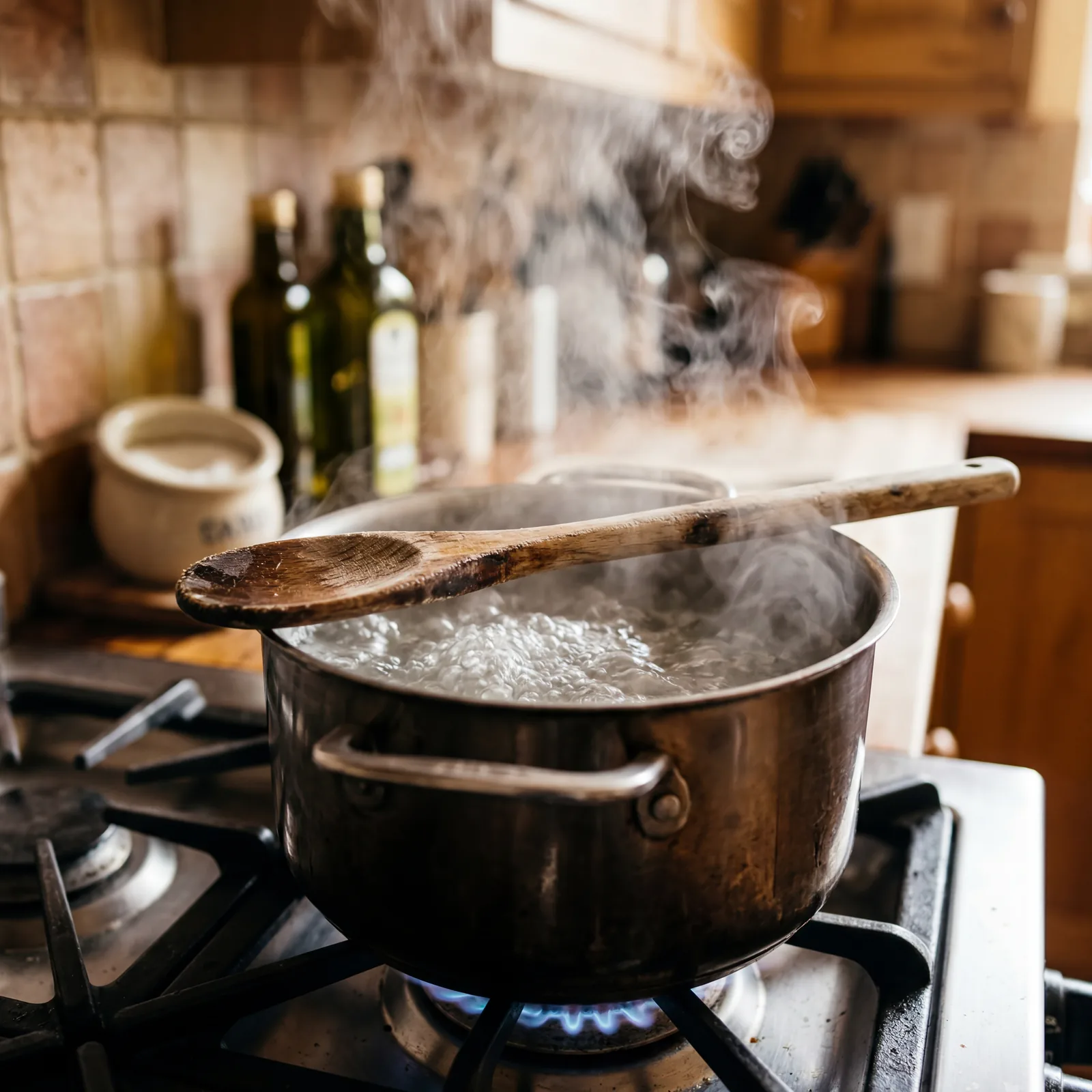
This one looks like a trick. It isn’t.
Lay a wooden spoon flat across the top of a pot that’s about to boil over and the bubbles will subside before they spill. The dry wood pops the surface tension of the bubbles the moment they touch it, collapsing the foam before it can crest the edge.
The wooden spoon also doesn’t conduct heat, so it doesn’t warm up and change the behavior of the foam. A metal spoon won’t do the same thing.
It looks like magic. It’s just surface tension.
15. Heat the Pan Before Adding Oil
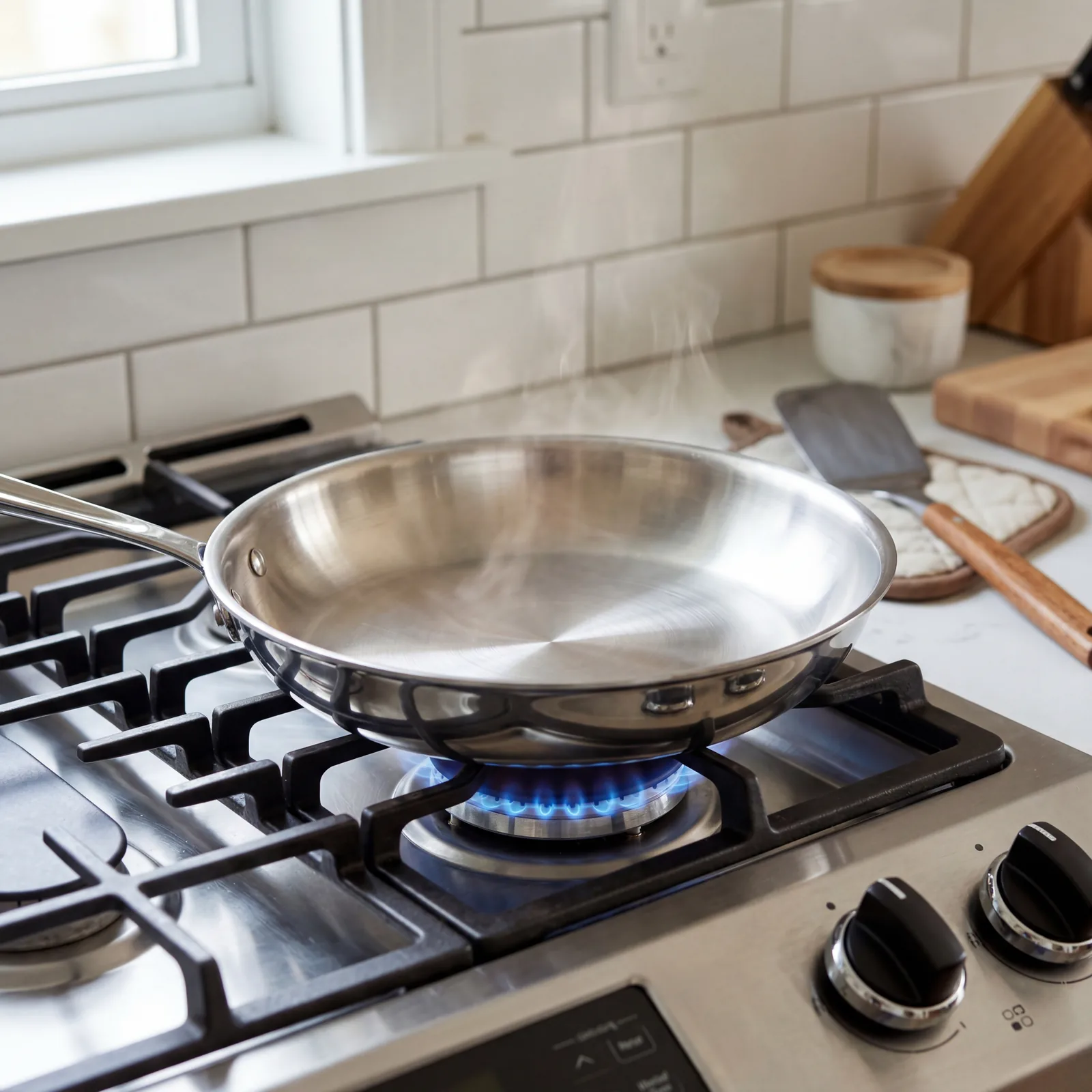
Food sticking to the pan isn’t a pan problem. It’s a temperature problem, and the solution happens before the oil even goes in.
Heat the pan on medium-high for 60 to 90 seconds before adding anything. When you flick a drop of water in and it beads and dances (the Leidenfrost effect), the pan is ready. Add the oil. Let it shimmer for a few seconds. Then add the food. A properly heated pan creates a barrier between food and metal that cold pans simply don’t have.
This is why restaurant kitchens never have stuck food. Their pans are never cold.
The pan should be hot before the oil. The oil should be hot before the food. Order matters.
This next one sounds obvious until you realize how rarely most home cooks actually do it.
14. Taste as You Cook, Not Just at the End
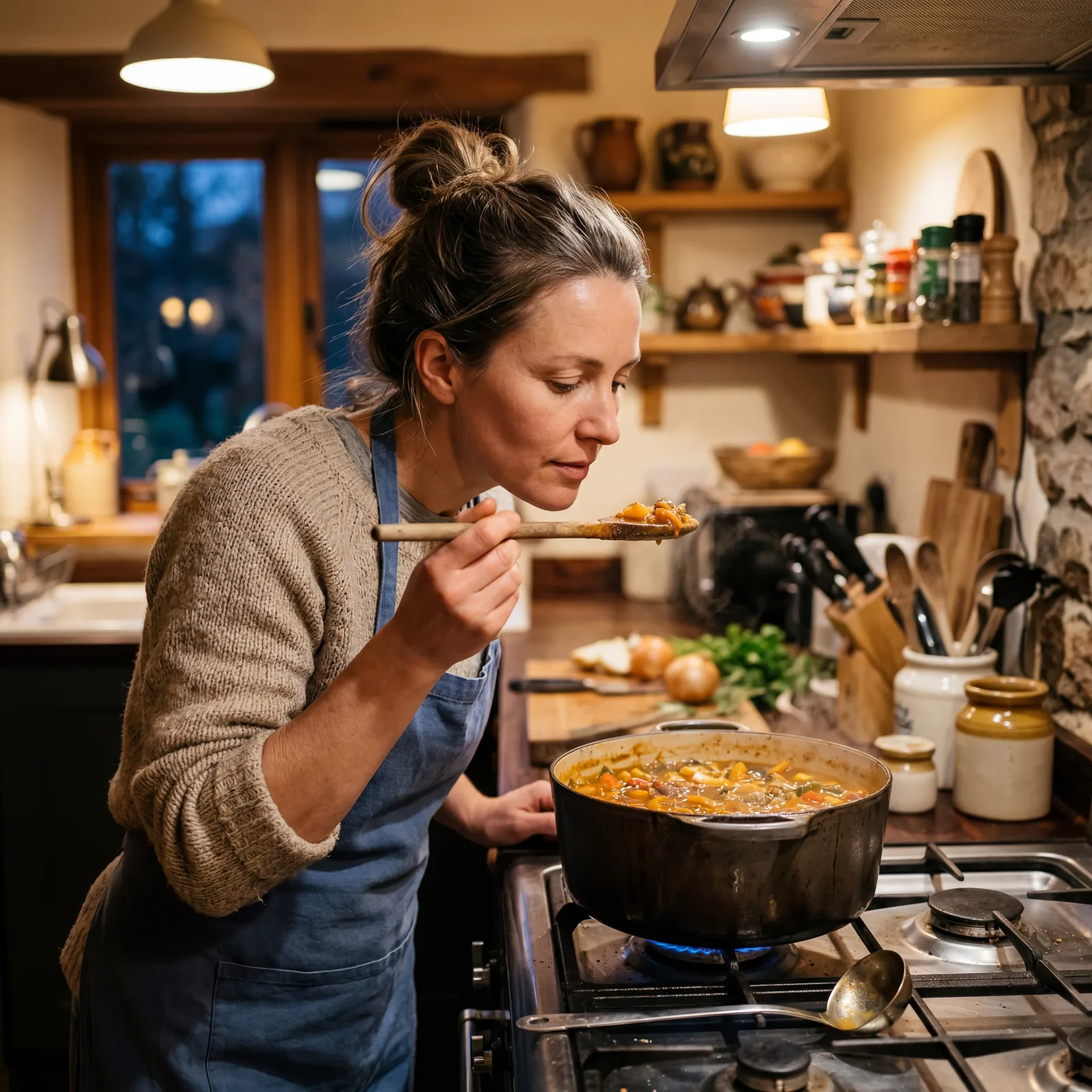
The single most common reason home cooking tastes less interesting than restaurant food is that nobody tasted it along the way.
Taste at every stage. After you add salt. After you add acid. After the sauce reduces. Before you plate. Your palate is the only tool that can tell you what the dish actually needs right now, in real time, before it’s too late to do anything about it. A dish that’s underseasoned at the end needed salt twenty minutes ago, not at the table.
Professional cooks taste constantly. It’s not a sign of uncertainty. It’s how they know where they are.
Cooking without tasting is like driving with your eyes closed. You’ll get somewhere. Just not where you intended.
13. Always Slice Meat Against the Grain

The chewiest steak you ever had probably wasn’t a bad cut. It was just sliced the wrong way.
Muscle fibers in meat run in one direction. If you slice with those fibers, you’re biting through long, intact strands. If you slice against the grain, you’re cutting those fibers short, which dramatically reduces the chewing work your jaw has to do. Look at the surface of the meat before you cut. See those lines? Cut perpendicular to them, not parallel.
Slicing with the grain increases perceived toughness by as much as 50% compared to cutting across it on the same piece of meat.
A good cut sliced wrong is a tough meal. A tougher cut sliced right is surprisingly tender.
12. Microwave Citrus for 20 Seconds Before Juicing
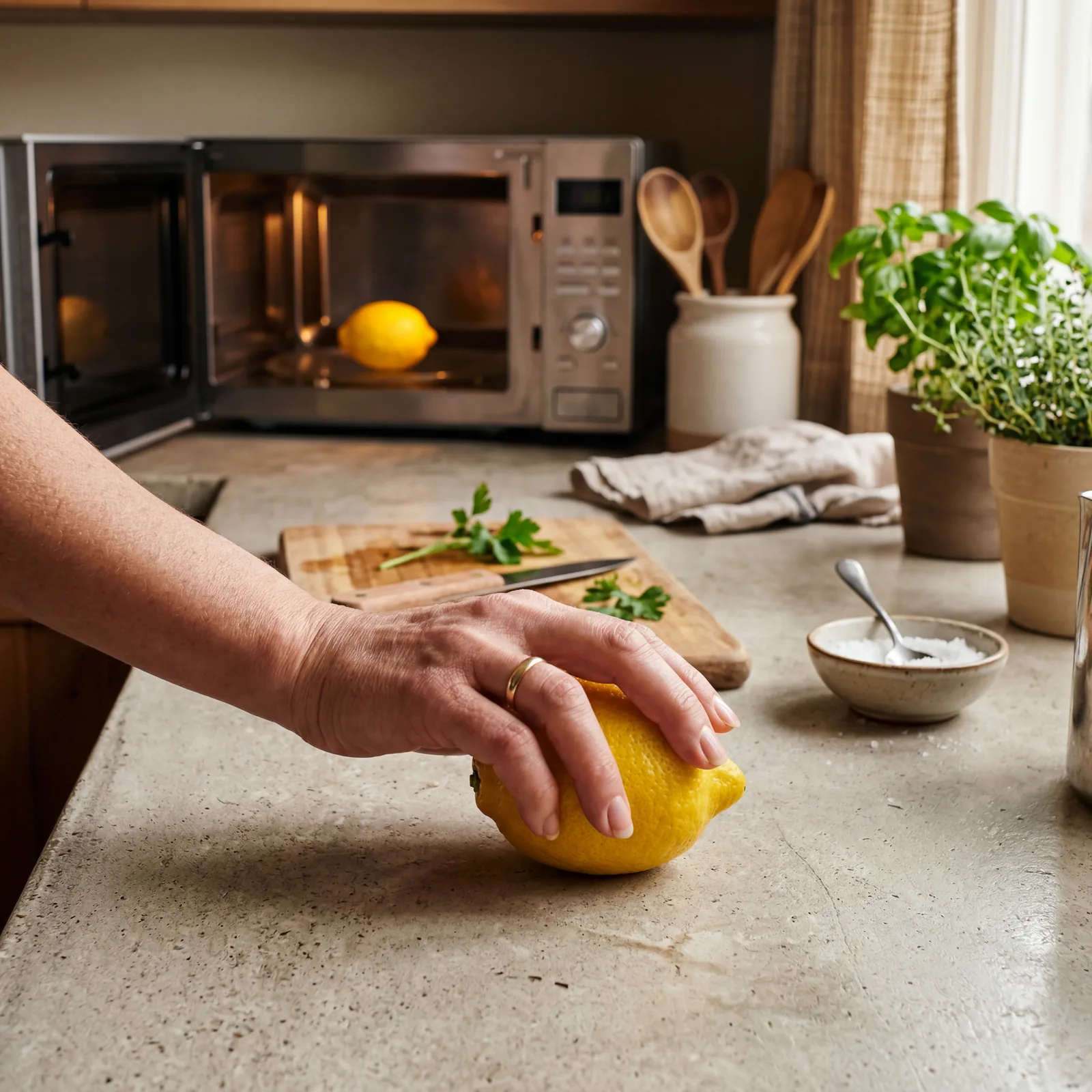
You’ve been leaving half the juice in the fruit. Every time.
Twenty seconds in the microwave warms and softens the inner membranes of lemons, limes, and oranges, making them significantly easier to compress. Roll the fruit firmly under your palm on the counter for a few seconds afterward. Then cut and squeeze. You’ll get noticeably more juice from the same fruit, sometimes nearly double what a cold lemon gives you.
The warmth breaks down the cellular walls inside the segments without cooking the juice or changing the flavor. It’s pure physics.
You’ve been buying more lemons than you needed to. Twenty seconds fixes that.
The next few are the kind of tips that take ten seconds but feel like a completely different kitchen once you know them.
11. Add a Pinch of Salt to Your Coffee Grounds to Reduce Bitterness
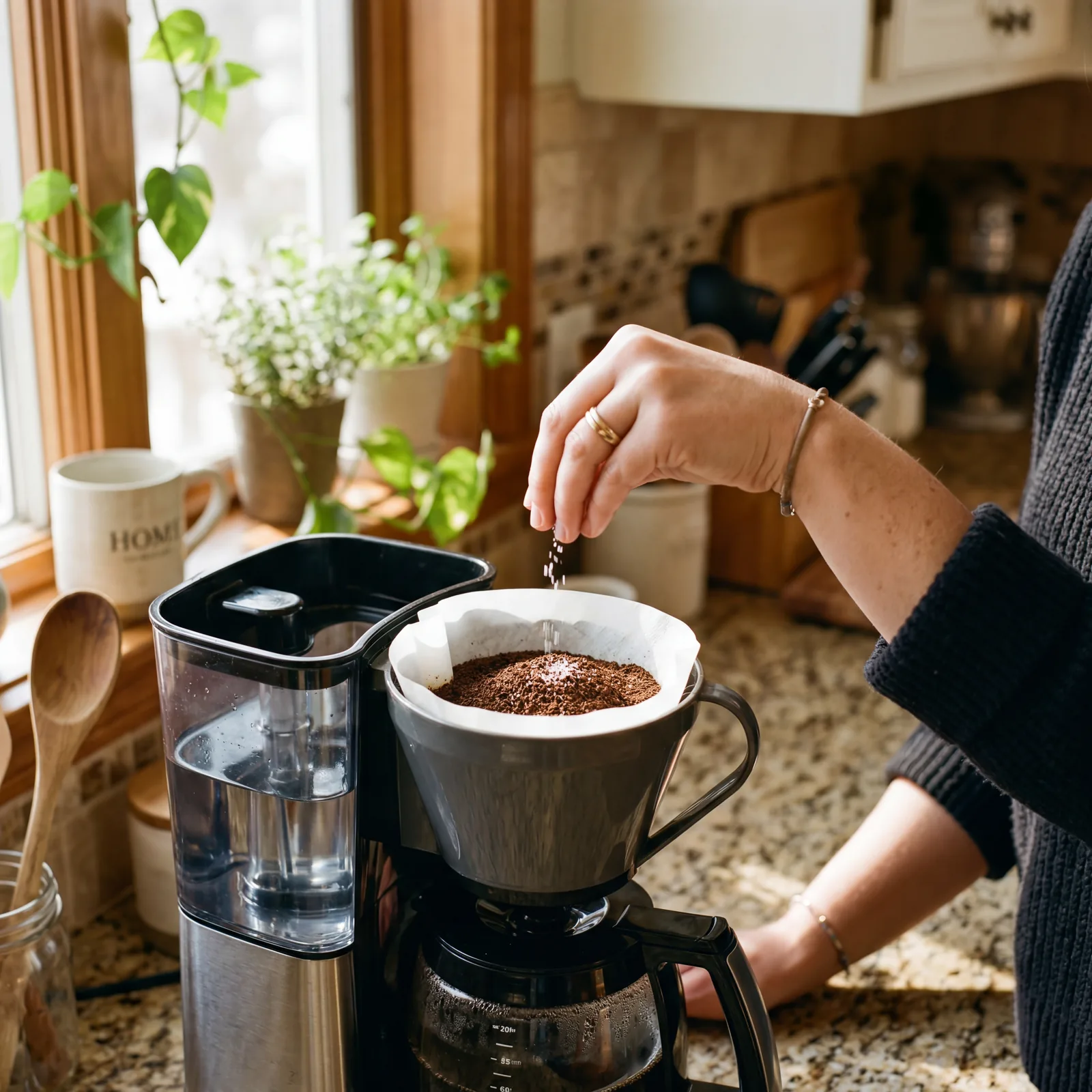
This one sounds wrong. It isn’t, and it works better than you’d expect.
Add a small pinch of salt, maybe an eighth of a teaspoon, to your dry coffee grounds before brewing. The sodium ions in salt suppress bitterness receptors on your tongue, which means the coffee tastes smoother and more rounded without tasting salty. It doesn’t add flavor. It subtracts harshness.
The science has been confirmed by food researchers: salt is more effective at reducing bitterness than sugar, which only masks it with sweetness rather than blocking the bitter signal at the source.
This matters most with cheap coffee, dark roasts, or coffee that’s been sitting on the burner too long. It won’t fix bad beans, but it will make any cup kinder to drink.
You don’t taste the salt. You just stop tasting the harsh edge.
10. Freeze Leftover Wine in Ice Cube Trays for Cooking
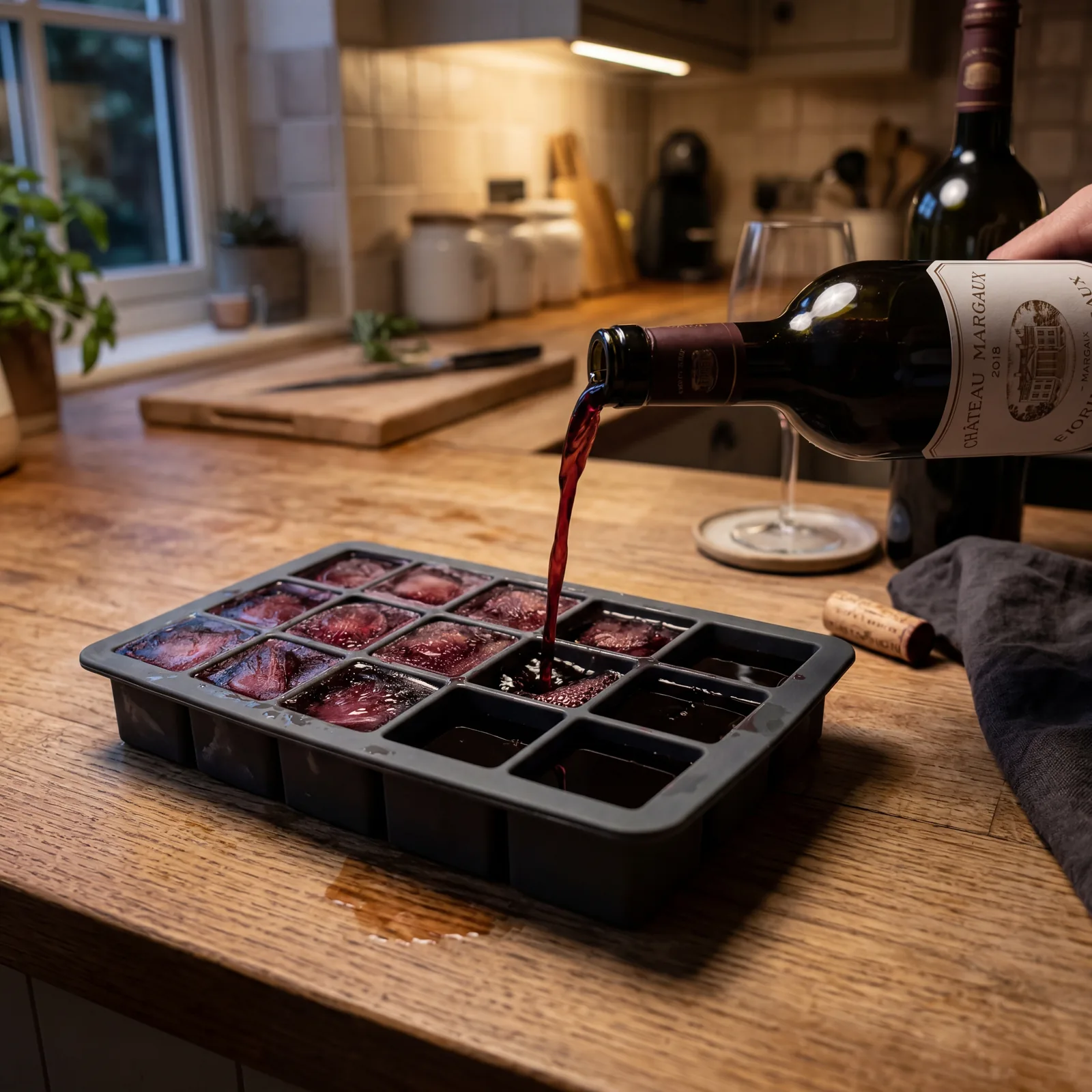
Leftover wine going down the sink is a minor tragedy that happens in thousands of kitchens every week.
Pour it into an ice cube tray instead. Each cube holds roughly 2 tablespoons of wine, which is almost exactly the amount most pan sauce and braise recipes call for. Red wine cubes go into beef braises and tomato sauces. White wine cubes finish fish, chicken, and cream sauces. Frozen, they keep their cooking utility for up to 3 months.
The alcohol content means wine freezes slightly softer than water, so it pops out of the tray cleanly and drops straight into a hot pan from frozen.
The bottle doesn’t have to be finished to be finished with.
9. Keep Your Most-Used Spices Within Arm’s Reach of the Stove

Alphabetical order looks tidy in a cabinet. It makes no sense when you’re cooking.
Think about which five or six spices you actually reach for every time you cook: salt, pepper, garlic powder, cumin, paprika, oregano, whatever your regulars are. Those spices belong within arm’s reach of the stove, not filed away in a drawer organized for aesthetics. The spices you use twice a year can live anywhere. The ones you use daily should live where you cook.
Keeping your core spices accessible means you’ll actually use them during cooking instead of skipping an addition because you’d have to cross the kitchen to get it.
Your spice drawer should be organized around how you cook, not how it looks.
Every tip from here down is something most experienced cooks do without even thinking about it. These are the ones worth slowing down for.
8. Pat Meat Completely Dry Before Searing

A beautiful sear, the kind with deep brown crust and rich flavor, is almost impossible on wet meat.
Before any meat goes into a hot pan for searing, press it firmly with paper towels on all sides until the surface is genuinely dry. Moisture on the surface of meat creates steam when it hits the pan. Steam keeps the surface temperature below 212°F (100°C), which is far too cool to trigger the Maillard reaction. That reaction, which starts at around 280°F (140°C), is what creates the crust, the color, and much of the flavor you’re after.
Wet meat steams. Dry meat sears. The difference on the plate is enormous, and it costs nothing but a few sheets of paper towel.
Moisture is the enemy of crust. Dry the meat every single time.
7. Always Use Two Cutting Boards
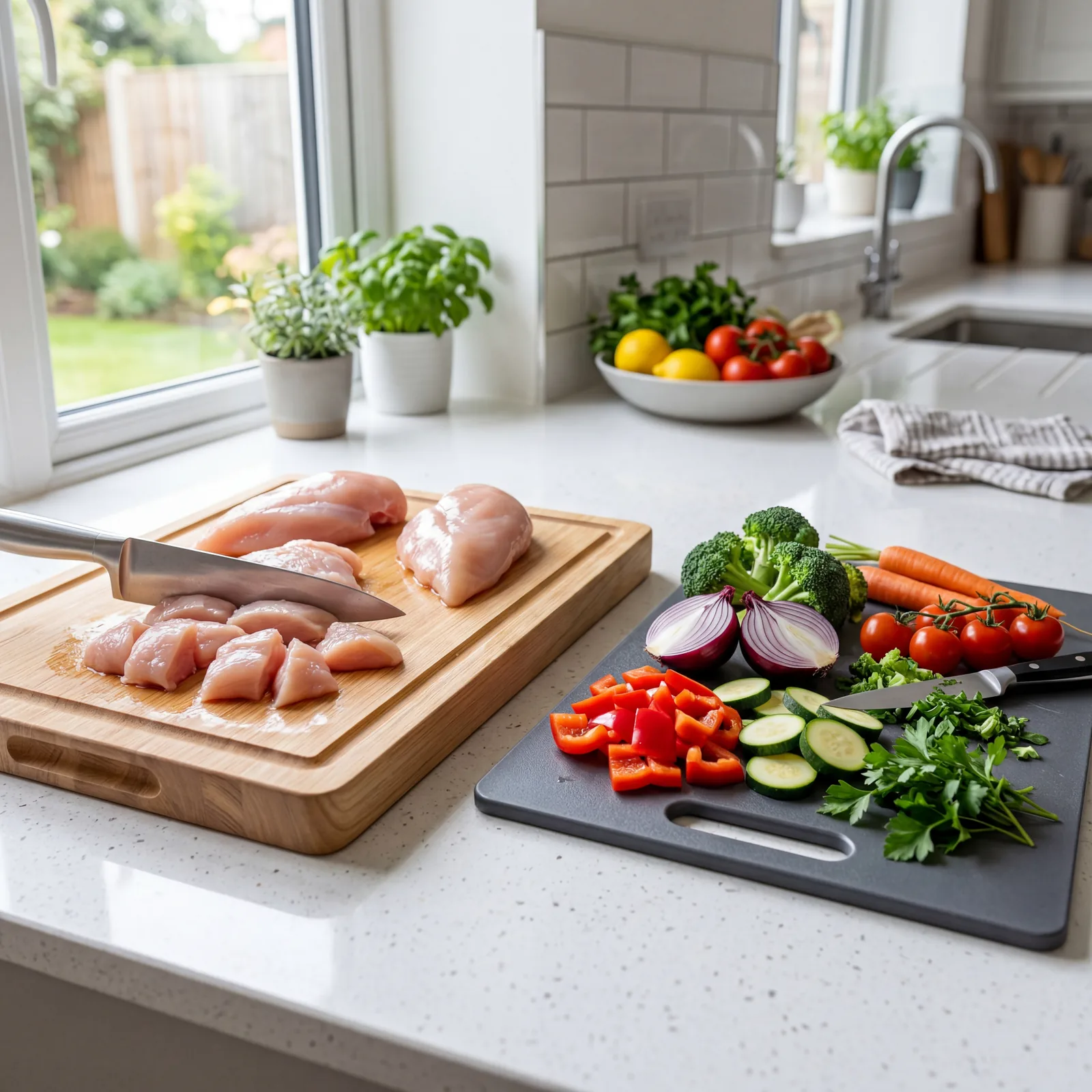
One board for raw meat. One board for everything else. This isn’t food safety theater. It’s a rule that exists because cross-contamination is invisible and genuinely dangerous.
Raw chicken, beef, and pork carry bacteria that survive on a cutting board surface even after you rinse it. If you then use that same board to slice a tomato or chop herbs that go straight onto a plate uncooked, those bacteria transfer directly to the food you’re about to eat. The CDC estimates that 48 million Americans experience foodborne illness each year, and cross-contamination in home kitchens is a leading cause.
Two boards costs less than $20 combined and removes one of the most common kitchen risks entirely. Color-code them if it helps. Red for meat. Green for produce.
The rule is easy. The consequences of ignoring it are not.
6. Add Acid at the End to Brighten Any Dish
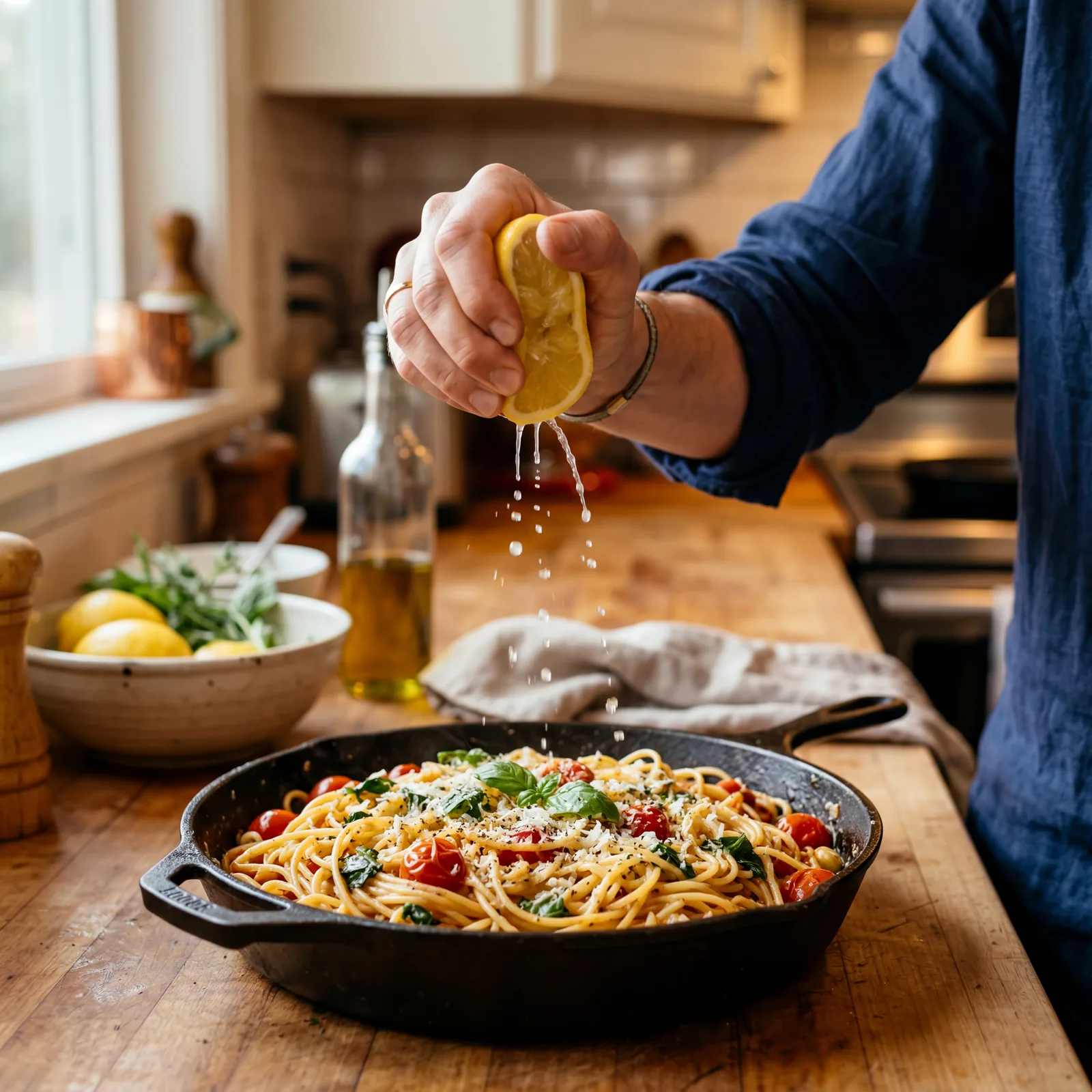
There’s a reason a finished dish sometimes tastes flat even though the seasoning seems right. It’s almost always missing acid.
A squeeze of lemon juice or a small splash of wine vinegar added at the very end of cooking does something salt can’t. It brightens. It lifts. It makes the other flavors in the dish more distinct and present without adding a sour taste. Think of it as contrast: acid makes richness taste richer and herbs taste fresher.
As little as half a teaspoon of acid can transform a dish that tastes muddy or heavy into one that tastes alive. Restaurant cooks finish nearly every savory dish this way as a matter of habit.
The key is adding it at the end. Acid added early in cooking mellows and integrates. Acid added at the finish wakes everything up.
If the dish tastes close but not quite right, it almost certainly needs acid.
5. Let Your Pan Get Properly Hot Before Adding Anything

This is different from item 15. That was about sequence. This is about patience, and most home cooks don’t have enough of it with a pan.
After your oil goes in and before your food goes in, wait. Not just until the oil shimmers. Wait until the oil is visibly moving in the pan, rippling and starting to smoke at the edges. For medium-high heat, that’s 30 to 60 full seconds after the oil goes in. The pan needs to reach 375 to 450°F (190 to 230°C) to properly sear, brown, or saute anything efficiently.
Adding food too early is why home cooking sticks, steams, and lacks the depth of color and flavor that restaurant food has. The food drops the temperature the moment it hits the pan. A properly preheated pan recovers immediately.
The extra 45 seconds of waiting is worth more than any piece of equipment you could buy.
From here, you’re into the top five. These are the ones that change how you think about cooking, not just how you do it.
4. Mise en Place: Prep Everything Before You Start Cooking
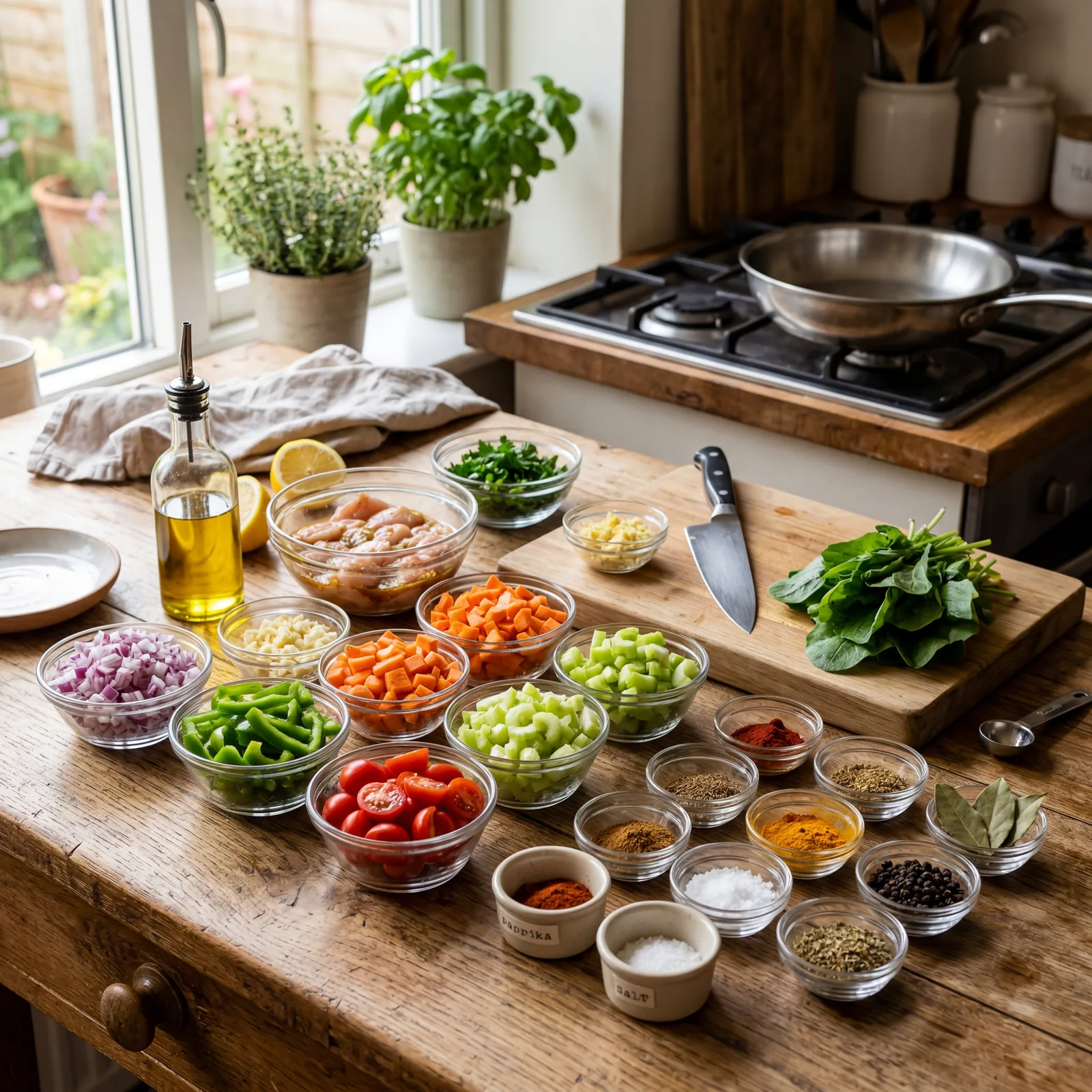
The French Principle That Every Professional Kitchen Runs On
“Mise en place” means everything in its place. It means chopping, measuring, and organizing every ingredient before the first burner turns on. Not during. Before.
When you cook without mise en place, you’re doing two jobs at once: processing raw ingredients and managing an active stove. The active stove almost always wins your attention at exactly the wrong moment. The onions go in too early because you’re still chopping the garlic. The sauce reduces while you’re searching for the cumin. Everything happens in the wrong order and at the wrong time.
With mise en place, cooking becomes execution. You follow the steps without scrambling. The dish gets your full attention because the prep is done.
Chefs don’t cook faster because they’re more skilled. They cook faster because they prepared.
Research into home cook behavior consistently shows that prep-before-cooking reduces error rates and dramatically lowers stress during the active cooking period. A study from the Cornell Food and Brand Lab found that organized kitchen environments improved food-quality outcomes and reduced decision fatigue throughout the cooking process.
The prep isn’t part of cooking. It’s what makes cooking possible.
3. Learn One Sauce by Heart

The Multiplier That Makes Everything Else Better
One sauce. Not five. Not the whole of French cooking. Just one that you know well enough to make without a recipe.
A simple pan sauce: deglaze with wine or stock, reduce by half, finish with a knob of butter. A basic vinaigrette: one part vinegar, three parts oil, a pinch of salt, a dab of mustard to hold it together. A béchamel: butter, flour, milk, salt, a scrape of nutmeg. Any one of these, learned properly and made enough times that it lives in your hands, will make every meal you cook more complete.
Sauces are where flavor is built and concentrated. They’re also what separates cooking that feels improvised and alive from cooking that feels like following instructions.
Learning one sauce by heart takes about three practice sessions. After that, it becomes part of how you cook, not something you look up.
You don’t need to know everything about cooking. You need to know one sauce really well.
2. Buy One Genuinely Sharp Chef’s Knife and Keep It Sharp
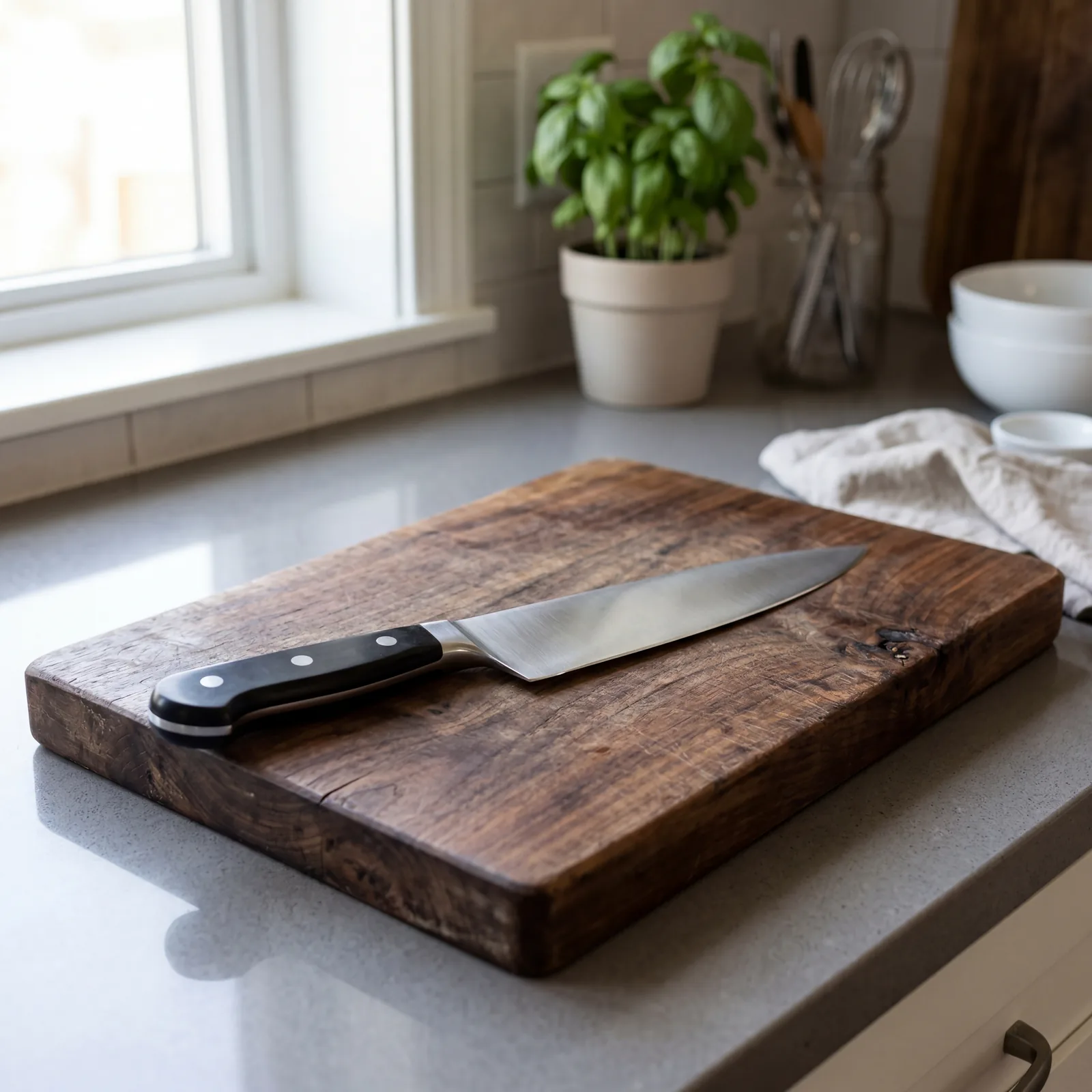
The Tool That Changes Everything Before the Food Does
Most home kitchens have a block full of knives. Most of those knives are dull. And a dull knife is the single most dangerous tool in a kitchen, because it requires force, and force means loss of control.
A sharp knife glides through an onion. A dull knife drags and slips. The drag is where accidents happen, and the slipping is how the blade finds your fingers instead of the food. A sharp 8-inch chef’s knife in the $60 to $100 range from a reputable brand like Victorinox or Wusthof outperforms a $300 set of dull knives in every practical measure.
Get it sharpened professionally once or twice a year. Use a honing steel before each session to realign the edge between sharpenings. Store it on a magnetic strip or in a block, never loose in a drawer where the edge dulls against everything it touches.
A sharp knife takes less effort, gives you more control, and is genuinely safer than the dull one you’re currently using.
The cost difference between a good knife and a mediocre one is often less than a single dinner out. The difference in what you produce with it compounds every single day you cook.
It’s bad. But it doesn’t come close to what’s waiting at #1.
1. Clean as You Go
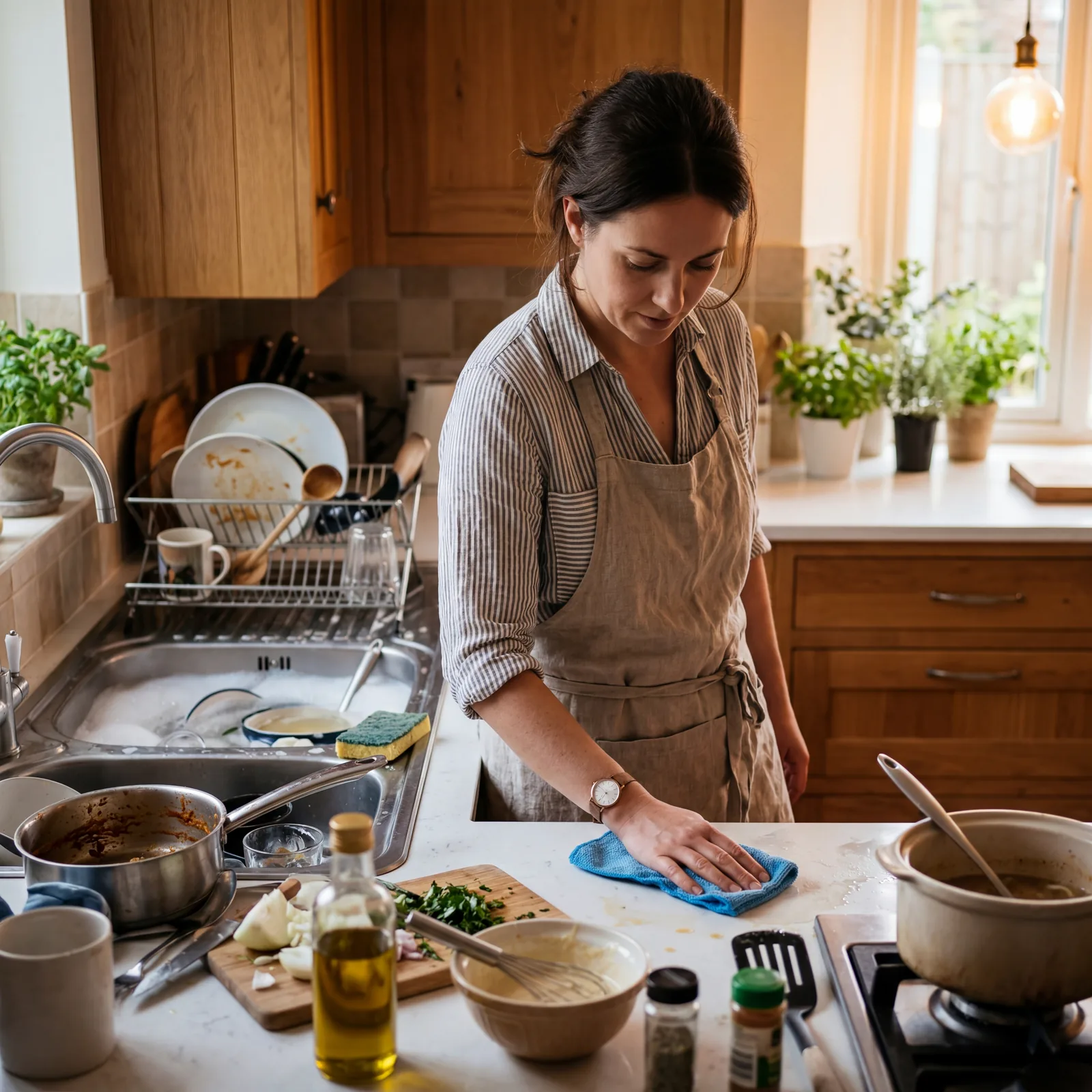
The Habit That Changes Everything Else
This is the one. Not because it’s the most technical or the most surprising. Because it changes how cooking feels more than any other single thing you can do, and almost nobody does it consistently.
Cleaning as you go means that while something simmers, you rinse the cutting board. While the oven preheats, you wipe the counter. While a sauce reduces, you wash the bowls you prepped in. You don’t cook and then clean. You cook in a kitchen that stays clear, because you’re managing it the whole time.
A retired home economics teacher from Texas named Barbara told me she spent twenty years cooking in chaos before a friend showed her this habit. “I used to dread the kitchen after dinner,” she said. “Not the cooking. The aftermath. Once I started cleaning as I went, the whole thing felt different. The cooking felt lighter too.”
The psychology here is real. A cluttered workspace increases cognitive load and stress. Studies in behavioral science show that physical environment directly affects perceived task difficulty. A clear counter doesn’t just look better. It makes the cooking feel easier than it actually is.
You don’t need a new kitchen. You don’t need new equipment. You need a sponge within reach and the habit of using it between steps.
Now open your kitchen drawers. There’s a good chance you can start this one tonight.
Worth Knowing Before Your Next Meal
None of these tips require you to overhaul the way you cook overnight. Pick one, use it this week until it feels automatic, and then pick another. That’s how good habits actually take hold in a kitchen, quietly and one at a time. If any of these changed something for you, share this with someone who loves to cook or is just starting to figure it out.