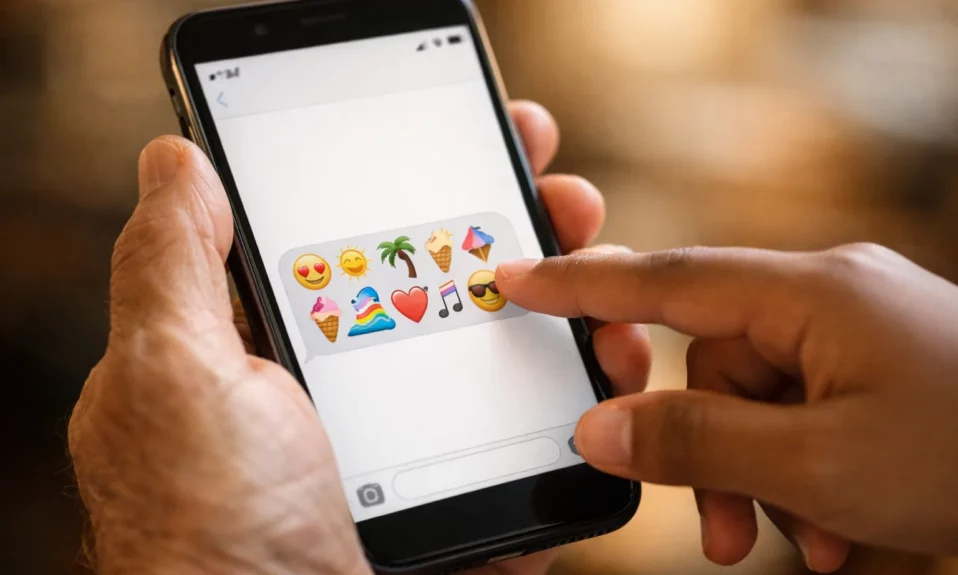

Scammers use specific emojis to start conversations and build trust before the ask. If you get one of these 8 emojis from a number you don’t recognize, here’s what you’re actually looking at.
If You Get One of These Emojis in a Text From a Stranger, Delete It Immediately
A text comes from a number you don’t recognize. There’s no name, no context, just a short message and one of these emojis at the end. It feels harmless, maybe even friendly. That’s exactly what it’s designed to feel like.
The emoji at #1 on this list appears in over 60% of the “wrong number” scam texts the FBI tracked in 2024, and most people who responded didn’t realize they’d been targeted until weeks later.
Go through all eight. If any of them look familiar from your recent texts, keep reading.
8. 🙏 The Praying Hands (From Someone You’ve Never Met)
This one shows up in texts like “I’m so grateful for people like you in the world 🙏” or “God bless you, I hope you’re having a wonderful day 🙏” from a number you’ve never seen. It feels warm and spiritual. That’s intentional.
Scammers use the praying hands emoji to signal sincerity and shared values early in a conversation. The goal is to get a reply. Once you reply, they have confirmation your number is active and you’re open to communication. One reply is all they need to classify you as a warm lead. You don’t owe a stranger a response, no matter how kind the message feels.
7. 💼 The Briefcase or 📈 The Chart Going Up

A message arrives: “Hi, I was looking for my financial advisor and I think I texted the wrong number 😅. Sorry! But since you’re here, have you heard about the returns people are getting right now? 📈”
This is not an accident. This is the opening line of an investment confidence scam, often called “pig butchering.” The briefcase and rising chart emojis are shorthand for “this is about money and it’s going well.” Once you show curiosity, the conversation shifts toward an exclusive opportunity, a platform to sign up for, and eventually a request to invest. The FBI says these scams cost Americans $3.9 billion in 2023 alone.
The next emoji is one of the most disarming on this list. Almost nobody expects it.
6. 🌸 or 🌷 Flower Emojis From an Unknown Number

A text that starts with a flower emoji feels gentle and non-threatening. It’s typically something like: “Good morning! 🌸 Sending you a little sunshine today. Hope your week is going well.” No context, no name, no shared history.
These are used in long-game romance and friendship scams. The flower opener signals softness and warmth. If you reply, the follow-up texts are equally gentle. Over days or weeks, a real emotional connection can develop before the scammer ever mentions money. A woman named Carol from Tennessee told us she texted someone who introduced themselves this way for almost a month before they mentioned they were in a financial crisis. “It felt like a friend,” she said. “I still feel embarrassed about it.”
5. 😍 The Heart Eyes (From Someone Introducing Themselves)

A text that opens with “Wow, your profile picture is gorgeous 😍” or “I saw you on [app] and had to reach out 😍” from someone you’ve never spoken to is a classic romance scam opener. The heart eyes emoji is used to create instant flattery and personal connection.
Flattery from a stranger with no prior context is a tactic, not a compliment. These openers often come with a profile photo of an attractive person, a compelling backstory, and a warmth that feels surprisingly genuine. The emotional investment happens first, usually over several weeks. Then the crisis arrives. If a stranger’s first message to you includes 😍, that’s a signal to not respond.
Read More: 12 Text Scams Targeting Americans Over 55 Right Now
4. 🤝 The Handshake or 💰 The Money Bag

Texts with these emojis typically sound like business proposals. Something like: “Hi, I got your number from a colleague. We’re looking for trusted partners for a short-term investment opportunity 💰. Are you open to hearing more? 🤝”
The professional framing is deliberate. This version of the scam targets people who’ve had careers in business, finance, or management because the tone matches your background. It’s designed to feel like a peer-to-peer approach rather than a cold pitch. The “colleague” referral is always fabricated. There is no colleague. If you don’t know the number, don’t engage with the content of the message.
3. ❤️ or 🥰 Affectionate Emojis in an Opening Text

A message arrives: “Hey, I don’t know if you remember me but we briefly met at [event/place] and I’ve been thinking about you ❤️. Would love to reconnect 🥰.” The specific event is vague enough that you can’t confirm or deny it.
These openers are designed to make you feel like you’ve made an impression on someone and it’s your memory that’s the problem, not their story. The combination of the red heart and the affectionate smiling face creates immediate emotional warmth. If you genuinely can’t place the person and the number isn’t in your contacts, trust that. Ask them to identify themselves specifically before responding to the emotional content at all.
The last two are the ones most people fall for without realizing it until later.
2. 😅 The Nervous Laugh (The “Wrong Number” Opener)

“Hey Sarah, still on for Saturday? 😅” You reply to let them know they’ve got the wrong number. They respond: “Oh gosh, I’m so sorry! That’s embarrassing 😅. I hope I didn’t interrupt anything! How’s your day going?”
That 😅 is working hard. It signals awkwardness and humanity. It makes the “mistake” feel genuine and relatable. But this script is followed so consistently across scam operations that it’s been documented and named by the FBI. The wrong number is never a coincidence. The 😅 is there to disarm you, and it works. If you get a text clearly meant for someone else, you don’t need to reply at all.
What’s waiting at #1 appears in more documented scam openers than any other emoji on this list.
1. 😊 The Warm Smile (In a Context-Free First Message)
The Most Common Emoji Scammers Use to Start a Conversation

It looks completely innocent. “Hi there! I hope this finds you well 😊” or “Good afternoon! Just wanted to reach out 😊” from a number you don’t recognize. No name. No shared context. Just warmth and a smile.
The 😊 is the most commonly used emoji in scam opening texts because it reads as approachable, harmless, and human. It’s the digital equivalent of a warm smile from a stranger at your door. And like that situation, the right response isn’t always to open up.
Here’s the pattern: the first text is just a greeting. If you reply, the second text introduces a name and a light personal detail. The third mentions something they do for work, often something impressive but vague. By the fifth or sixth exchange, you feel like you know this person. Then comes the investment tip, the crisis, or the request.
A woman named Judy from Ohio received a text like this on a Thursday afternoon. It was friendly, warm, and appeared to be from someone who simply had the wrong number but wanted to chat anyway. Over three weeks of daily texts, she felt she’d made a real friend. By the time she was asked to invest $5,000 in a “private opportunity,” she trusted the person completely. She sent it. The number went silent the same day.
The 😊 in a context-free text from a stranger isn’t a sign of bad intentions by itself. But it is a sign to pause before you respond. Ask yourself: do I know this person? Does this number match anyone in my contacts? If the answer is no, deleting is always the right call.
Now check your recent texts. If any unknown number has sent you a warm opener with an emoji and no clear context, you know what you’re looking at.
A Simple Rule for Unknown Number Texts
If a text from an unknown number creates warmth, curiosity, or urgency, those feelings were engineered. That’s not a reason to be unkind about it. It’s just a reason to pause.
Don’t reply, don’t click, don’t engage with the content. If it’s genuinely someone you know, they’ll reach out another way. Which one of these have you seen recently? Drop it in the comments.