
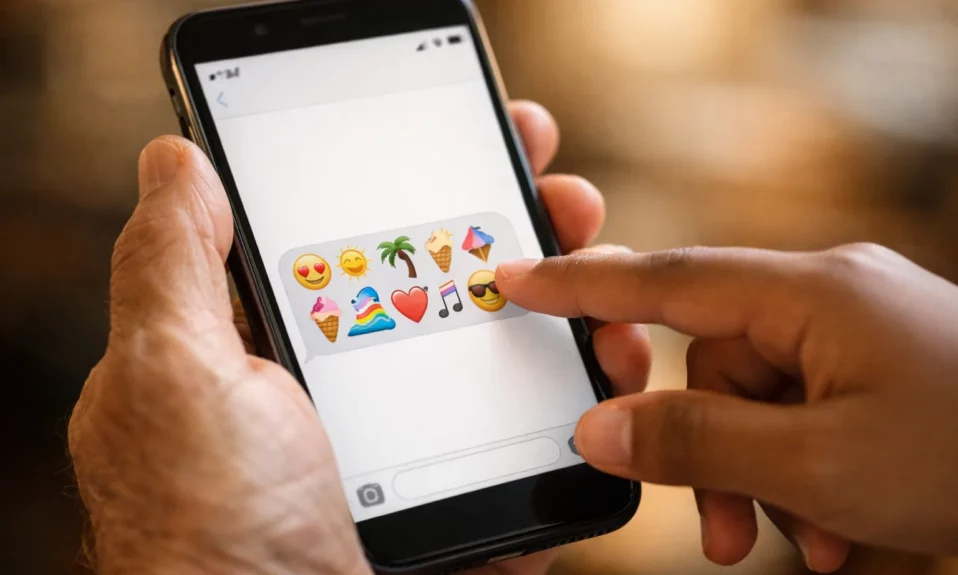
Your kids and grandkids are sending you emojis that mean something completely different than what you’re reading. Here are 10 of them decoded, including the one at #1 that almost every parent gets wrong.
10 Emojis Your Kids Send That You’re Probably Misreading
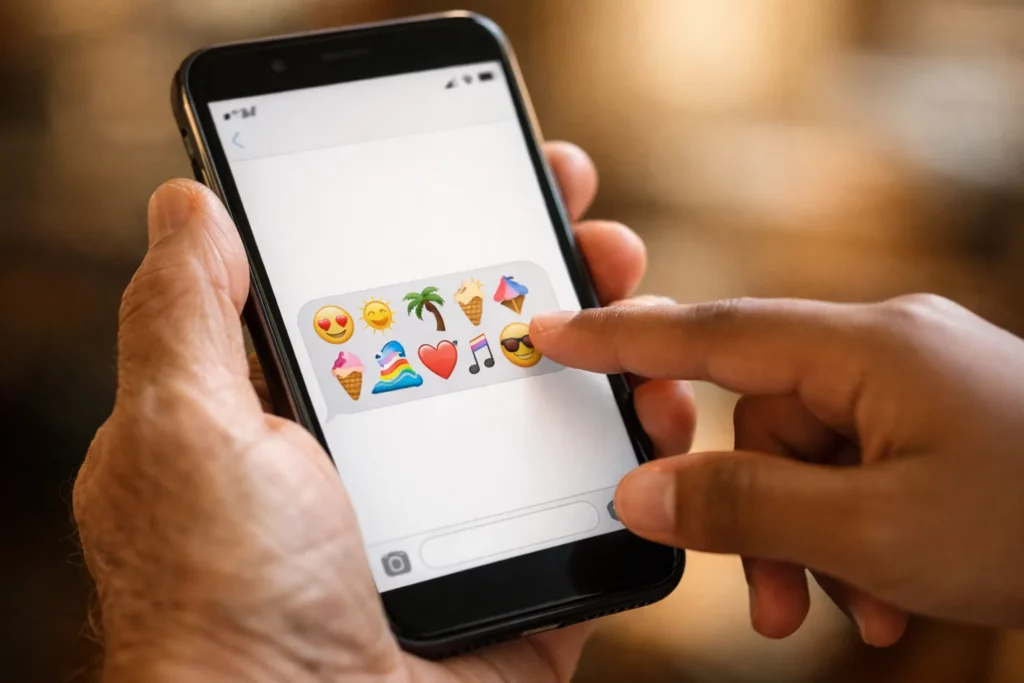
They sent you something that seemed off. Or you said thank you for a message that apparently wasn’t what you thought it was. Either way, there’s a gap between what your kids and grandkids are sending and what you’re reading, and it’s wider than most people realize.
The one at #1 is the emoji that causes the most visible confusion in family group chats, and it’s been misread by parents and grandparents consistently since at least 2021.
Go through all ten. You’ll almost certainly recognize something from your own recent messages.
10. 🙃 The Upside-Down Smile

Your kid sends “Can’t wait for this traffic 🙃” or “Great, the printer just jammed again 🙃.” You see a smile and read it as cheerful. They’re not cheerful.
The upside-down smile is the universal emoji for sarcasm, resignation, or mild exasperation. When your kid sends it, they’re signaling “everything is fine” with the clear subtext that everything is distinctly not fine. It’s used the way someone might smile through clenched teeth. If you responded warmly to their frustration because you saw a smile, now you know why they gave you a look.
9. 👁️👄👁️ The Eyes and Mouth Face
This one is used to express being speechless, stunned, or uncomfortable with something. It looks strange, which is exactly the point.
“👁️👄👁️” is the textual equivalent of staring in horrified or shocked silence. If your child sends you this after you share a news story or describe a situation, they’re not being rude. They’re telling you that what you just said is so wild, so uncomfortable, or so surprising that they genuinely don’t know how to respond in words. Consider it a compliment to your storytelling, albeit a slightly alarming-looking one.
The next one trips up almost every parent the first time they see it in the family chat.
8. 😭 The Crying Face (When Nothing Is Wrong)

You share a cute photo of the grandkids, and your daughter sends back 😭. Multiple, even. You’re about to ask if she’s okay.
She’s fine. She’s more than fine. Among younger users, 😭 has flipped to mean overwhelmingly positive emotion, particularly things that are so cute, sweet, or moving that it produces an involuntary emotional response. “This is too cute 😭😭” means the person is genuinely delighted. “I can’t 😭” means they’re overcome with positive feeling. The visual of crying has been reclaimed to mean emotional overflow in any direction.
7. 🤌 The Italian Hand Pinch
If your grandchild sends you a photo of food you made and adds 🤌, they are complimenting you. Enthusiastically.
The Italian pinched hand gesture crossed into internet culture and came to mean “perfect,” “exquisite,” or “this is exactly right.” It’s a very high praise emoji in the context of food, aesthetics, or anything done with skill. “Your lasagna 🤌” translates to: this lasagna is perfect and I can barely express it. If you haven’t started making that lasagna more often, you might want to.
6. 💀 The Skull (Again, But This Time Someone Sent It to You)

You tell a joke in the family group chat. Your grandchild responds with just 💀. You’re staring at a skull emoji trying to figure out what you did wrong.
You didn’t do anything wrong. The skull means “I’m dead from laughing.” It’s the highest-intensity laugh reaction in use among younger generations, having replaced 😂 around 2021. If someone sends you 💀 after something you shared, you were so funny that they’re metaphorically deceased. That’s the best response you can get. You can stop worrying.
Read More: What Each Heart Emoji Actually Means (They’re Not All the Same)
5. 🙄 The Eye Roll (When It Doesn’t Mean What You Think)

Your teenager sends 🙄 in response to something you said, and you brace for a fight. But their tone in the rest of the message is warm and playful.
Here’s the nuance: among younger users, a light 🙄 used in an otherwise affectionate context often signals fond exasperation rather than genuine dismissal. “Mom, you’re so embarrassing 🙄” followed by a 😂 isn’t criticism. It’s the same energy as laughing and shaking your head. Context matters enormously. If the message around the eye roll is warm, the eye roll is probably warm too.
It gets more interesting from here. The next two have specific meanings most parents don’t know.
4. 🫠 The Melting Face

This one looks alarming. A face slowly melting into a puddle. Your child sends it and you’re trying to figure out if they need help.
The melting face emoji means overwhelmed, exhausted, or deeply uncomfortable, but almost always in a self-aware, slightly dramatic way rather than a genuine emergency. “Five meetings back to back 🫠” means they’re tired and a bit theatrical about it. “This heatwave 🫠” means they’re hot and they want you to know how hot. It’s expressive, not a cry for help. Think of it as an upgrade from the plain tired emoji.
3. 🫶 The Heart Hands (What It’s Actually Saying)

You might have assumed this emoji was broadly similar to a regular heart. And it is, in some ways. But the heart hands carry a specific quality worth understanding.
🫶 means “I appreciate you” or “sending you love” with an emphasis on warmth toward the specific person. It’s often used at the end of a message where your child wants you to feel genuinely seen and valued. “Thanks for being there today 🫶” isn’t a throwaway close. It’s them telling you that what you did mattered. A lot of parents skim past it without registering it as the genuine gesture it is.
2. 😤 The Triumph Face (That Looks Like Anger)

This emoji has a face that looks like it’s fuming with anger. Puffed cheeks, determined eyes, steam from the nostrils. If your child sends it after something goes well, you might read it as frustration.
Here’s what actually happened: 😤 is used to express determination, triumph, and “I did it” energy. It’s the face of someone who just proved a point, finished a challenge, or handled something difficult with style. “Finally got that promotion 😤” means they’re proud. “Made it to the gym three days in a row 😤” means they’re celebrating their own discipline. The anger reading is wrong. The right read is fired up in a good way.
What’s waiting at #1 is the emoji misread that causes the most visible awkward silence in family group chats, every week, all over the country.
1. 💀 Revisited: What Happens When You Respond to It Wrong
The Misread That Causes the Most Confusion in Family Chats Right Now
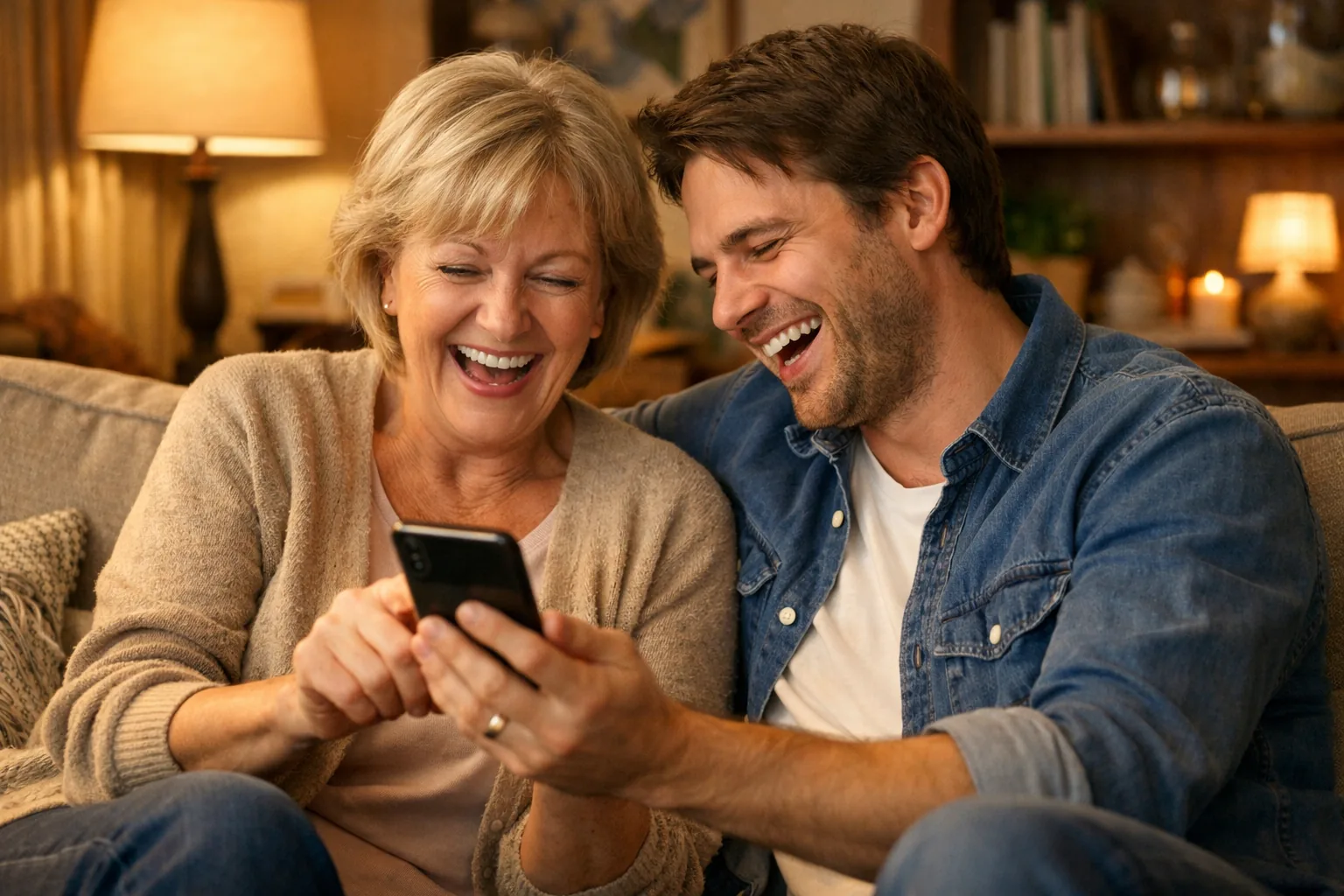
This deserves a second entry because the pattern plays out so consistently and the fallout is so specific.
Here’s the sequence: you send a funny story, a photo, or a joke in the family chat. Your grandchild or your adult child responds with 💀. You read it as alarming, or strange, or you’re not sure what it means, so you either respond with concern (“Are you okay?”) or you go quiet, worried you said something that landed badly.
Your kid then has to explain that 💀 is a laugh reaction. You feel slightly embarrassed. They feel guilty for the confusion. And there’s a moment of awkwardness before the conversation recovers.
A man named Dave from Colorado texted his daughter a story about a customer at his old job. She responded 💀💀💀. He called her to make sure she was alright. She was at her desk, still laughing. “Dad, that’s the funniest thing I’ve heard this week,” she told him. “The skulls mean I loved it.”
The skull means your joke killed. That’s the entire message. Among anyone under 35, it has replaced 😂 as the highest compliment you can get for something funny. It comes from the phrase “I’m dead from laughing” and the emoji is the visual shorthand.
The double confusion runs in the other direction too. Some parents, after learning the skull is positive, start using 💀 themselves in contexts where their own peer group has no idea what they mean. Sending a skull to your friend your own age who isn’t familiar with the usage will land very strangely.
The rule: receive 💀 as the compliment it is. Use it yourself only in conversations where you’re confident both people are fluent in the same dialect.
Now check your recent texts. There’s a fair chance you’ve gotten at least one of these in the past week and read it wrong.
Now You’ve Got the Decoder
The gap between what they sent and what you read is almost never about a lack of care. These are two different emoji dialects running on the same phone, in the same family, at the same time.
Which one surprised you most? Drop it in the comments. And send this to someone who texts with their kids or grandkids regularly. There’s almost certainly something on this list that will make them laugh in recognition.