
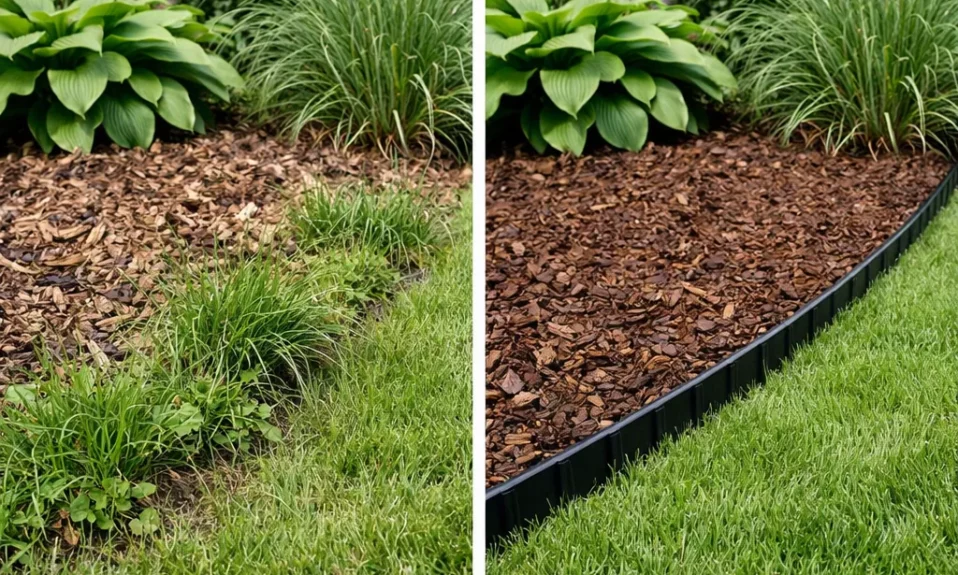
You’ve edged the lawn again. It still looks like something chewed along the border and gave up halfway. The problem isn’t effort — it’s specific, fixable mistakes nobody explains.
Here are all 35.
35. Wrong Edger Type for Your Grass Variety

You bought an edger. It’s the wrong one for your lawn.
Different grass varieties require different blade geometries. Bermuda and Zoysia respond well to stick edgers with a single vertical blade. St. Augustine and Centipede grass — which grow thicker and denser — need a blade that can cut through broader stolons without tearing.
Using a rotary edger on St. Augustine is like using a bread knife to cut rope. It scores the surface without cleanly separating anything. You’ll spend 20 minutes running over the same section and still leave a fuzzy border.
The right tool for your specific grass type is the first thing any professional checks.
34. Dull Blade

A dull blade does not cut. It tears.
When the blade on your edger loses its edge, it starts ripping grass stems instead of slicing through them. The result looks edged from 10 feet away. Up close, you’ll see frayed, brown tips that die off within 48 hours and leave the border looking chewed.
Most homeowners sharpen their edger blade once a season — or never. Professionals sharpen or replace blades every 8 to 10 hours of use. A new replacement blade for a standard edger costs $6 to $12 at any hardware store.
The tool is only as good as its edge.
33. String Trimmer Angle Wrong

String trimmers are not edgers. Most people use them as one anyway — and use them wrong.
To get a clean vertical edge with a string trimmer, the head must be rotated so the string spins in a perfectly vertical plane, cutting downward rather than horizontally sweeping. The moment that angle drifts even 15 degrees, you get a beveled, sloped edge that looks clean the day you do it and ragged within a week.
Most homeowners hold the trimmer at a slight lean without realizing it. That slight lean compounded over 20 feet of edging creates a slope that catches every seed and runner that blows across the border. The grass grows back into the bed faster.
Tape a level to your trimmer handle once to feel what true vertical actually is. It is probably not what you’ve been doing.
32. Using a Spade Instead of an Edger

A flat spade can cut a lawn edge. It cannot hold one.
Spades leave irregular depth profiles — some sections cut 3 inches deep, others barely 1 inch. That inconsistency means grass roots cross back over the line at the shallow points within days. You’ve also disturbed the soil structure, which actually encourages new growth from runners that were just beneath the surface.
An edger creates a repeatable, consistent vertical cut at a fixed depth. A spade makes a rough approximation. Use the right tool.
31. No Guide Line

Freehand edging looks freehand.
Without a physical guide — a string line, a garden hose laid flat, or chalk dust along the intended edge — you follow the existing ragged line. You edge along what the grass tells you, not where you want the border to be. Every slight curve in your current ragged edge becomes the new official border.
Over three or four sessions, a once-straight edge develops a soft, wandering curve that no amount of additional edging will correct. Set the line first. Edge the line. Not the grass.
30. Wrong RPM Setting on Powered Edger

Most variable-speed edgers have a recommended RPM range printed in the manual that nobody reads.
Running a powered edger too slow causes the blade to drag rather than cut, pulling the grass stem rather than severing it. Running it too fast on soft or sandy soils throws debris into the cut and immediately contaminates the clean edge. The sweet spot for most residential edgers is 3,400 to 4,000 RPM — and most homeowners run them at whatever speed feels “about right.”
Check your manual. If you threw it out, search the model number online. This takes four minutes and fixes a problem you’ve had for years.
“The next one is so simple that most people assume it can’t be the problem.”
29. Cheap Plastic Edger That Can’t Hold Depth

You get what you pay for with edgers, and with cheap plastic models, you get something that flexes.
A $14 plastic rotary edger cannot maintain consistent blade depth under pressure. The housing bends as you push forward. The wheel wobbles. The blade depth shifts by up to half an inch across a single 10-foot run. That variation shows up as a wavy, uneven cut that looks worse than the untouched grass in some spots.
A solid metal-wheeled edger with a fixed depth guide — even a mid-range model at $35 to $45 — holds its depth through rocks, roots, and soil variations. The inconsistency you’ve attributed to technique is probably just the tool.
Inspect the blade housing on your current edger. If it flexes when you push firmly on it with your hand, it’s too flimsy for clean results.
28. Not Cleaning Debris from the Blade Between Passes

Grass clippings, soil, and moisture pack into the blade housing and reduce cutting depth mid-run.
As debris accumulates, the blade rides higher and higher off the soil. What starts as a clean 2-inch cut becomes a 1-inch scrape by the time you reach the corner. The last third of every edge run looks visibly worse, and most homeowners assume they lost concentration rather than recognizing it’s a packed blade.
Clear debris from the housing every 20 to 30 feet. It takes 10 seconds. It is the single most commonly skipped step in residential edging.
27. Edging After Mowing Instead of Before

The order matters, and most people do it backwards.
When you mow first, the mower throws clippings across the edge you’re about to cut. You then edge into a border already contaminated with loose grass, which gets packed into the cut and obscures the line. Worse, some of those clippings end up in the garden bed where they feed weed growth and mat against plant stems.
Edge first. Mow second. The mower collects most of the edging debris on its final pass, leaving you with a clean result rather than a border buried in clippings.
26. Edging Wet Grass

Wet grass tears. It doesn’t cut.
When grass stems are saturated with morning dew or post-rain moisture, they compress under a blade rather than being cleanly severed. The cut looks okay until the grass dries and springs back — at which point the edge looks frayed and incomplete. Wet soil also clumps into the blade housing far faster, reducing your effective cutting depth within the first few feet.
Wait until after 10 AM when morning dew has dried. After rainfall, wait at least 24 hours before edging. The dry-condition edge holds twice as long as the wet one.
25. Cutting Too Deep

More depth does not mean a cleaner edge. It means an invitation for weeds.
Cutting the edge trench deeper than 2.5 to 3 inches severs grass roots at a level that weakens the turf and creates an open-soil channel. That channel fills with windblown weed seeds within days. Within two weeks, you have a perfect weed nursery running the entire length of your garden bed border.
The ideal cutting depth is 1.5 to 2 inches — deep enough to create a visible separation, shallow enough to not destabilize the turf root system. Most powered edgers have a depth guide for a reason.
24. Cutting Too Shallow

A shallow cut gives the impression of edging without actually creating a barrier.
At half an inch or less, you’ve trimmed the visible grass stem but left the runners and stolons beneath the surface completely intact. Bermuda grass can send horizontal stolons several inches underground. A surface skim doesn’t interrupt them at all. Within three to five days, those runners push new growth over the cut line and the edge disappears.
You need to cut through the thatch layer and into the soil — at least 1.5 inches. If your blade is bouncing along the surface rather than biting into the ground, you are not edging. You are trimming.
“This is the mistake that makes every other fix useless.”
23. No Consistent Depth Across the Run

An inconsistent depth edge looks as bad as no edge at all.
When depth varies across a run — 2 inches here, 1 inch there, 3 inches at the corner — the visual line breaks up. Your eye reads the variation as sloppiness even if every individual cut was clean. In growing season, the shallow sections recover faster and the border looks patchy within days.
The fix is simple: walk the line at a steady pace without stopping and starting. Stoppages cause depth increases as the blade dwells in one spot. A smooth, continuous, same-speed pass maintains depth better than any setting on the tool.
22. Rushing Corners

Corners are where edge jobs fall apart. Every time.
Most homeowners carry the same forward momentum into a corner that they use on a straight run, and the result is a rounded, blown-out corner that looks nothing like the crisp right angle they imagined. The blade either digs too deep as it pivots or pulls away too soon, leaving a ragged triangle of grass.
Slow to a near stop before each corner. Make two deliberate cuts that meet at the apex rather than trying to pivot in one continuous motion. Corners are finished in two strokes, not one.
21. Not Following the Natural Curve

If your bed has a curve, fight it and you’ll lose.
Many homeowners try to straighten organic curves as they edge, slowly pulling the line in a direction the bed wasn’t designed to go. Over several sessions this creates a hybrid edge — partly curved, partly angular — that looks like neither and satisfies neither intention.
Either commit to the curve and follow it exactly, or invest one session in redefining the edge with a garden hose and stakes to create the straight line you actually want. Half measures read as mistakes.
20. Going Too Fast

Speed is the enemy of clean edging, and it’s the most invisible mistake.
At a fast walking pace, the blade doesn’t have full contact time with the soil at each point. The result is a dotted-line cut — clean every 2 to 3 inches, intact in between — that looks fine immediately and reveals itself as a ragged mess once the grass straightens back up.
Edging pace should feel slightly slower than a casual stroll. Think deliberate, not leisurely. If you’re catching yourself speeding up to finish the job faster, slow down. You’ll spend less time re-edging.
19. Edging in Peak Heat

Hot, heat-stressed grass does not edge cleanly.
Grass in peak afternoon heat is in a defensive physiological state — it has withdrawn moisture from cell walls, which makes stems more brittle and prone to tearing rather than cutting. The edge looks acceptable immediately but the cut ends die back further than they would in cooler conditions, creating a brown fringe along the border within 24 hours.
Edge in the morning before 9 AM or after 5 PM. The grass is more supple, the soil is cooler, and you will spend significantly less time fixing the aftermath.
“Most homeowners have never been told the next one — and it costs them weeks of progress every summer.”
18. Not Edging Often Enough in Growing Season

In peak growing season, letting the edge go for two or three weeks is not a delay. It’s a reset.
Fast-growing grass varieties — Bermuda, St. Augustine, Kikuyu — can push runners 2 to 4 inches across a bare border in 14 days in warm conditions. Once that happens, you’re not maintaining an edge anymore. You’re re-establishing one. That takes three times as long and leaves a wider scarred zone that looks raw until the turf fills in.
During growing season — roughly May through September in most US states — edge every 7 to 10 days. Outside of growing season, every 3 to 4 weeks is fine. The gap in your schedule is the gap in your border.
17. Edging Dormant Grass

Dormant grass does not hold an edge. It reveals one and then mocks you.
When Bermuda or Zoysia goes dormant in winter, the brown stems are dry, brittle, and barely rooted. Edging creates a visible line — sometimes a very clean one. But the moment spring green-up begins, that line is the first thing to go. Dormant grass was not actively holding the border anyway.
Wait until the grass is actively growing before establishing or re-establishing an edge. Dormant edging is aesthetic work with zero structural value.
16. Edging After Rain

Rain-softened soil is deceptive. It looks easy to cut. It creates terrible results.
In wet conditions, the blade slides through the soil without creating a clean vertical face. The soil smears instead of separating. That smeared wall collapses inward within 48 hours as the soil dries and contracts, taking your clean edge with it. You will look at the edge five days after a post-rain session and not be able to tell you edged at all.
Post-rain minimum wait is 24 hours for clay-based soils, 12 hours for sandy loam. Check the soil with a thumb press — if it compresses without bouncing back, it’s too wet.
15. Waiting Too Long Between Cuts

Let it go long enough and you’re not edging — you’re excavating.
When grass encroaches more than 3 inches into a bed before you address it, the edger has to make multiple passes to work back to the true border. Each pass disturbs more soil, widens the cut zone, and creates a raw-looking scar that takes weeks to settle. The bed looks like it was attacked, not maintained.
The longer you wait between edging sessions, the harder each session becomes. Consistency at short intervals is dramatically easier than restoration after long neglect.
14. Doing It in the Wrong Order vs. Other Lawn Tasks

Lawn care has a sequence, and ignoring it undoes your edging work.
Fertilizing before edging deposits granules in the cut zone — they fall into the trench and feed the runners you just tried to remove. Applying pre-emergent herbicide after edging breaks up the chemical barrier with the blade pass that follows. Mulching before edging traps debris in the border that interferes with the cut.
The correct sequence is: edge first, then mow, then blow debris, then apply any treatments. Get it backward and you’re working against your own last step.
“The next five mistakes happen before you even pick up the tool.”
13. Edging Dormant Grass During the Wrong Phase

Transitional grass — half-dormant, half-green — is the most difficult to edge cleanly and the most commonly attempted.
During early spring green-up, live green runners grow through a mat of dead brown stems. The edger blade doesn’t know which is which. It cuts both, but only the dead stems stay cut. The live runners spring back within days. You’ve created a clean-looking edge that is actively regrowing underneath.
Hold off until the lawn is at least 80% green and actively growing uniformly. Two weeks of patience here prevents two months of frustrated re-edging.
12. No Physical Border Installed

Here is the hard truth about edging without a physical barrier: the grass does not know you edged.
Grass spreads via stolons — horizontal surface runners — and rhizomes — underground runners. Cutting a clean edge removes what’s visible. It does nothing to stop the next runner from crossing the invisible line you’ve established. Without something physical in the ground that the runner cannot cross, your edge is temporary by definition.
Every edge without a physical barrier installed is a temporary cosmetic fix. You are managing regrowth, not preventing it. That’s why you keep edging and it keeps coming back. The fix is a physical barrier — and we’ll get to exactly that.
11. Wrong Mulch Depth in Garden Beds

Mulch depth affects your edge more than most homeowners realize.
Mulch should sit 2 to 3 inches below the top of the grass crown — creating a visual step down into the bed. When mulch is level with or higher than the grass, runners don’t have to work to cross the border. They simply grow laterally across the mulch surface, and within weeks you have grass growing in the middle of your garden bed with no clear border left to edge.
Rake mulch back to create that step-down profile. Recheck depth every season. The bed should be a bowl, not a ramp.
10. Soil Too Compacted for the Blade to Penetrate Cleanly

Compacted clay soil will defeat any edger you own if you go in dry.
In heavily compacted clay — common in newer subdivisions where the builder graded the lot — the edger blade skips and bounces rather than cutting. You’ll hear it. You’ll feel it in your hands. The result is a jagged, irregular edge that looks like someone ran a blade over concrete.
The fix is to water the edge zone lightly — not to saturation — 30 minutes before edging. This softens the top 2 inches of soil enough for a clean penetration. You can also aerate along the edge zone once a year to reduce future compaction.
“We’re getting close to the root causes. These next ones are structural — and they explain everything.”
9. Grass Variety That Spreads Aggressively by Nature

Some grass varieties are biological machines optimized for invasion. If that’s what you have, you are in a different category of lawn care challenge.
Bermuda grass (Cynodon dactylon) produces both aerial stolons and underground rhizomes. It can send a new shoot across 3 to 4 inches of bare soil in a single week during summer. Kikuyu grass — common in warmer US climates — is even more aggressive, capable of pushing runners under mulch, under a raised bed frame, and through gaps in pavement cracks.
If you have Bermuda or Kikuyu, edging once a week is not maintenance. It is containment. Standard edging alone will never be enough. You need a physical barrier rated for aggressive grass — heavy-duty plastic, aluminum, or steel edging hammered 4 to 6 inches into the ground. Anything less and the runners go under it.
Identify your grass variety before deciding on your edging approach. Bermuda on the label changes everything about the strategy.
8. Sloped Edging That Drains Into the Bed

Water follows the path of least resistance. So does grass.
When the edge of your lawn slopes toward the garden bed — even a gradient of 2 to 3 degrees — irrigation and rainfall channel toward that border and into the bed. Wet soil in the bed encourages root extension from grass at the border. Those roots follow the moisture. Every time you water the bed, you are actively pulling the grass toward it.
Re-grading a sloped border is a larger project. The interim fix is a raised physical border that creates a dam — aluminum or steel edging installed so the top lip sits slightly above the lawn grade, redirecting flow. This is a bigger conversation about your landscape design, but the slope is quietly undoing your edging work after every rain.
7. No Defined Edge to Follow

You cannot maintain an edge that was never properly established.
Many suburban lawns have a vague area where grass transitions into a planting bed without any defined separation. There’s no clear original border — just a gradual fade from turf to mulch to plant. Edging this with a tool is like drawing a line on water. You’re approximating a border that doesn’t actually exist in the soil.
Before you edge a single more time, establish the border. Use a garden hose to lay out the intended line. Spray-paint the line with landscape marking paint. Cut the definitive edge with a half-moon edging tool. Mulch the bed immediately after. Once that clean starting edge exists, maintaining it is straightforward. Without it, every edging session is a first attempt.
6. Not Cleaning Clippings From the Edge After Edging

The clippings you leave in the edge trench become the next problem you’re trying to solve.
After every edging session, the blade deposits cut grass stems and soil debris directly into the trench and into the border of the bed. Left there, this debris mats down and creates a nutrient-rich seedbed exactly where you least want one. Weed germination in that zone spikes within 10 days. Some of those “weeds” are the grass you just cut, rerooting in the bed.
Blow or sweep the trench clean immediately after edging. Don’t let the clippings sit overnight. This single step dramatically extends how long a clean edge holds before maintenance is needed.
5. Letting Bed Plants Creep Over the Edge

The battle at the edge runs both ways. And plants can be just as aggressive as grass.
Creeping perennials — ajuga, vinca, liriope — will grow outward from the bed and cover the edge line completely. Once they’re draped over the border, you can’t see the edge to maintain it. You can’t run an edger along a line you can’t see. You trim the plants, which sets them back temporarily, but the border problem compounds underneath.
Keep bed plants cut back 3 to 4 inches from the edge at all times. Install a clean physical separation between the bed and the lawn. If your current plant placement puts aggressive groundcovers right at the border, consider relocating them further into the bed and placing a more compact plant at the edge.
“The last four mistakes are the ones most homeowners never get told about — and they’re the reason nothing else has worked.”
4. Ignoring the First 2cm of Regrowth

There is a critical window after edging where a small amount of maintenance prevents a large amount of work.
Within 3 to 5 days of a clean edge, the first new growth appears along the border — usually a thin line of upright stems, 1 to 2 cm tall. This is the easiest point at which to remove them: a quick pass with a string trimmer or even a hand tool removes them in minutes. Left alone, they flatten out, send horizontal runners across the open edge trench, and within 10 days you have a visible border problem again.
Treating the edge at day 4 takes 5 minutes. Waiting until day 12 takes 30. Treating it at day 12 takes 30 minutes. Waiting until day 20 means re-establishing the entire edge from scratch. The math strongly favors catching it early.
3. Not Treating for Creeping Weeds at the Edge

Weeds use the edge trench as a highway. You’ve been edging and leaving the highway open.
The cut zone along a garden bed edge is bare, disturbed soil — exactly the conditions that creeping weeds like crabgrass, spurge, and creeping Charlie prefer. They don’t compete well in thick, established turf. But in the open, aerated edge zone you’ve been creating with your edger, they thrive.
Applying a targeted pre-emergent herbicide along the edge zone in early spring — before soil temperatures reach 55°F — prevents the seed germination cycle that fills your edges every summer. This is a once-a-season application that takes 15 minutes. Doing it eliminates one of the most persistent reasons edges fail to hold.
Without addressing the weed pressure, you’re edging into a constantly replenishing invasion front. The edging creates ideal germination conditions. The weeds exploit those conditions. You edge again. This loop repeats until you break it with chemistry.
2. Leaving the Edge Without a Border After Edging

You’ve done the work. You’ve created the cleanest edge of your life. And then you’ve left it open.
An edged border without a physical barrier installed is an open invitation for re-invasion. The clean trench you’ve cut has exposed bare soil along both the lawn side and the bed side. Grass runners, weed seeds, and surface water all have unobstructed access to that open zone. Within 7 days in growing season, the visual difference between an edged border and an unedged one starts to collapse.
Every session where you edge without installing any form of physical border is a session where you’ve done 90% of the work and skipped the 10% that actually holds the result. The edging itself is not the solution. The border is. Edging is preparation. A physical barrier is the fix.
This creates the cleanest edge you’ve ever had — for about a week. It’s bad.
“It’s bad. But it doesn’t come close to what’s waiting at #1.”
1. The Single Structural Reason Your Edges Revert Within Days

The $12 Fix That Nobody Tells You About
You have been edging a lawn that has no reason to stay edged.
Every mistake in this list compounds the same structural problem: without a physical barrier between your lawn and your garden bed, the grass has no reason to stop. It doesn’t know there’s an edge. It doesn’t care about your line. It follows moisture, light, and warmth — and it crosses that trench within days because nothing in the ground is telling it not to.
The fix is flexible plastic lawn edging stakes. You can buy a pack at any hardware store — Home Depot, Lowe’s, Ace — for $10 to $15. That pack covers 30 feet. The stakes are thin, flexible strips of high-density polyethylene, usually in black, that you hammer vertically into the ground along the edge of your garden bed using a rubber mallet. Installation takes about 5 minutes per 10 feet. Total tool cost: one rubber mallet, under $15.
Once installed, the top of the edging sits just flush with or slightly above the lawn surface. Grass stolons hit the barrier and cannot cross. The root system hits the buried section — typically 4 to 6 inches deep — and cannot go under. For the first time in your lawn’s history, the edge is being held by physics, not by your schedule.
“I edged this yard every weekend for four years,” said Marcus, a retired teacher from Georgia. “Put the plastic edging in and didn’t touch it again for six weeks. It still looked perfect. I actually couldn’t believe it.”
After years of re-edging the same ground, the fix was never more effort. It was one afternoon, a $12 pack of stakes, and a rubber mallet.
“Now you know why we saved this one for last.”
What to Do This Weekend
You don’t have to fix all 35 at once. That would be overwhelming and unnecessary.
Start with #1. Buy a pack of flexible plastic lawn edging stakes, pick one border — just one — and install them this weekend. Edge that section cleanly first, then stake it. Watch what happens over the next three weeks. That one section will stay cleaner than any edge you’ve maintained in years.
Then work backwards. Fix your timing by edging before mowing, in the morning, when the grass is dry. Check your blade. Walk the line slower. Follow the natural curve. Those five changes alone will transform the rest of your borders.
The lawn edges that look effortlessly sharp in your neighborhood are not maintained by people who edge more often than you. They’re maintained by people who built a system — a physical barrier, the right timing, the right depth — and then just followed it. You can build that same system this weekend.
Start with one section. The rest will follow.