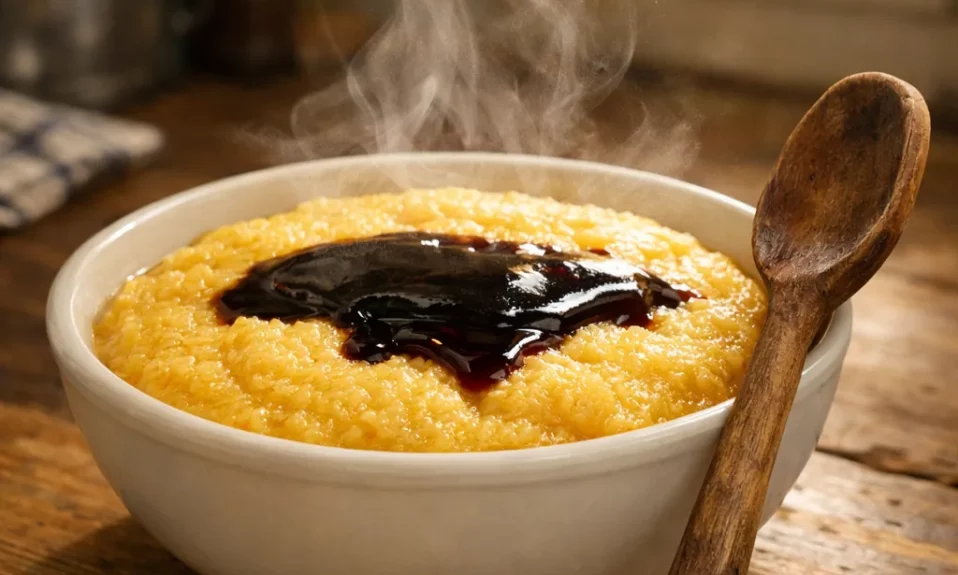
Here are 42 dishes, snacks, and food trends that were everywhere in American homes and restaurants during the 1970s. You’ve definitely had at least one of these.
42. Tang

Tang was what you drank when your mom wanted to feel like the future had arrived.
It came in a bright orange canister and mixed into a glass of water that was somehow both too sweet and not quite orange at all. The color was aggressively orange. The taste was a rough approximation of orange if you’d never actually eaten one.
NASA used it on space missions, and that was the whole marketing pitch. Tang was astronaut juice, and by 1970 every American kid had been told so at least a dozen times.
It stayed on kitchen shelves well into the 80s, long after anyone could explain why.
41. Fondue Sets

Every couple in America received a fondue set as a wedding gift between 1968 and 1977.
Most of them used it exactly twice. The first time was exciting. You’d melt cheese in a pot, stab bread cubes with a long fork, and feel like you were doing something terribly European and sophisticated. The second time you pulled it out, you remembered what a mess it made.
The fondue set spent the rest of its life in the cabinet above the refrigerator, behind the potato ricer and the waffle iron that also never got used.
Fondue parties were the dinner parties of the 70s. Nothing has filled that exact cultural niche since.
40. TV Dinners

You peeled back that aluminum foil and the steam hit you in the face like a warm warning.
The compartments were the point. Each one held a different thing: a few slices of meat, a little mound of corn, a square of brownie that somehow always overcooked while the potatoes stayed cold. The idea that every component needed its own sealed territory felt scientific and modern and slightly absurd all at once.
Swanson sold more than 100 million TV dinners a year by the mid-1970s. The family gathered around the television with their trays, and for a moment, eating in front of the TV felt like progress rather than laziness.
The aluminum tray is mostly gone. The category it created is still worth billions.
The next one showed up at every single gathering, and nobody ever finished the leftovers.
39. Jell-O Moulds

Your grandmother made one and nobody touched it and she made another one the following week.
The Jell-O mould was architectural food. You’d get a shimmering dome of lime green gelatin with canned fruit suspended inside, or a layered ring of red and orange that trembled when the plate was set down. It looked impressive until you cut into it and remembered that the main ingredient was flavored rubber.
Sales of Jell-O peaked in the 1970s. Every church cookbook from that decade has at least four mould recipes.
The mould got retired somewhere around 1985 and has never fully come back.
38. Vienna Sausages

You could open a can of Vienna sausages with a tin opener and eat them cold and nobody thought that was strange.
They came packed in liquid, pale pink and slippery and exactly the size of a cocktail weenie. The texture was soft in a way that defied easy description. You’d eat them on crackers, or on toothpicks at a party, or straight from the can while standing at the kitchen counter because lunch was ten minutes away and you couldn’t wait.
Armour and Libby’s moved millions of cans a year during the decade.
They’re still on the shelf at every grocery store. Most people under 40 have never opened one.
37. Hamburger Helper

One pound of ground beef and a cardboard box and you had dinner for five.
Hamburger Helper arrived in 1971 and became one of the fastest-growing products in General Mills history almost immediately. The concept was simple: pasta, a seasoning packet, and the instruction to add water and browned beef. The result was a meal that was somehow both ordinary and genuinely comforting.
General Mills launched it specifically as a response to rising meat prices. It worked because families needed it to work.
The Helping Hand mascot had four fingers. The debate about why it had four and not five was the kind of thing you’d discuss at dinner if there was nothing else to talk about.
The next one smelled up the whole house and everyone ate it anyway.
36. Liver and Onions

Your parents made liver and onions and the smell got into the walls.
Beef liver cooked in a cast iron pan with onions that had been softened in butter first. The liver itself had a dark, almost purple interior and a crust that crackled when you cut it. The smell was deep and mineral, the kind that announced dinner from two rooms away before you were anywhere near ready.
It was considered highly nutritious and extremely economical. A whole pound of liver cost less than fifty cents in 1972.
The generation that grew up eating it mostly stopped cooking it for their own kids. The kids never looked back.
35. Tuna Noodle Casserole

Tuna noodle casserole was the dish every American mother had a version of and every American kid had feelings about.
The base was cream of mushroom soup, egg noodles, and canned tuna, all combined in a baking dish and topped with crushed crackers or potato chips before going into the oven. The top got golden. The inside got bubbly. The tuna got what could charitably be called integrated into the whole.
Campbell’s Soup printed casserole recipes directly on the cream of mushroom soup can for most of the decade.
It fed families through tight weeks. You still know exactly what it smells like.
34. Ambrosia Salad

Ambrosia salad was dessert pretending to be a side dish and everyone let it get away with it.
You mixed canned mandarin oranges, crushed pineapple, mini marshmallows, shredded coconut, and sour cream or Cool Whip into a bowl and called it a salad. It was sweet enough to be a pudding. It was served next to the green beans. Nobody questioned this arrangement.
The name “ambrosia” comes from the food of the Greek gods. Whether Olympus would have approved of the mini marshmallow situation is unclear.
It was at every holiday meal, every potluck, every church supper between 1968 and 1983. And then, quietly, it disappeared.
The next one was considered the height of sophistication and cost about thirty cents per serving.
33. Swedish Meatballs from a Can

Long before IKEA made Swedish meatballs famous, American kitchens were opening cans of them for dinner.
SAGA and similar brands sold canned Swedish meatballs in cream sauce that you could heat directly on the stove in ten minutes. They came in a thick, pale gravy with a hint of nutmeg. The texture was softer than homemade, the flavor mild and slightly sweet. Poured over egg noodles, they passed as a real meal without much argument from anyone at the table.
One can fed a family of four for under a dollar. That math was hard to argue with in 1974.
IKEA’s version has since taken over the cultural slot. The canned version is mostly forgotten.
32. Deviled Eggs

There was a deviled egg plate at every party in the 1970s, usually owned by the most organized person in the room.
The filling was straightforward: mashed yolk, mayonnaise, mustard, a touch of pickle relish, piped back into the white half and dusted with paprika. The result was a bite-sized thing that disappeared faster than anything else on the buffet table. You could watch a platter of twenty-four get cleared in under six minutes.
The deviled egg plate was a dedicated piece of serveware with individual oval indentations for each half. If your mother had one, she was serious.
Deviled eggs never actually went away. But for a while in the 80s, people pretended they were too sophisticated for them. They were wrong.
31. Hi-C

Hi-C came in a can and tasted like what would happen if a fruit had a very enthusiastic publicist.
The juice was fruit-flavored, not quite fruit. Ecto Cooler didn’t exist yet, but Fruit Punch did, and it was aggressively red in the way that only 1970s food coloring could achieve. Kids drank it after school, at birthday parties, and at fast food restaurants where the fountain machine dispensed it cold and slightly flat.
Coca-Cola acquired Hi-C in the mid-1960s, and by the 70s it was in 85% of American households with children.
The Ecto Cooler flavor that came later got all the nostalgia. But it was Fruit Punch that started the whole conversation.
The next one was a dessert pretending to be a dinner, or possibly a dinner pretending to be a dessert.
30. Swanson Pot Pies

A Swanson pot pie was a complete meal inside a crimped foil crust, and the crust was the best part.
You’d bake it at 375 until the top turned golden and the filling bubbled up around the edges. The inside was a thick, starchy gravy with small pieces of chicken or turkey and diced carrots and peas. The bottom crust got slightly soggy. Nobody cared. You ate around the sides first because they were crispiest.
Swanson pot pies cost about 29 cents each in 1972. A family of four could eat dinner for just over a dollar.
They’re still on the freezer shelf, almost unchanged. Exactly one thing is different: the price.
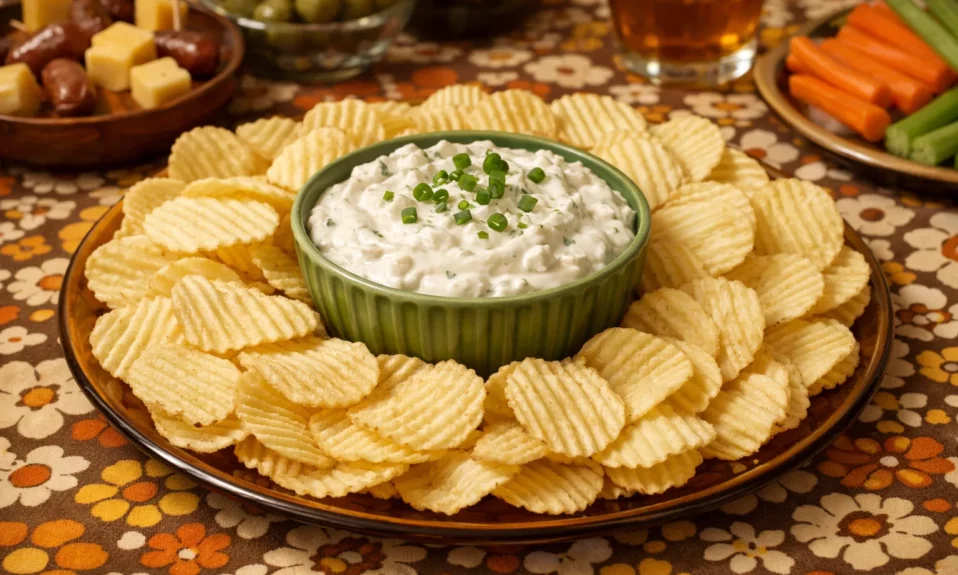
29. Onion Dip and Ruffles

Onion dip was not a recipe. It was a packet of Lipton Onion Soup Mix stirred into a container of sour cream.
That was it. That was the whole thing. And it was very good. The chips were Ruffles, always Ruffles, because the ridges held more dip and anyone who told you otherwise was at the wrong party. You’d make the bowl and set it on the table and it would be gone before the guests had their coats off.
Lipton introduced its onion soup mix recipe for dip in 1954, and the 1970s was its absolute peak.
Every party host in America had a box of Lipton mix in the pantry, reserved specifically for this purpose.
28. Cheese Balls

The cheese ball was the centerpiece of the 1970s holiday appetizer table, and it required no cooking whatsoever.
You mixed cream cheese with shredded sharp cheddar, Worcestershire sauce, garlic powder, and whatever else seemed right. You shaped it into a ball. You rolled it in crushed nuts or dried parsley. You put it on a board with a ring of crackers and a small spreading knife. That was holiday entertaining, right there.
The cheese ball appeared in virtually every women’s magazine recipe section from 1967 through 1981.
The cheese log is the same thing shaped differently. Both deserve more credit than they get.
The next one came in a can and made the whole neighborhood smell like the inside of a chef’s kitchen.
27. Chef Boyardee Ravioli

Chef Boyardee ravioli was what happened when pasta became something you could open with a can opener.
The squares of pasta were filled with a meat mixture and coated in a thick, sweet tomato sauce that was impossible to mistake for anything homemade. Kids loved it. Parents appreciated that it took three minutes. The pasta was softer than any fresh ravioli you’d find in an Italian restaurant, but that wasn’t the point. The point was dinner was done.
Hector Boiardi, the real Chef Boyardee, was actually an Italian-born chef who cooked at the Plaza Hotel before starting his canning company.
The can is still in production. It still tastes exactly the same. That’s either a comfort or a warning, depending on how you think about it.
26. Stuffed Green Peppers

Stuffed green peppers were a genuine production, and the person who made them wanted you to know it.
You’d slice the tops off the peppers, scoop out the seeds, and fill the cavity with a mix of ground beef, cooked rice, diced tomatoes, and seasoning. They’d go into the oven in a Pyrex dish with a bit of tomato juice in the bottom. The pepper softened to tenderness. The filling cooked through. The whole dish came out looking like something from a proper cookbook illustration.
A recipe for stuffed peppers appeared in The Joy of Cooking as early as 1936, but the 1970s were when they became a weekly rotation staple for millions of families.
You needed the right size peppers and about an hour. It was worth it.
25. Waldorf Salad

Waldorf salad was on the menu at every nice restaurant in America and on the table at every dinner party that wanted to feel nice.
The classic version was diced apple, celery, and walnuts in a mayonnaise dressing, served in a lettuce cup. Some versions added raisins. Some added grapes. Some added chicken and called it lunch. The crunch of the celery against the soft apple was the whole point of the thing.
The salad was invented at the Waldorf Astoria Hotel in New York in 1896, but it reached peak American home kitchen status squarely in the 1970s.
It has a Monty Python sketch named after it, which may be more than most salads can say.
The next one is the reason the word “casserole” still makes some people feel nostalgic and others feel tired.
24. Green Bean Casserole

Green bean casserole was invented by Campbell’s in 1955 and hit its peak relevance sometime around 1972, when no Thanksgiving table felt complete without it.
You mixed canned green beans with cream of mushroom soup and milk, poured it into a casserole dish, and topped the whole thing with French’s fried onions before baking. The onions got crispy. The beans got soft. The sauce thickened into something that coated every bite. It was warm and filling and required exactly six ingredients.
Campbell’s estimates that 40% of their cream of mushroom soup is used specifically for this recipe.
It’s still made at roughly 30 million American Thanksgiving tables every November. Some traditions don’t fade. They just become furniture.
23. Creamed Chipped Beef on Toast (SOS)

The military had a name for this dish that couldn’t be printed in a family newspaper.
Dried beef reconstituted in a thick white gravy, poured over toast. That was it. That was “SOS.” The gravy was a basic white sauce, the beef was salty and chewy, and the toast went soggy immediately in a way that was somehow correct and expected. You didn’t fight it. You ate it because it was breakfast and it was filling and it cost almost nothing to make.
A jar of dried beef cost about 80 cents in 1971, and it could make six servings of gravy.
Veterans made it at home because they’d grown up on it. Their kids ate it because it was what was served. The grandkids have mostly moved on.
22. Pigs in a Blanket

Pigs in a blanket were the item at every 1970s party that everyone ate first and nobody admitted to wanting most.
A cocktail sausage or a small hot dog, wrapped in crescent roll dough, baked until golden. The dough puffed slightly. The sausage inside stayed snappy and hot. You ate one standing up and then you ate four more before you’d had a proper conversation with anyone. They were the first thing to disappear from any buffet table in American history.
The Pillsbury crescent roll made the home version possible starting in the mid-1960s, but the 1970s were when the party version became standard.
The recipe is unchanged. It is still the first thing gone from every buffet table.
The next one was technically a salad, and also was clearly not a salad.
21. Watergate Salad

Watergate salad was named after the Watergate scandal and contained no vegetables whatsoever.
The mix was pistachio pudding powder, crushed pineapple, Cool Whip, mini marshmallows, and chopped pecans. It was a shade of green that had nothing to do with nature. It was dense and sweet and cold and the texture was like eating a cloud that had been to a potluck. Everyone took a scoop and considered it a vegetable because it was green and called a salad.
The exact origin of the name is disputed, but the dish was popularized in the mid-1970s and appeared in Midwestern church cookbooks with astonishing frequency.
It was usually next to the Jell-O mould. They were a team.
20. Quiche Lorraine

Quiche was the dish that told the world you’d read Julia Child.
Quiche Lorraine was a pastry shell filled with a custard of eggs, cream, cheese, and bacon, baked until the filling was just set and the top had a faint golden wobble. It appeared in French cookbooks but became an American dinner party staple after Julia Child and other food writers brought French technique to American kitchens in the early 1970s.
“Real Men Don’t Eat Quiche”, published in 1982, became a bestseller largely because quiche was so culturally omnipresent that poking fun at it was broadly legible.
The joke landed because everyone had been served quiche at least once. Most people liked it and didn’t want to admit it.
19. Velveeta Mac and Cheese

Velveeta mac and cheese was not Kraft. It was the step up from Kraft that still involved no actual cheese.
You melted Velveeta in a pot with a splash of milk, cooked your elbow macaroni separately, combined them, and produced something with a smooth, orange, unnaturally perfect consistency that no actual cheese could achieve. It coated every piece of pasta evenly. It stayed creamy as it cooled. It tasted exactly the same every single time.
Velveeta was processed cheese product, which is a legal category and not a description anyone found reassuring once they knew it.
Kids ate two bowls and didn’t care about the label. That was the whole business model.
The next one started on a plane and ended up in every American kitchen cabinet.
18. Harvey Wallbanger Cake

The Harvey Wallbanger was a cocktail. At some point in the early 1970s, it became a cake, and nobody thought that was unusual.
The cake used a yellow cake mix with orange juice, Galliano liqueur, and Vodka mixed into the batter. The result was a moist, citrusy Bundt cake with a gloss glaze poured over the top. It tasted adult in a way that was hard to explain to a child who was offered a piece. The name alone was a conversation starter at every party it appeared at.
Galliano, the tall yellow Italian herbal liqueur, saw its American sales spike specifically because of this cake and the cocktail it was named for.
The Harvey Wallbanger as a cocktail has mostly faded. The cake still shows up at retro potlucks when someone wants to make a statement.
17. Sloppy Joes

Sloppy Joes were the lunch that was designed to make a mess and made it anyway.
Ground beef in a sweet, tangy tomato-based sauce, piled onto a soft hamburger bun. The sauce would immediately soak through the bottom of the bun. The meat would fall out the sides before you got the sandwich to your face. Eating one required both hands and usually a napkin tucked into your collar. None of this stopped anyone from ordering seconds.
Manwich, launched in 1969, made the Sloppy Joe a weeknight staple by turning the sauce into a pour-from-can operation.
The school cafeteria served them on Fridays. The memory of the smell is probably in your head right now.
16. Fondue au Chocolat

The fondue set you received as a wedding gift had a second life as a chocolate fondue pot.
Same setup, different contents. You’d melt dark or semi-sweet chocolate with cream and maybe a splash of liqueur, and set out a platter of things to dip: strawberries, banana pieces, pound cake cubes, marshmallows. The fondue forks came back out. The conversation got better. The cleanup was still a disaster.
Chocolate fondue became its own tradition separate from cheese fondue after Konrad Egli, a Swiss restaurant owner in New York, popularized it in the mid-1960s.
The cheese fondue pot got one use a year. The chocolate version got used every Valentine’s Day, and sometimes not even then.
The next one showed up in the lunchbox of every American kid born between 1962 and 1975.
15. Lunchables Precursors: Bologna, Crackers, and Cheese

Before Lunchables were a product, they were just the contents of every American kid’s lunchbox.
A few slices of bologna, a handful of crackers, two squares of American cheese. You’d eat the crackers first, then fold the bologna around the cheese and eat that, then eat whatever crackers were left by themselves. It was a meal in the loosest sense. It was also, for many kids, the best part of the school day.
Oscar Mayer invented the pre-packaged Lunchable in 1988 specifically because research showed kids were already assembling their own versions from these components.
The genius was in realizing that the assembly was the appeal.
14. Spam and Eggs

Spam was canned ham for families who needed ham to last indefinitely.
You’d slice it from the block, fry it in a pan until the edges crisped and caramelized, and serve it alongside eggs. The smell of frying Spam was very specific: sweet, porky, slightly metallic. Once you’ve smelled it, you don’t forget it. The taste was salty and mild in the way that processed pork products achieve when they’re designed to appeal to the widest possible audience.
Hormel introduced Spam in 1937, but its American kitchen moment stretched from World War II all the way through the 1970s and beyond.
Hawaii still consumes more Spam per capita than any other US state. In some places, it never needed to make a comeback.
13. Jiffy Pop Popcorn

Jiffy Pop was the popcorn that turned making popcorn into a performance.
You’d set the flat foil pan over the stove burner and shake it continuously. Slowly, the foil dome would start to expand as the kernels popped inside. If you did it right, the dome would swell up to the size of a small balloon. If you did it wrong, you burned it and the whole thing turned into a fire hazard. Either way, it was the most theatrical snack preparation in the American kitchen.
Jiffy Pop launched in 1959, but Saturday movie nights in the 1970s were its golden era.
The microwave made it obsolete almost overnight. The experience of making it, though, is unrepeatable.
This next one appeared on restaurant menus as the exotic option, and it was definitely worth trying.
12. Beef Stroganoff

Beef stroganoff was the dish that made American cooks feel like they were doing something vaguely Russian and impressive.
Strips of beef sauteed with onions and mushrooms, finished with sour cream and served over wide egg noodles. The sauce was rich and tangy. The beef had to be tender, which meant you needed the right cut and the right timing. When it worked, it was genuinely one of the best things you could put on a plate for a dinner party.
Campbell’s cream of mushroom soup made an appearance in many 1970s versions, which simplified the sauce considerably.
You can still find it on diner menus. It’s never not good when it’s done correctly.
11. Pineapple Upside-Down Cake

Pineapple upside-down cake required one moment of faith: the flip.
You’d make the cake in a cast iron skillet or a round pan, with butter and brown sugar melted on the bottom first, then pineapple rings laid out in a pattern with a maraschino cherry in the center of each ring, then the batter poured over all of it and baked. The flip onto the serving plate was the reveal. If it worked, you had a gorgeous caramelized top. If it didn’t, you had a mess and a story.
Dole Pineapple promoted the recipe through decades of magazine advertising, and by the 1970s it was one of the most-made cakes in American homes.
The maraschino cherry in the center of each ring is not optional. It’s the whole philosophy.
The next few are the ones that get the loudest reaction. Keep going.
10. Shake ‘n Bake

“I helped” is a quote from a commercial that aired in 1972 and has never fully left the cultural memory.
Shake ‘n Bake was a bag of seasoned breadcrumbs that you put chicken pieces into, shook until coated, and baked. The result was a crispy, seasoned crust without a drop of oil in a pan. It was marketed as a healthier alternative to frying, which was technically true and also beside the point because it tasted good.
General Foods launched it in 1965, and the 1970s television campaign turned it into a household phrase.
Millions of kids grew up telling their parents “I helped” because they shook the bag. That’s the correct use of that phrase and always will be.
9. Deviled Ham Spread

Deviled ham came in a small can with a cartoon devil on the label and you spread it on crackers and called it lunch.
The product was cooked ham ground into a smooth paste with seasonings, packed into a small tin can with a pop-top lid. It smelled like ham intensified. It spread like peanut butter. On a Ritz cracker, it was genuinely satisfying in a way that no nutritionist would validate but no honest person could deny.
Underwood has been making deviled ham since 1868. The devil logo is one of the oldest American trademarks still in use.
The little cans are still in grocery stores, usually on a low shelf near the canned tuna. They’ve survived everything.
8. Meatloaf with Ketchup Glaze

Meatloaf was what ground beef became when you needed it to feed eight people and look intentional.
Ground beef mixed with egg, breadcrumbs, onion, and seasoning, packed into a loaf pan, glazed with ketchup on top, and baked until the outside caramelized and the inside cooked through. The ketchup on top was not optional. It turned into something between a sauce and a crust. The slice of meatloaf on your plate had a dark red stripe across the top that was the whole point.
American households consumed more ground beef per capita in the 1970s than in any decade before or since.
Cold meatloaf on white bread the next day was the sandwich that nobody admits is better than the original dinner. It is.
The next three are the ones people tag their siblings about. You’ll see why.
7. Chicken à la King

Chicken à la King sounded fancy and tasted like being taken care of.
Diced cooked chicken in a cream sauce with pimentos and peas, served over a puff pastry shell, rice, or toast points. Restaurants put it on the menu as an elevated option. Home cooks made it with leftover chicken and cream of chicken soup and it was just as good. The pimentos added a slight sweetness and a color that said the cook had made an effort.
The origin of chicken à la King is disputed between several New York restaurants in the early 1900s, but American diners were still ordering it in large numbers through the late 1970s.
It’s the kind of dish that hasn’t come back on restaurant menus but would be welcomed if it did.
6. Baked Alaska

Baked Alaska was the dessert that proved you were willing to do the most for your dinner guests.
Ice cream encased in sponge cake, covered completely in meringue, and put in a very hot oven just long enough to toast the meringue without melting the ice cream inside. It was a physics experiment served on a dessert plate. The contrast between the warm, caramelized meringue exterior and the cold ice cream interior, when you cut into it, was genuinely theatrical.
Properly executed Baked Alaska takes about three to four hours if you count the freezing steps. Most people who made it once, made it again.
Flambeed versions existed and were better. They were also the source of several memorable kitchen incidents.
5. Macaroni Salad

Macaroni salad was at every American gathering that happened outside between 1965 and 1985.
Elbow macaroni cooked just past al dente, mixed with mayo, a splash of white vinegar, celery, diced onion, and whatever else your family put in it. Served cold. Transported in a Tupperware container. Set on a folding table next to the potato salad and the coleslaw as part of a trio that was at every summer cookout, every Fourth of July, every graduation party.
Kraft Miracle Whip versus Hellmann’s was the religious conflict of the American picnic table.
The argument about which was correct is still happening. Both sides believe they are obviously right.
4. Chicken and Rice Casserole

Chicken and rice casserole was what happened when someone needed to feed a crowd with confidence and one baking dish.
Chicken pieces laid over uncooked white rice, covered with a mixture of cream of mushroom soup and water or chicken broth, sealed tightly with foil, and baked low and slow until the rice absorbed the liquid and the chicken was tender enough to pull apart with a fork. You lifted the foil at the end and everything inside had merged into something deeply satisfying and smelling of home.
The recipe appeared on the back of cream of mushroom soup cans from Campbell’s for most of the decade, and most 1970s cooks knew it by heart.
You didn’t need a recipe card after the second time. It lived in your hands.
3. Pot Roast with Vegetables

Sunday pot roast was not just a meal. It was an entire structure for the week.
A tough cut of beef, browned first in a Dutch oven, then braised low and slow with carrots, potatoes, onion, and broth for three or four hours until the meat fell apart at the suggestion of a fork. The smell filled the house from early afternoon. Everyone knew what Sunday meant before they got out of bed.
The leftover roast became Monday’s sandwiches. The remaining broth became Tuesday’s soup. One pot roast fed a family of five for three days, which was the whole economic logic of the thing.
The Sunday roast is one of the great anchors of American domestic life. Enough families have let it go that its absence is noticeable. The ones who kept the tradition know something the others have forgotten.
It’s bad. But it doesn’t come close to what’s waiting at #1.
2. Waldorf Astoria-Style Gelatin Mould with Meat Inside

At some point in the 1970s, someone decided the Jell-O mould should contain meat, and this happened at dinner parties across America.
The tomato aspic was the most famous version: tomato juice set with unflavored gelatin, mixed with shrimp, celery, olives, or diced vegetables, poured into a ring mould and chilled until set. It was served cold, on a bed of lettuce, as a first course. It was sliced at the table. It was savory and gelatinous and perfectly serious about itself.
Better Homes and Gardens cookbook editions from 1970 to 1978 contain aspic recipes with the tone of someone recommending an investment strategy.
This was not fringe cooking. This was the dinner party dish of the decade. And yes, the meat was inside the Jell-O. That’s what makes it the thing it is.
It’s bad. But it doesn’t come close to what’s waiting at #1.
1. Tuna Casserole with Potato Chips on Top
The One That Defined an Era

This is not just a recipe. It’s a memory with a crust.
The base was egg noodles, canned tuna, cream of mushroom soup, and frozen peas. Everything mixed in the casserole dish. Spread flat. Then came the topping that separated this version from every other 1970s casserole: an entire layer of crushed potato chips, pressed gently into the surface before baking.
The chips crisped and caramelized in the oven’s heat. The salt deepened. The fat from the chips rendered slightly and merged with the steam from the casserole beneath. When you pulled it out of the oven, the top crackled when you pressed a spoon into it. The first bite was crunch, then warmth, then the soft savory tuna interior all at once.
A woman named Barbara from Iowa told me her mother made this every Thursday for twelve years running. Not because it was the only thing she knew how to make. Because it was the thing her family stopped complaining about and started asking for.
The potato chip topping was not in the original Campbell’s recipe. Someone’s mother invented it, passed it to a neighbor, and it spread across the country the way good ideas do before the internet: through church potlucks and neighborhood phone calls and handwritten recipe cards.
That’s the version everyone remembers. The original was fine. The version with the chips was the one that got written down.
Now you know why we saved this one for last.
Some of It Was Better Than We Admitted
The 1970s kitchen wasn’t fancy, but it fed people. It kept families at the table. It built the food memories that come back forty years later at a whiff of something familiar.
Which one hit you hardest? Drop it in the comments. Especially if we missed one that was a weekly rotation in your house.