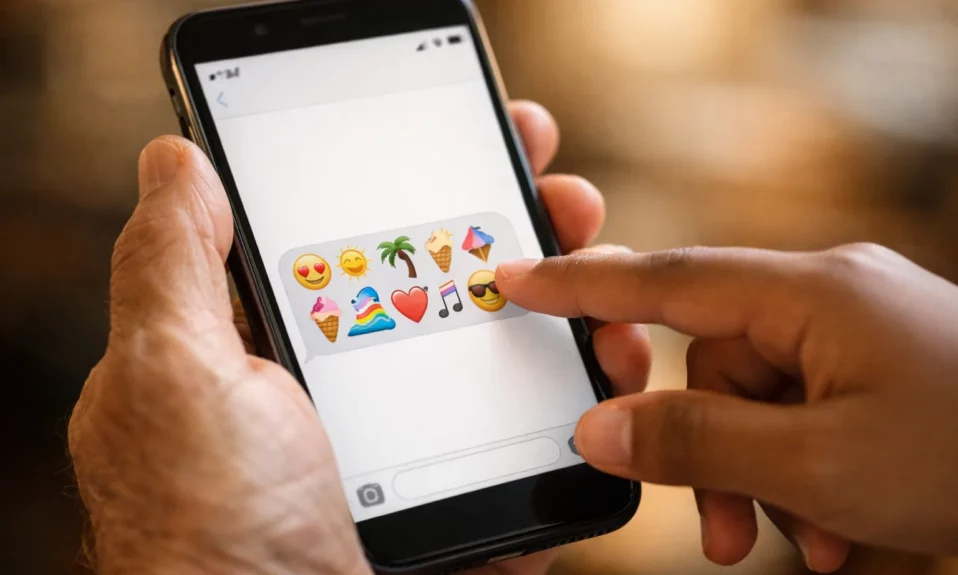

Your kids’ texts aren’t what you think they mean. From “no cap” to the skull emoji, here are 10 phrases and emojis decoded, including the one at #1 that causes the most confusion in family group chats.
10 Things Your Kids Text That Mean Something Completely Different Than You Think
Your kid sent you a skull. Or they said something was “lowkey fire.” Or they replied to your good news with “that’s so slay.” You’re nodding along pretending you understood, but you have no idea what they actually said. You’re not alone.
The thing at #1 on this list is the one that causes the most visible confusion in family group chats, and it looks completely harmless at first glance.
Go through all ten. You’ll probably recognize at least half of them from your own recent texts.
10. “No cap” (or just “cap”)

Your kid texts you something surprising and adds “no cap” at the end. You’re wondering if this has anything to do with hats.
“No cap” means “I’m not lying” or “I’m completely serious.” It’s the modern equivalent of “I swear” or “no joke.” The word “cap” in this context means a lie or exaggeration, and “no cap” means the opposite. So “that pizza place was incredible, no cap” means they’re genuinely enthusiastic, not overselling it. And just “cap” on its own, sometimes written as 🧢, is calling something out as a lie or exaggeration.
9. “Lowkey” or “Highkey”

Your kid texts “I’m lowkey obsessed with that show you recommended” and you’re not sure if that’s a good thing or a lukewarm thing.
“Lowkey” means quietly, secretly, or moderately enthusiastic, as in they don’t want to make a big deal of it but they genuinely feel it. “I lowkey love this” means “I really love this, I just won’t shout it from the rooftops.” “Highkey” is the opposite: enthusiastic and open about it. “I highkey need you to call me” means they really need the call and they’re not being subtle about it.
The next one trips up almost every parent the first time they see it.
8. “It’s giving…” (followed by something)

Your daughter sends you a photo of something and texts “it’s giving cottage core” or “it’s giving main character.” You know what cottages are. You still have no idea what she said.
“It’s giving” means something has the vibe, energy, or aesthetic of whatever follows. “It’s giving 1970s” means the thing looks or feels very 1970s. “It’s giving chaos” means the situation feels chaotic in a way the sender finds funny or dramatic. It replaced “it looks like” or “it feels like” because it’s more expressive. When your kid sends “it’s giving vacation” about something mundane, they’re saying it has that relaxed, freewheeling energy.
7. “Rent free” or “living in my head rent free”

Your son texts “that song you played on the drive is living in my head rent free” and you’re trying to figure out if that’s a complaint.
It’s not. “Living in my head rent free” means something is stuck in their thoughts without being invited, usually in a good way. The joke is that this thought is taking up mental real estate for free, like a tenant who doesn’t pay. It’s affectionate when applied to music, a phrase, a memory. If your kid says something you said is living in their head rent free, it means it landed. Take that as a win.
6. “Bussin” or “bussin bussin”

You made dinner. Your kid texts “mom this is bussin bussin” and you’re not sure if that’s a compliment or a critique.
“Bussin” means really, genuinely good, especially about food. It comes from Black American slang and was in use long before it spread into mainstream texting culture. When your kid adds it twice, “bussin bussin,” they’re emphasizing it’s not just good, it’s exceptional. If someone texts you “bussin” about something you made or shared, they love it. That’s the whole message.
Read More: 10 Emojis Your Kids Send That You’re Probably Misreading
5. “I’m dead” or “I’m crying”

You send your kid a funny story and they text back “I’m dead” or “I’m literally crying.” You read it and wonder if you should call them to check.
You don’t need to call. “I’m dead” and “I’m crying” both mean they’re laughing intensely. “I’m dead” is short for “I’m dead from laughing.” “I’m crying” means “I’m crying with laughter.” Both are the highest form of laugh-react in text form. If you made them “dead,” your joke landed perfectly. This also connects to the skull emoji 💀, which means the same thing and is equally positive.
The next two are the ones most parents say they were glad someone explained.
4. “Slay” or “You slay”

You share a photo, tell a story, or accomplish something, and your kid texts “slay, mom” or “you literally slay.” You’re caught between being pleased and slightly baffled.
“Slay” means to do something exceptionally well, to look amazing, or to handle a situation with confidence and style. It comes from drag and queer culture and has moved into mainstream slang over the last decade. When your kid tells you that you slay, they’re giving you a genuine, enthusiastic compliment. It doesn’t have a negative connotation. It’s a compliment. A big one.
3. “That hits different”

You share an old song, a memory, or something meaningful, and your kid texts “that hits different now.” You’re not sure what it means or whether it hit the right way or the wrong way.
“Hits different” means something has a particular emotional impact that’s distinct from how you’d normally experience it. The “different” doesn’t mean worse. It means more resonant, more complex, or more meaningful in a specific context. “That song hits different at night” means it feels more intense in that setting. If your kid says something you shared “hits different,” they’re telling you it moved them in a specific way. That’s a compliment worth sitting with.
2. “NGL” or “Not gonna lie”

Your kid texts “NGL, I was kind of nervous about that” and you’re scanning it trying to figure out the acronym. Or they write it out: “not gonna lie, that actually helped a lot.”
“NGL” or “not gonna lie” is a preface for honesty. It signals that what follows is an admission, a confession, or a genuine feeling they might normally downplay. It’s often vulnerable in a low-key way. “NGL, I missed you this week” is your kid telling you they missed you, in a way that feels emotionally honest without being too earnest. Take it at face value. It means they’re telling you something real.
What’s waiting at #1 is the text reaction that causes the most visible confusion in family group chats, and it’s been going on since at least 2021.
1. 💀 The Skull Emoji
The Reaction That Means the Exact Opposite of What It Looks Like

You send a funny story, a photo, or a joke in the family group chat. Your grandchild responds with 💀. Just the skull. Nothing else.
To someone who grew up with the skull as a symbol of death, poison, or danger, receiving it in response to something you thought was lighthearted is a gut punch. Did I say something wrong? Are they upset? Is this a warning?
Here’s what it means: you were so funny that they’re “dead from laughing.” Among younger generations, 💀 has fully replaced 😂 as the highest-intensity laugh reaction. “I’m dead” became Gen Z slang for hysterical laughter around 2018 or 2019, and the skull is its emoji equivalent. When you get 💀 in response to something you sent, it means your joke or story completely landed. It is the best possible response they could give you.
A woman named Barbara from Florida texted her daughter a joke about getting lost in IKEA. Her daughter sent back just 💀. Barbara put her phone down and spent an hour wondering if she’d caused offense. Then her daughter called, still laughing, to explain. “Mom, that’s the funniest thing I’ve heard all week,” her daughter told her. “The skull means I’m dead.”
The rule is simple: if you told them something funny and they sent 💀, you killed it. Literally and figuratively. And if you want to use it yourself, go ahead. Just know your audience. Sending 💀 to a friend your own age who isn’t familiar with the meaning will not land the same way.
Now check your recent texts. There’s a reasonable chance you’ve received at least one 💀 in the past month and had no idea it was a compliment.
Now You’ve Got the Decoder
The gap between what they sent and what you read is almost never about a lack of care. It’s just two different dialects running on the same phone.
Send this to someone who has a kid or grandkid who texts them. There’s almost certainly something on this list that will make them laugh in recognition.