Your grandparents didn’t call it “rustic cooking.” They called it Tuesday. These are the meals that kept families fed when money was nothing but a rumor.
42. Bread and Lard

Before butter was affordable, lard was on every table.
A slice of day-old bread, a scrape of rendered pork fat, maybe a pinch of salt if you were lucky. It sounds wrong until you remember that this was breakfast for millions of Americans through the 1930s and into the 40s.
Lard cost almost nothing. Bread cost almost nothing. Together, they kept kids from going to school hungry. Your great-grandparents didn’t waste a drop.
The families who made this never forgot the weight of it.
41. Oatmeal with Salt (Not Sugar)

Not the brown sugar and cinnamon version you grew up with. The plain kind.
Salt oatmeal was a savory, filling breakfast that cost pennies per pot. Some families added a little bacon grease stirred in for richness. Some just ate it plain and were glad to have it.
A pound of oats fed a family for a week. That math mattered when there wasn’t much else.
Grandma didn’t sweeten everything. She sweetened what she could afford to.
40. Fried Cornmeal Mush

Leftover mush from breakfast became dinner when you fried it.
You’d pour the cornmeal porridge into a pan the night before, let it set overnight, then slice it in the morning and fry it in whatever fat you had. The outside went crispy. The inside stayed dense and filling.
Cornmeal was Depression pantry gold. Ten cents bought enough for days of meals. Fried mush appeared on tables from Appalachia to the Midwest without anyone calling it “fusion.”
Once you’ve had it with a little molasses drizzled over the top, you understand why families kept making it long after they could afford something else.
“This next one was the meal that showed up whenever money ran out completely.”
39. Potato Soup (Water-Based)

Not the loaded kind with cheese and bacon. The plain kind.
Diced potatoes, water, an onion if you had one, salt. That’s it. No cream, no stock, no frills. It was thin and pale and honest. Some families added a bit of flour to thicken it up. Some just served it as-is.
During the Depression, a ten-pound bag of potatoes could cost 25 cents and feed a family through the week in soups, fries, and boiled sides.
This soup kept people warm in winters when the heat was unreliable too.
38. Pinto Beans and Cornbread

This was the Southern poor man’s power meal.
A pot of pinto beans simmered all day with a ham hock if you had one, or just salt and onion if you didn’t. A pan of skillet cornbread on the side. You crumbled the cornbread straight into the beans and ate it like a thick porridge.
A pound of dried pintos cost a few cents and fed six people. That math kept families alive in the rural South through the hardest years.
Even families who eventually got comfortable never stopped making this on cold Sundays.
37. Milk Toast

Sick food. Baby food. Poor food. Sometimes all three.
You’d tear stale bread into a bowl, pour hot milk over it, add a little butter and sugar if you had any. The bread softened into something between porridge and soup. It went down easy and cost almost nothing.
Mothers made this for sick children first. Then it became regular breakfast when budgets were desperate. Then it became comfort food for the rest of their lives.
Half the people reading this had a grandmother who made milk toast and never once called it anything sad.
“The next five were eaten in nearly every American household at some point.”
36. Creamed Chipped Beef on Toast (SOS)

The military gave it a name that can’t be printed here. Soldiers knew it well.
Dried, salted beef sliced paper-thin, stirred into a white flour-and-milk gravy, served over toast. The saltiness of the beef flavored the whole sauce. It was filling, fast, and cheap. A jar of dried beef was a Depression pantry staple.
Families made this at home long before and after the wars. Kids grew up eating it on weeknight mornings without knowing soldiers complained about it constantly.
The families who loved it never called it by its Army name at the table.
35. Dandelion Greens with Bacon Fat

When the yard was the grocery store, dandelions were free vegetables.
Grandmothers who knew their plants would send kids out to pick the young leaves in spring before the flowers came up. You’d wilt them in bacon drippings with a splash of vinegar, season with salt. Bitter, a little sharp, but genuinely nutritious.
Free food from the yard. That was not a trend in 1935. That was survival strategy.
Families who grew up picking dandelions for dinner still look at overgrown lawns differently.
34. Cornbread and Buttermilk

This is the one that divides people cleanly.
Crumble leftover cornbread into a tall glass of cold buttermilk and eat it with a spoon. That’s it. The cornbread softens and absorbs the buttermilk. The tanginess cuts through the richness of the bread.
Old-timers from the South will tell you this was supper. Not a snack. Supper. When there wasn’t anything else going.
The people who love this feel a specific kind of nostalgia that’s hard to explain to anyone who didn’t grow up with it.
“This one fed families of eight for under fifty cents.”
33. Hoecakes

Cornmeal, water, salt, a little fat. That’s a hoecake.
Originally cooked on the flat of a hoe blade over an open fire by field workers who couldn’t stop for a break. By Depression times, they were made in the skillet on the stove. A small stack of hoecakes was a meal. Eat them plain, eat them with beans, eat them with sorghum syrup if you had any.
The name stuck because the origin story stuck. Families who knew the name understood the history that came with it.
A bag of cornmeal and a cast iron skillet. That’s the whole recipe and the whole survival kit.
32. Fried Salt Pork and Gravy

Salt pork was the meat when there was no real meat.
You’d slice it, sometimes soak it in water overnight to cut the salt, then fry it until the edges crisped. The rendered fat became the base for a white flour gravy to pour over biscuits or bread. The meat itself was tough and salty but it was protein and flavor when both were scarce.
A slab of salt pork cost almost nothing and lasted weeks in the cellar. Smart families made a little go a long way.
That gravy over a biscuit is still one of the most comforting things you can eat on a cold morning.
31. Depression-Era Chocolate Cake (No Eggs, No Butter)

Also called Wacky Cake. Also called War Cake. Also called the miracle that proved someone was trying.
Made with flour, sugar, cocoa, baking soda, oil, vinegar, and water. No eggs. No butter. No dairy. Mixed right in the pan you bake it in. It comes out dense, fudgy, and genuinely chocolatey.
Mothers made this for birthdays during the Depression when real cake ingredients were too expensive. Kids didn’t know the difference. They just knew it was cake.
This recipe is still in millions of hand-written recipe boxes across America because it works perfectly.
“Your grandparents probably had a different name for the next one.”
30. Bread Pudding

Stale bread was never thrown away. It became dessert.
Tear the bread into a baking dish, pour over a mixture of eggs, milk, sugar, and vanilla. Let it soak. Bake until the top goes golden and the inside sets into something between pudding and cake. A drizzle of whiskey sauce if you were celebrating. Plain if you weren’t.
This was poverty food elevated by patience. It cost almost nothing to make and tasted like something much better than nothing.
The restaurants that charge $12 for a square of bread pudding don’t tell you where it came from.
29. Bean Soup with Ham Hock

One ham hock. A pound of dried white beans. A full pot of soup.
The hock simmered all day, giving everything it had to the broth. Beans soaked overnight went in and cooked down until the broth went rich and the beans went soft. Salt, pepper, maybe an onion. That was the whole recipe.
This was the smell of Sunday in a lot of American homes. A pot that started in the morning and was ready when everyone came in from outside.
The ham hock gave its last and the beans turned humble water into something warm and real.
28. Crackers and Milk

This was supper when supper was hard to come by.
Soda crackers or saltines crumbled into a bowl of cold milk. Some families warmed the milk. Some didn’t. Some added a spoonful of sugar. The crackers softened in minutes and the whole thing went down quick. Kids ate it without complaint because it was warm and filling.
A box of crackers and a bottle of milk. That could be dinner four nights in a row if it had to be.
The families who grew up with this don’t forget the particular sound of crackers breaking in the kitchen at night.
“This next one was considered a luxury version of everything on this list.”
27. Tomato Gravy Over Biscuits

When there was no meat for gravy, tomatoes were the answer.
Canned or fresh tomatoes cooked down with flour, a little bacon fat, salt and pepper. It went thick and red and rich. Pour it over homemade biscuits. It tasted like something more than it was, which was the whole point of a good poor man’s cook.
Families in Appalachia and the rural South knew this one particularly well. The tomato gravy covered whatever was underneath and made everything feel like a real breakfast.
The biscuits didn’t need to be perfect. The gravy covered everything anyway.
26. Fried Potatoes and Onions

Three ingredients. One skillet. One complete dinner.
Slice the potatoes thin. Slice the onion. Fry them together in lard or bacon grease until everything goes golden and soft with crispy edges. Salt heavily. Maybe a little pepper.
This was Monday night dinner. It was Saturday morning breakfast. It was whatever-you-called-it when the fridge was empty and you needed to feed everyone.
A ten-pound bag of potatoes and two onions. That’s a week of this if you need it to be.
25. Molasses on Bread

Not jam. Not honey. Molasses, because it was cheaper than both.
Dark, thick, intensely flavored. A little bitter, a little sweet, deeply rich. Spread it on a slice of bread and you had something that felt like a treat when it wasn’t one. Kids liked it. Adults used it to make bread feel like dessert when there was no dessert.
A jug of sorghum molasses lasted weeks and cost almost nothing. It made plain food feel like it had been thought about.
The people who grew up with molasses bread still reach for it sometimes, just to remember.
“This one shows up in stories from every region of Depression-era America.”
24. Vinegar Pie

No fruit. No cream. Just vinegar, sugar, eggs, and butter in a pie shell.
The vinegar cooked down into something sweet and tangy that mimicked fruit without any fruit being involved. It set firm and sliced cleanly and looked like a proper pie from across the room. Families served it at the end of a hard meal like a small act of dignity.
This was what baking looked like when the pantry had nothing. You worked with what chemistry gave you: acid plus sugar makes something close to citrus.
Every family that made this had a version slightly different from their neighbor’s, and both of them thought theirs was right.
23. Boiled Eggs on Toast

Two eggs and a slice of bread. A complete meal, and a good one.
You boiled the eggs just until the yolk was still a little soft, split them in half and laid them on the toast. The yolk ran into the bread. You salted it and ate it standing at the counter sometimes, before anyone else was up.
Eggs were cheap protein. Bread was cheap carbs. This was the working poor’s complete breakfast long before “complete breakfast” was a cereal commercial.
Simple things that are actually good deserve to be remembered without irony.
22. Cornmeal Porridge (Grits Before Grits Were Cool)

Before grits got trendy, every poor family in America already knew this dish.
Slow-cooked cornmeal stirred for twenty minutes until smooth and thick. A pat of butter melting in the center. Salt. Maybe a drizzle of cane syrup. This was breakfast before school for generations of kids who had no idea they were eating something that would later be listed on restaurant menus for $14.
The stove had to be watched. Grits splatter when they’re mad. Grandma knew.
Every family called it something slightly different and that distinction mattered.
“The next one was the emergency meal. The one you made when everything else was gone.”
21. Flour and Water Gravy (Poor Man’s Gravy)

No drippings. No stock. Just flour, water, salt, and whatever fat was available.
You browned the flour a little first for color. Added water slowly and whisked out the lumps. Added salt and pepper and maybe a smear of lard or bacon grease. Poured it over bread, biscuits, or rice. It looked like proper gravy from a few feet away.
This was the end of the road meal. When the real gravy ingredients were gone, you made the ghost of gravy and you were grateful for it.
The families who made this never called it “poor man’s” while they were eating it. It was just dinner.
20. Navy Bean Soup

The U.S. Senate has served this soup every single day since 1903. That should tell you something.
Dried navy beans soaked overnight, simmered for hours with a ham hock and an onion. They broke down into a thick, creamy, deeply flavored soup that cost almost nothing to make and kept well through the week.
During the Depression, a pot of navy bean soup could last a family three or four days. A little thinner each time as you added water back in, but the flavor stayed.
Cheap, slow food made by people who understood that patience was free.
19. Spaghetti with Butter and Garlic

Before anyone in America knew what marinara was, this was the Italian-American poor man’s pasta.
Cook the spaghetti until soft. Drain it. Toss it with butter and a little garlic if you had it. Salt generously. That was dinner. No sauce, no meat, no parmesan. Just pasta and fat and salt.
A pound of spaghetti cost almost nothing in the 1940s. It stretched easily to feed four or five people. Immigrant families who knew pasta made this work beautifully.
The simplest version is sometimes still the best version.
“Your grandmother’s version of this next one is probably different from everyone else’s.”
18. Collard Greens with Pot Likker

The greens were the side dish. The pot likker was the real prize.
Collard greens cooked slow all day with a ham hock until the broth went deep and dark and salty and rich. You ate the greens, yes. But then you soaked cornbread in the pot likker and that was the part grandmothers remembered with specific warmth.
In the South, wasting pot likker was a genuine offense. That broth had been worked for all day.
The greens fed your body. The pot likker fed your memory.
17. Egg Drop Soup (American Version)

Not the restaurant version. The home version, made with water and a bouillon cube.
Heat up water, dissolve a bouillon cube, bring it to a boil and drizzle in a beaten egg while stirring slowly. Egg ribbons form. Add a little salt. Done. It was thin and hot and it took six minutes to make and cost almost nothing.
Poor families found this trick independently across many cultures. Hot broth with an egg in it was a meal you could make when there was nothing else to make.
A bouillon cube and one egg. That’s a warm dinner.
16. Rice and Gravy

In Louisiana, this wasn’t a side dish. It was the whole point.
A cup of long-grain rice cooked until fluffy, covered with whatever gravy you could make from pan drippings or roux and water. The rice soaked everything up. It was filling and satisfying in a way that surprised people who’d never had it.
Rice was Cajun Depression food. Ten cents worth of rice and a little roux could feed a family of six. The gravy made plain rice feel like a real meal.
Generations of Louisiana families grew up eating this as the centerpiece of the plate, not the background.
“This one fed families across three different generations of hard times.”
15. Turnip Soup

Turnips were the vegetable nobody wanted but everyone ate.
They were cheap, they grew fast, they stored well, and they had enough flavor to make a thin soup seem substantial. Diced turnip cooked in salted water with an onion and whatever scraps you had. It went golden and a little sweet as it cooked down.
Nobody was excited about turnip soup. But when it was cold and the pantry was thin, it was warm and it was filling and it was there.
The people who made this understood that food didn’t have to be your favorite to be important.
14. Egg Salad (Stretched Far)

Eggs were the Depression pantry’s most reliable protein.
Hard-boil six eggs. Mash them. Mix with a little mustard, a spoonful of mayo if you had it, a pinch of celery salt. Spread it across as many sandwiches as you could make it reach. A little chopped pickle if you were lucky.
Six eggs became eight sandwiches when you stretched the mixture right. That was a Depression cook’s skill, making a little look like a lot without anyone feeling shorted.
Egg salad sandwiches still taste like comfort food to people who grew up stretching six eggs across a family.
13. Souse Meat (Head Cheese)

This one requires you to leave your modern sensibilities at the door.
Souse meat was made from the parts of the pig that nobody talked about in polite company: the head, the feet, sometimes the ears. Boiled until tender, the meat picked off the bone, seasoned with vinegar and spices, packed into a mold and left to set in its own gelatin.
Sliced cold and eaten on bread, it was genuinely flavorful and deeply economical. Nothing was wasted. Every piece of that animal counted.
The families who made souse understood something about food that the modern world lost somewhere along the way.
“Nobody who grew up in a farming family is surprised by this next one.”
12. Soup Beans (Appalachian Pinto Beans)

Soup beans wasn’t a recipe. It was a ritual.
Dried pinto beans soaked overnight, simmered all day in a heavy pot with a little fatback or ham and enough water to let the beans go soft and the broth go thick. You didn’t rush soup beans. You let them tell you when they were done.
Served with cornbread and raw onion on the side. Sometimes a sliced tomato in summer. You didn’t need anything else and you didn’t want it.
In Appalachia, soup beans on the stove meant everyone was coming home.
11. Cold Potato Sandwich

Yesterday’s boiled potatoes. Today’s lunch.
Slice cold boiled potatoes onto white bread, add a scrape of butter or mayonnaise, salt heavily. Wrap in wax paper and take it to school or the fields. It was dense and filling and it held until dinnertime without any refrigeration.
This was the lunch of coal miners, farmhands, and schoolchildren across rural America in the 1930s. Nobody thought it was strange. It was just what lunch looked like.
Cold potato sandwiches kept people working on days when there wasn’t much else to keep them going.
10. Fried Bread (Doughboys)

Flour, water, baking powder, salt, and a pan of hot fat.
Drop spoonfuls of the dough into hot lard and watch them puff up and go golden. Called doughboys, fry bread, fried dough, fried puffs, depending on where you were. Eaten plain with butter or rolled in sugar, depending on what you had.
This was the Depression-era treat that cost almost nothing to make and felt like a celebration anyway. Kids remembered it as a special weekend breakfast. Adults knew it was just flour and water with ambition.
The fact that it tasted good was something families were quietly proud of.
“This next one was every grandmother’s secret weapon against an empty pantry.”
9. Mayonnaise Sandwich

Don’t knock it until you’ve had it when it was the only thing available.
Two slices of white bread, a generous spread of mayonnaise, salt and pepper. That was the whole sandwich. It was creamy and salty and filling in a way that surprised people who’d never had to eat one. Some families added a slice of tomato. Some added iceberg lettuce. Some added nothing because there was nothing.
Mayonnaise sandwiches were eaten by children who didn’t know they were a sign of lean times. They just knew they were lunch.
Adulthood eventually taught them what they were, and most of them still ate one occasionally anyway.
8. Chocolate Gravy and Biscuits

This sounds wrong until you taste it. Then it makes complete sense.
Cocoa powder, flour, sugar, and milk cooked into a thin chocolate sauce poured hot over split biscuits. It’s sweet and slightly rich and deeply Southern. Families in Appalachia and the Ozarks ate this for breakfast on special mornings when there was cocoa in the pantry.
A tablespoon of cocoa and a cup of milk fed a table of children something that felt like pure luxury for almost nothing.
Chocolate gravy and biscuits is still the best thing you’ve never ordered at a restaurant.
7. Fried Bologna Sandwich

Before lunch meat became something people apologized for, fried bologna was a weeknight star.
A thick slice of bologna scored around the edge so it didn’t curl too badly, fried in the dry skillet until the center puffed up and the edges went a little charred. Slapped on white bread with yellow mustard. That was it.
Bologna was the cheap lunch meat that stretched a dollar across a week’s worth of sandwiches. Fried, it became something slightly better than its ingredients suggested it could be.
Every family that grew up with this remembers the specific sound it made in the skillet.
“The final six are the ones people remember most specifically. They came up in nearly every family interview.”
6. Depression-Era Vegetable Soup (Scratch)

Every family had a version, and every version was slightly different, and every family thought theirs was the right one.
Whatever vegetables were available went into the pot. Potatoes, carrots, whatever canned tomatoes you had, dried beans, maybe a little cabbage. Simmered in salted water for hours until the broth went rich from the vegetables themselves. No stock needed if you cooked it long enough.
A pot of this soup lasted four days. On the first day it was soup. On the second day it was thick soup. By the fourth day it was almost stew.
This was the meal that guaranteed nobody went to bed hungry, even when the pantry looked empty to an adult who knew better.
5. Biscuits and Water Gravy

Water gravy was the gravy you made when you had flour, water, fat, and the will to make something from nothing.
No drippings, no meat, no milk. Just flour browned gently in whatever fat was in the pan, then water whisked in slowly until it thickened. Salt and pepper. Poured hot over split biscuits.
It sounds like not enough. And for a moment, looking at it, it was. But biscuits and water gravy filled bellies and kept families at the table together and those two things mattered more than the ingredients did.
Grandmothers who made this never felt sorry for themselves while they made it. That’s the part worth carrying forward.
“It’s bad. But it doesn’t come close to what’s waiting at #1.”
4. Peanut Butter and Syrup Sandwich

Before jelly was on every shelf, syrup was the sweetener.
Peanut butter and cane syrup, sorghum syrup, or molasses on white bread. The peanut butter gave fat and protein. The syrup gave sweetness and made it feel like a treat. Kids ate these sandwiches before school and didn’t understand why the neighbor kids thought it was unusual.
Peanut butter itself was one of the Depression pantry’s miracle foods. A jar lasted weeks and cost almost nothing. Mixed with syrup it became something a child would ask for by name.
Generations of families had this version of peanut butter long before strawberry jelly became the standard.
3. Tomato Sandwich on White Bread

Late summer, a ripe garden tomato, a loaf of soft white bread. That was the whole recipe.
Slice the tomato thick. Lay it on the bread. Salt it generously. A smear of mayonnaise if you had it. Eat it over the sink because it would drip and that was part of it. This was summer lunch for families across the rural South and Midwest when the garden was giving and the pantry was thin.
Fresh tomatoes were free when you grew them. White bread was ten cents a loaf. This was a meal that cost almost nothing and tasted better than most things that cost ten times as much.
The people who grew up eating these in the summer remember them as some of the best meals of their lives.
2. Crackling Bread

Regular cornbread was already good. Crackling bread was something else entirely.
You took the crispy bits left after rendering lard, the cracklings, the cracklins, and folded them directly into the cornbread batter before it went into the skillet. They baked into the bread, adding pockets of salty, fatty, smoky richness throughout every slice.
This was Depression-era resourcefulness at its most delicious. Nothing was wasted. The leftover bits from making the fat became part of the bread that used that fat. A perfect loop.
Families who grew up on crackling bread never needed to be told not to waste anything. The bread itself taught the lesson.
“It’s bad. But it doesn’t come close to what’s waiting at #1.”
1. Cornmeal Mush with Molasses

The Meal That Fed America When Nothing Else Would
Hot, filling, and made from the two cheapest ingredients in any Depression-era pantry.
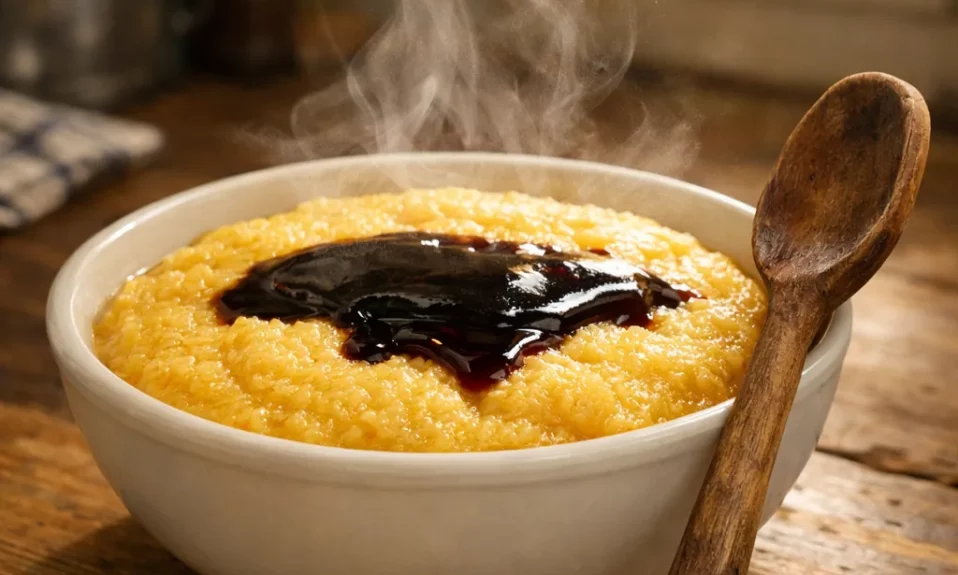
Cornmeal cooked slow in salted water until it went thick and smooth and steaming. A pour of dark sorghum molasses over the top, letting it pool and spread into the heat. No butter needed. No milk needed. Just cornmeal and molasses and the time it took to stir it without stopping.
This was breakfast across Appalachia, the Deep South, the Midwest, and the rural plains for generations. Not as a seasonal thing. As a daily reality. Before the electricity. Before the running water. Before any of the conveniences that made cooking easier, there was cornmeal and heat and someone willing to stand at the stove.
“Mary from Tennessee, whose grandmother made this every morning before the family went out to the fields, told me: ‘She’d have that pot going before anyone else was up. When I smell cornmeal cooking now, I still see her standing at that old wood stove in the dark. She never complained once. Not once. She just made breakfast.’”
The molasses made plain mush into something almost sweet. Something a child could look forward to. Something a grandmother could be proud of setting on the table.
It’s the meal that asked for almost nothing and gave back everything it could.
Now you know why we saved this one for last.
Worth Remembering Before It’s Gone
These weren’t failures of cooking. They were the achievements of people who refused to let hardship become the last word.
Your grandmother’s cornmeal mush and your grandfather’s bean soup carried families through decades of difficulty with their dignity intact. The recipes survived because the people who made them were worth remembering.
Which one did your family make? Tell us in the comments, we’d love to hear the name your family used for it.