18 Orchid Re-Bloom Tricks for Supermarket Orchids That Refuse to Flower Again
Most supermarket orchids are resting, not dead.
Use these small care shifts to help roots recover and trigger another bloom.
18. Confirm It Is a Phalaenopsis
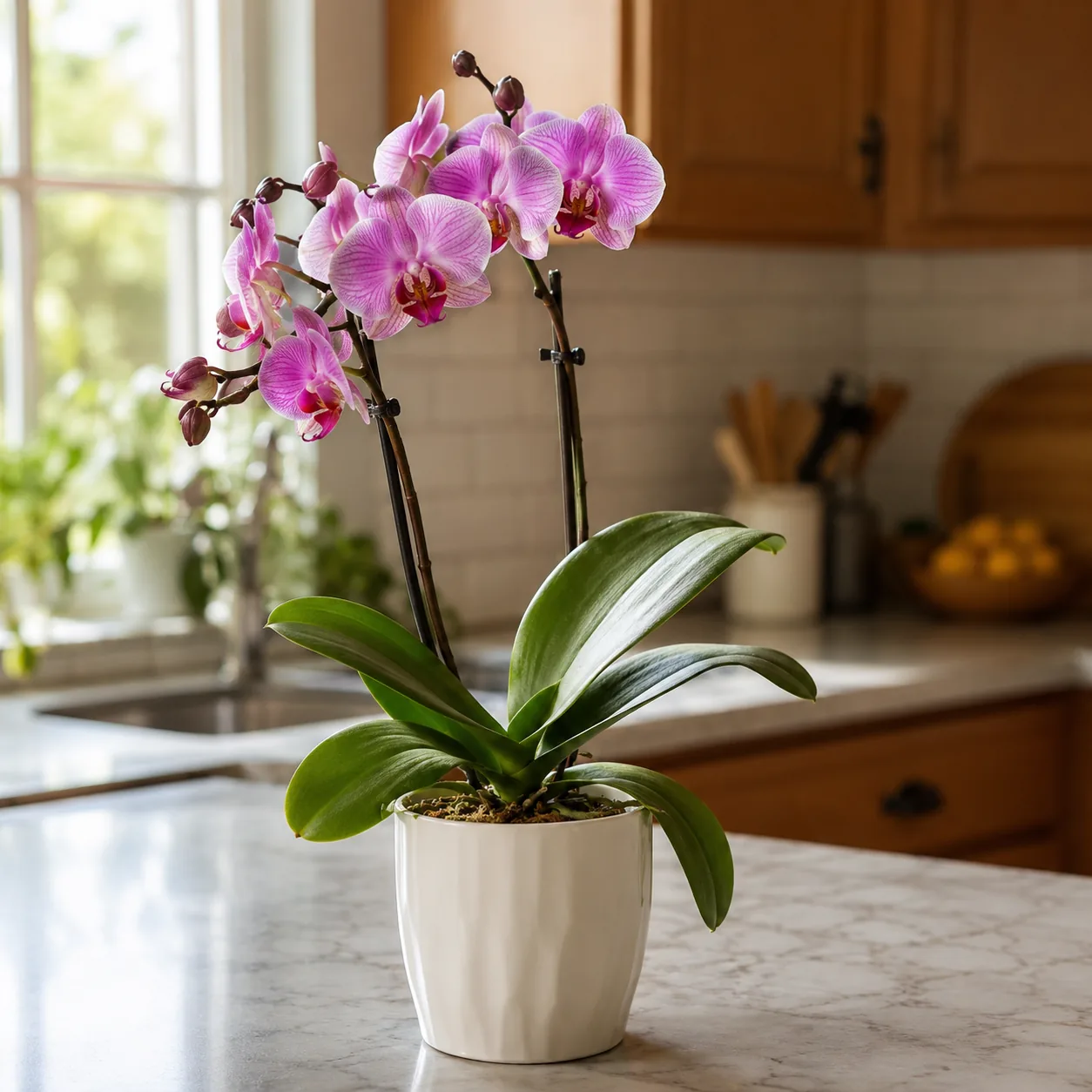
Most grocery orchids are Phalaenopsis, and their care is different from many other orchids.
The thick leaves and arching flower spike are the clue.
Do not apply generic orchid advice without checking the type. Roots come first; flowers follow a steady plant. Use bright indirect light, open bark, and careful watering before expecting flowers.
17. Cut the Spike Only After You Know What It Is Doing
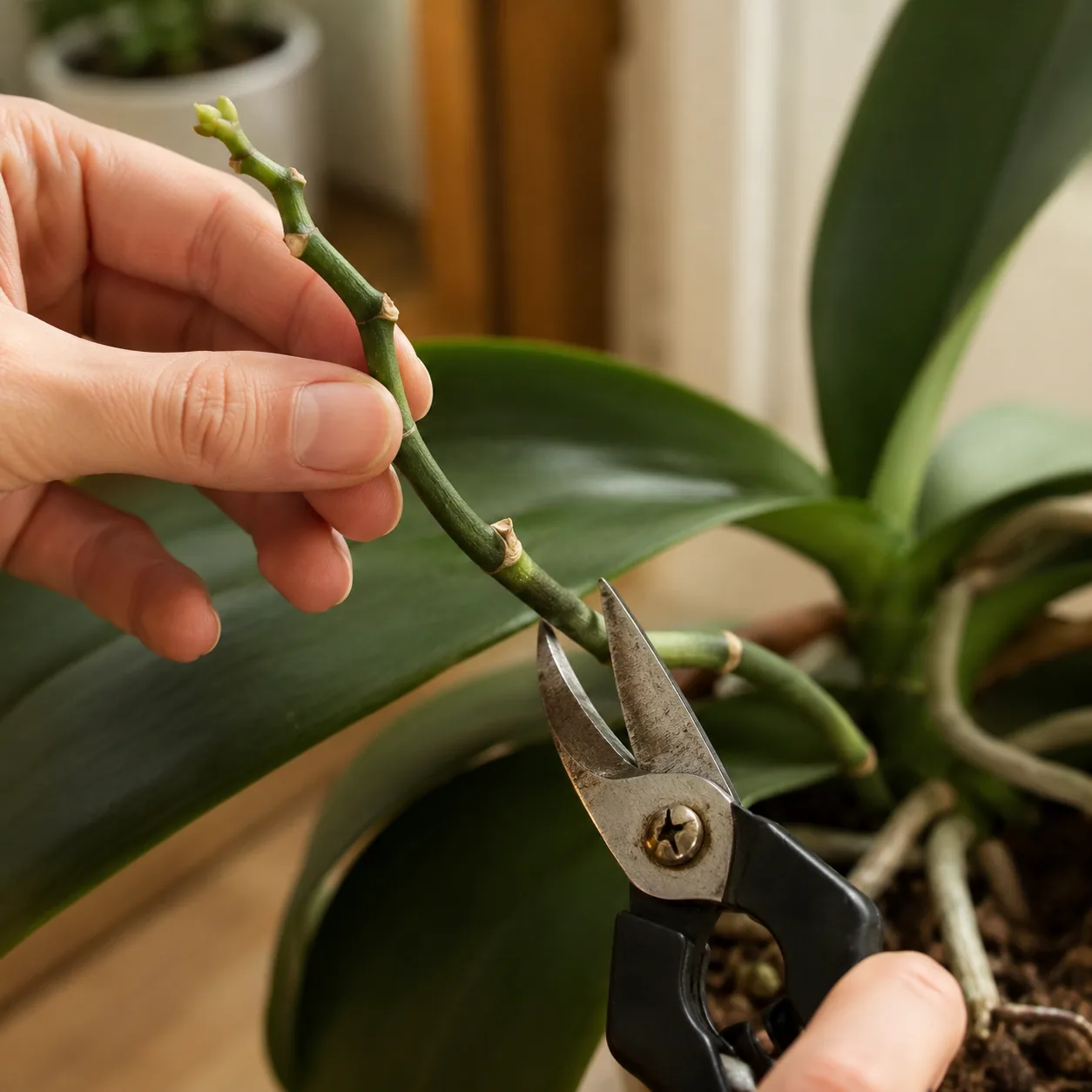
A green spike can sometimes branch and flower again.
A brown dry spike is finished and should be cut near the base.
If the plant is weak, cut even a green spent spike back so energy goes to roots first. Roots come first; flowers follow a steady plant. Use bright indirect light, open bark, and careful watering before expecting flowers.
16. Give It Bright Indirect Light
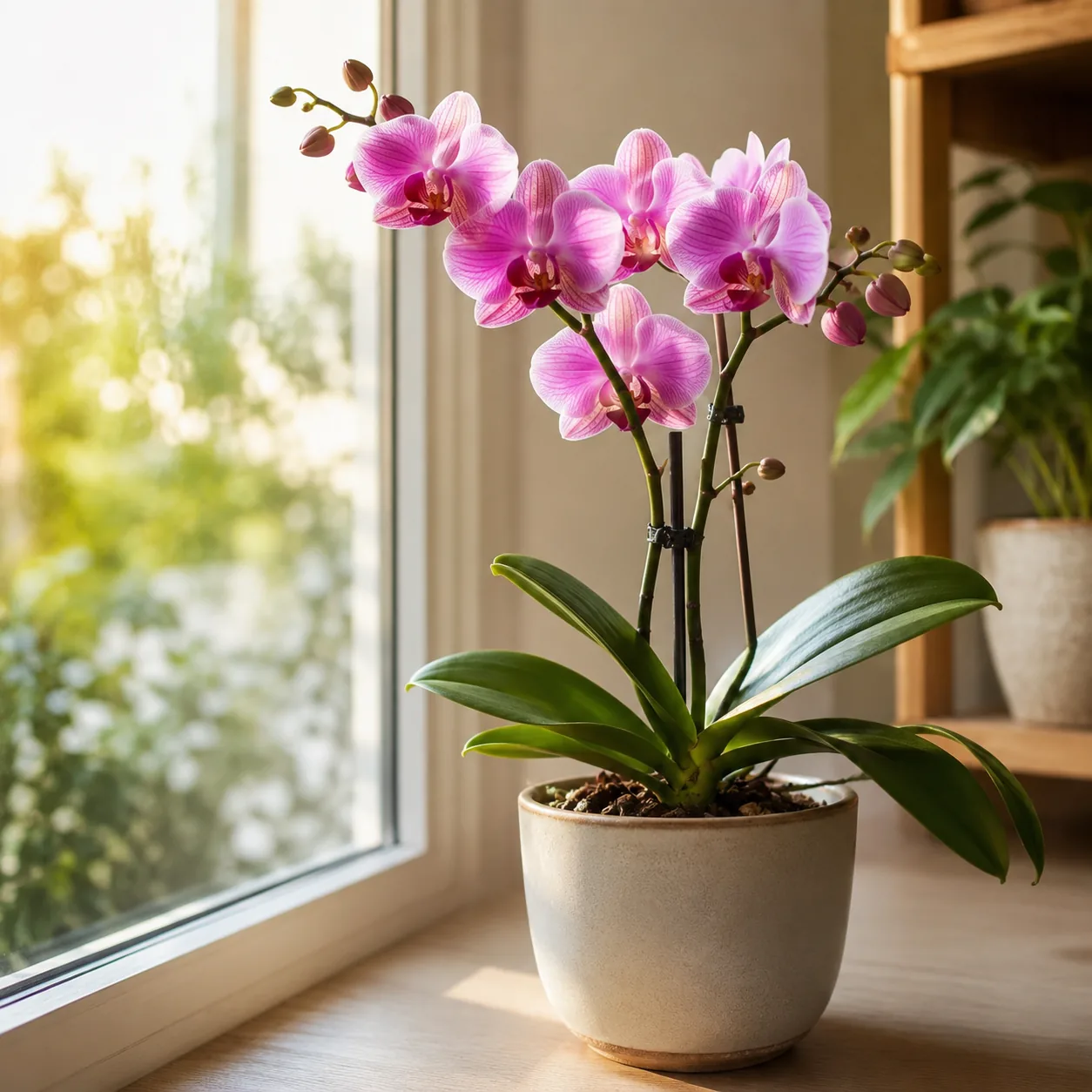
Orchids often fail to rebloom because they sit in a dim room after flowering.
A bright east window is usually better than a dark coffee table.
Leaves should be medium green. Roots come first; flowers follow a steady plant. Use bright indirect light, open bark, and careful watering before expecting flowers.
15. Create a Gentle Night Temperature Drop
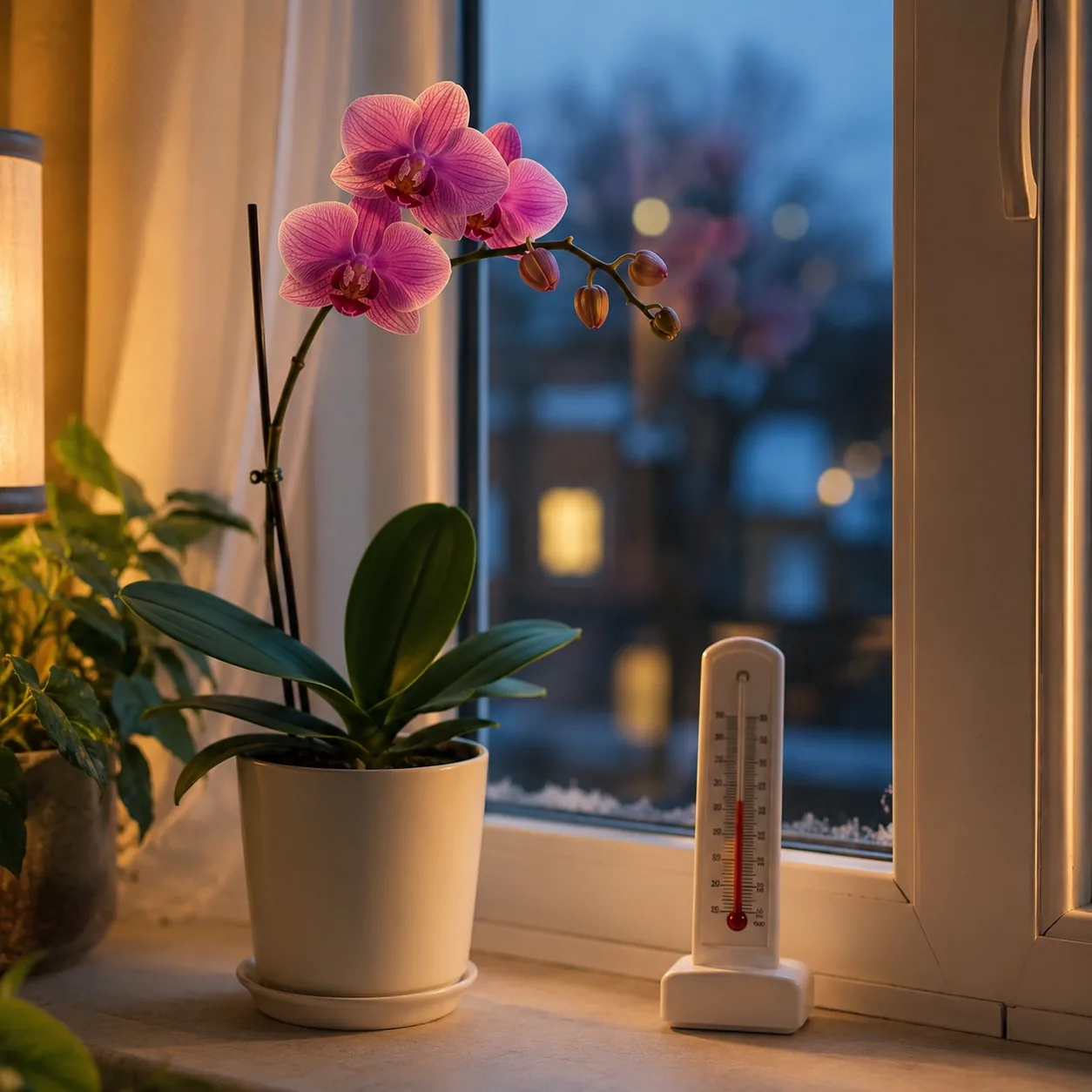
Phalaenopsis often needs cooler nights to trigger a flower spike.
A 10 F drop for a couple of weeks can help.
Do not chill it below roughly 55 F. Roots come first; flowers follow a steady plant. Use bright indirect light, open bark, and careful watering before expecting flowers. If leaves wrinkle or roots collapse, rebuild the plant first and chase blooms later.
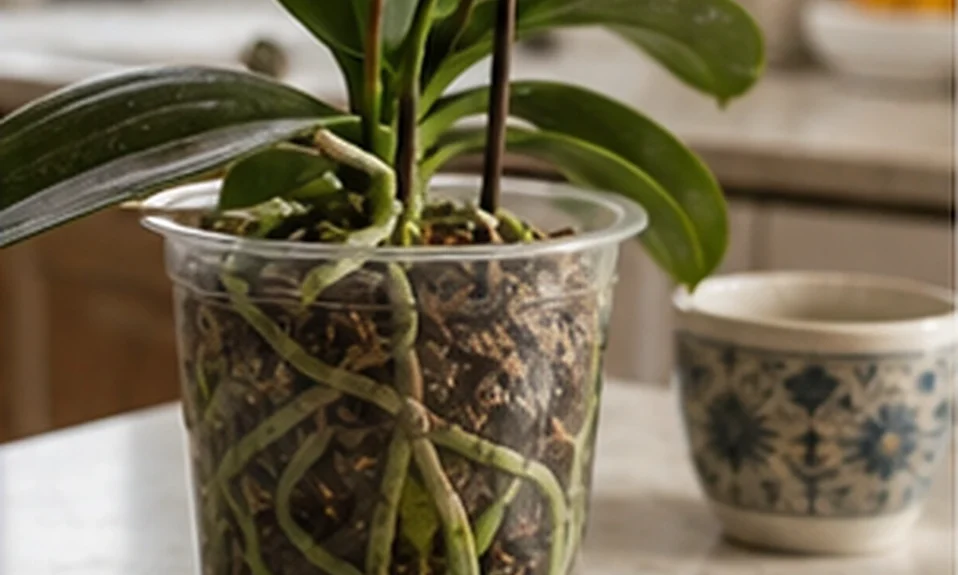
14. Water When the Roots Turn Silvery
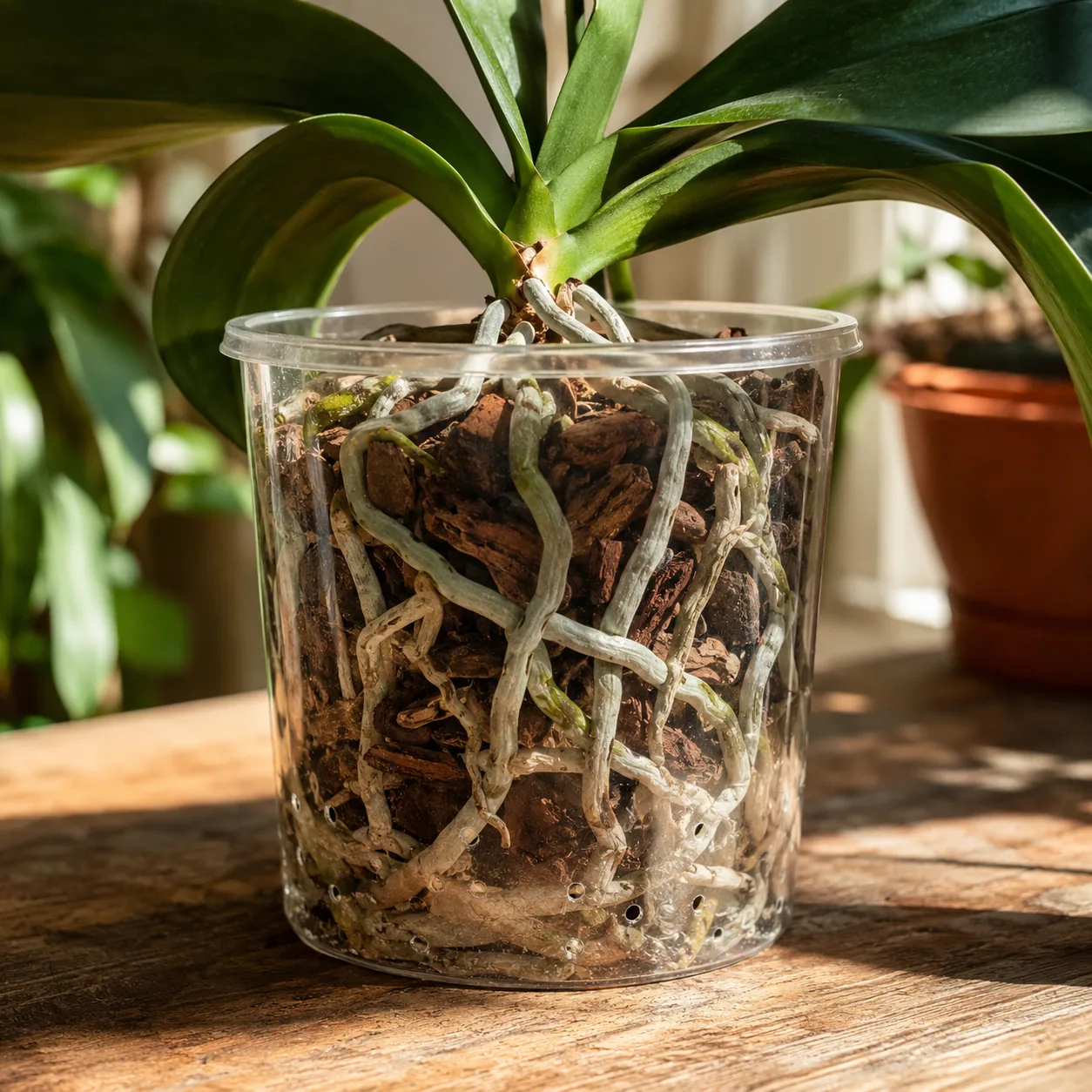
Green roots are recently watered.
Silvery roots are ready for moisture.
This is more reliable than watering every Saturday. Roots come first; flowers follow a steady plant. Use bright indirect light, open bark, and careful watering before expecting flowers. If leaves wrinkle or roots collapse, rebuild the plant first and chase blooms later.
13. Drain the Decorative Sleeve
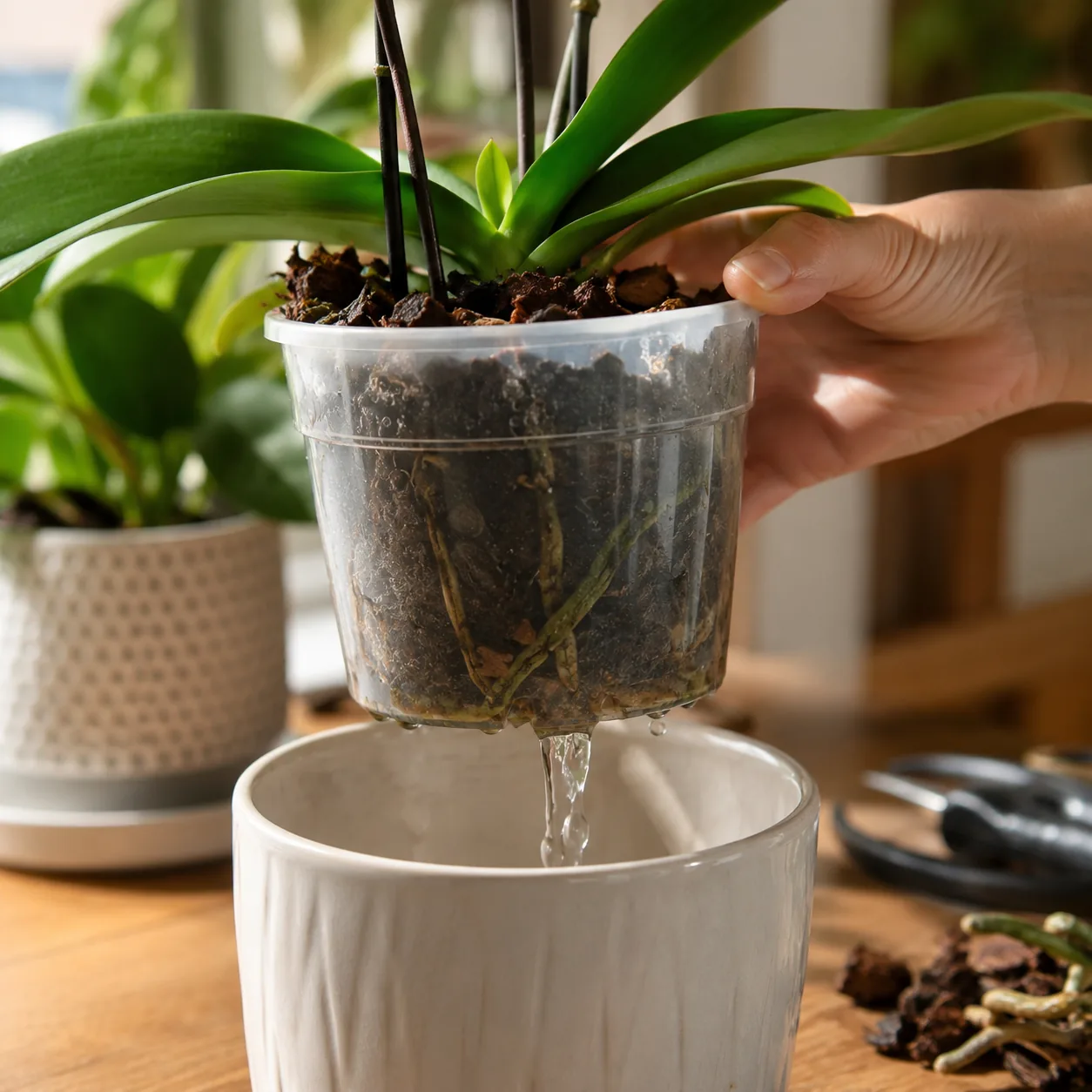
Many gift orchids sit inside a plastic sleeve or ceramic pot that traps water.
The roots suffocate before the owner notices.
After watering, lift the nursery pot and pour out every bit of standing water. Roots come first; flowers follow a steady plant. Use bright indirect light, open bark, and careful watering before expecting flowers.
12. Use Orchid Bark, Not Regular Potting Soil
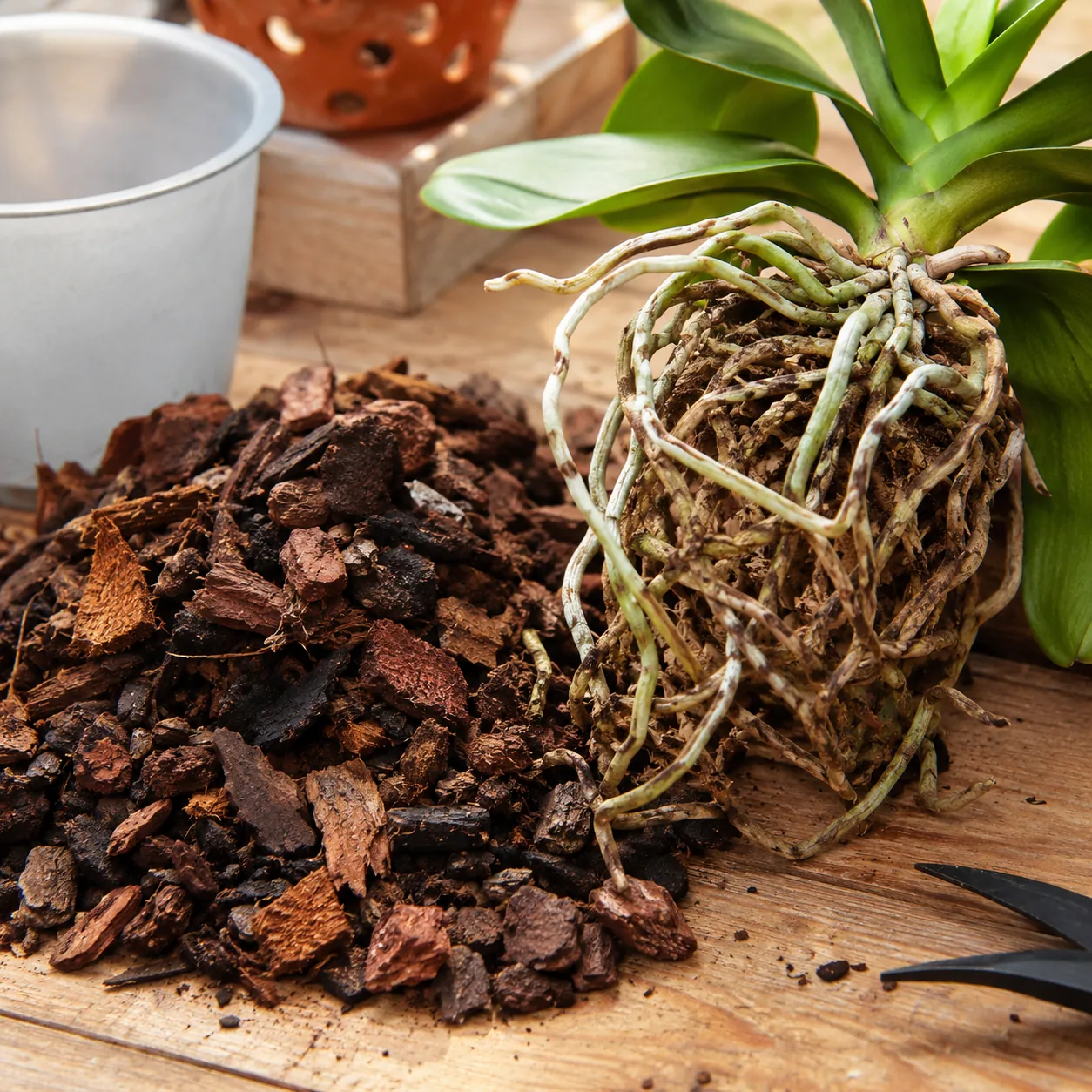
The hidden problem: Orchid roots need air around them.
Standard potting soil stays too dense and wet for a Phalaenopsis.
Repot into bark when the old medium smells sour, breaks down, or stays wet for too long. Roots come first; flowers follow a steady plant. Use bright indirect light, open bark, and careful watering before expecting flowers.
11. Repot After Blooming, Not During Peak Flowers
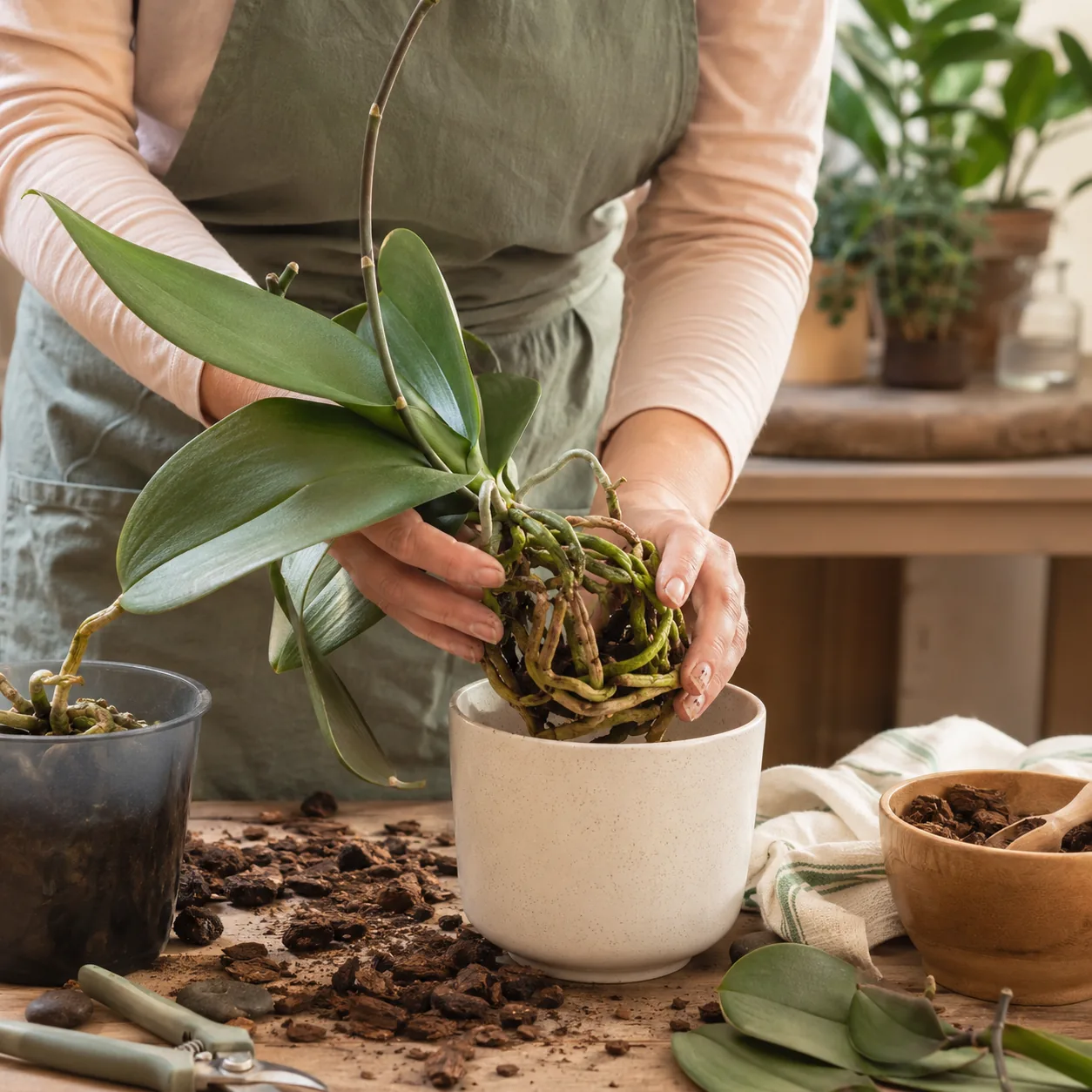
Repotting during full bloom can shorten the show.
Once flowers fade, the plant can handle a root check and fresh medium.
If roots are rotting badly, repot sooner. Roots come first; flowers follow a steady plant. Use bright indirect light, open bark, and careful watering before expecting flowers. If leaves wrinkle or roots collapse, rebuild the plant first and chase blooms later. For another plant-care reset, Pest-Repelling Flowers and Herbs to Plant Around Tomatoes, Roses, and Patios keeps the next step practical.
10. Trim Dead Roots With Sterile Scissors
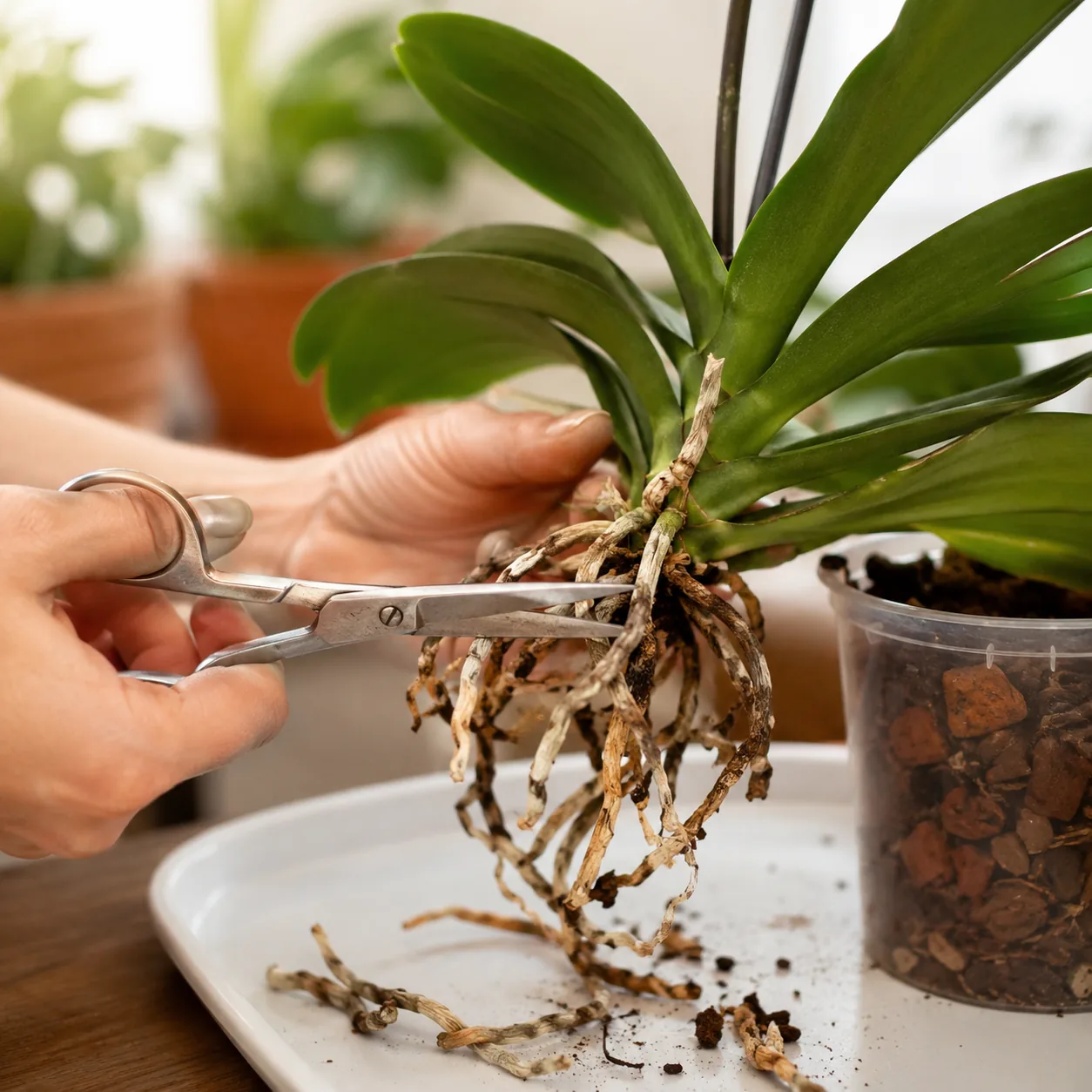
Dead roots are mushy, hollow, or papery.
Removing them keeps rot from sitting inside the pot.
Healthy roots can look pale when dry, so soak first if you are unsure. Roots come first; flowers follow a steady plant. Use bright indirect light, open bark, and careful watering before expecting flowers.
9. Feed Weakly During Growth
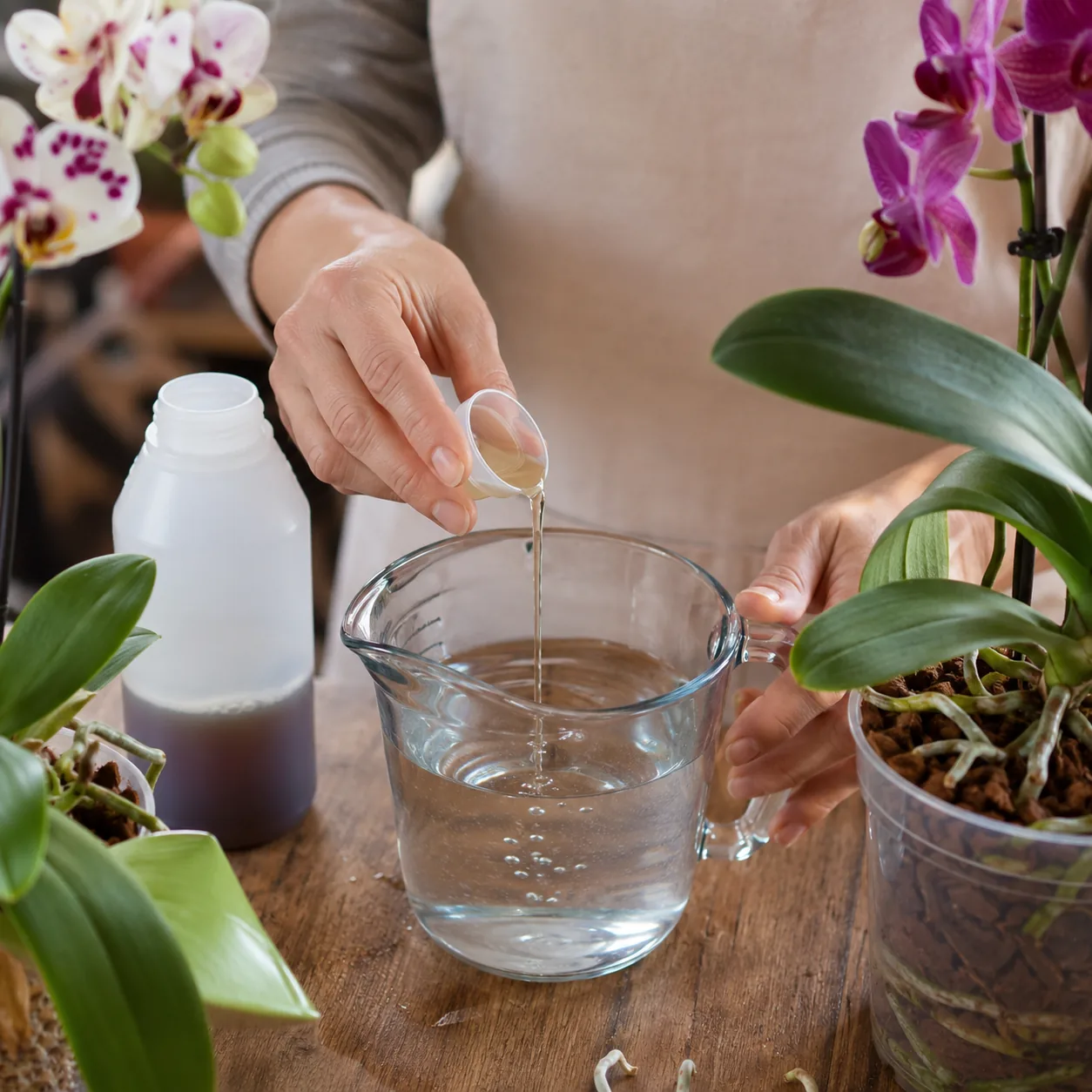
Orchids like light feeding when they are making leaves and roots.
A weak orchid fertilizer every few waterings is enough.
Do not feed a dry root system. Roots come first; flowers follow a steady plant. Use bright indirect light, open bark, and careful watering before expecting flowers. If leaves wrinkle or roots collapse, rebuild the plant first and chase blooms later. For another plant-care reset, Houseplants You Can Forget to Water for Weeks, Ranked by How Hard They Are to Kill keeps the next step practical.
8. Do Not Keep It in Direct Afternoon Sun
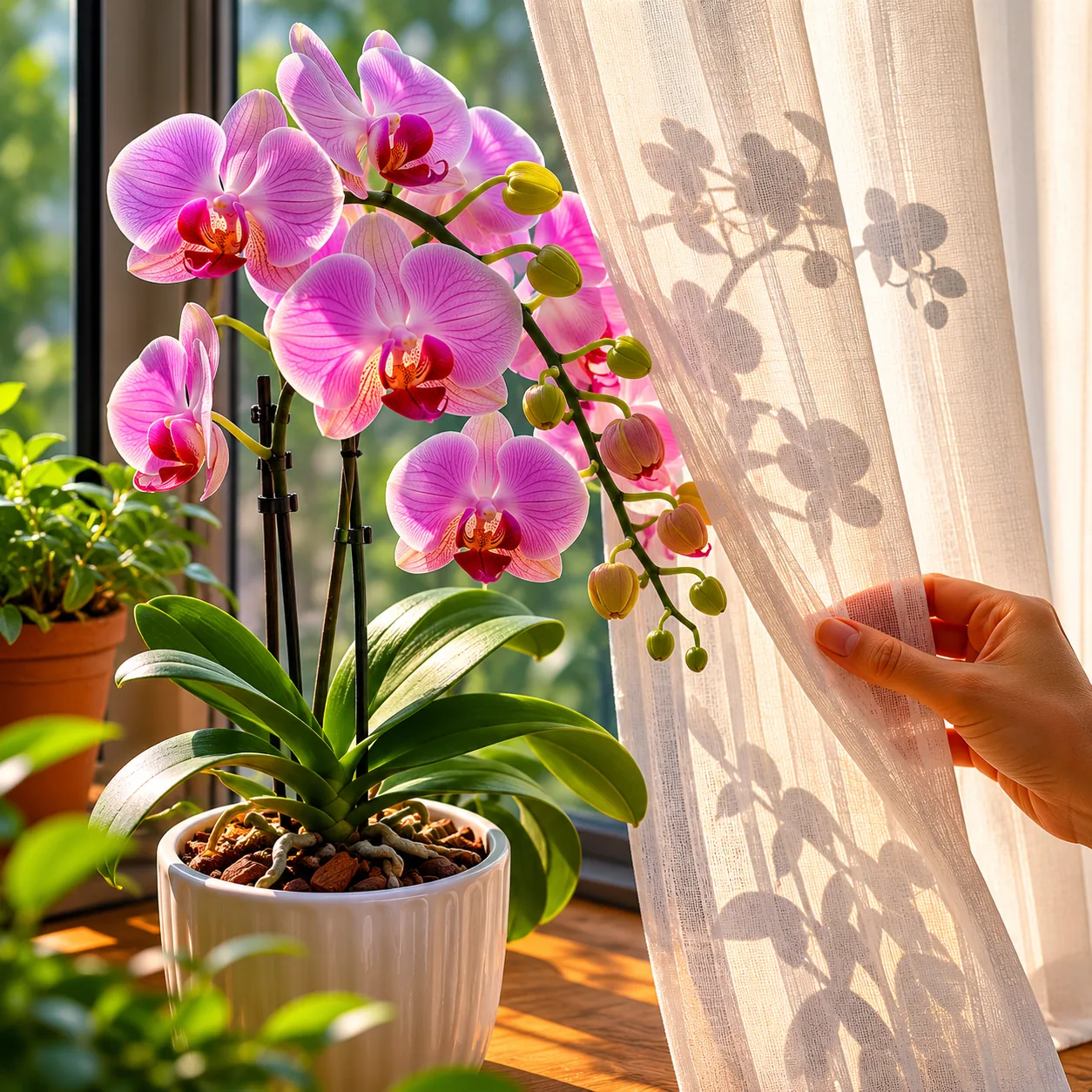
More light helps reblooming, but hot direct sun scorches leaves.
A sheer curtain can turn a risky window into a good one.
A sunburn patch will not heal. Roots come first; flowers follow a steady plant. Use bright indirect light, open bark, and careful watering before expecting flowers. If leaves wrinkle or roots collapse, rebuild the plant first and chase blooms later.
7. Wipe Dust From the Leaves
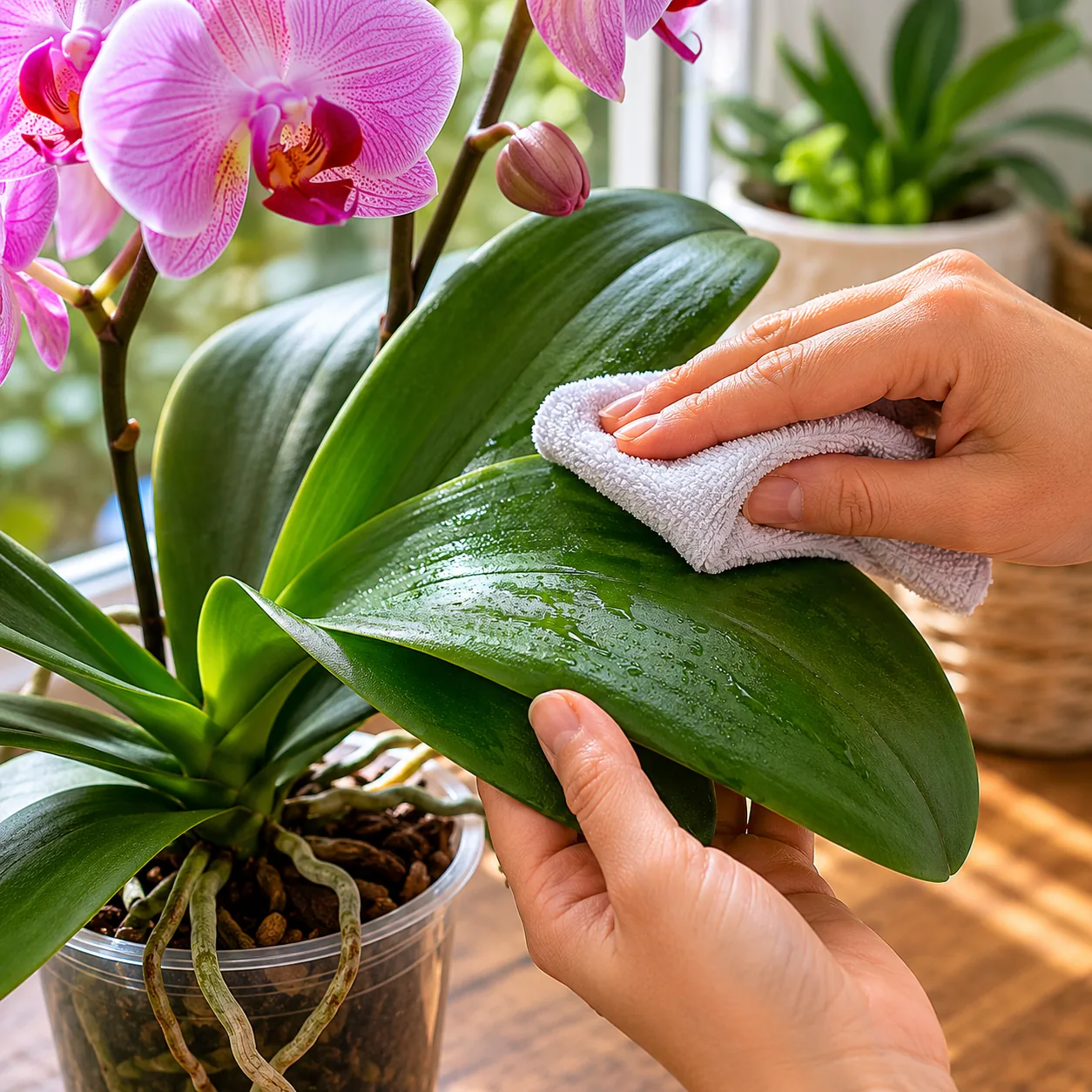
Leaves make the energy that pays for the next bloom.
Dusty leaves work less efficiently.
Use plain water on a soft cloth. Roots come first; flowers follow a steady plant. Use bright indirect light, open bark, and careful watering before expecting flowers. If leaves wrinkle or roots collapse, rebuild the plant first and chase blooms later. For another plant-care reset, Low-Light Houseplants That Actually Survive Neglect, Dry Air, and Dark Corners keeps the next step practical.
6. Watch for New Root Tips
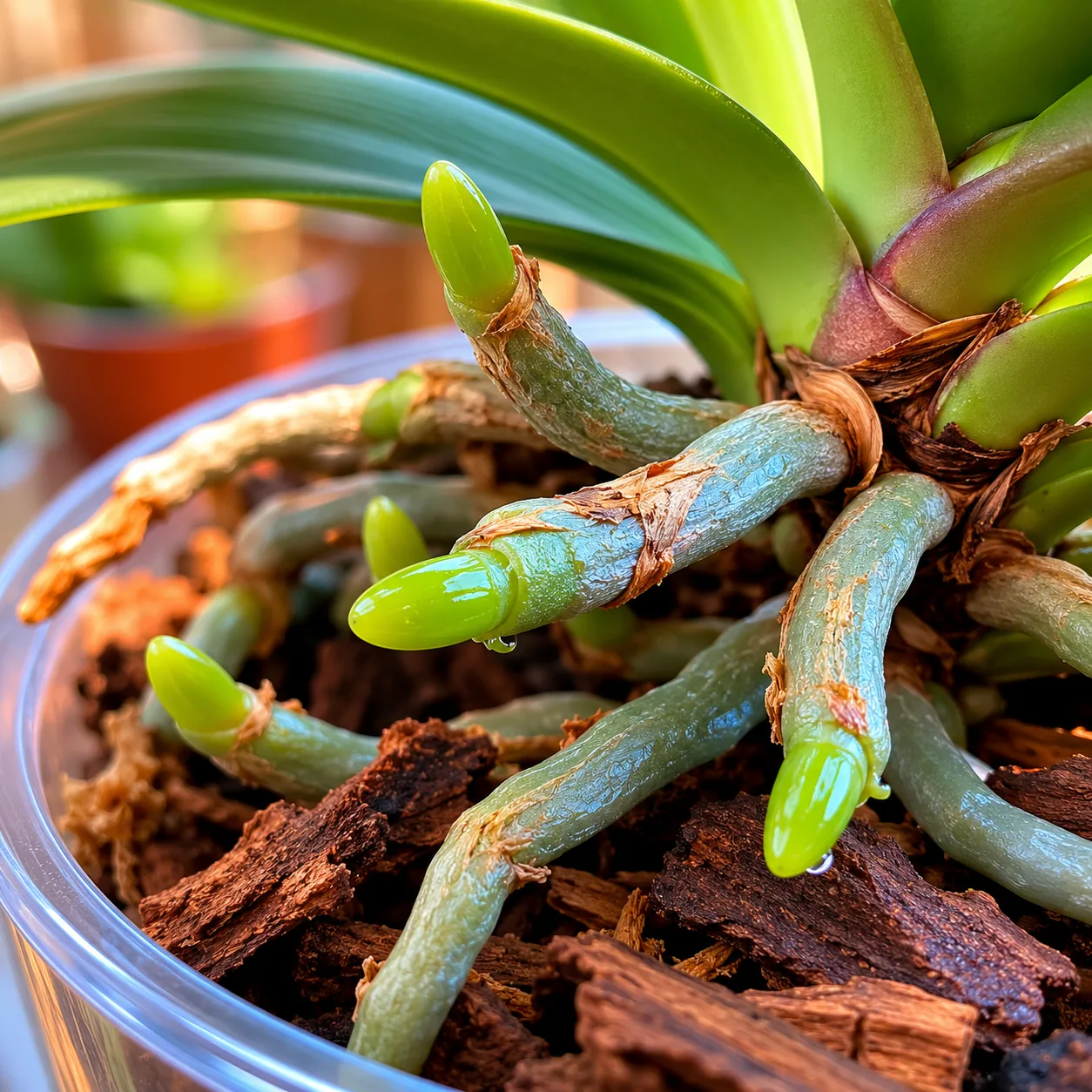
Quick read: Fresh green root tips are a good sign.
A plant making roots is rebuilding the system needed to support flowers.
Do not panic if leaves appear before spikes. Roots come first; flowers follow a steady plant. Use bright indirect light, open bark, and careful watering before expecting flowers.
5. Stake the Spike Only After It Has Length
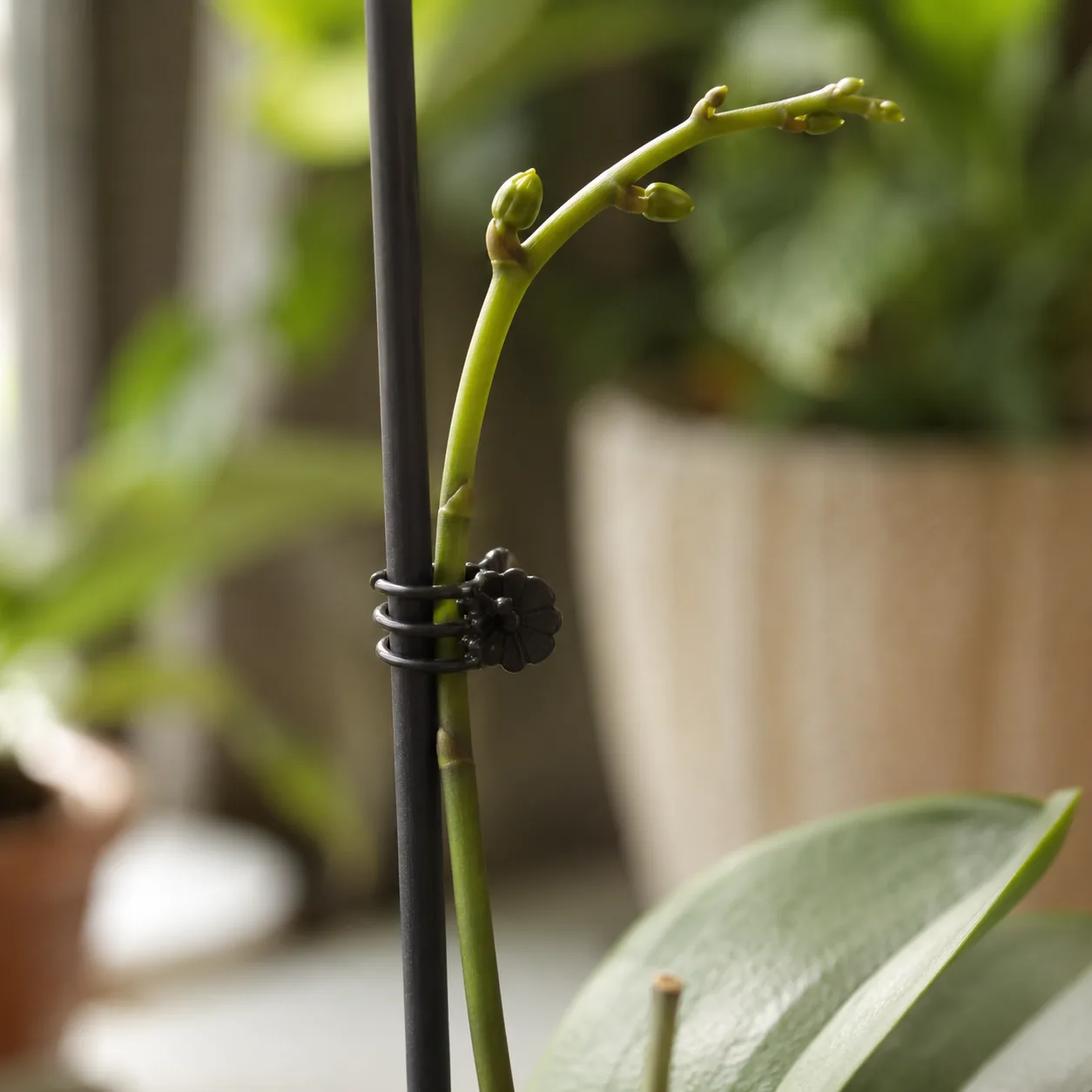
A new spike is fragile when it first appears.
Wait until it is several inches long before gently clipping it to a stake.
Do not confuse a root with a spike. Roots come first; flowers follow a steady plant. Use bright indirect light, open bark, and careful watering before expecting flowers.
Read More: Ground Covers That Hold Slopes in Place Without Taking Over Your Yard
4. Give It Airflow Without a Draft
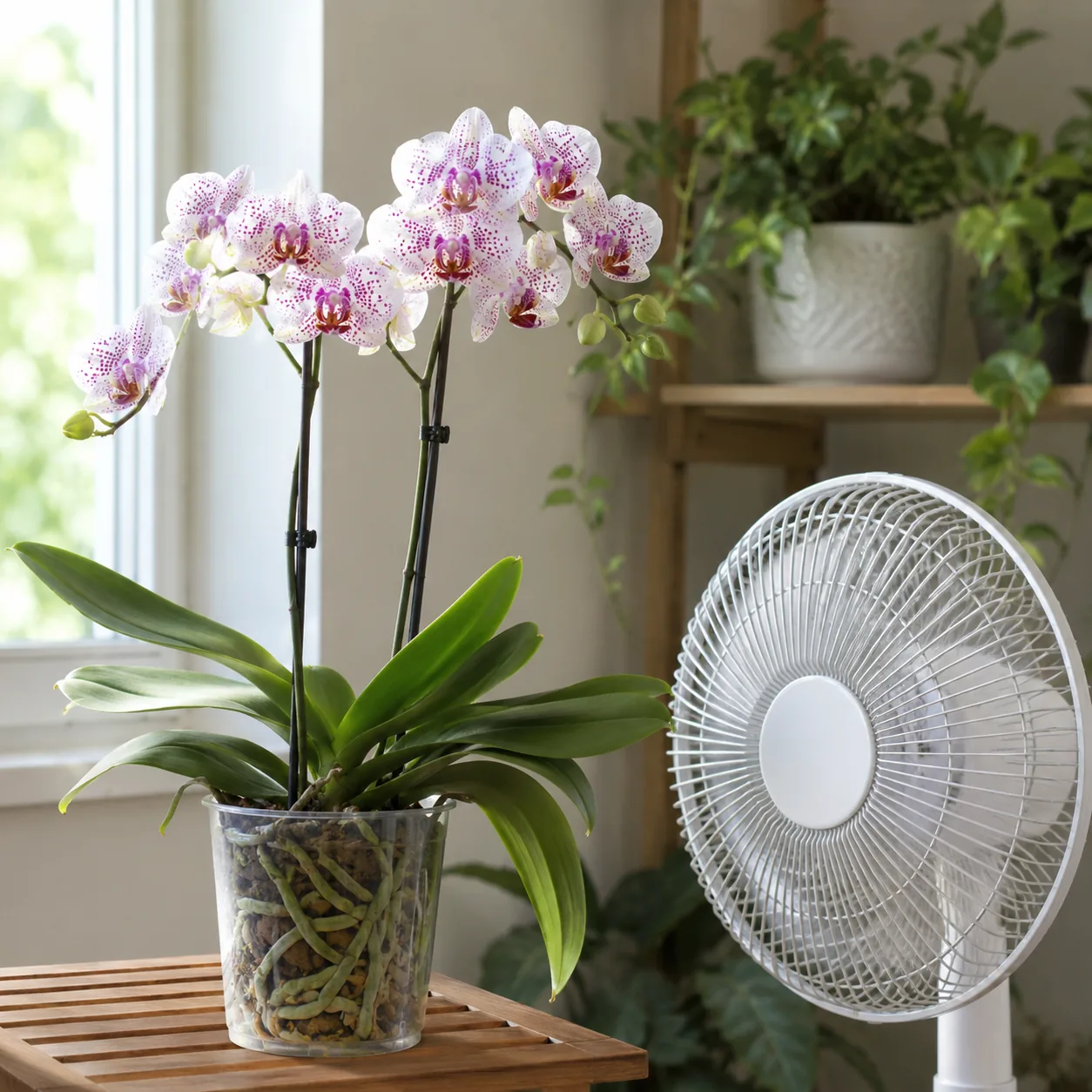
Still, damp air encourages disease.
Gentle room airflow helps leaves and bark dry evenly.
Avoid direct blasts from heating or cooling vents. Roots come first; flowers follow a steady plant. Use bright indirect light, open bark, and careful watering before expecting flowers. If leaves wrinkle or roots collapse, rebuild the plant first and chase blooms later.
3. Stop Ice Cube Watering if Roots Look Stressed
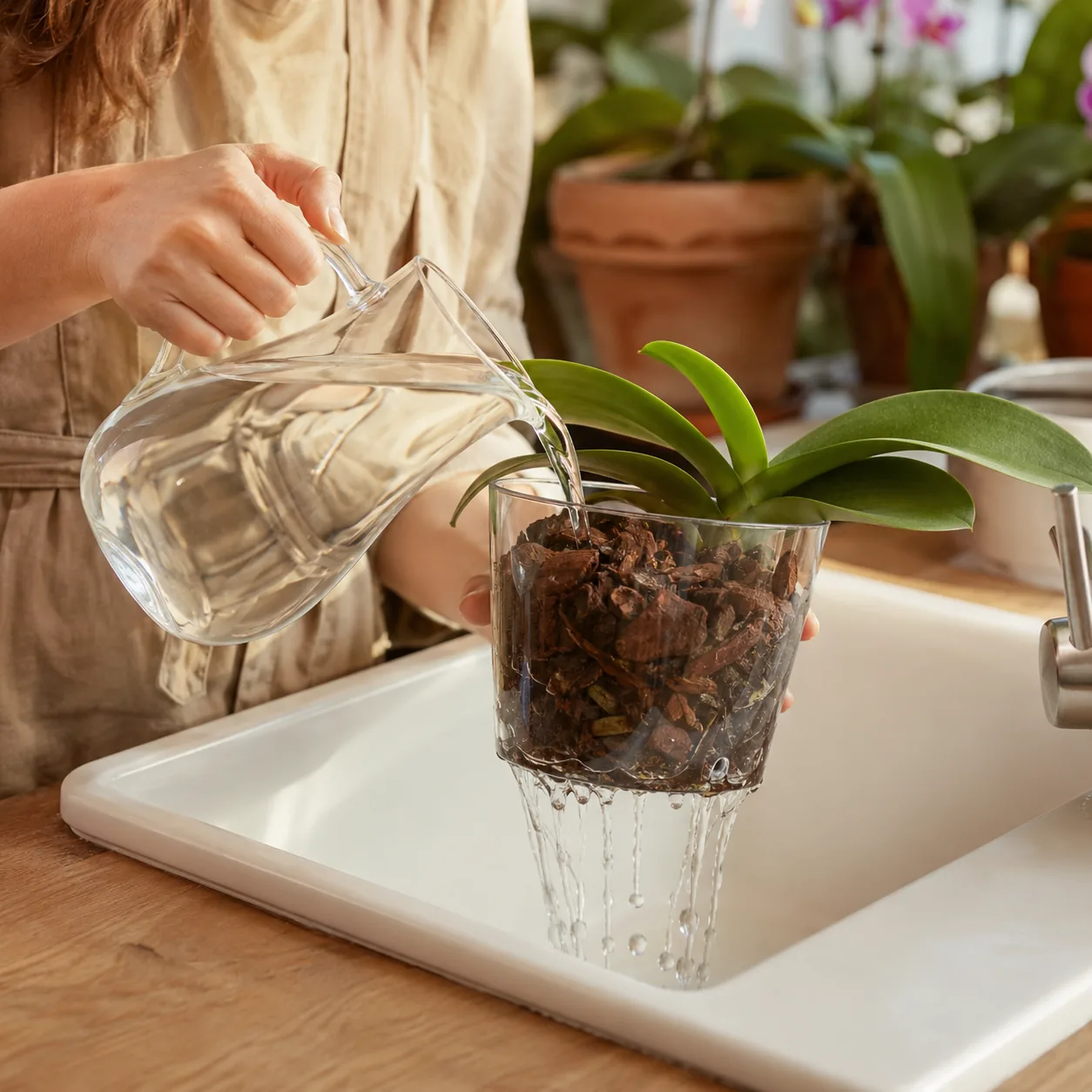
Ice cubes are convenient, but cold concentrated water can stress roots in small pots.
Room temperature watering is safer.
If your orchid is thriving with ice, do not panic. Roots come first; flowers follow a steady plant. Use bright indirect light, open bark, and careful watering before expecting flowers. If leaves wrinkle or roots collapse, rebuild the plant first and chase blooms later.
Read More: Drought-Proof Flowers That Keep Blooming Through Brutal Summer Heat
2. Be Patient After the First Bloom Drop
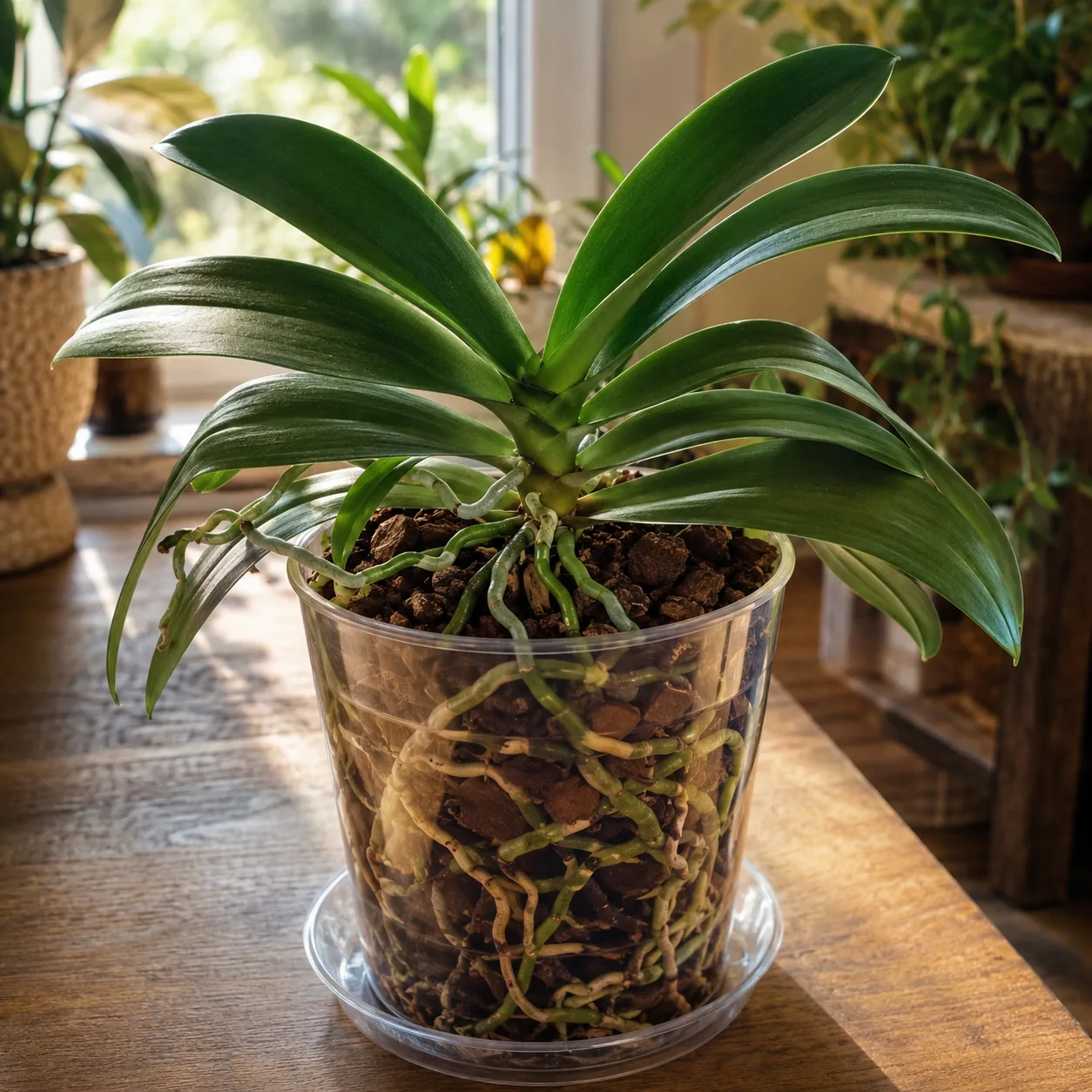
A healthy Phalaenopsis may take months to rebloom.
That is normal, not failure.
Judge the plant by roots and leaves during the rest period. Roots come first; flowers follow a steady plant. Use bright indirect light, open bark, and careful watering before expecting flowers. If leaves wrinkle or roots collapse, rebuild the plant first and chase blooms later.
1. Buy the Next Orchid by Roots, Not Flowers

The prettiest flowers can hide a weak root system.
Clear pots let you choose a plant with firm green or silvery roots.
A bargain orchid with rotten roots is not a bargain. Roots come first; flowers follow a steady plant. Use bright indirect light, open bark, and careful watering before expecting flowers.
Read More: Plants That Fill Bare, Dry Shade Where Grass Refuses to Grow
The goal is not to copy a magazine garden. It is to make the next practical decision easier, then let the results compound.