27 Pothos Fixes That Turn Leggy Vines Into a Fuller, Faster-Growing Plant
A leggy pothos usually needs better light, smarter pruning, or a small watering reset.
Start with the simple fixes before you give up on a thin plant.
27. Move It One Step Closer to Bright Indirect Light
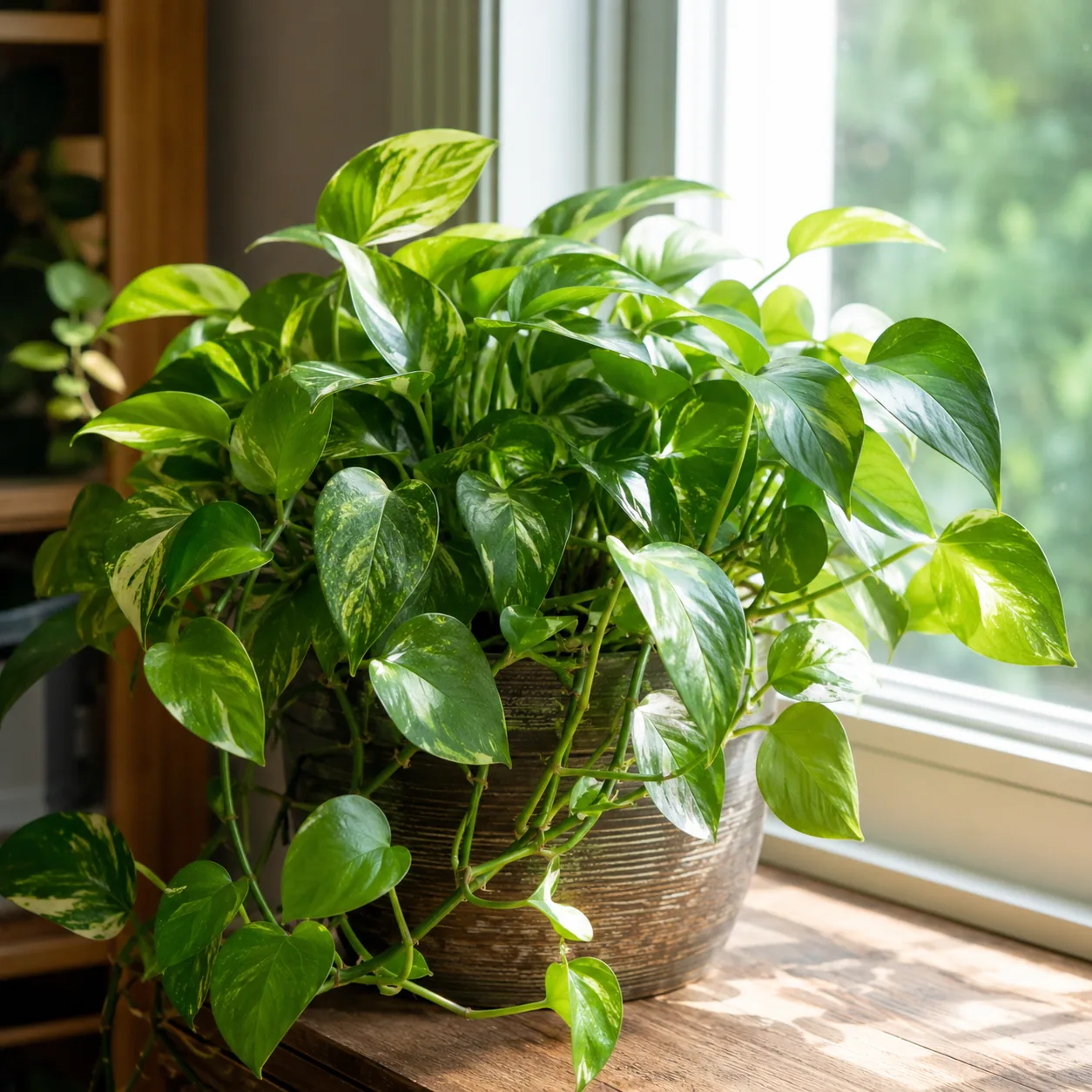
Pothos tolerates low light, but it rarely grows full there.
Move it near a bright window where the leaves see the sky but not harsh afternoon sun.
Give it two weeks before judging the result. Watch fresh growth before changing anything else. Judge the change by fresh nodes, firmer stems, and new leaves over the next few weeks.
26. Rotate the Pot Every Time You Water

The side facing the window usually grows fastest.
A quarter turn at each watering keeps one side from becoming thick while the back goes bare.
Do not rotate a stressed plant daily. Watch fresh growth before changing anything else. Judge the change by fresh nodes, firmer stems, and new leaves over the next few weeks.
25. Prune Above a Leaf Node, Not in the Middle of a Stem
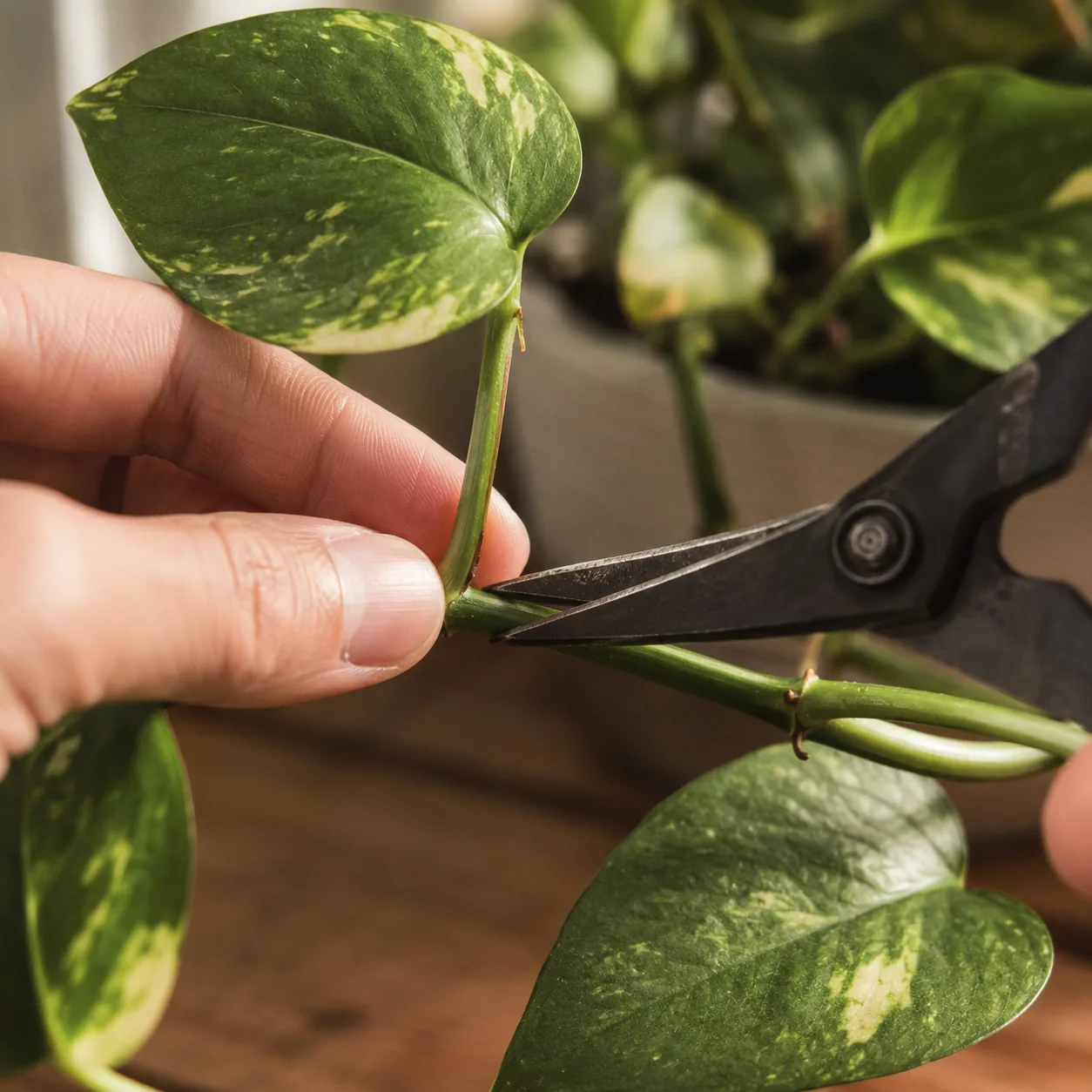
A bare cut in the middle of a vine often stays bare.
Cut just above a node so the plant has a growth point to activate.
Use clean scissors and remove no more than one third of the plant at a time. Watch fresh growth before changing anything else. Judge the change by fresh nodes, firmer stems, and new leaves over the next few weeks.
24. Root Cuttings Back Into the Same Pot
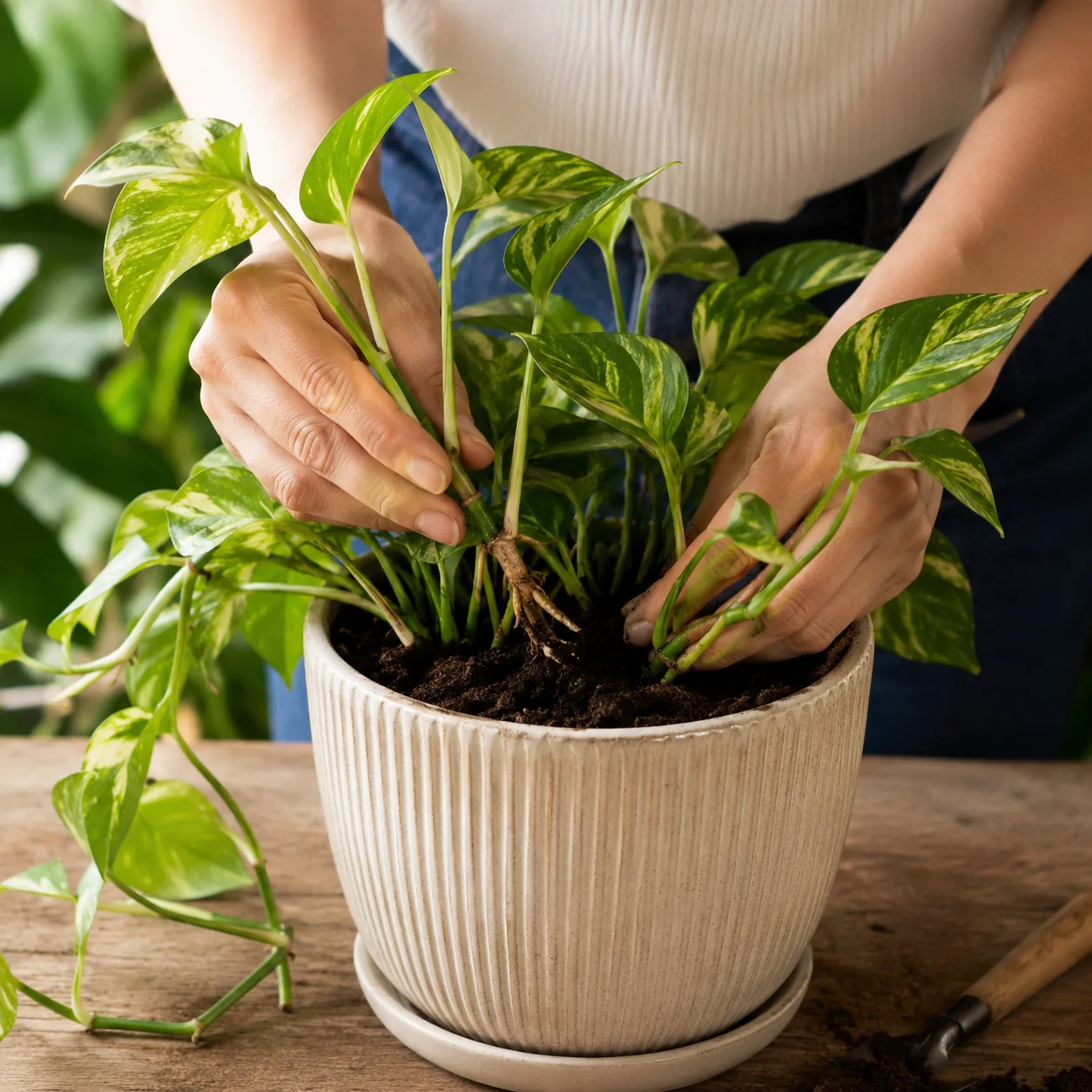
The fastest way to make a pothos look fuller is to plant rooted cuttings into the empty spaces.
You are not waiting for one vine to branch.
You are adding more vines. Watch fresh growth before changing anything else. Judge the change by fresh nodes, firmer stems, and new leaves over the next few weeks.
23. Use a Pot With Drainage Holes
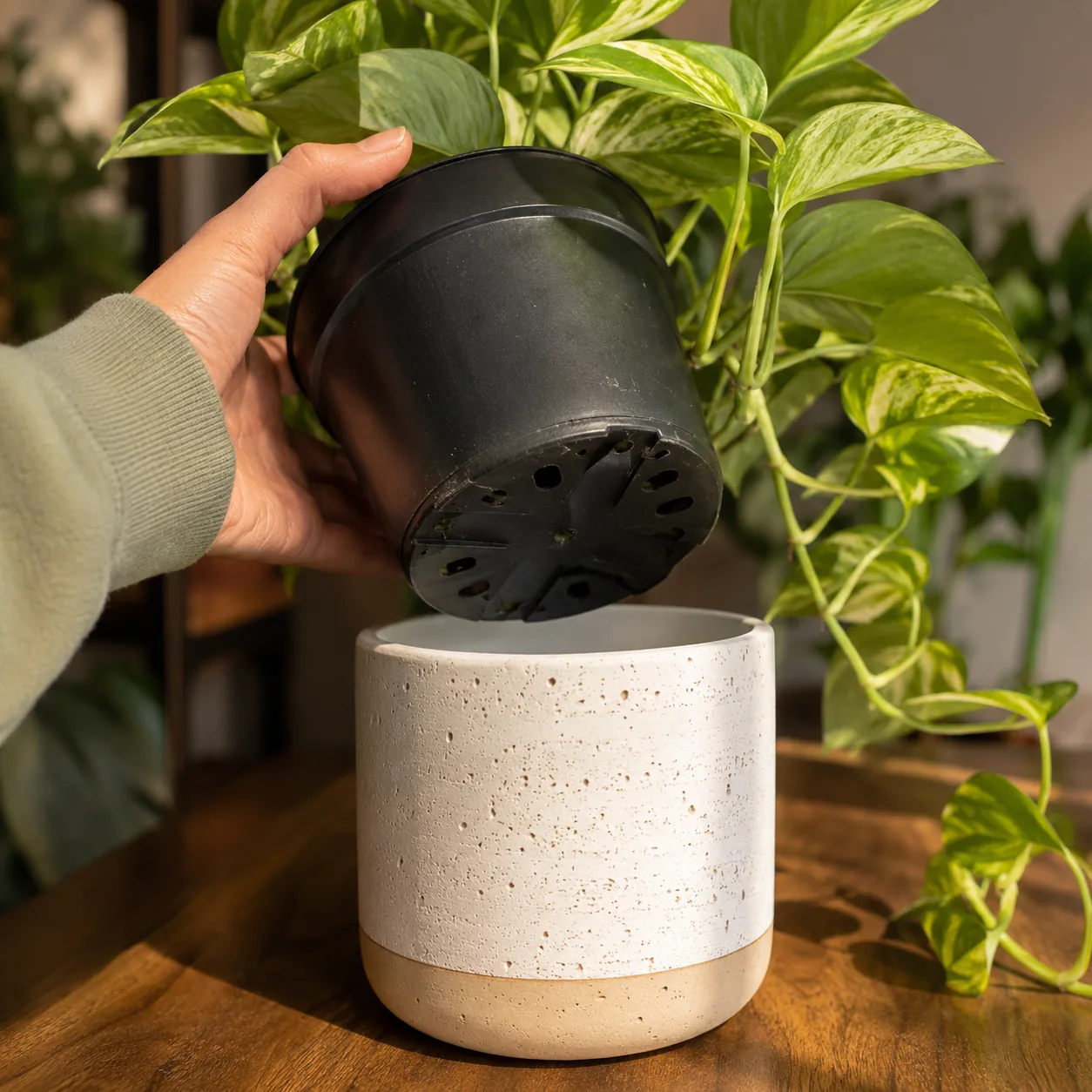
A decorative pot with no drainage makes watering a guessing game.
Pothos roots want oxygen as much as moisture.
If you love the outer pot, use it as a cachepot. Watch fresh growth before changing anything else. Judge the change by fresh nodes, firmer stems, and new leaves over the next few weeks.
22. Let the Top Inch of Soil Dry Before Watering
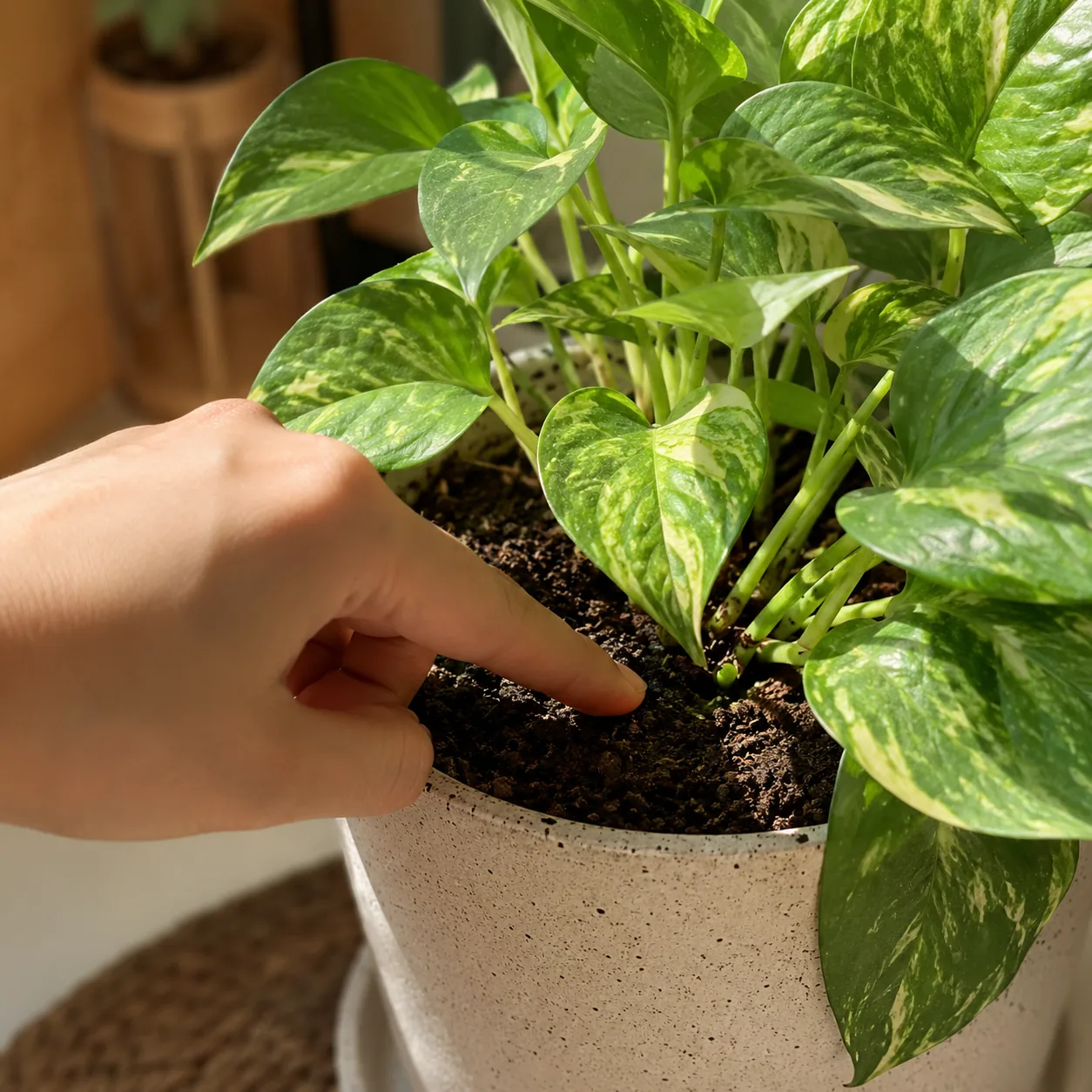
Constantly damp soil leads to yellow leaves and weak roots.
The top inch should feel dry before you water again.
Do not follow a calendar blindly. Watch fresh growth before changing anything else. Judge the change by fresh nodes, firmer stems, and new leaves over the next few weeks. If roots smell sour or stems turn soft, fix watering and drainage before adding fertilizer.
21. Water Deeply Instead of Splashing the Surface
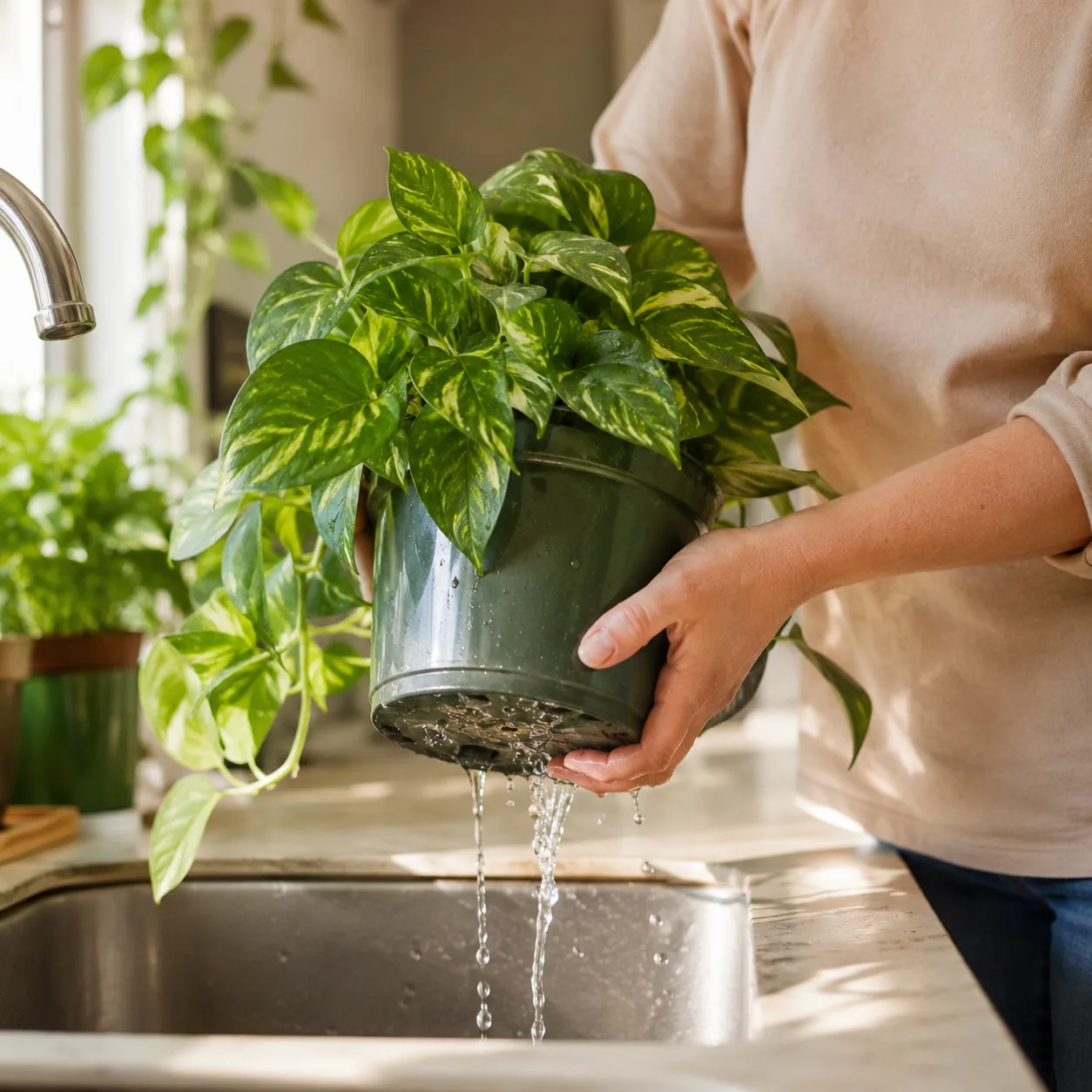
The hidden problem: A few tablespoons on top encourages shallow roots.
Water until the pot drains, then empty the saucer.
If water races straight through, the mix may be hydrophobic. Watch fresh growth before changing anything else. Judge the change by fresh nodes, firmer stems, and new leaves over the next few weeks.
20. Switch From Heavy Potting Soil to an Airier Mix
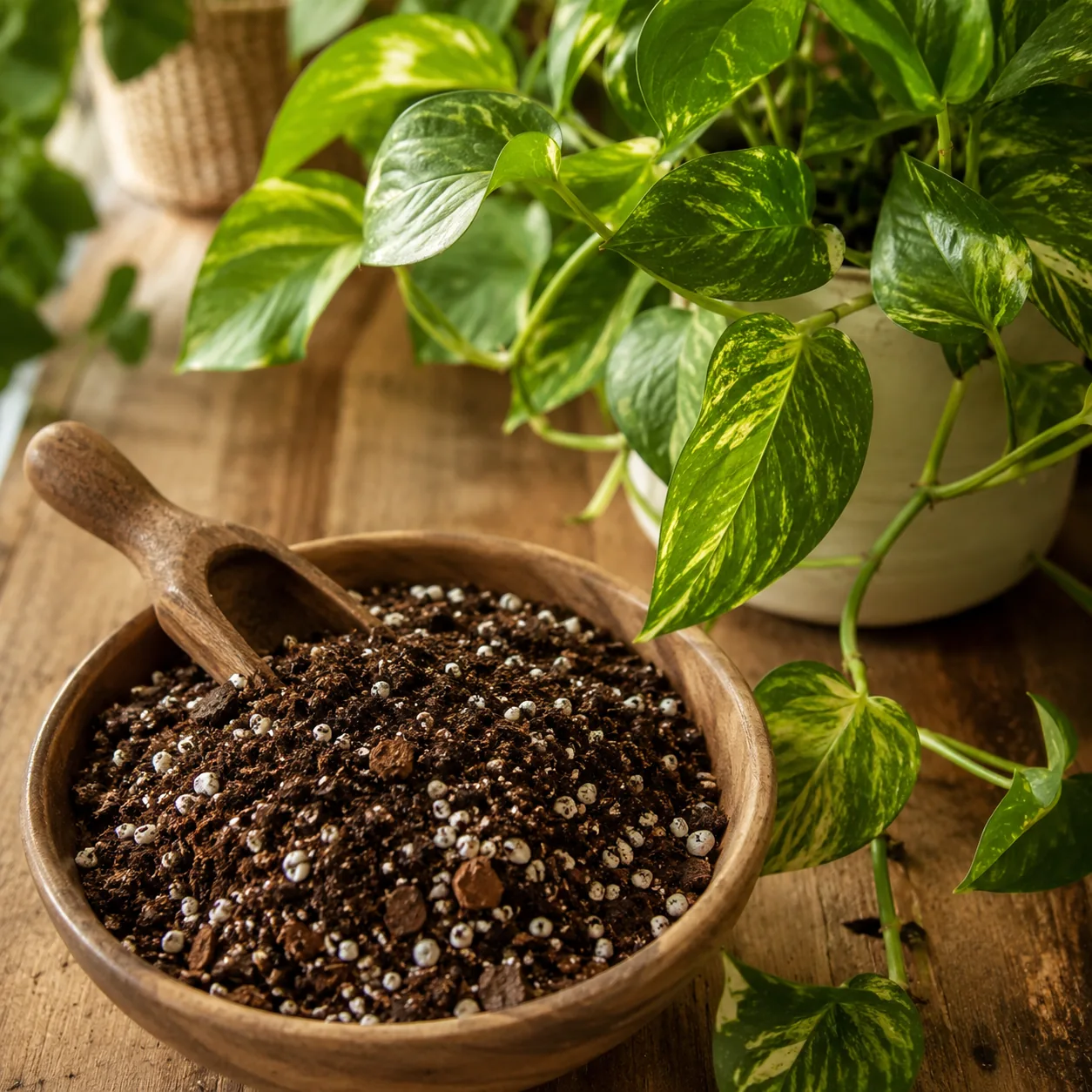
Dense soil stays wet around the roots and slows growth.
Add perlite, orchid bark, or coco chips so the root zone breathes.
A good beginner mix is two parts indoor potting mix, one part perlite, and one part orchid bark. Watch fresh growth before changing anything else. Judge the change by fresh nodes, firmer stems, and new leaves over the next few weeks.
19. Check for a Rootbound Coil

If the roots circle the pot like rope, the plant has little room left for new growth.
That can make watering harder and leaves smaller.
Move up only one pot size. Watch fresh growth before changing anything else. Judge the change by fresh nodes, firmer stems, and new leaves over the next few weeks.
18. Feed Lightly During Active Growth
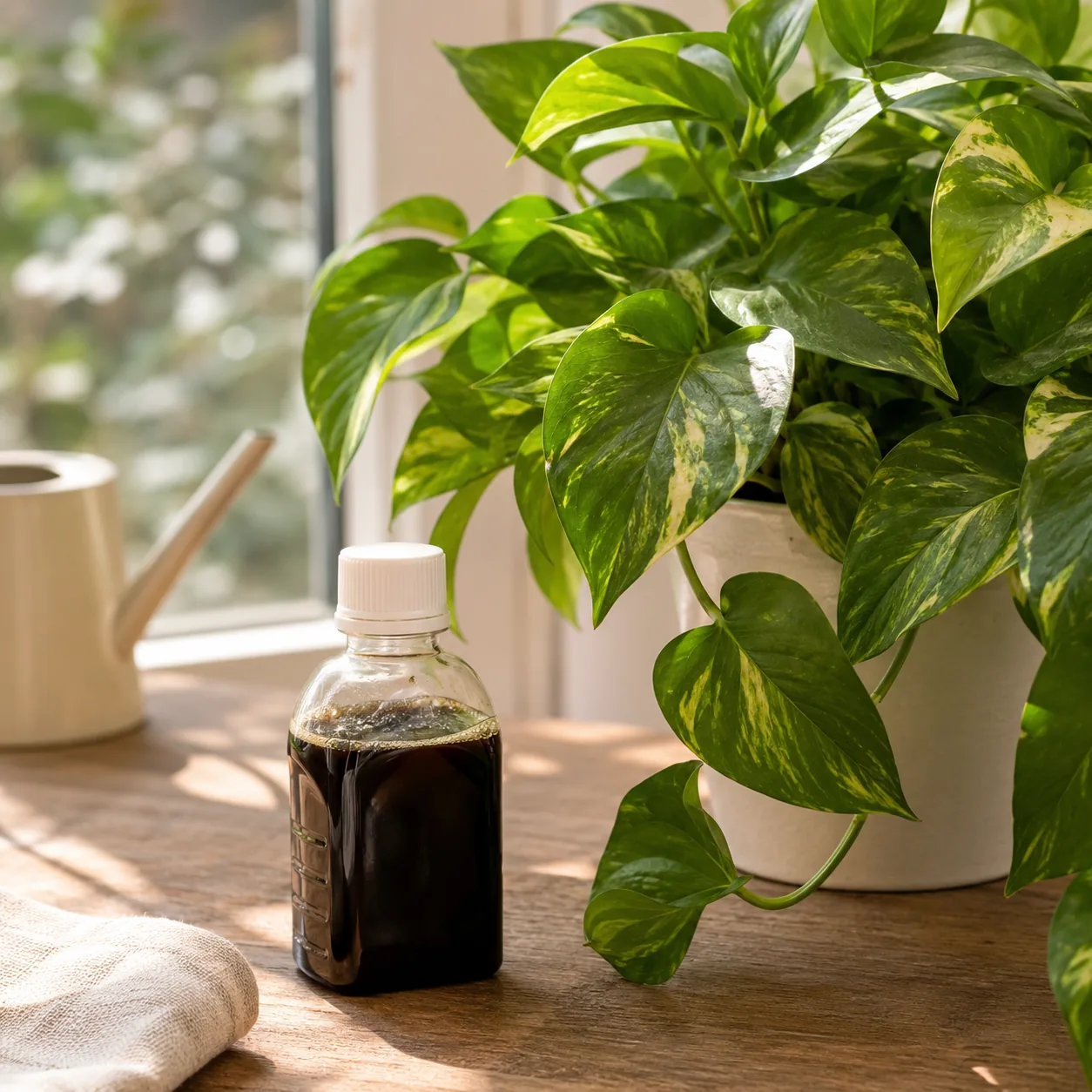
Pothos is not a heavy feeder, but a plant making new vines needs nutrients.
Use a balanced liquid fertilizer at half strength in spring and summer.
Skip fertilizer when the plant is not actively growing. Watch fresh growth before changing anything else. Judge the change by fresh nodes, firmer stems, and new leaves over the next few weeks.
17. Dust the Leaves So They Can Use the Light

Dust blocks light and makes photosynthesis less efficient.
A quick wipe can help a struggling plant use the light it already has.
Use a damp microfiber cloth. Watch fresh growth before changing anything else. Judge the change by fresh nodes, firmer stems, and new leaves over the next few weeks. For another plant-care reset, Orchid Re-Bloom Tricks for Supermarket Orchids That Refuse to Flower Again keeps the next step practical.
16. Train Long Vines Up Instead of Always Letting Them Trail
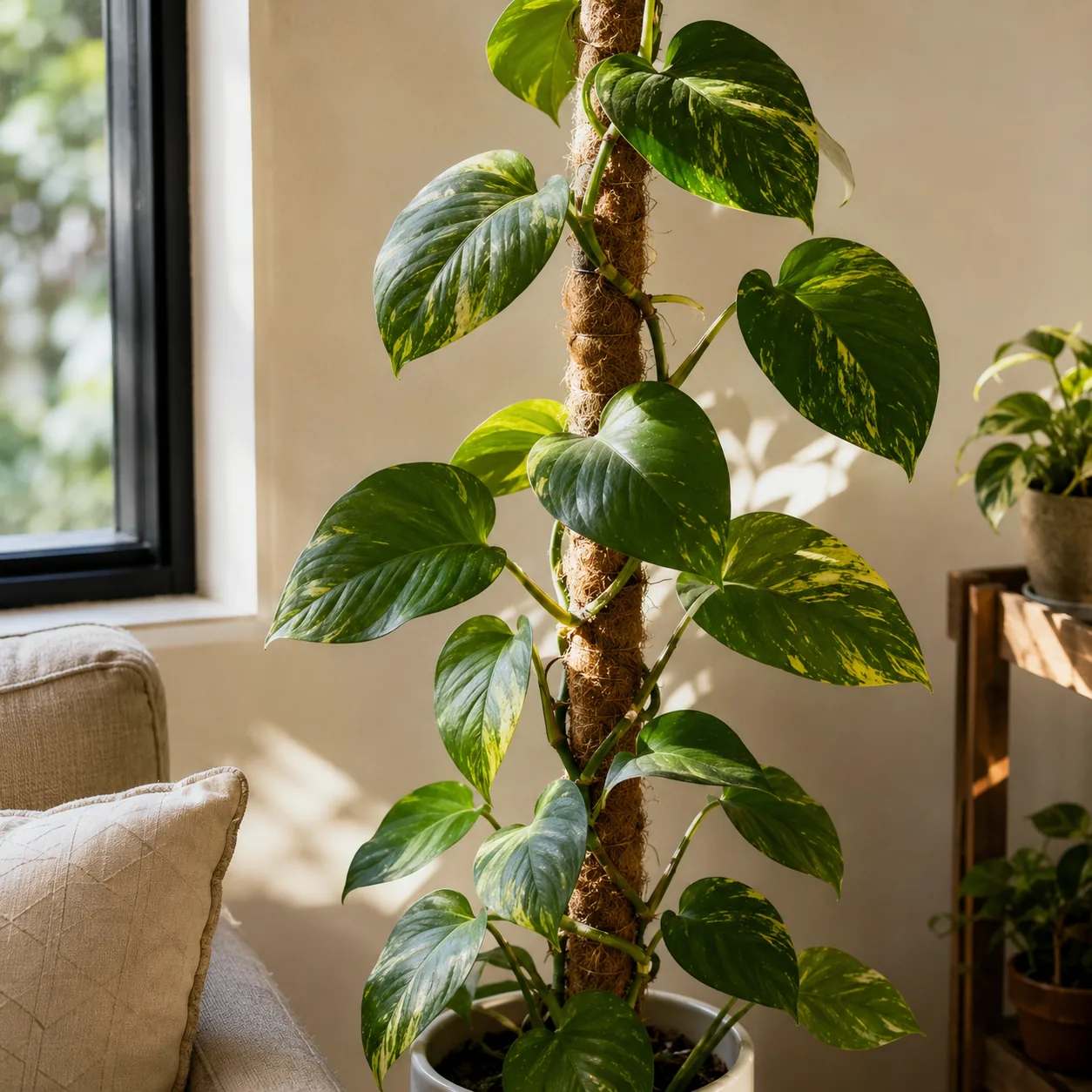
A pothos growing upward often makes larger leaves because it thinks it has found support.
A moss pole, trellis, or simple wall clips can change the growth habit.
Tight ties can bruise stems and create weak points. Watch fresh growth before changing anything else. Judge the change by fresh nodes, firmer stems, and new leaves over the next few weeks.
15. Stop Moving It Around the House

Quick read: Pothos adjusts to a light level, then grows for that level.
Moving it every week keeps it in recovery mode.
Choose the best spot you have and leave it there for a month. Watch fresh growth before changing anything else. Judge the change by fresh nodes, firmer stems, and new leaves over the next few weeks.
14. Trim Off the Longest Bare Vines First
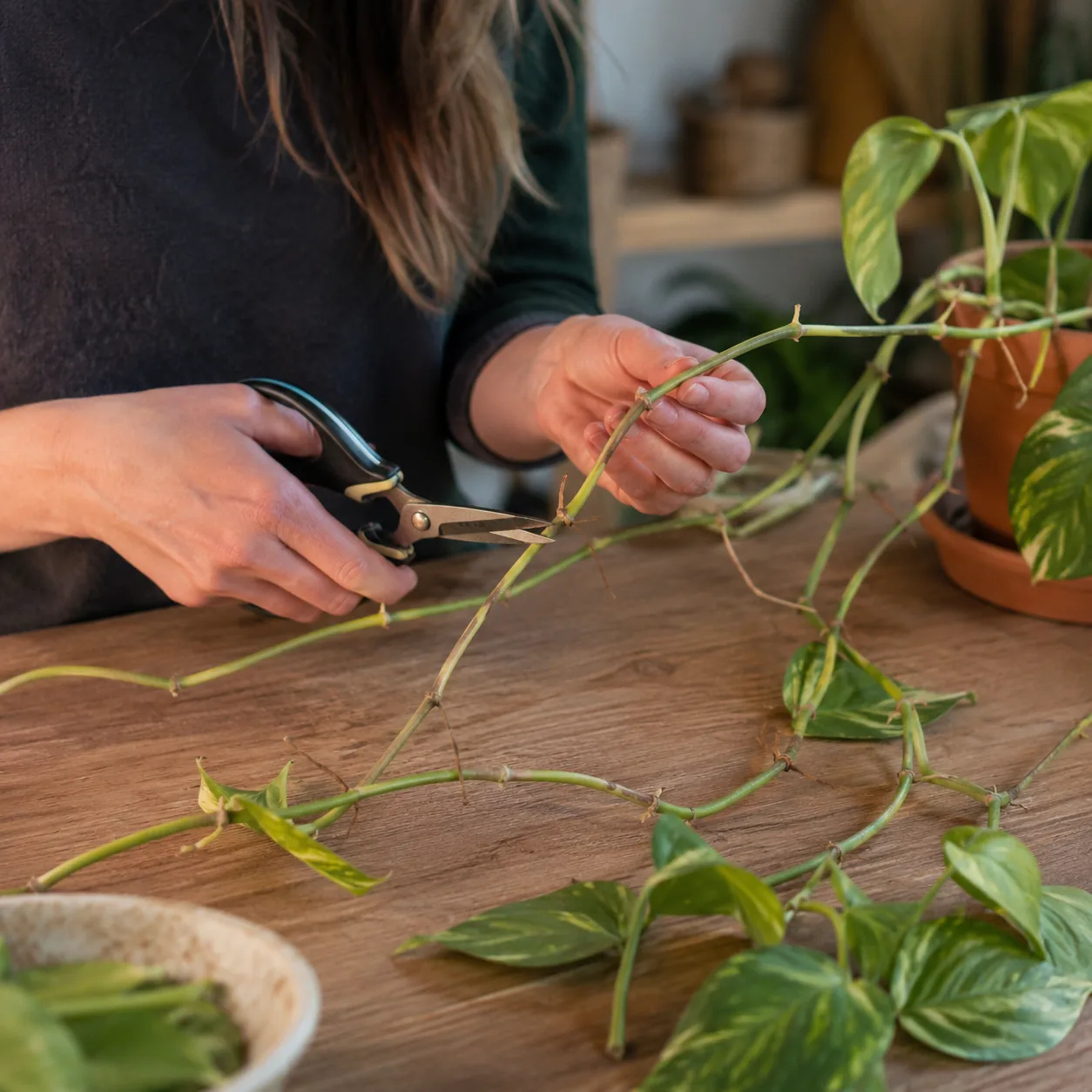
One extremely long bare vine makes the whole plant look tired.
Cutting it back redirects energy and gives you propagation material.
Do not leave a long naked stem hoping it will refill from the middle. Watch fresh growth before changing anything else. Judge the change by fresh nodes, firmer stems, and new leaves over the next few weeks. For another plant-care reset, Pest-Repelling Flowers and Herbs to Plant Around Tomatoes, Roses, and Patios keeps the next step practical.
13. Pin Vines Across the Soil Surface
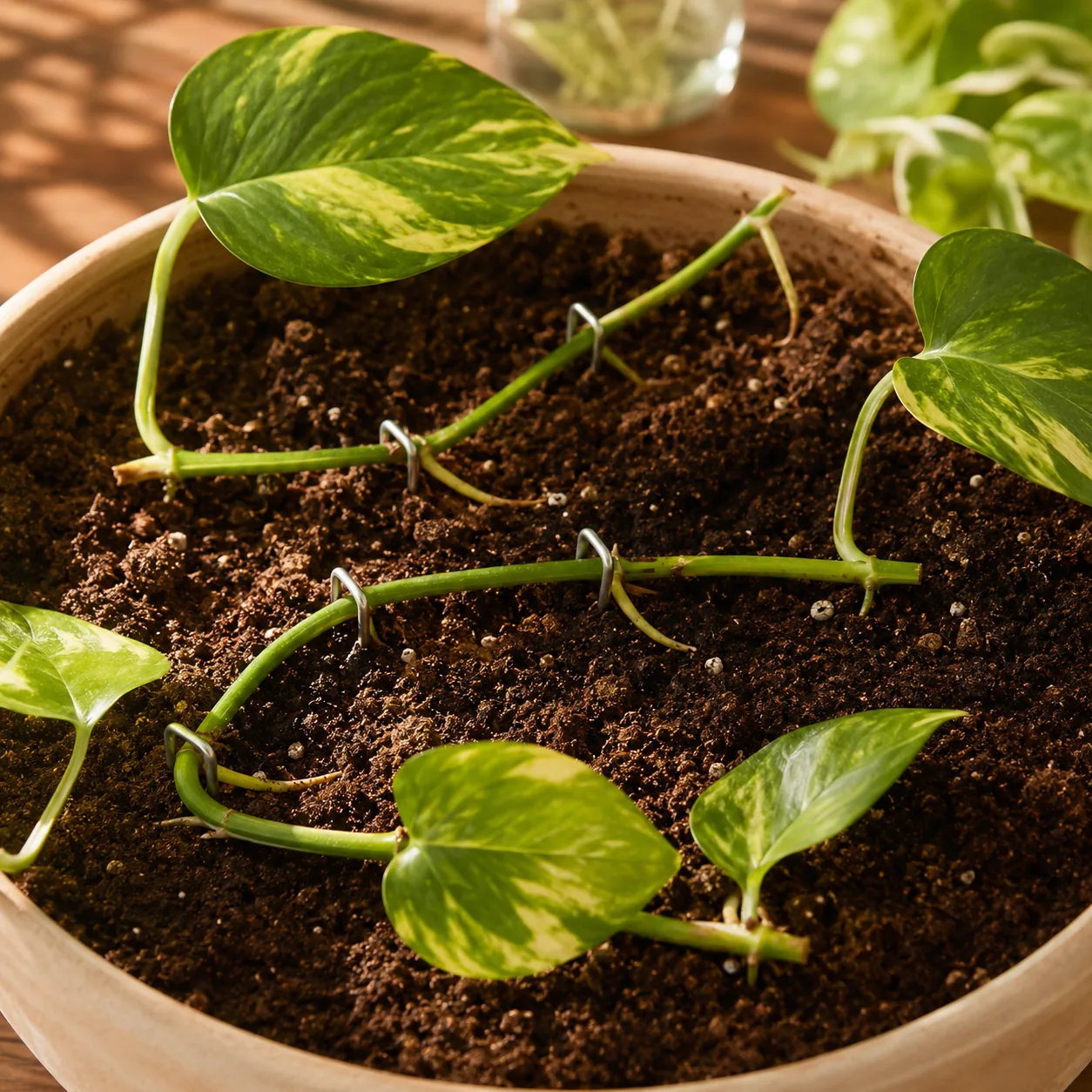
If a vine has nodes touching the soil, those nodes can root and create new shoots.
This is a quiet way to thicken the pot without making many cuttings.
Use soft plant pins or bent paper clips. Watch fresh growth before changing anything else. Judge the change by fresh nodes, firmer stems, and new leaves over the next few weeks.
12. Remove Yellow Leaves Quickly
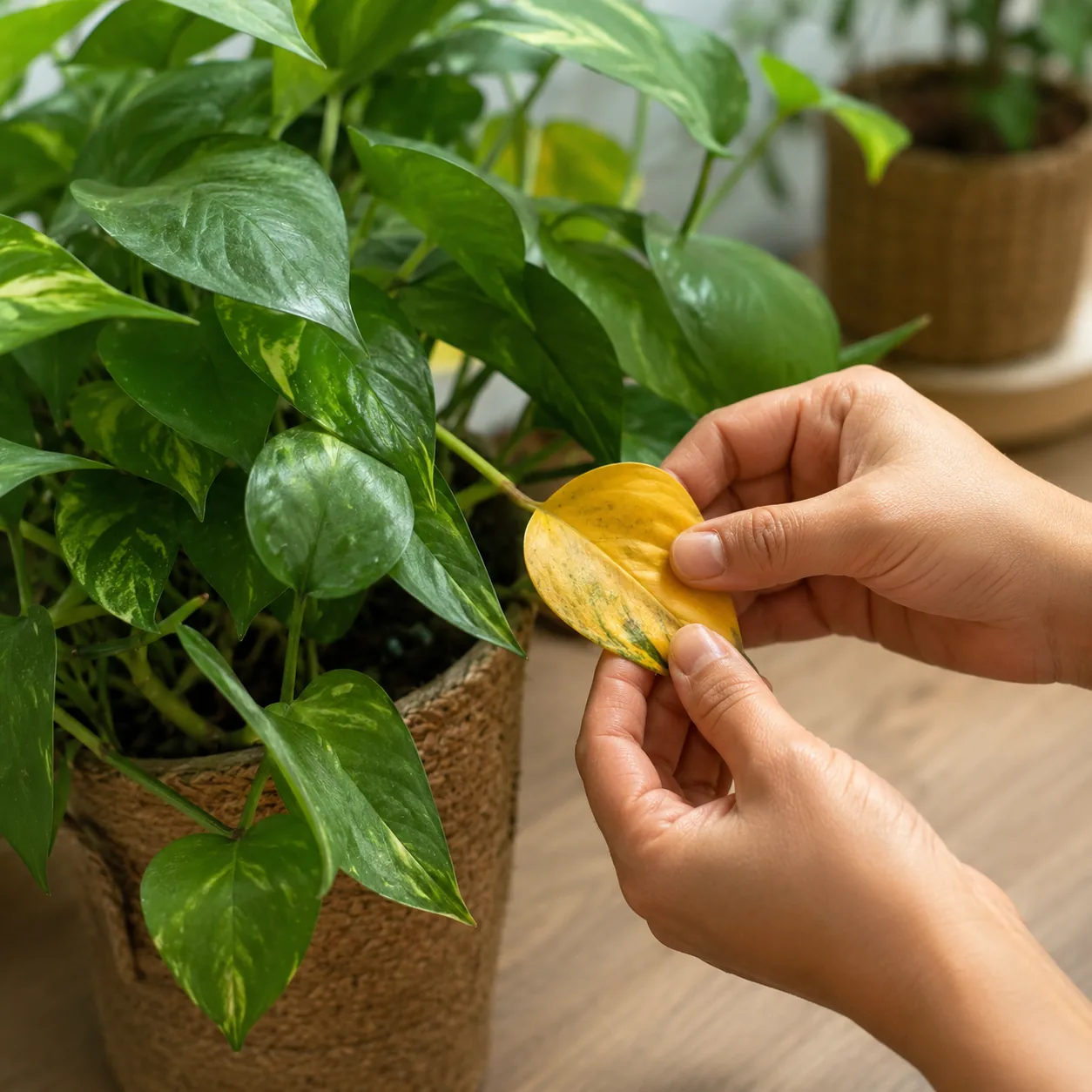
Yellow leaves do not turn green again.
Removing them helps you see whether the problem is still happening or already fixed.
One old yellow leaf is normal. Watch fresh growth before changing anything else. Judge the change by fresh nodes, firmer stems, and new leaves over the next few weeks.
11. Inspect the Undersides for Pests
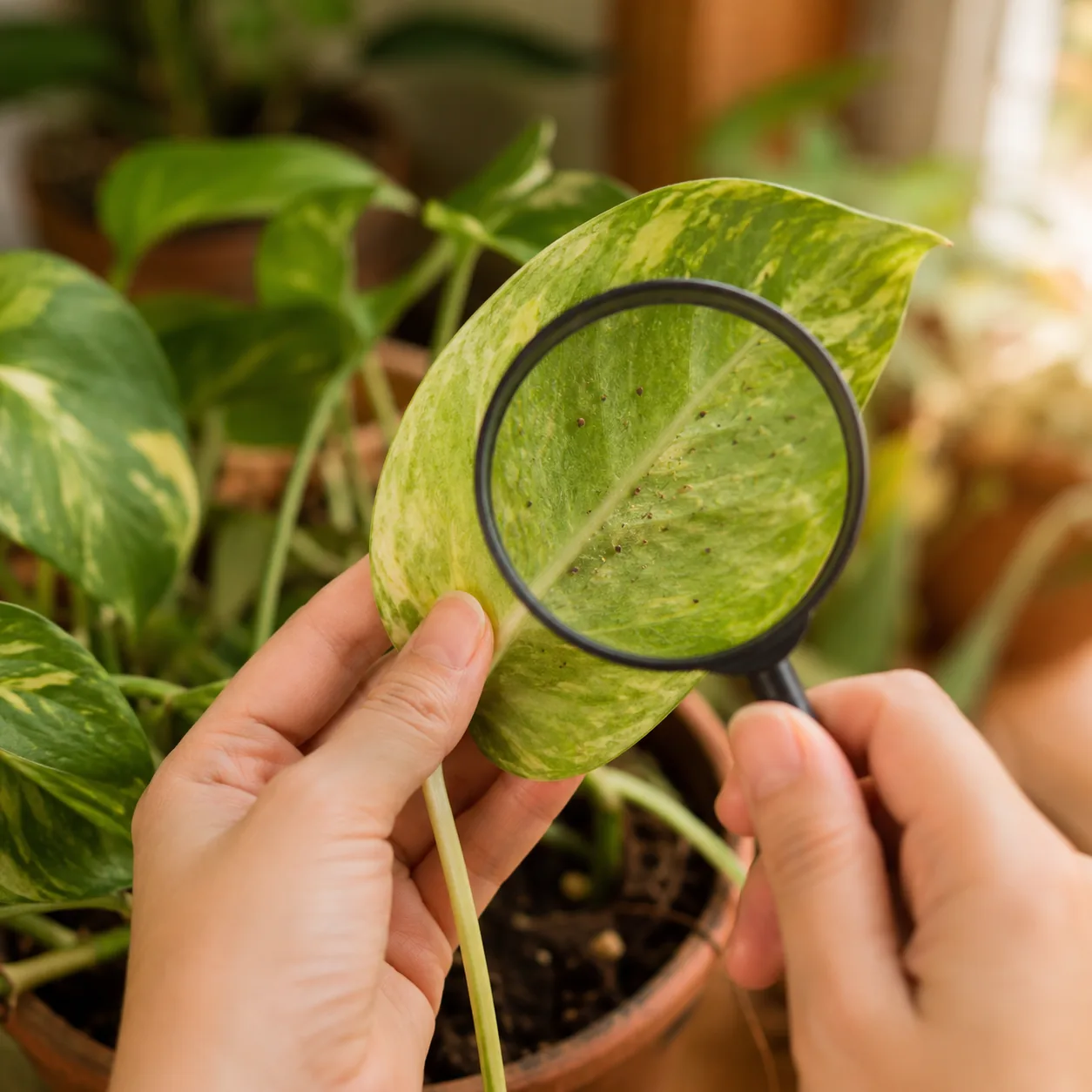
Thin growth can come from spider mites, thrips, or mealybugs stealing energy.
Check under leaves and along stems with a flashlight.
Treat early with a rinse and insecticidal soap. Watch fresh growth before changing anything else. Judge the change by fresh nodes, firmer stems, and new leaves over the next few weeks. For another plant-care reset, Houseplants You Can Forget to Water for Weeks, Ranked by How Hard They Are to Kill keeps the next step practical.
10. Give Golden and Variegated Types More Light
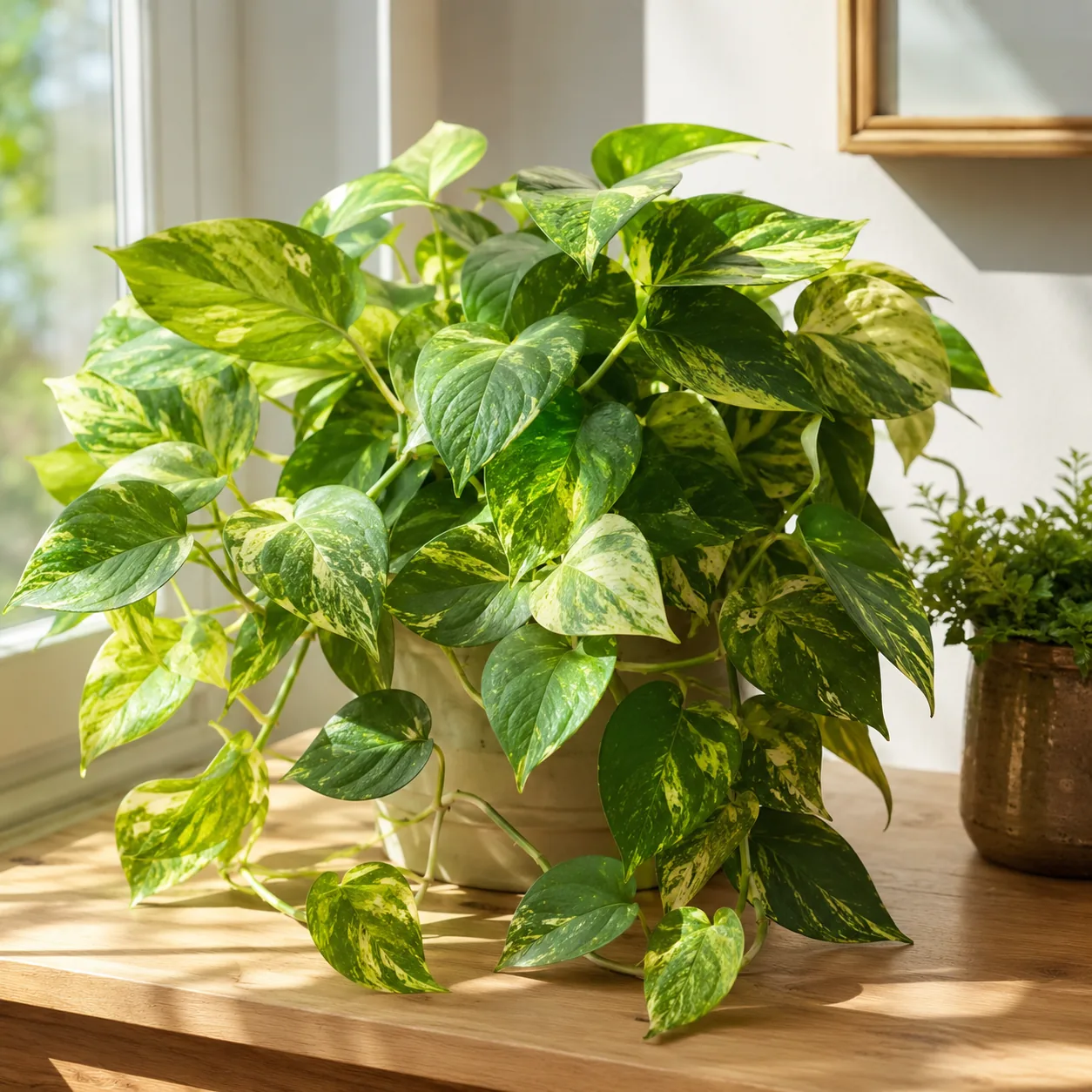
Variegated pothos has less green tissue to make energy.
In a dark room, it may grow slower and lose contrast.
If the white sections turn cream or new leaves come in mostly green, move it brighter before pruning. Watch fresh growth before changing anything else. Judge the change by fresh nodes, firmer stems, and new leaves over the next few weeks.
9. Keep It Away From Cold Drafts
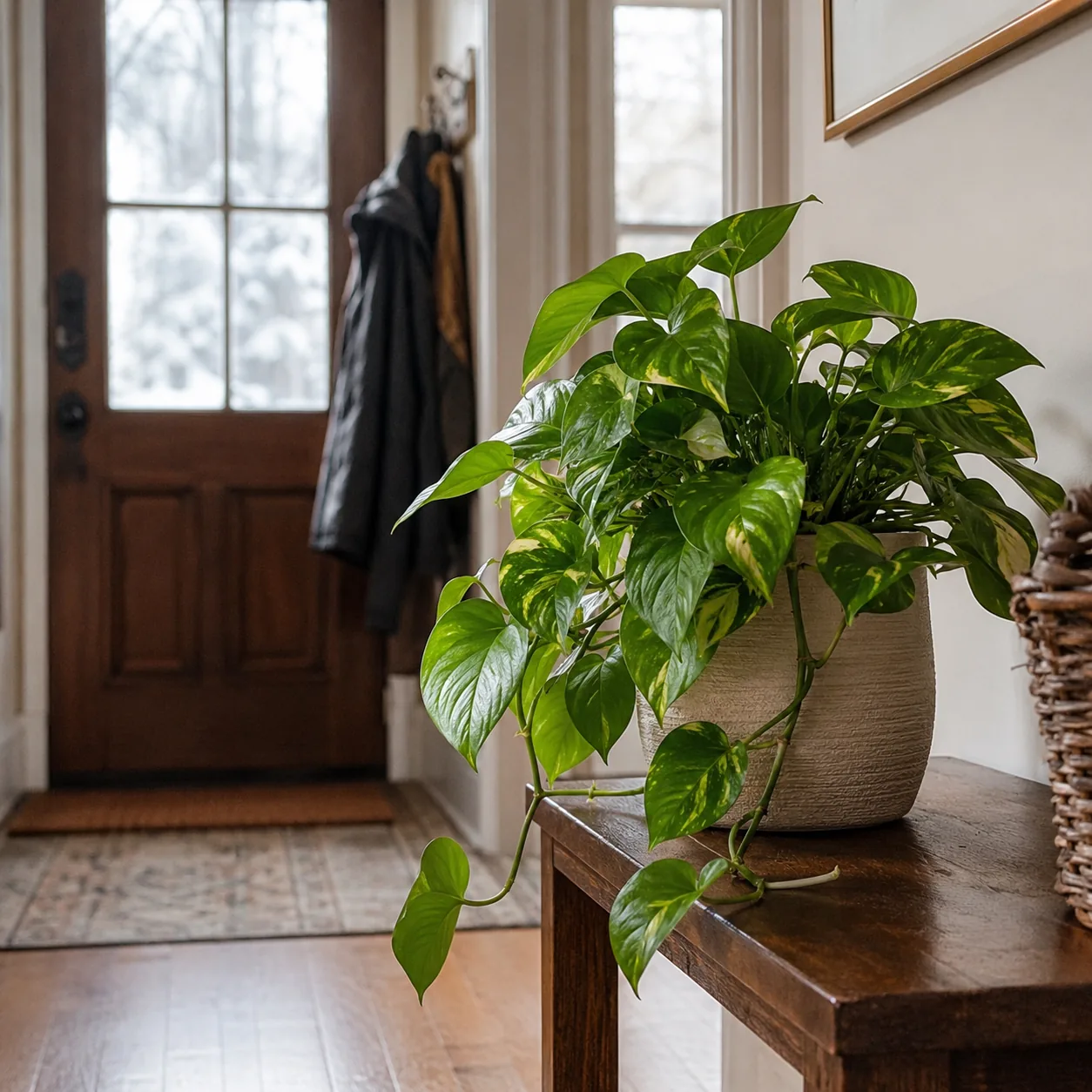
A pothos near a winter door or air conditioner can stall even if the light is good.
Cold roots and chilled leaves slow growth.
Move it away from vents, exterior doors, and single-pane windows during cold spells. Watch fresh growth before changing anything else. Judge the change by fresh nodes, firmer stems, and new leaves over the next few weeks.
8. Use Room Temperature Water
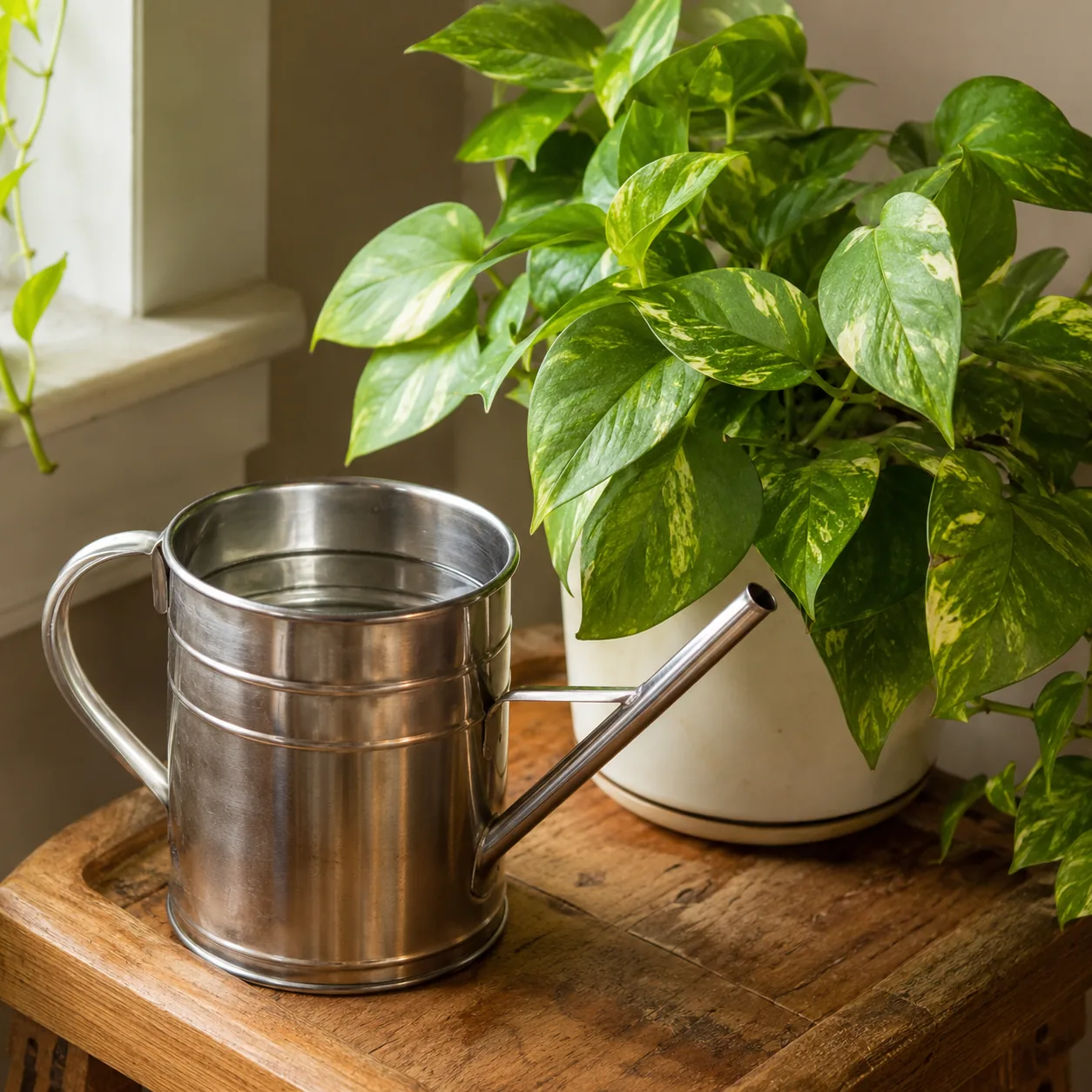
Very cold water shocks roots, especially in winter.
Room temperature water is a small habit that keeps the plant from cycling through stress.
This matters most for plants in small pots because the soil temperature changes quickly. Watch fresh growth before changing anything else. Judge the change by fresh nodes, firmer stems, and new leaves over the next few weeks.
7. Avoid Constant Misting as a Humidity Plan

Quick read: Misting looks helpful, but the humidity bump disappears fast.
Better humidity comes from grouping plants or using a pebble tray nearby.
Do not leave leaves wet at night in a cool room. Watch fresh growth before changing anything else. Judge the change by fresh nodes, firmer stems, and new leaves over the next few weeks.
Read More: Low-Light Houseplants That Actually Survive Neglect, Dry Air, and Dark Corners
6. Cut Back to Healthy Green Tissue After Rot
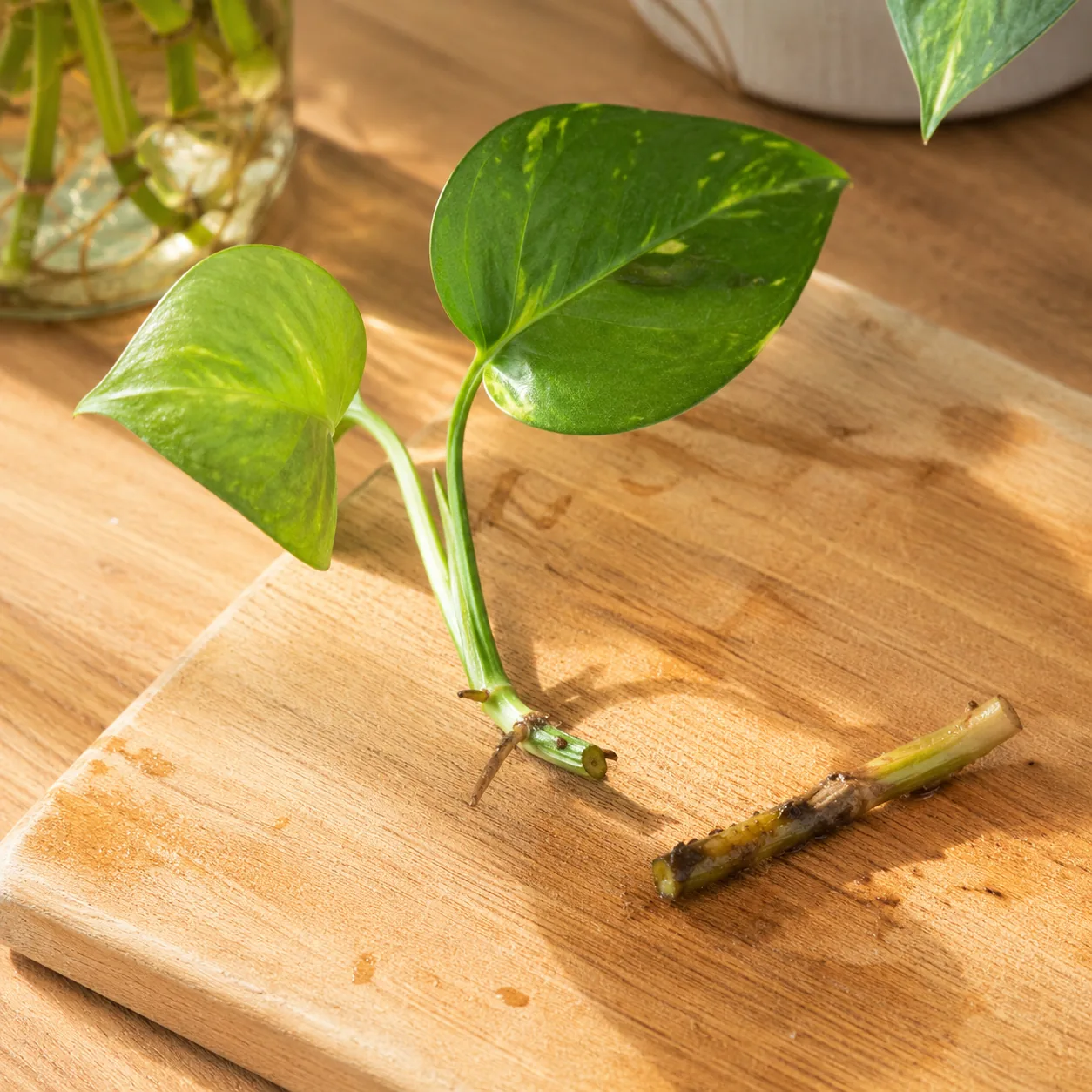
If a stem is mushy, do not try to nurse that section along.
Cut back to firm green tissue and reroot what is healthy.
Rot spreads faster than most owners expect. Watch fresh growth before changing anything else. Judge the change by fresh nodes, firmer stems, and new leaves over the next few weeks.
5. Use a Smaller Pot for Small Cuttings
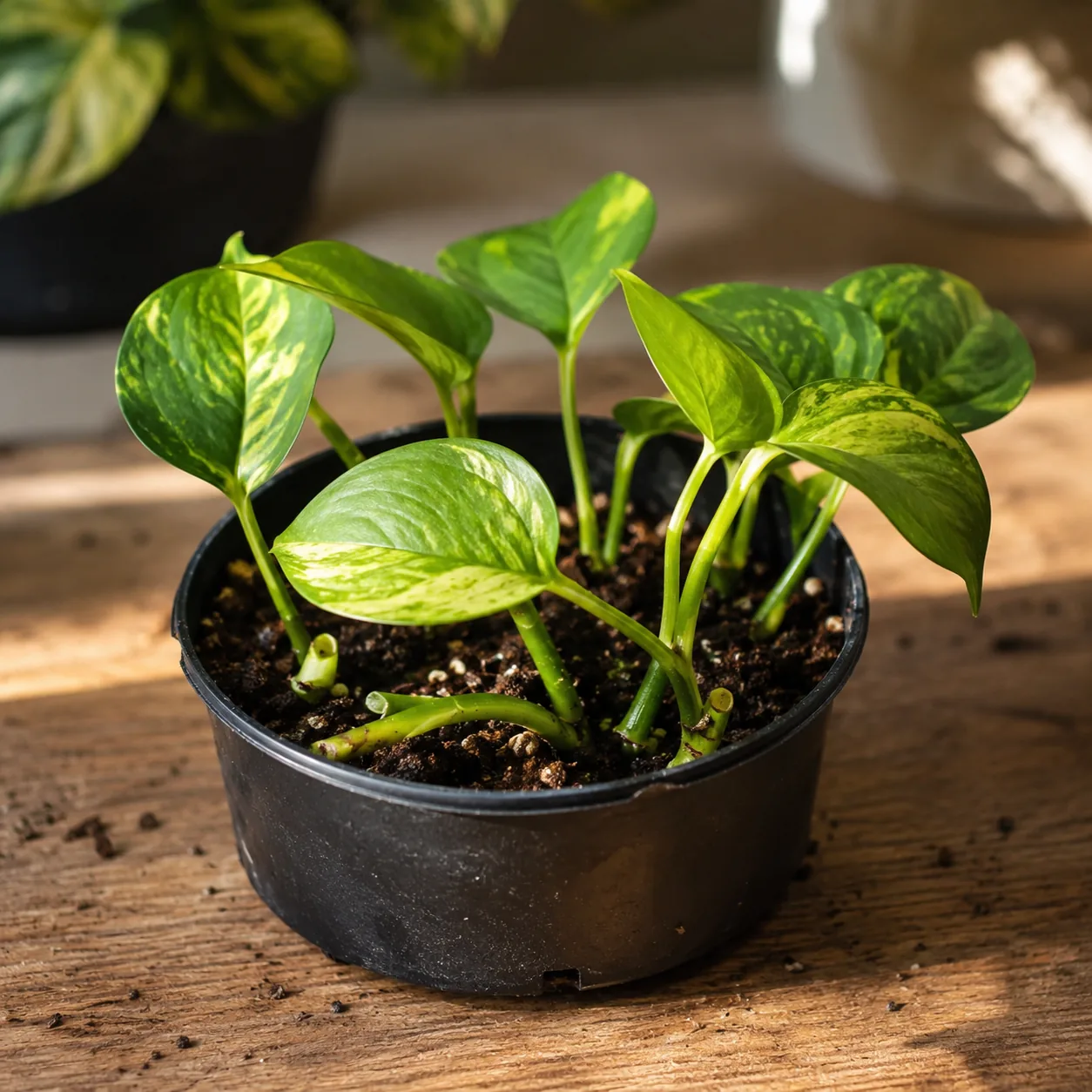
The hidden problem: Tiny cuttings in a large pot stay wet too long.
Small starter pots help roots fill the soil before moisture becomes stale.
Combine several rooted cuttings into one small pot, then size up once growth is obvious. Watch fresh growth before changing anything else. Judge the change by fresh nodes, firmer stems, and new leaves over the next few weeks.
4. Check the Stem Nodes Before You Propagate
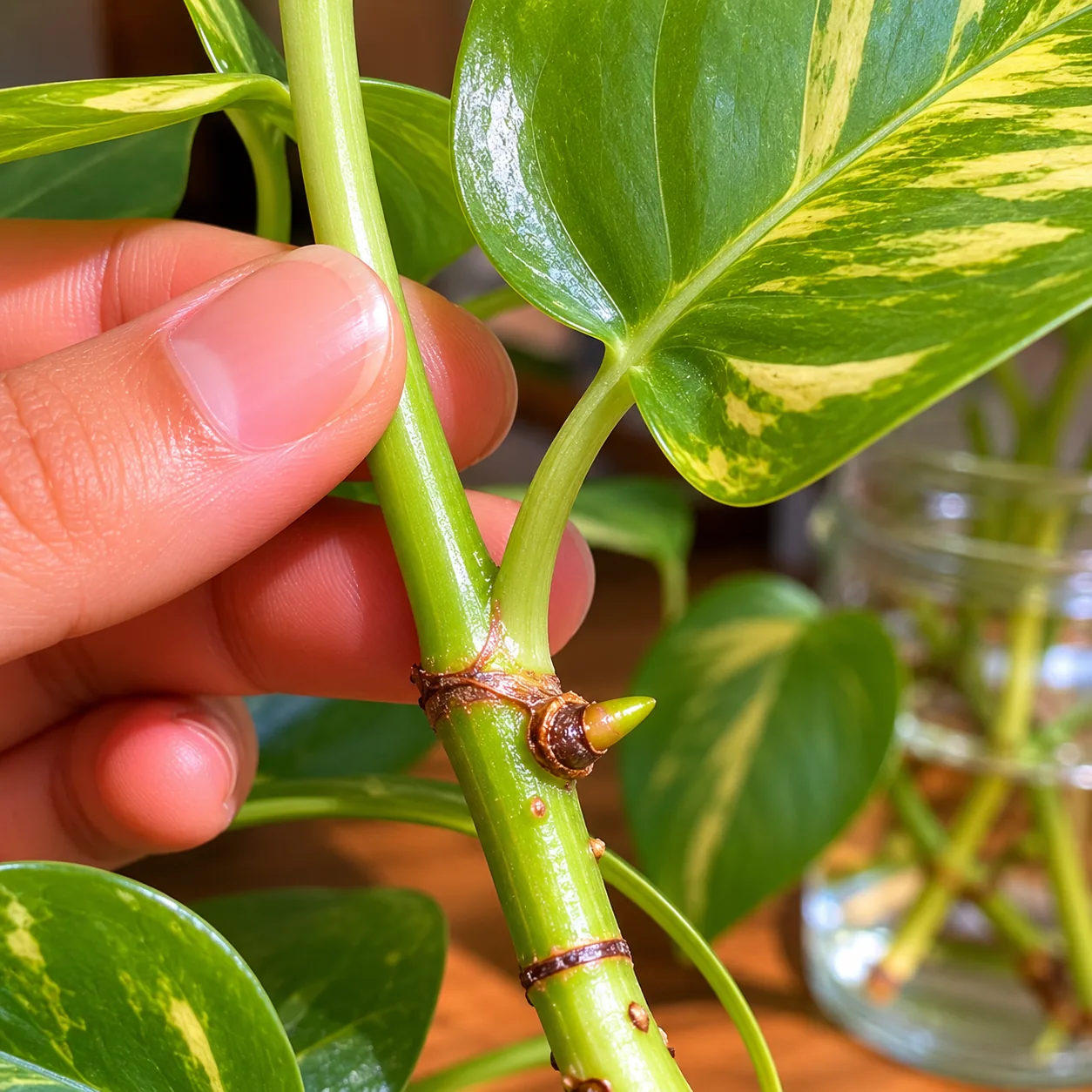
A pothos cutting needs at least one node to root and grow.
A leaf with no node can stay green in water but will not become a plant.
Look for the small bump where the leaf stem meets the vine. Watch fresh growth before changing anything else. Judge the change by fresh nodes, firmer stems, and new leaves over the next few weeks.
Read More: Ground Covers That Hold Slopes in Place Without Taking Over Your Yard
3. Refresh the Top Layer of Soil
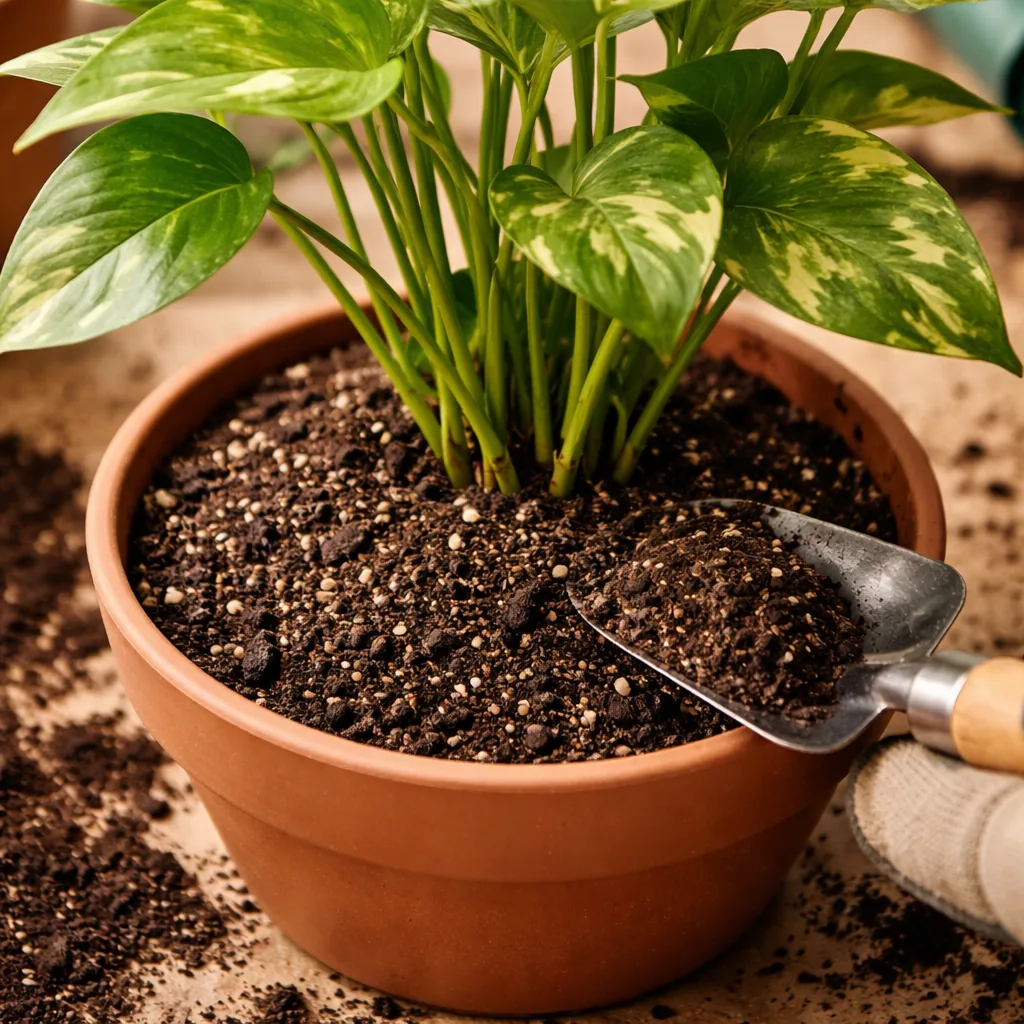
Old crusty soil can repel water and collect mineral salts.
Scrape off the top half inch and replace it with fresh airy mix.
This is not a substitute for repotting a rootbound plant. Watch fresh growth before changing anything else. Judge the change by fresh nodes, firmer stems, and new leaves over the next few weeks.
2. Take Before Photos So You Notice Progress

Pothos changes slowly enough that you may miss the improvement.
A photo every two weeks shows whether vines are filling out.
Compare new leaves, not old damage. Watch fresh growth before changing anything else. Judge the change by fresh nodes, firmer stems, and new leaves over the next few weeks.
1. Restart the Plant if the Top Is Empty and the Vines Are Bare
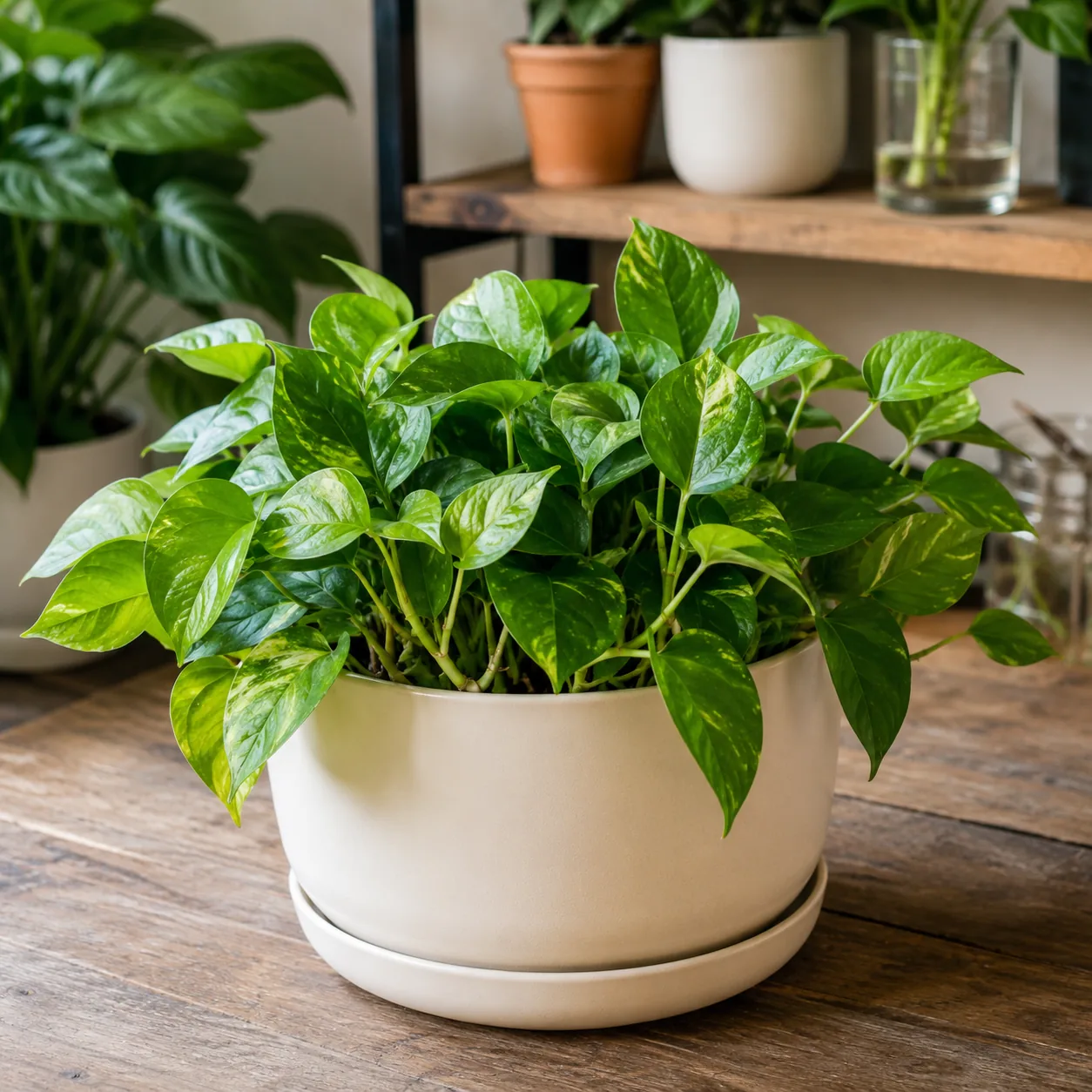
Sometimes the cleanest fix is to chop and prop the healthiest sections.
You can rebuild a fuller pot from the best vines instead of defending a tired shape.
This feels dramatic, but it often saves months. Watch fresh growth before changing anything else. Judge the change by fresh nodes, firmer stems, and new leaves over the next few weeks.
Read More: Drought-Proof Flowers That Keep Blooming Through Brutal Summer Heat
The goal is not to copy a magazine garden. It is to make the next practical decision easier, then let the results compound.