
Outdoor Kitchen Mistakes: 21 Outdoor Kitchen Mistakes That Are Expensive to Fix Later
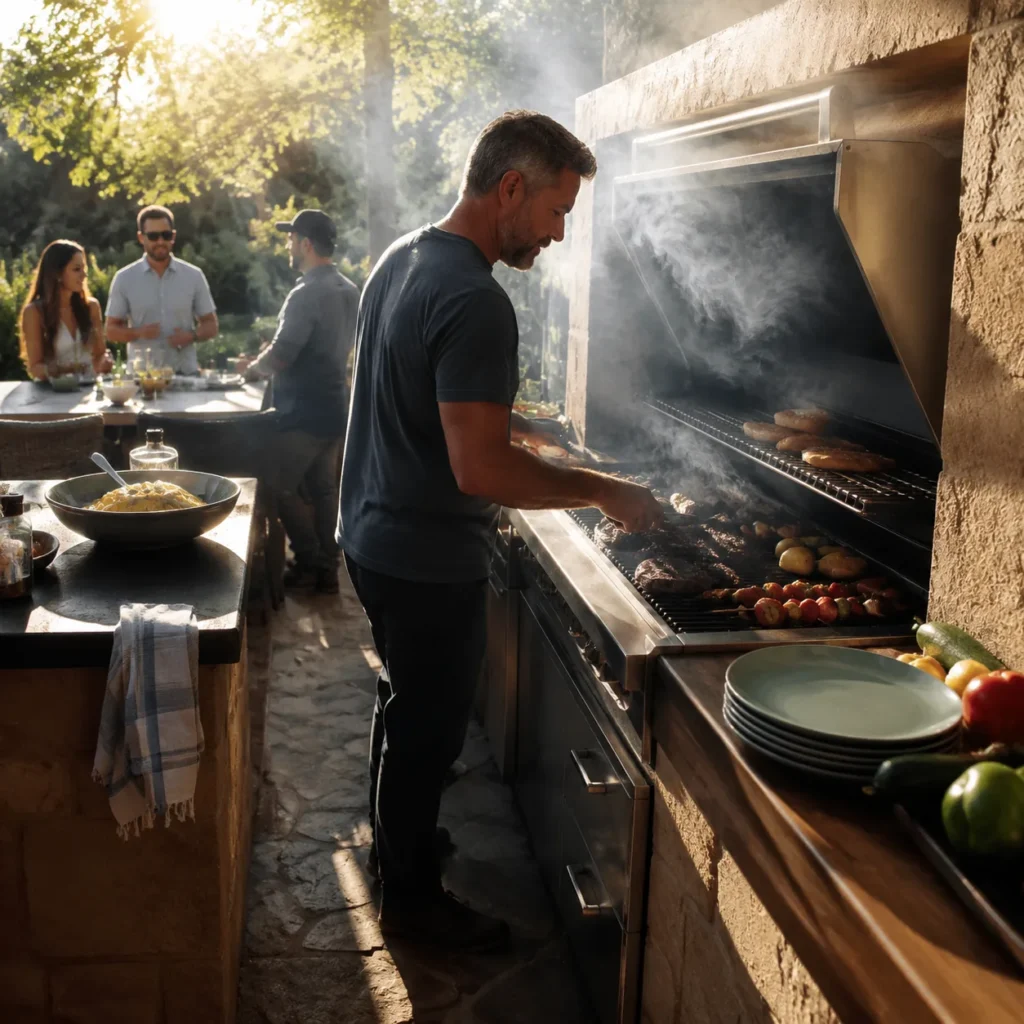
A good outdoor kitchen should make burgers, ribs, steaks, and weeknight dinners easier.
The expensive mistakes usually happen before the first cookout.
They hide in the layout, the wind, the heat, the grease, and all the little places where a backyard cook actually needs room to move.
21. Putting the Grill Too Close to the House

This is the mistake that can turn a pretty build into a constant worry.
A grill throws heat forward, upward, and backward. It also throws smoke, flare-ups, and grease in directions that do not always behave politely.
If the grill is jammed against siding, railing, trim, screens, or overhangs, every cook becomes a clearance problem.
Moving a grill after the stonework, gas line, and counter are built is not a small tweak. It is a rebuild.
The better plan is boring but smart: give the hot zone real breathing room from the start.
20. Forgetting a Landing Zone Beside the Grill
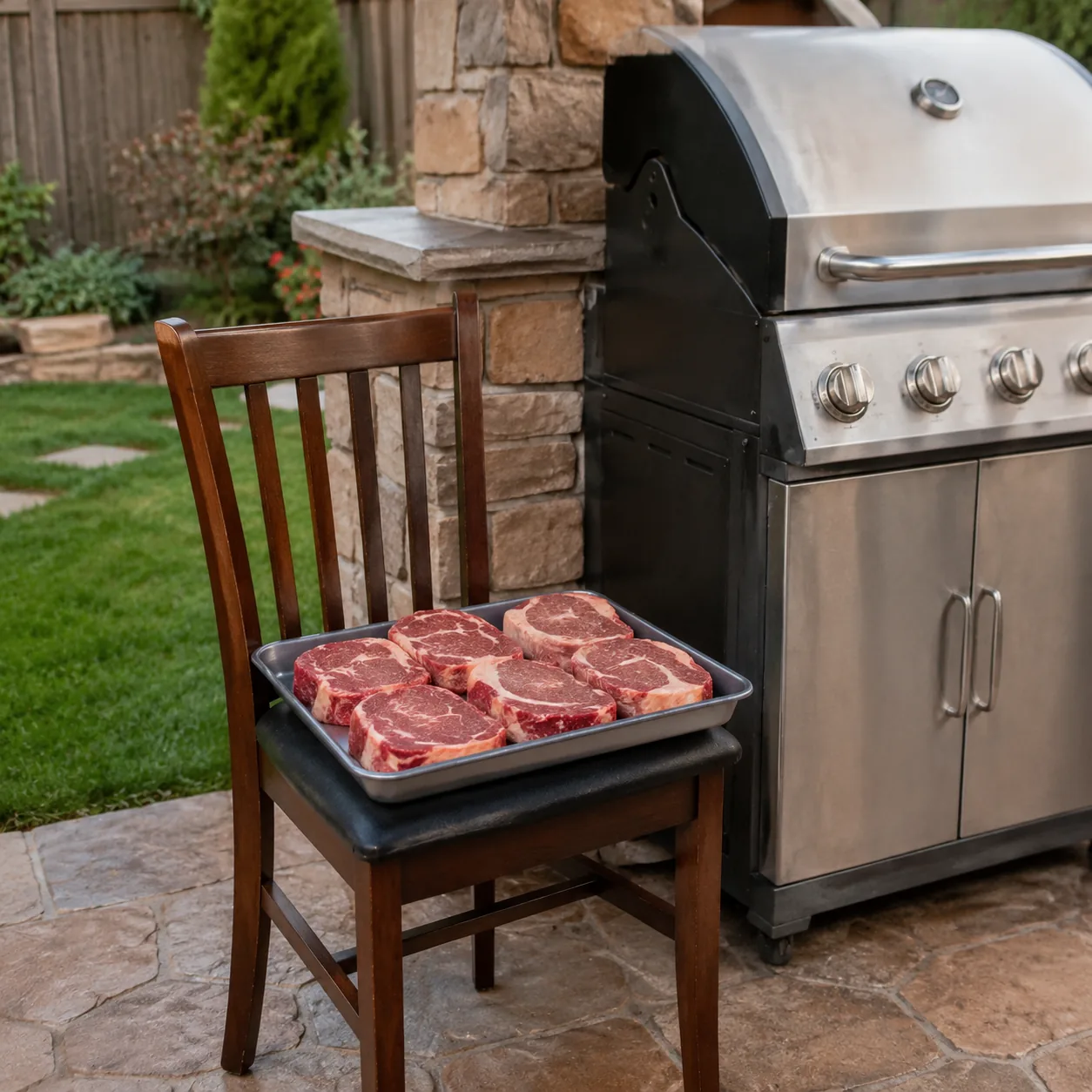
Every grill needs a place for the tray.
Raw burgers go somewhere. Finished steaks go somewhere else. Tongs, gloves, sauce, seasoning, foil, and a thermometer all need a spot within arm’s reach.
Without a landing zone, the cook starts using chair arms, cooler lids, window ledges, or the edge of the sink.
That is how sauce bottles fall, plates get crowded, and hot food gets walked across the patio for no reason.
Plan counter space on both sides of the grill if you can. One side for raw and prep. One side for finished food.
19. Building With Indoor Cabinets
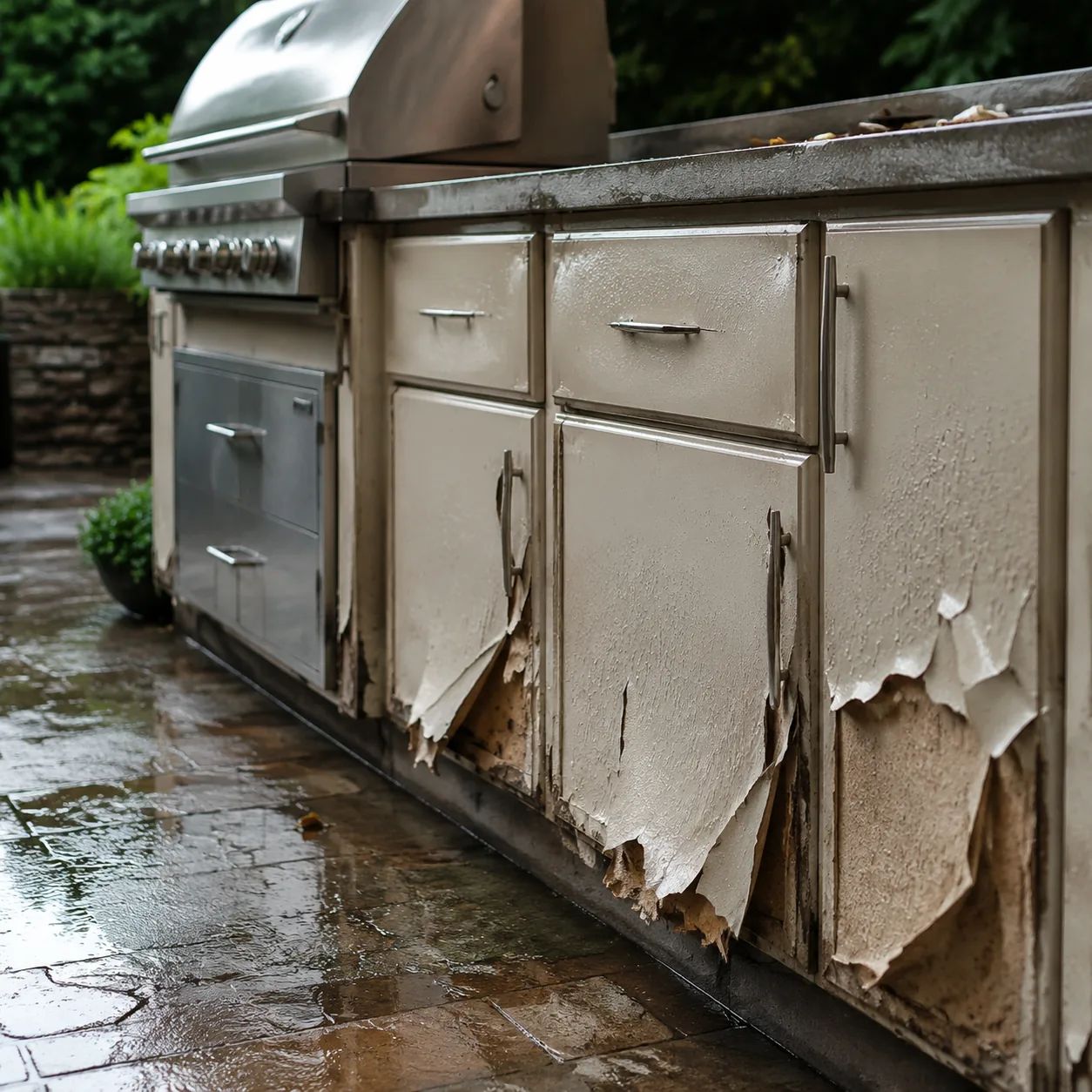
Indoor cabinets look like a bargain until the first hard season outside.
Moisture gets into seams. Heat works on finishes. Sun fades panels. Bugs find gaps. Hinges and slides start complaining.
An outdoor kitchen is not just a kitchen with better weather.
It is a wet, hot, smoky, dusty, windy space that occasionally gets blasted by rain.
Use materials meant for outside: stainless, masonry, marine-grade options, sealed outdoor cabinetry, or properly built framing.
Cheap boxes outdoors usually become expensive trash.
18. Choosing the Wrong Countertop
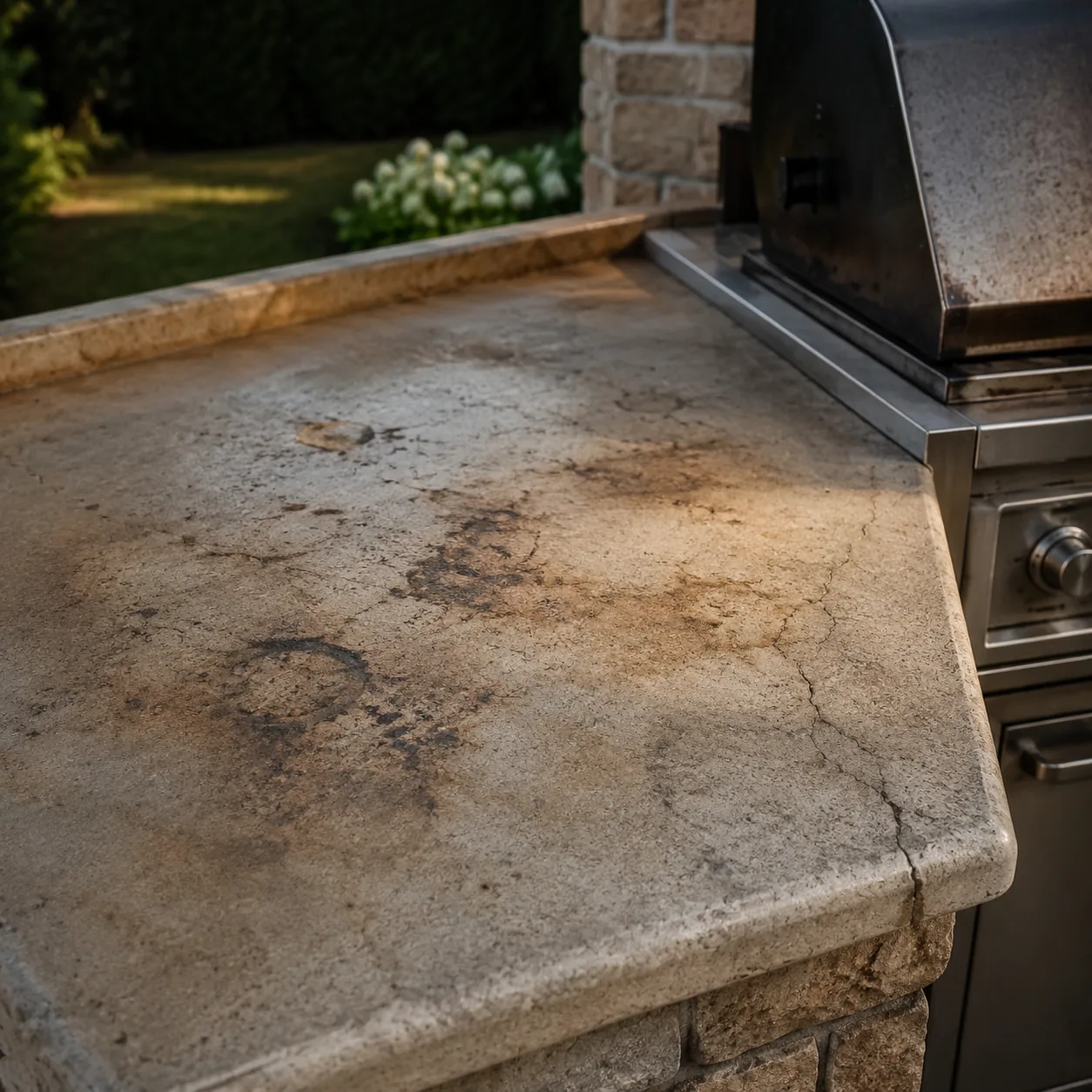
Outdoor counters live a harder life than indoor counters.
They catch hot pans, greasy trays, lemon juice, BBQ sauce, rainwater, sunscreen, ash, and afternoon sun.
A material that looks beautiful in a showroom can stain, crack, fade, or get slick outside.
The counter also has to feel good during the cook. If it gets scorching hot in the sun, nobody will want to prep there.
Think less about how it photographs empty and more about how it handles ribs, sauce, heat, and cleanup.
17. Skipping Shade Over the Prep Area
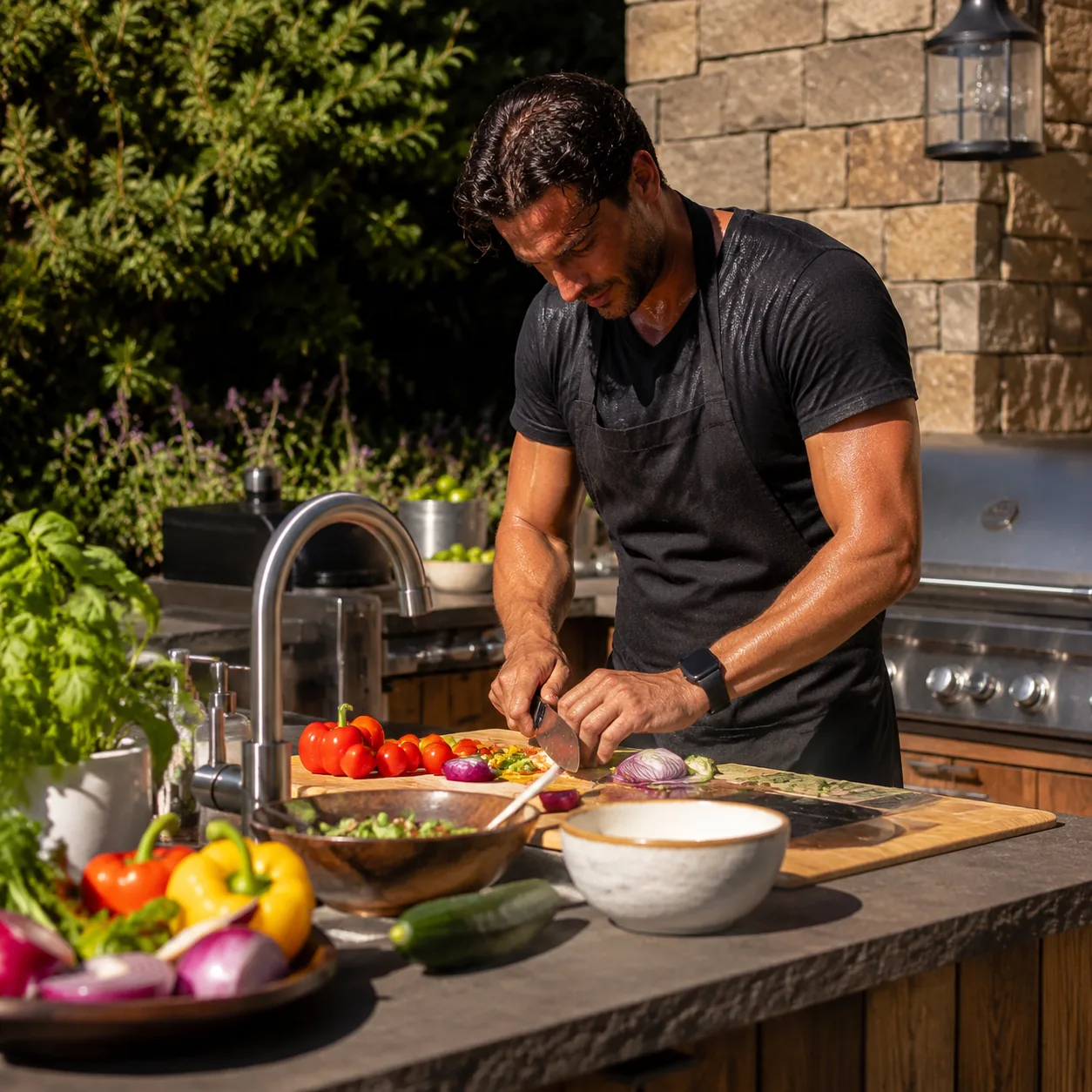
The grill can handle the sun.
The person cooking cannot always say the same.
If the prep counter sits in direct afternoon light, the whole kitchen becomes harder to use. Ingredients warm up faster. Sauces separate. Ice melts. The cook starts rushing.
Shade does not have to mean a full roof over the grill.
It can be a pergola, umbrella, awning, shade sail, or a smarter orientation. Just do not design a prep station that feels like a punishment at 5 p.m.
16. Putting the Sink in Without a Real Drainage Plan
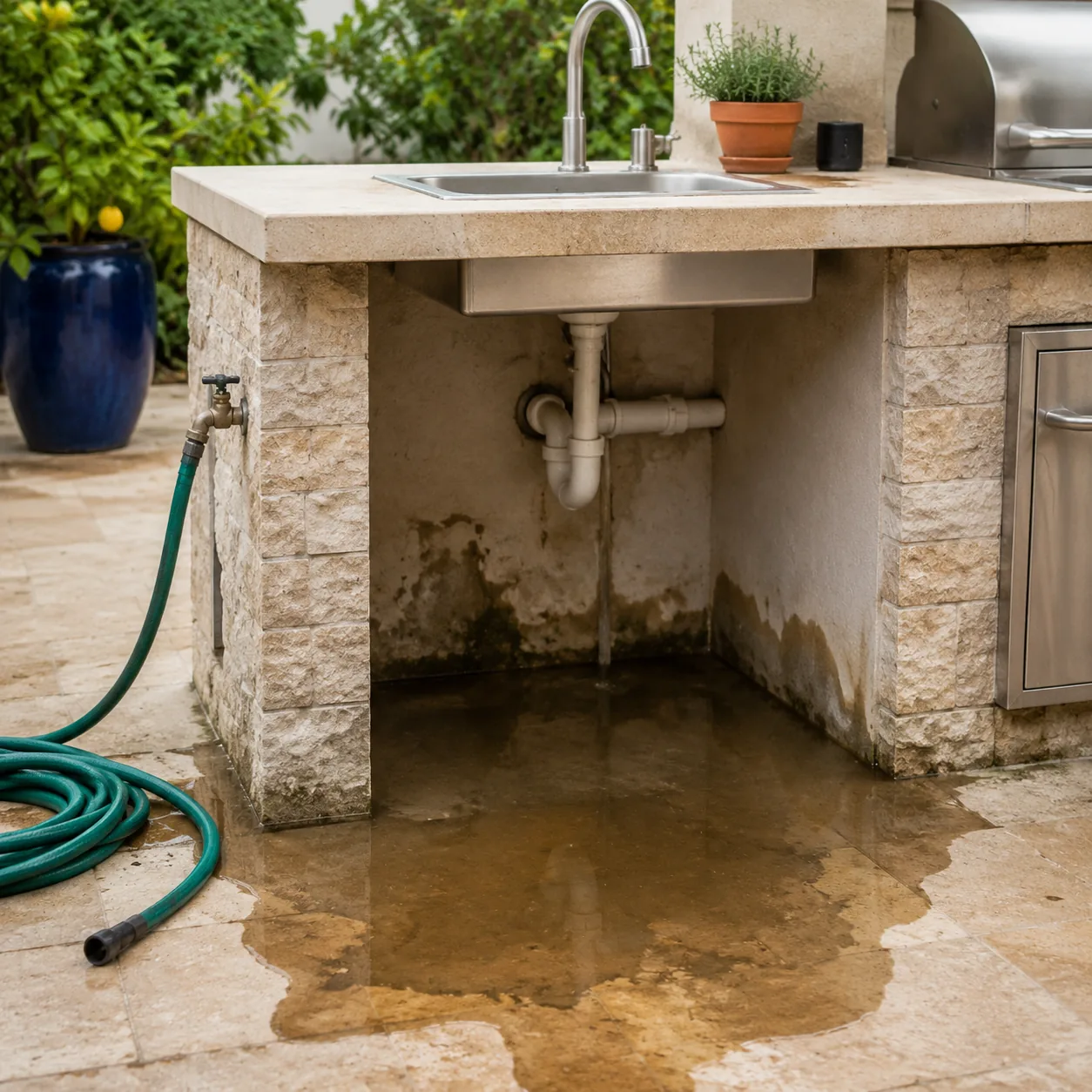
An outdoor sink sounds simple.
Then you have to decide where the water goes.
Some people imagine rinsing vegetables, washing hands, cleaning grill tools, filling a pot, and dumping melted cooler water. That is a lot of water for a sink with no serious plan.
Drainage, winterization, local rules, and shutoff access all matter.
If the sink is only decorative, skip it. If it is functional, build the plumbing like you mean it.
15. Forgetting Outlets Where the Cooking Happens
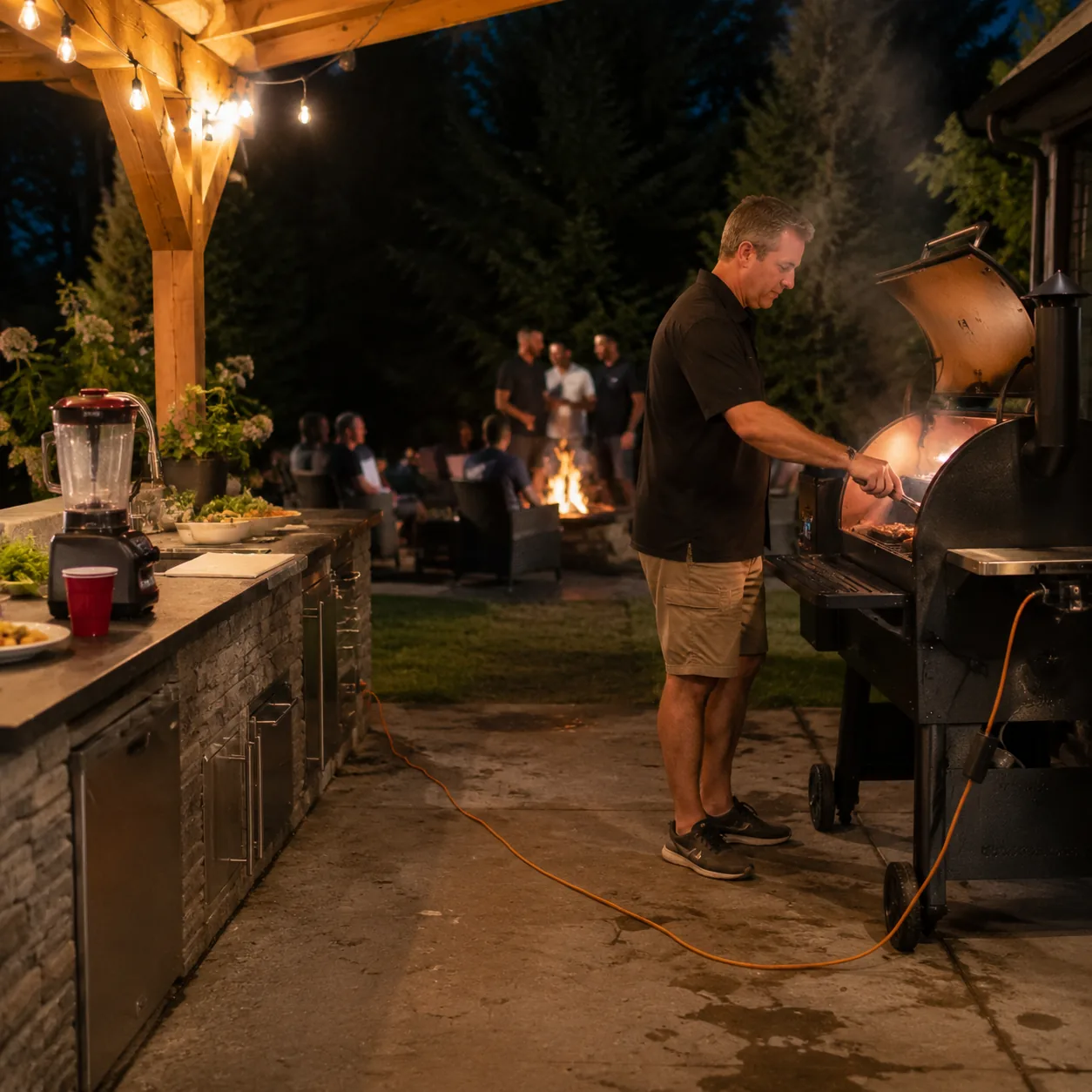
Outdoor cooking uses more electricity than people expect.
Pellet grills need power. Rotisseries need power. Fridges, lights, fans, phone chargers, speakers, thermometers, and blenders all want a plug.
If outlets are too far away, extension cords become part of the design.
That looks messy, gets in the way, and can create problems around water and foot traffic.
Plan outdoor-rated outlets where the tools will actually be used, and have the electrical work handled properly.
14. Parking the Outdoor Fridge in Full Sun
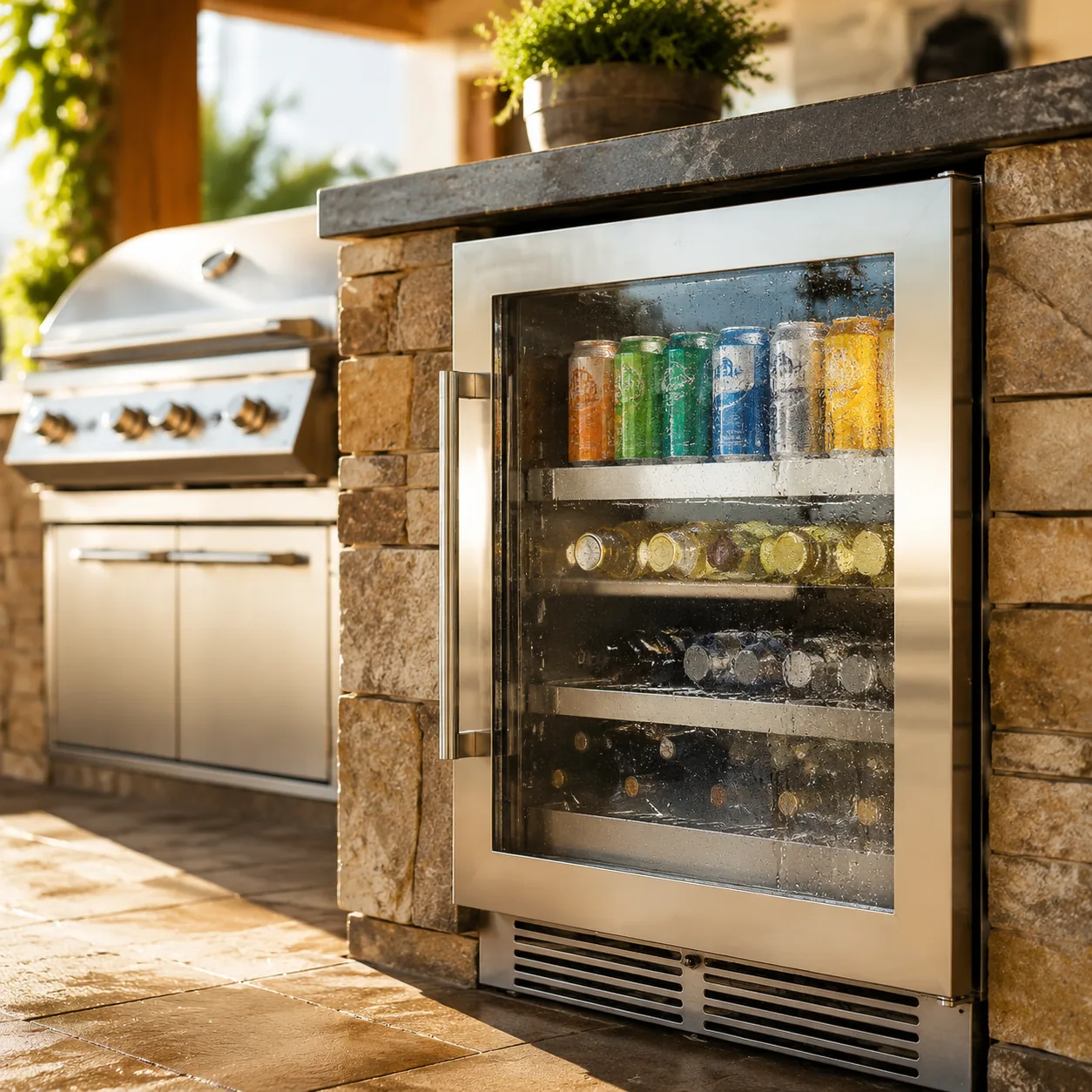
An outdoor fridge already works harder than an indoor one.
Put it in full sun and it works even harder.
That can mean warmer drinks, more strain, more condensation, shorter appliance life, and a fridge that never feels as cold as you expected during a cookout.
The fridge should be outdoor-rated, ventilated correctly, and placed where shade helps it.
A hot box under a hot counter beside a hot grill is not a clever setup. It is a service call waiting to happen.
13. Ignoring Wind Direction
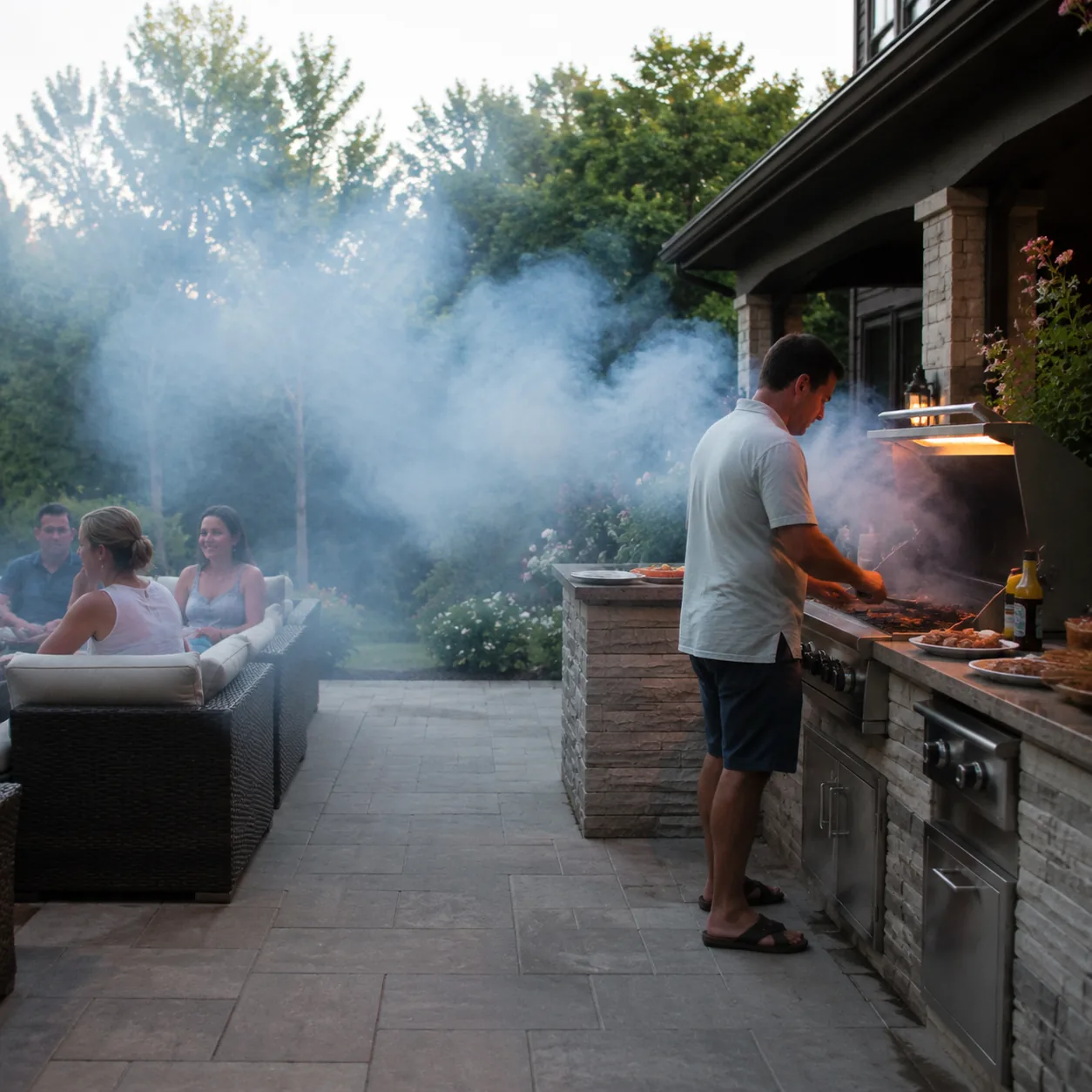
Wind decides where the smoke goes.
Most drawings do not show that part.
If the grill is placed without thinking about wind, smoke can blow into the dining table, the sliding door, the neighbor’s yard, or right back into the cook’s face.
Wind also changes how a gas grill behaves and how comfortable the prep area feels.
Before locking in the layout, stand outside during the hours you actually cook. Watch where smoke would travel.
The backyard already knows the answer.
12. Building Around One Grill Forever
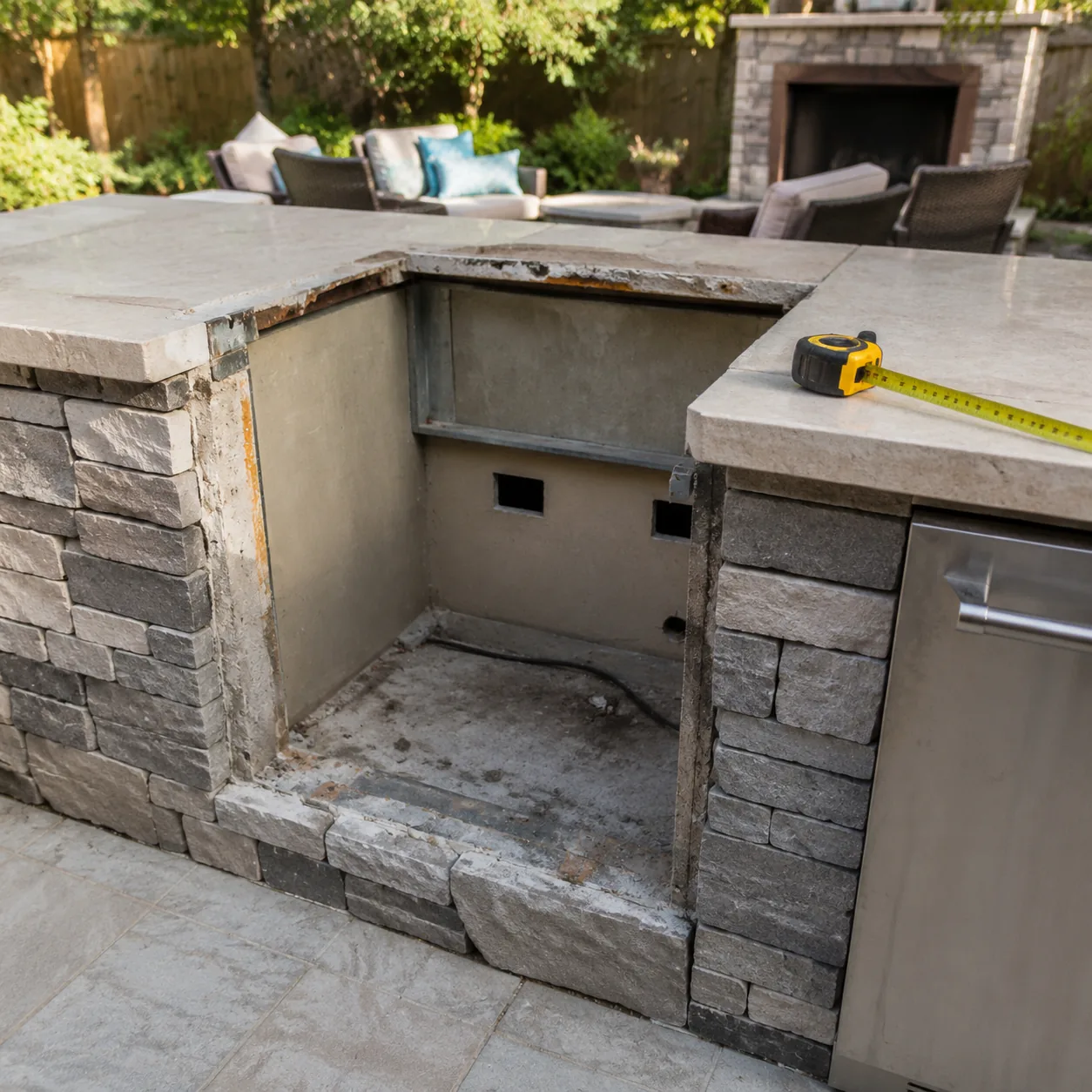
Grills do not last forever.
Your cutout might.
If the whole island is built tightly around one exact grill model, replacing it later can become a miserable puzzle.
New models change dimensions. Doors swing differently. Venting requirements differ. Gas connections move. Trim kits disappear.
Leave service access. Keep manuals. Measure clearances. Think about what happens when the grill you love today is discontinued.
The best outdoor kitchens are built for cooking now and replacement later.
11. Making the Cook Stand Alone

The person at the grill should still feel like part of the party.
Too many outdoor kitchens put the cook in a corner, facing a wall, away from the table.
That may look tidy in a plan. It feels lonely during a two-hour rib cook.
Good barbecue is social. People gather around the smell, the sizzle, the first sliced piece of steak, and the moment the lid opens.
Design the kitchen so the cook can talk, turn, serve, and still keep an eye on the fire.
10. Forgetting Room for Lids, Doors, and Drawers
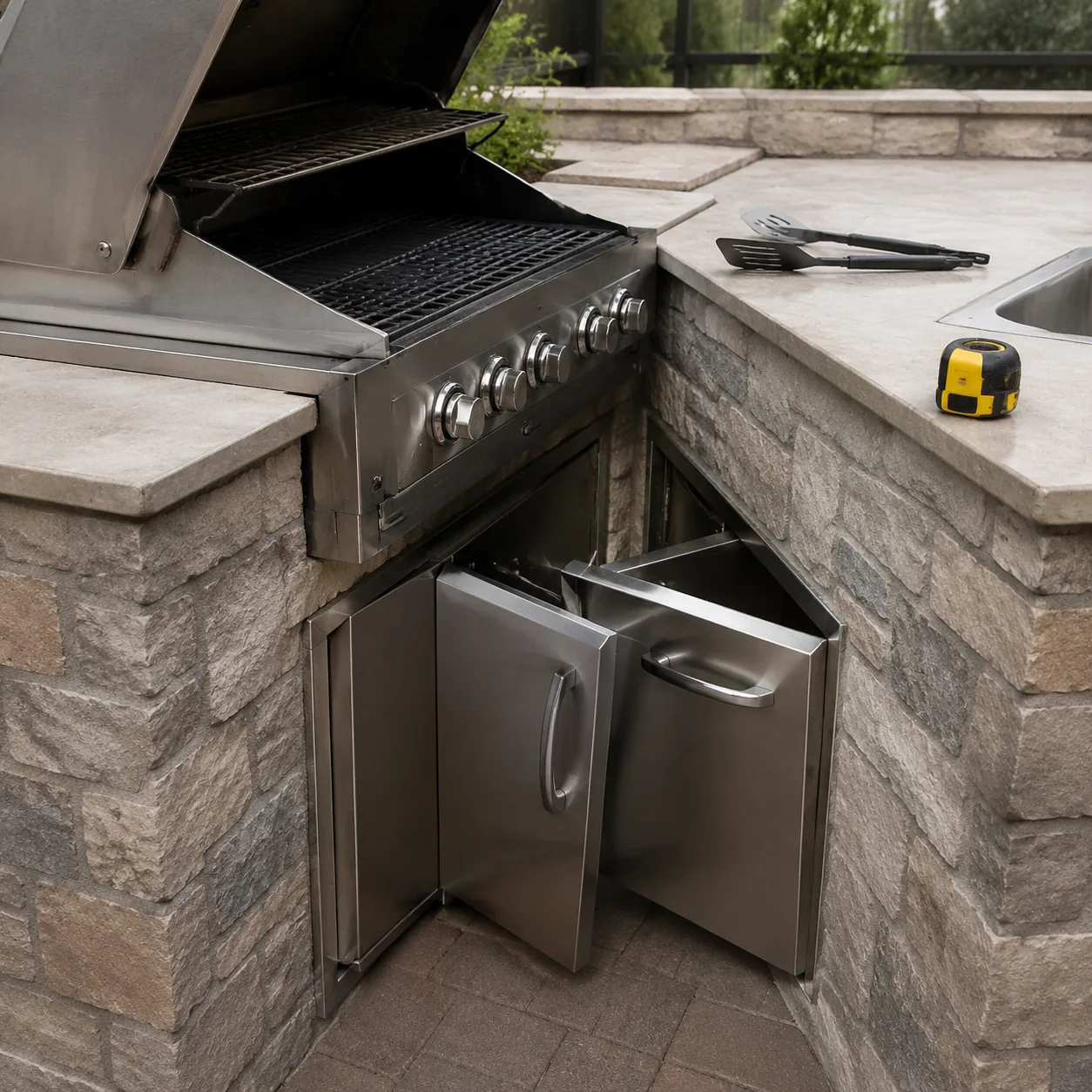
Appliances need space when they move.
Grill lids lift. Smoker lids swing. Cabinet doors open. Trash drawers pull out. Fridge doors need clearance. Access panels cannot be trapped behind furniture.
The layout may look generous when everything is closed.
Then the cook opens three things at once and discovers the whole station is fighting back.
Mock it up before you build. Use painter’s tape, cardboard, chairs, or anything that shows real swing space.
Closed dimensions do not cook dinner. Open dimensions do.
9. Skipping a Grease and Trash Flow
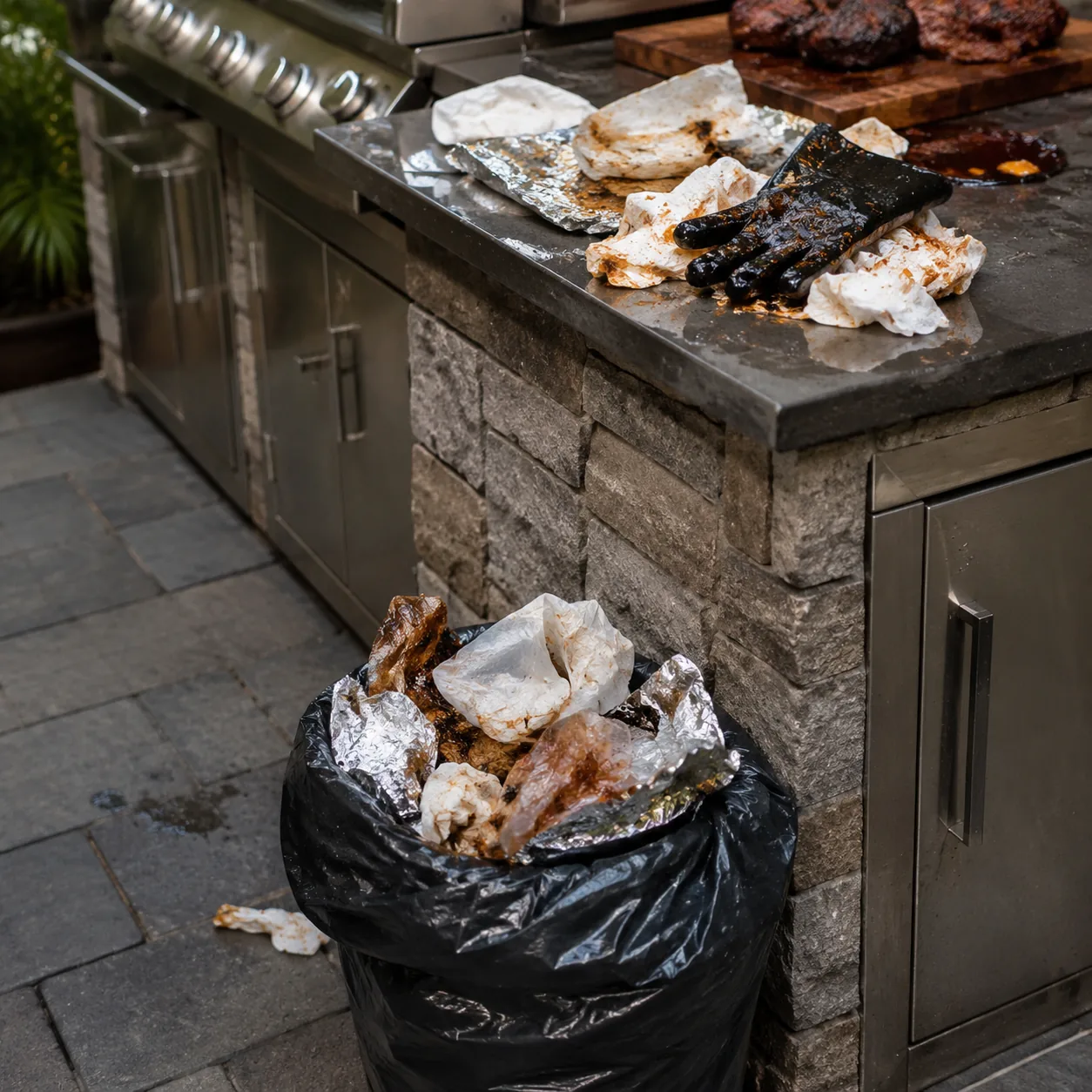
Barbecue makes trash.
It also makes grease.
Foil, butcher paper, gloves, paper towels, packaging, bones, marinade bags, rub containers, and charcoal bits pile up faster than anyone wants to admit.
If there is no trash pullout, no paper towel spot, and no plan for grease trays, the counter becomes the garbage zone.
That makes the kitchen feel dirty even when the food is great.
Build a cleanup path as carefully as you build the cook path.
8. Choosing Slippery Flooring
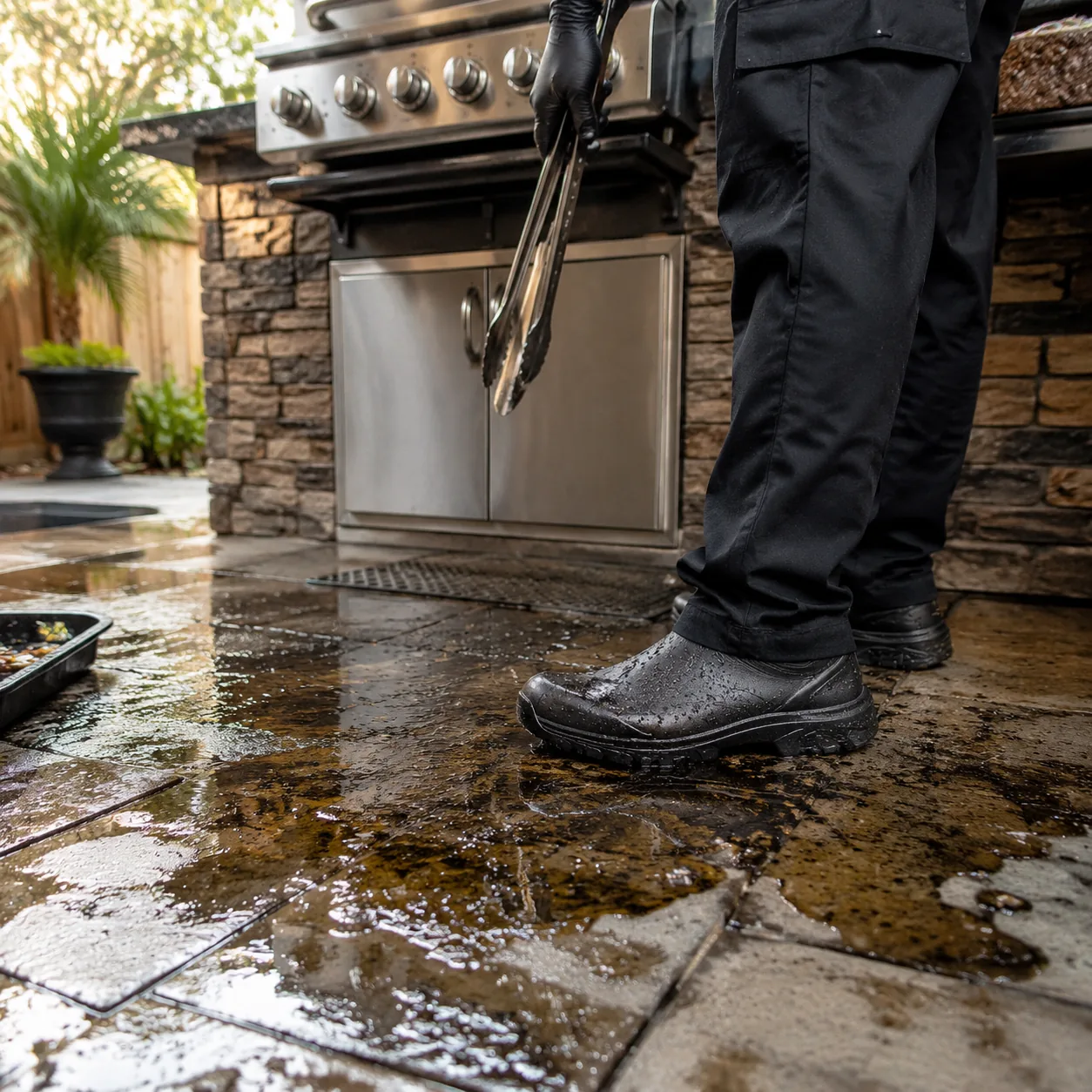
Outdoor kitchen floors get wet.
They also get greasy, smoky, dusty, and covered in little bits of food.
A polished surface that looks sharp dry can become a skating rink after rain, sauce spills, or a quick hose-down.
The cook is often carrying hot food, sharp tools, or a heavy tray.
This is one place where grip matters more than shine. Choose flooring that behaves when it is wet, not just when it is clean.
7. Forgetting Night Cooking Light
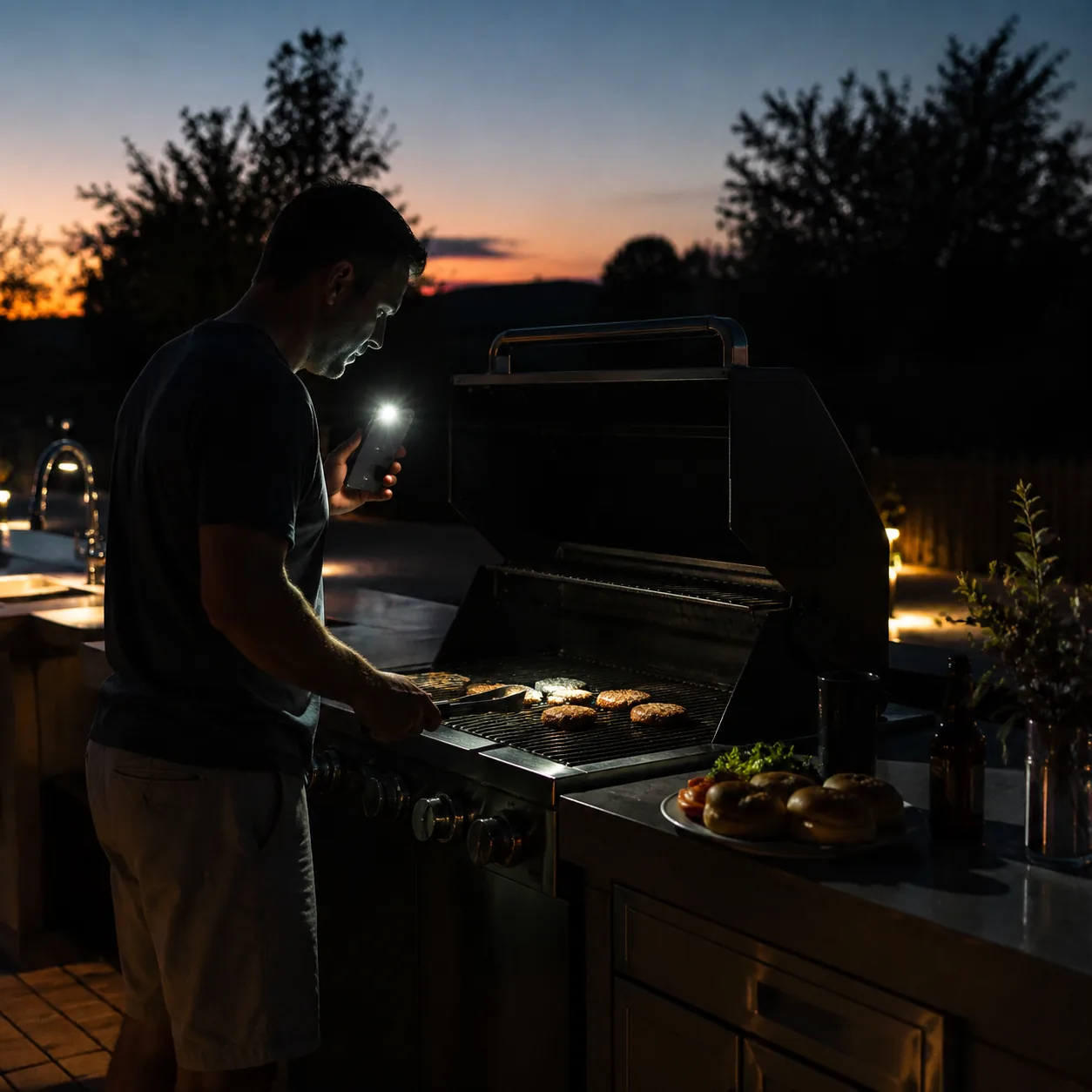
Most cookouts drift into the evening.
The grill does not care if you can still see.
Bad lighting makes it harder to read meat color, check doneness, slice properly, and clean the grates after dinner.
Overhead patio lights can help guests but still leave the cooking surface in shadow.
You need task lighting where the food is: over the grill, over the prep counter, and near the serving spot.
A phone flashlight is not an outdoor kitchen lighting plan.
6. Storing Everything Too Far Away
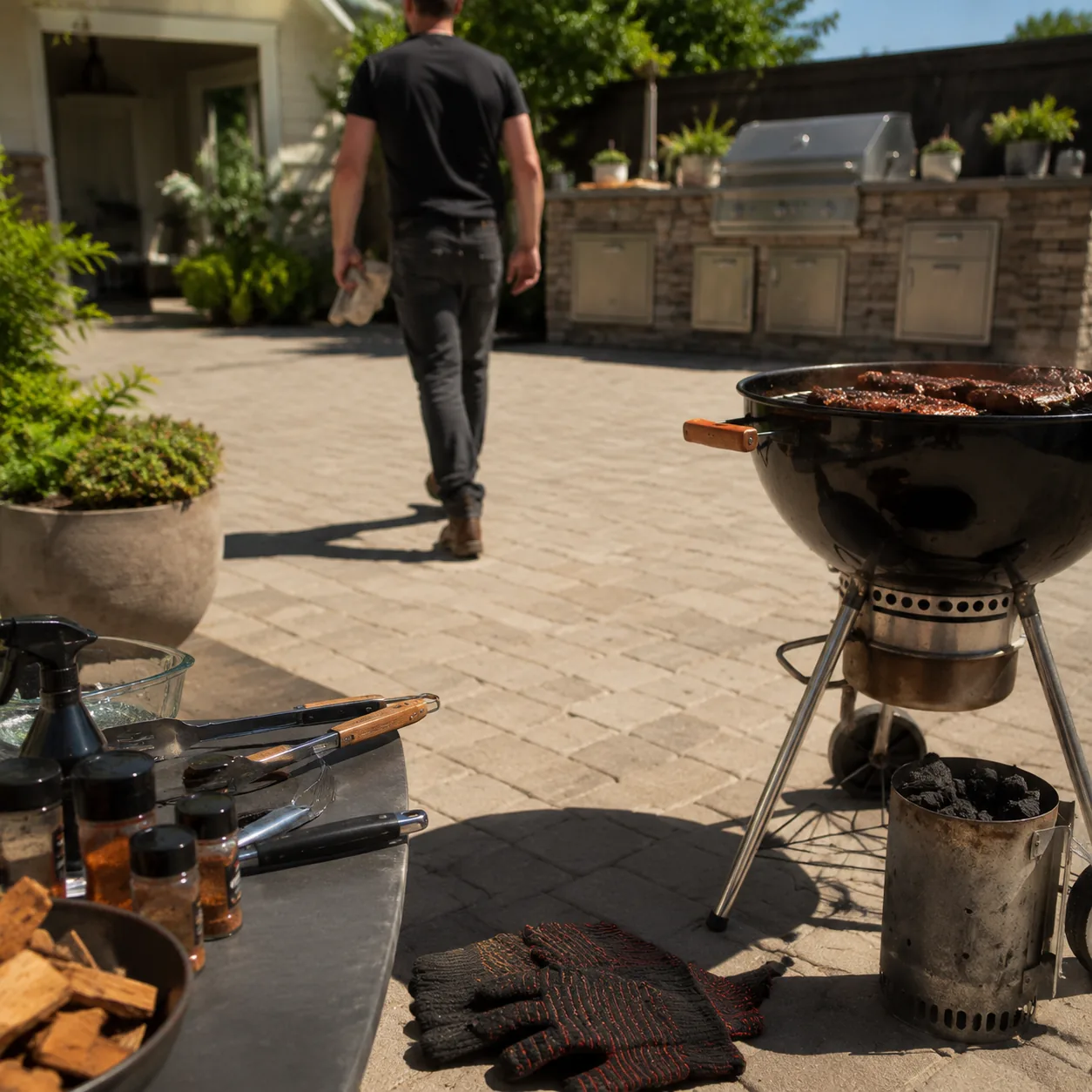
The best grill setup has rhythm.
Open. Season. Sear. Move. Sauce. Rest. Serve.
That rhythm falls apart when gloves are inside, rubs are in the pantry, foil is across the yard, and the thermometer lives in a kitchen drawer.
Storage should match the way you cook.
Keep heat gloves, grill brushes, fuel, foil, paper towels, trays, rubs, and thermometers close enough that the cook does not have to abandon the fire.
Convenience is not a luxury here. It is how dinner stays on schedule.
5. Putting Seating in the Smoke Path
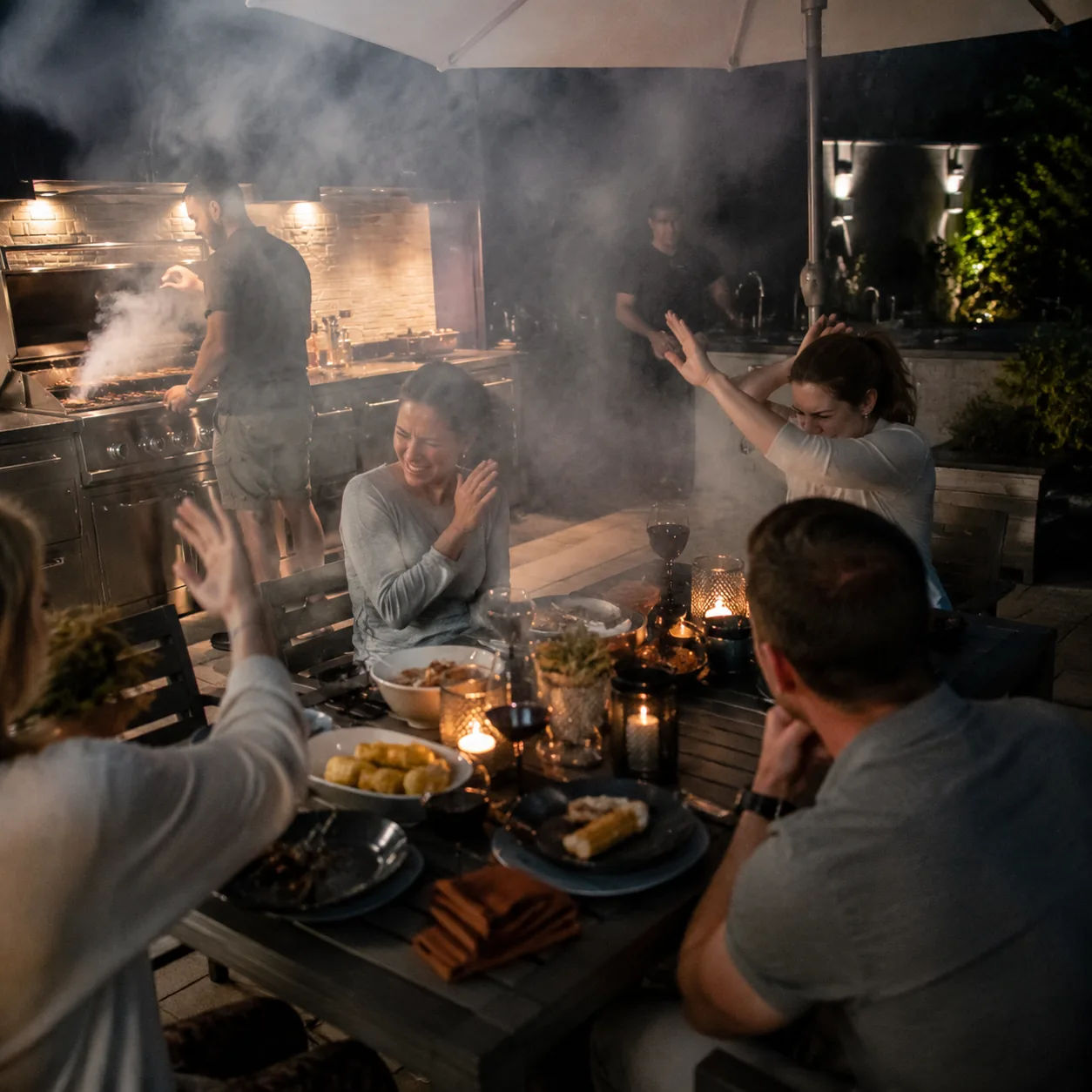
Guests love the smell of barbecue.
They do not love wearing it in their eyes.
If the dining table sits where smoke naturally travels, people will move chairs, close doors, or leave the table just when the food is ready.
This is especially true with charcoal grills, smokers, and pellet cookers.
Before building permanent seating, test the smoke path with your actual grill style. A beautiful dining zone that nobody wants to sit in is expensive decoration.
4. Treating a Covered Patio Like Open Air
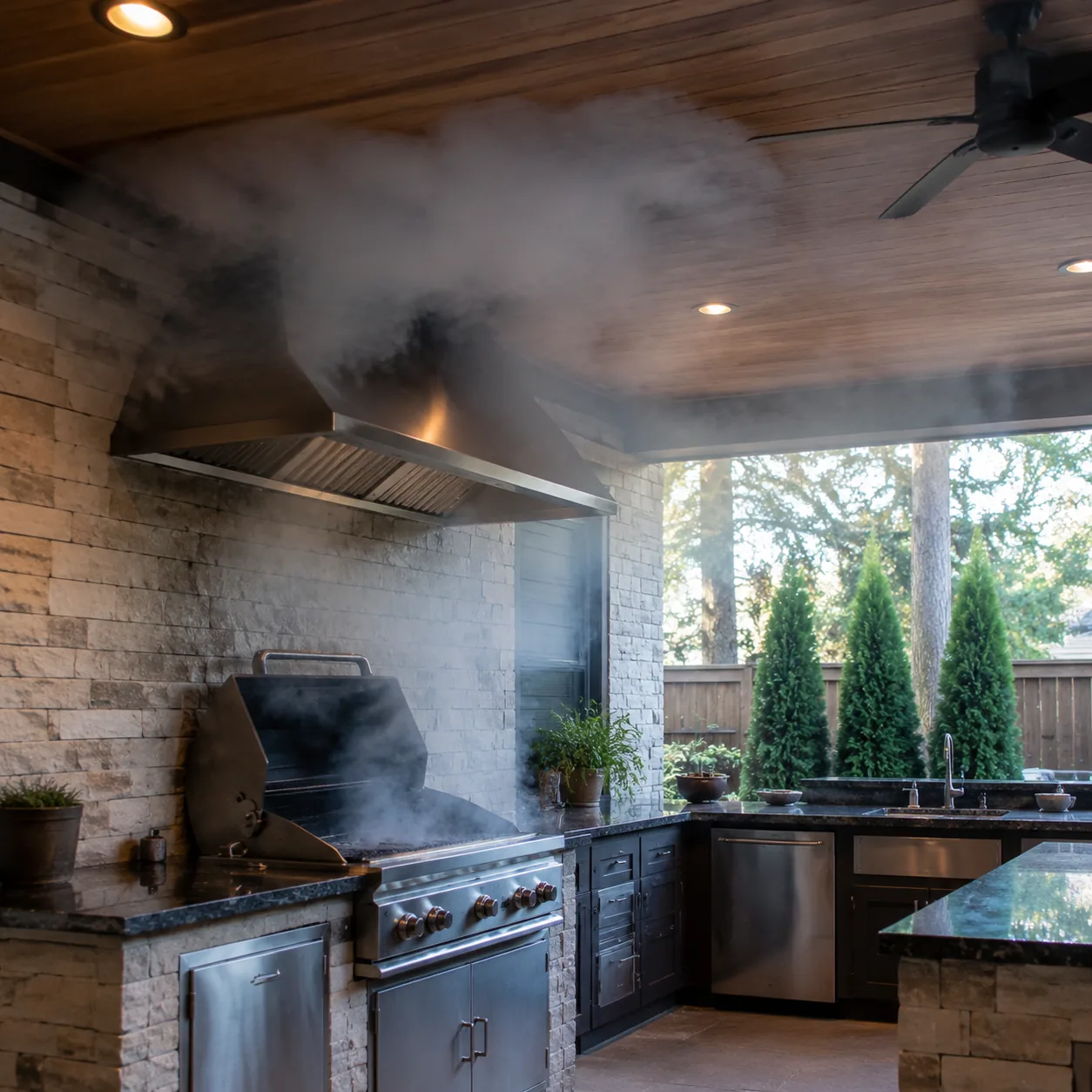
A roof changes everything.
It protects the cook from rain, but it can also trap heat, smoke, grease, and fumes.
Covered spaces need careful planning around ventilation, clearances, appliance type, and combustible materials.
This is where guessing gets expensive.
Before putting a grill under any cover, check the appliance instructions, local requirements, and the real ventilation plan. The word “outdoor” does not automatically make a covered corner safe or comfortable.
3. Running Gas, Water, and Electric as an Afterthought
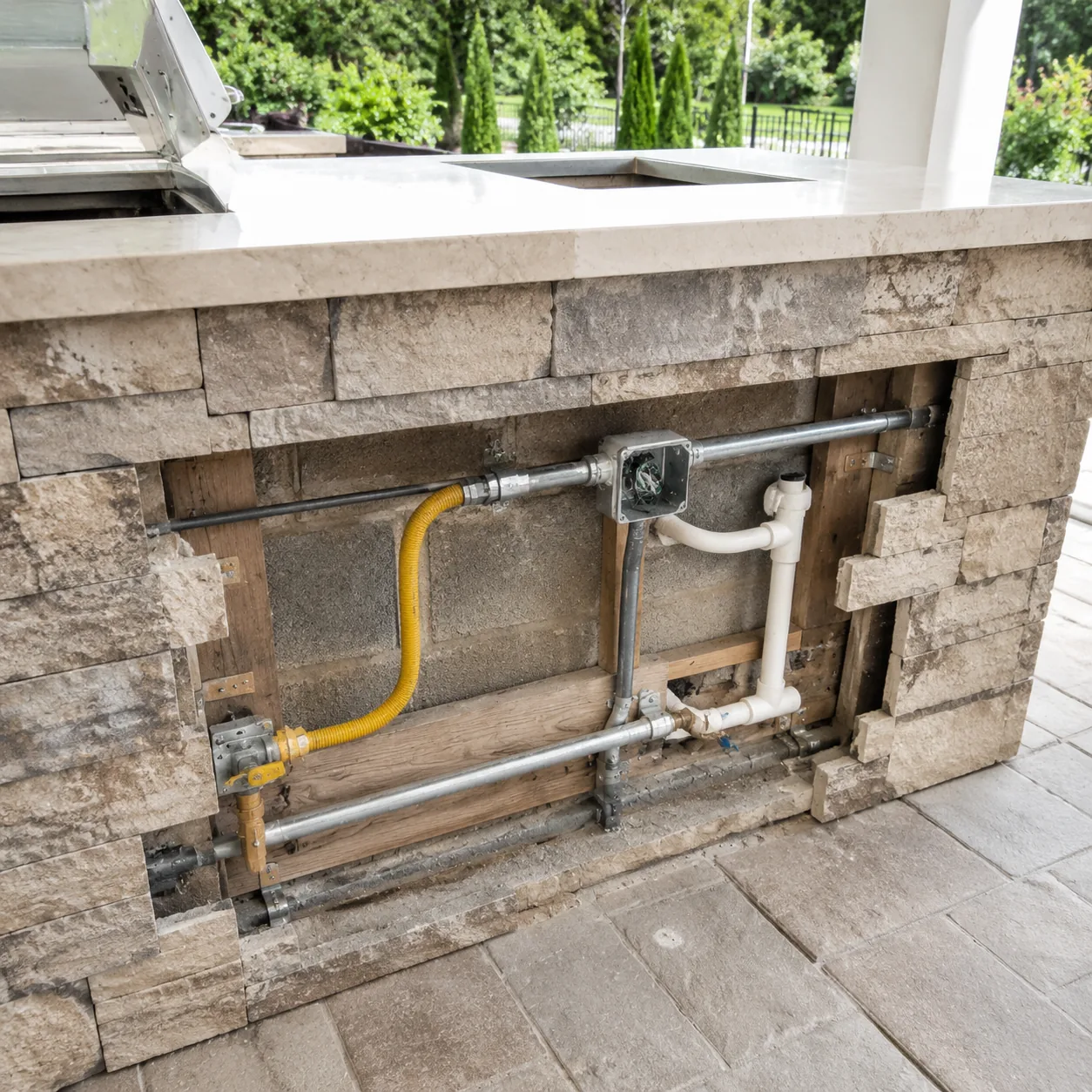
Utilities are the bones of the outdoor kitchen.
They are also the hardest thing to fix after the counters, pavers, walls, and appliances are in place.
Gas line location affects the grill. Electrical affects lighting, outlets, refrigeration, and pellet cookers. Water affects sinks, drainage, winter shutoff, and cleanup.
If those decisions come late, the project starts making ugly compromises.
Plan utilities before the pretty stuff. Use licensed pros where required. Future you will not care that the stone looked good first.
2. Buying Appliances Before Planning the Layout
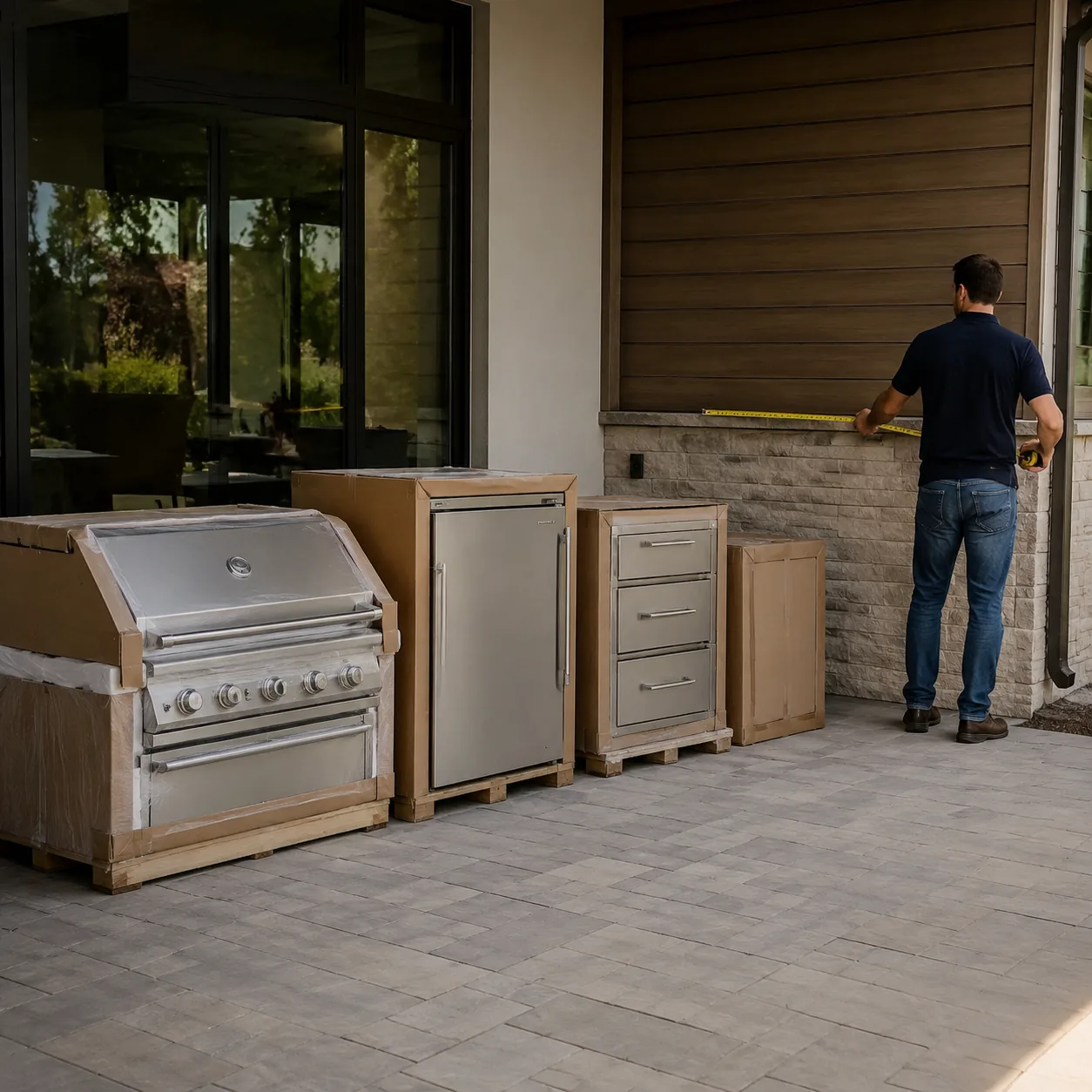
Outdoor kitchen shopping is dangerous.
The grill is fun. The fridge is tempting. The side burner sounds useful. The pizza oven feels like a personality upgrade.
But buying appliances first can lock you into a layout that does not cook well.
Start with the meals you actually make. Burgers for six. Ribs on weekends. Pizza nights. Fish on weeknights. Breakfast on the griddle. Then choose the equipment that supports that pattern.
An outdoor kitchen should be designed around the cook, not around whatever appliance was on sale.
1. Treating It Like an Indoor Kitchen With a Grill
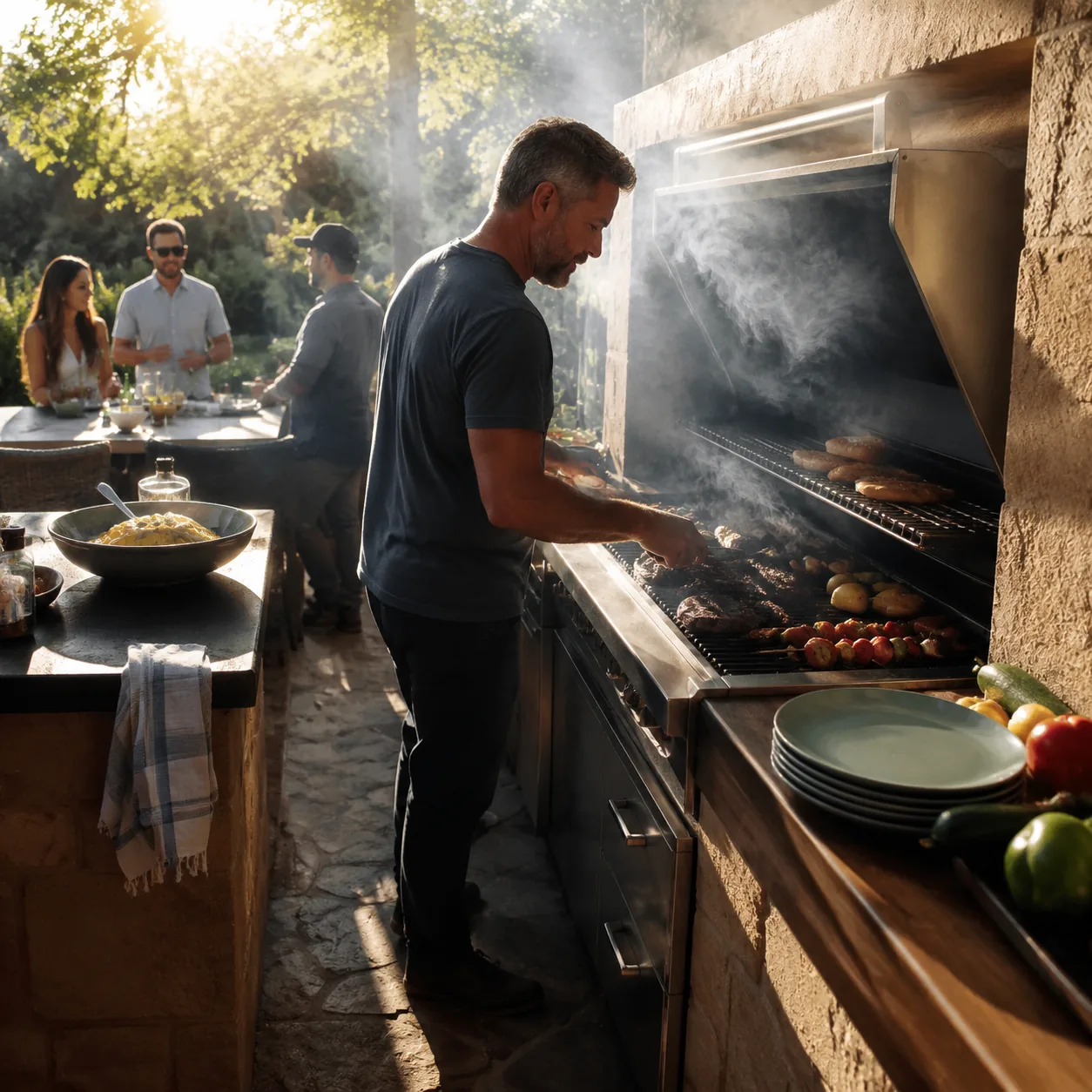
This is the mistake underneath most of the others.
An outdoor kitchen is not an indoor kitchen moved onto the patio.
It has weather, wind, smoke, flame, grease, bugs, darkness, fuel, guests, and heat coming from directions an indoor kitchen never has to handle.
The best ones are built like barbecue stations.
They have a smart hot zone, a real prep zone, a clean serving zone, good lighting, safe clearances, easy storage, and a cook who can enjoy the night instead of fighting the layout.
That is the whole point.
The food should be the hard part.
Not the kitchen.
Build the Outdoor Kitchen Around the Cook
A backyard kitchen does not have to be huge.
It has to work.
Give the grill room to breathe. Give the cook counter space. Give smoke somewhere to go. Give utilities, storage, lighting, grease, and cleanup a plan before the first stone is set.
That is how an outdoor kitchen becomes the place everyone wants to gather around, instead of the expensive patio feature everyone quietly works around.